Urinary Tract Infection: Symptoms, Causes and Treatment
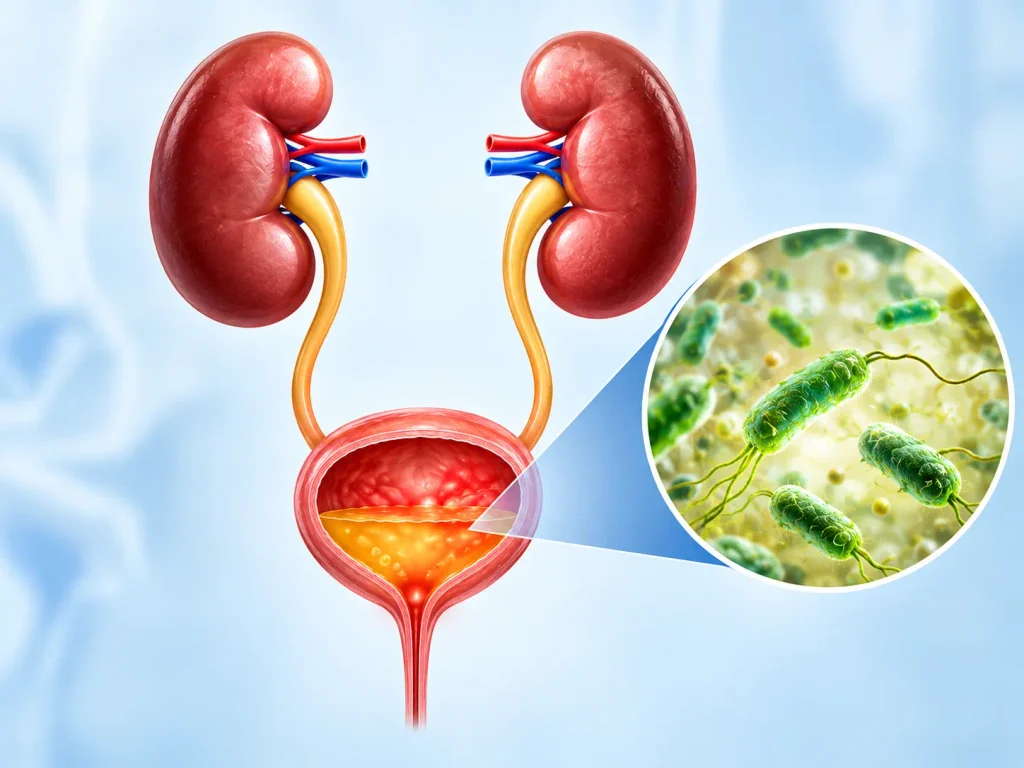
A urinary tract infection (UTI) is an infection that affects part of the urinary system, including the bladder, urethra, or kidneys. It often happens when bacteria enter the urinary tract and multiply. A UTI can cause burning during urination, frequent urination, and discomfort in the lower abdomen. Most UTIs affect the bladder, but an untreated infection can sometimes spread to the kidneys. Knowing the symptoms of a UTI, its causes, and available treatment options can help you understand when to seek medical care. What Is a Urinary Tract Infection (UTI)? A urinary tract infection occurs when harmful bacteria enter the urinary system. The bladder stores urine, while the kidneys filter waste from the blood and produce urine. The ureters carry urine from the kidneys to the bladder, and the urethra carries it out of the body. A bladder infection is a common type of UTI. A kidney infection is less common but can be more serious. Early diagnosis and suitable treatment can help reduce the risk of complications. Common Symptoms of a UTI The symptoms of a UTI may vary depending on which part of the urinary system is affected. Common signs include: The phrase urination frequent describes a common symptom, but frequent urination can also occur with other health conditions. If you notice blood in the urine or have ongoing urinary discomfort, contact a healthcare professional. A kidney infection may cause fever, chills, pain in the back or side, nausea, or vomiting. Seek prompt medical care if these symptoms occur, especially alongside urinary symptoms. Causes and Risk Factors of UTIs Most UTIs are caused by bacteria that enter the urinary tract through the urethra. These bacteria may come from the bowel area. Wiping from front to back after a bowel movement can help reduce the spread of bacteria toward the urethra. Several factors can increase the risk of developing a UTI: Some medicines or medical treatments may also affect urinary health. However, a medication side effect should not be assumed to be the cause of urinary symptoms without medical advice. How Is a UTI Diagnosed? A healthcare professional usually reviews your symptoms and medical history before deciding whether testing is needed. Two common tests are a urine test and a urine culture. Urine Test A urine test can look for signs of infection, such as white blood cells or other substances that may suggest a UTI. The results are considered alongside your symptoms and medical history. Urine Culture A urine culture checks whether bacteria grow from a urine sample. It can help identify the bacteria causing the infection and guide the choice of antibiotic when needed. Not everyone requires the same tests. Your healthcare professional will decide which tests are appropriate based on your symptoms, risk factors, and overall health. Urinary Tract Infection Treatment Options Treatment depends on the location and severity of the infection, your symptoms, and any other medical conditions you have. Antibiotics Bacterial UTIs are commonly treated with antibiotics prescribed by a healthcare professional. The medicine and treatment length depend on individual circumstances. Take the medication as directed, and do not use leftover antibiotics or share them with another person. Contact your healthcare professional if your symptoms do not improve as expected or return after treatment. Fever, back or side pain, and vomiting may indicate a more serious infection that needs prompt assessment. Drinking Fluids and Managing Discomfort Drinking enough water can support normal urinary function, unless a healthcare professional has advised you to limit fluids. Water does not replace antibiotics when they are needed. Your healthcare professional may also recommend ways to manage discomfort based on your symptoms and medical history. Do not rely on home remedies alone to treat a suspected bacterial infection. How to Prevent UTIs Although not every infection can be prevented, some habits may help reduce the risk: These steps may help prevent UTIs, but they cannot guarantee that an infection will never occur. When Should You Seek Medical Care? Speak with a healthcare professional if you have burning during urination, frequent urination, lower abdominal pain, or blood in the urine. Early assessment can help identify the cause and determine suitable treatment. Seek urgent medical care if urinary symptoms occur with fever, chills, pain in the back or side, or vomiting. These signs may indicate a kidney infection. People with other health conditions or repeated UTIs may need an individual assessment. Conclusion A urinary tract infection (UTI) is a common medical condition that can affect the bladder, urethra, or kidneys. Common symptoms include burning during urination, frequent urination, lower abdominal discomfort, and sometimes blood in the urine. Bacteria entering the urinary tract are the main cause, while factors such as sexual activity, kidney stones, an enlarged prostate, and certain health conditions may increase the risk. A urine test or urine culture may help confirm the diagnosis. With appropriate treatment and practical prevention habits, many people recover from a UTI. Seek medical advice when symptoms appear, worsen, or return to protect your urinary health and quality of life. Medical disclaimer: This article is for general educational purposes only and is not a substitute for professional medical advice, diagnosis, or treatment. Consult a qualified healthcare professional about your symptoms.
Diarrhea: Symptoms, Causes, Treatment & Prevention

What Is Diarrhea? Diarrhea is a common digestive problem that causes loose, watery stools or more frequent bowel movements than usual. It may last a few days or continue for a longer period, depending on the cause. Most short-term cases improve with proper care, but diarrhea can become serious if it causes severe dehydration. (sources) Diarrhea occurs when the digestive system cannot absorb enough water or when extra fluid enters the bowel. It can affect the small intestine, large intestine, or both. The right treatment depends on the cause and the severity of the symptoms. (sources) Common Symptoms of Diarrhea Symptoms may vary from person to person. Common signs include: Bloody stools, severe abdominal pain, or signs of dehydration may indicate a more serious problem. Seek medical advice if these symptoms occur. (sources) What Causes Diarrhea? Several conditions and everyday factors can cause diarrhea. 1. Infections and Food Poisoning Infectious diarrhea may result from viruses, bacteria, or parasites. These infections can spread through contaminated food or water, or through contact with infected people. Food poisoning is another possible cause and may occur after eating contaminated food. A bacterial infection can also cause diarrhea and other digestive symptoms. (sources) 2. Food Intolerance Some people develop diarrhea after eating certain foods. Lactose intolerance occurs when the body has difficulty digesting lactose, a sugar found in milk and other dairy products. This may cause diarrhea, gas, and bloating after consuming milk or dairy foods. (sources) 3. Medicines and Long-Term Conditions Certain medicines, including some antibiotics, can cause diarrhea. Digestive conditions may also lead to repeated or long-term symptoms. If diarrhea continues, returns frequently, or affects daily activities, a healthcare professional can help identify the cause. (sources) Who Is at Risk? Anyone can develop diarrhea, but some people face a higher risk of complications. Young children, older adults, and people with weakened immune systems may be more likely to experience serious effects from dehydration. Poor sanitation, unsafe drinking water, contaminated food, and inadequate hand hygiene can increase the risk of infectious diarrhea. In the United States and other countries, food safety and hand hygiene remain important ways to reduce the spread of infections. (sources) Diarrhea Treatment and Home Care The main goal of home care is to replace lost fluids and prevent dehydration. 1. Drink Enough Fluids Drink water regularly. Oral rehydration solutions (ORS) help replace water and essential salts lost through diarrhea. They are especially useful when fluid loss is significant. Take small sips frequently if nausea makes it difficult to drink larger amounts. (sources) Sports drinks may replace some lost fluids, but they are not the same as oral rehydration solutions. Fruit juice and sugary drinks may make diarrhea worse for some people, so do not rely on them as the main treatment. 2. Choose Foods You Can Tolerate Continue eating when you feel able to do so. Choose simple foods that you can tolerate and return to your usual diet as symptoms improve. If dairy products make your symptoms worse, temporarily reducing them may help, especially if lactose intolerance is a possible cause. 3. Use Medicines Carefully Some medicines may help adults with certain types of diarrhea, but they are not suitable for every cause. Do not use anti-diarrheal medicines without medical advice if you have bloody stools or a fever. Antibiotics are not needed for every case and should only be used when recommended by a healthcare professional. (sources) When Should You See a Doctor? Seek medical advice if diarrhea is severe, lasts longer than expected, or comes with worrying symptoms. Warning signs include: Severe dehydration can become life-threatening if it is not treated. Young children need special attention because they can lose fluids quickly. Contact a healthcare professional promptly if a child has fewer wet diapers, unusual sleepiness, a dry mouth, or other signs of dehydration. (sources) A doctor may perform a physical exam and ask about your symptoms, medicines, food, and recent travel. Depending on the situation, stool tests or blood tests may be needed to investigate the cause. (sources) How to Prevent Diarrhea Simple hygiene and food safety habits can lower the risk of diarrhea: These steps can help reduce exposure to germs that cause infectious diarrhea. (sources) Frequently Asked Questions How long does diarrhea last? Many short-term cases improve within a few days. Diarrhea that persists, lasts for several weeks, or keeps returning needs medical assessment. The duration depends on the underlying cause. (sources) What should I drink when I have diarrhea? Water and oral rehydration solutions can help replace lost fluids. Take small sips often if you feel nauseated. Ask a healthcare professional for advice if symptoms are severe or you cannot keep fluids down. Can dairy products cause diarrhea? Yes. People with lactose intolerance may develop diarrhea, gas, or bloating after consuming milk and some dairy products. Other causes of diarrhea are also possible. When can diarrhea become dangerous? Diarrhea can become dangerous when it causes severe dehydration or occurs with warning signs such as bloody stools, severe pain, or significant weakness. Seek medical care when these symptoms occur. Conclusion Diarrhea is a common digestive problem that can result from infections, food poisoning, food intolerance, medicines, or other health conditions. Drinking enough fluids, using oral rehydration solutions when needed, practising good hand hygiene, and handling food safely can help reduce complications and prevent some cases. Seek medical advice for severe symptoms, bloody stools, signs of dehydration, or diarrhea that does not improve. Medical disclaimer: This article is for general educational purposes only and is not a substitute for professional medical advice, diagnosis, or treatment. Consult a qualified healthcare professional if you have concerns about your symptoms.
Allergic Rhinitis: 7 Symptoms, Causes & Treatment

Introduction Allergic rhinitis occurs when the immune system reacts to airborne allergens such as pollen, dust mites, mold, or pet allergens. It can cause sneezing, a runny or blocked nose, an itchy nose, and watery eyes. Symptoms may occur during certain seasons or throughout the year. (sources) Understanding allergic rhinitis symptoms, causes, and treatment options can help people manage their condition. Suitable care may reduce discomfort, improve sleep, and support quality of life. What Is Allergic Rhinitis? Allergic rhinitis, also called hay fever or nasal allergy, is an allergic reaction that affects the lining of the nose. When a sensitive person encounters an allergen, the immune system releases histamine and other chemicals. This response can cause irritation, swelling, sneezing, and extra mucus. There are two main types: 7 Common Allergic Rhinitis Symptoms Symptoms vary from person to person. Common signs include: 1. Sneezing Frequent sneezing is a common response to allergens that irritate the nasal passages. It may occur repeatedly after exposure to pollen, dust, or other triggers. (sources) 2. Runny Nose A runny nose occurs when the nose produces extra fluid. The discharge is often thin and watery and may occur with sneezing or itching. (sources) 3. Nasal Congestion Inflammation and swelling inside the nose can make breathing through the nostrils difficult. Congestion may also disturb sleep and cause discomfort during daily activities. (sources) 4. Itchy Nose Nasal itching is a typical allergy symptom. It often occurs alongside sneezing and a runny nose. (sources) 5. Watery or Itchy Eyes Allergies can affect the eyes, causing itching, watering, and irritation. Persistent eye symptoms may need professional advice. (sources) 6. Postnasal Drip Postnasal drip happens when mucus moves from the back of the nose into the throat. It may cause throat irritation or a frequent need to clear the throat. Other conditions can also cause this symptom. (sources) 7. Fatigue and Dark Circles Nasal symptoms may disturb sleep and contribute to daytime tiredness. Dark circles can also occur in people with nasal allergies, but they do not confirm allergic rhinitis on their own. (sources) What Causes Allergic Rhinitis? Allergic rhinitis develops when the immune system reacts to a substance that is usually harmless to most people. Common triggers include: Not everyone reacts to the same allergens. Identifying likely triggers can help guide prevention and treatment. Risk Factors A family history of allergies may increase the likelihood of allergic rhinitis. Other allergic conditions, including asthma and eczema, may also be associated with it. However, risk factors do not mean a person will definitely develop the condition. (sources) Allergic Rhinitis vs. Common Cold Allergic rhinitis and the common cold can cause sneezing, a runny nose, and congestion, but their causes differ. FeatureAllergic RhinitisCommon Cold CauseAllergensVirusesSneezingCommonCan occurItchy eyes or noseCommonLess typicalFeverNot typicalCan occurSymptom patternMay return after allergen exposureUsually temporary (sources) This comparison is general guidance. Similar symptoms can have different causes, so persistent or unclear symptoms may need medical assessment. How Is Allergic Rhinitis Diagnosed? A healthcare professional may ask about symptoms, medical history, and possible exposure to allergens. The timing of symptoms can help identify potential triggers. Skin-prick tests and blood tests may help identify sensitivity to specific allergens. Results should be interpreted alongside symptoms and medical history because a positive test alone does not prove that an allergen causes every symptom. (sources) Treatment for Allergic Rhinitis The treatment for allergic rhinitis depends on the person’s symptoms, age, medical history, and response to treatment. Antihistamines Antihistamines reduce the effects of histamine and may help relieve sneezing, itching, and a runny nose. A pharmacist or healthcare professional can help select a suitable product. (sources) Nasal Corticosteroid Sprays These sprays reduce inflammation inside the nose and can help control nasal symptoms. Regular use may be needed before the full benefit becomes noticeable. Follow product instructions and seek professional advice about use in children. (sources) Saline Nasal Rinses Saline rinses can help clear mucus and irritants from the nasal passages. Use distilled, sterile, or previously boiled and cooled water for nasal rinsing. Follow the device instructions carefully. (sources) Decongestants Decongestants may provide temporary relief from nasal congestion. However, overusing certain decongestant nasal sprays can make congestion worse. Follow the product instructions and ask a healthcare professional if you are unsure about safe use. (sources) Allergen Immunotherapy Allergen immunotherapy may be suitable for selected people whose symptoms remain troublesome. It involves a planned course of treatment directed at specific allergens. Eligibility, duration, risks, and long-term benefits vary, so specialist advice is important. (sources) Allergic Rhinitis Prevention Allergic rhinitis prevention focuses on reducing exposure to triggers that cause symptoms. Complete avoidance may not be possible, but practical steps can help: The most useful steps depend on the allergens involved. Avoid unnecessary changes to your home or routine unless they address a likely trigger. When to Seek Medical Advice Consult a healthcare professional if symptoms persist, interfere with sleep or daily activities, or do not improve with appropriate care. Medical advice can help distinguish allergic rhinitis from other conditions and identify suitable treatments. Seek emergency medical help for severe breathing difficulty or swelling of the tongue or throat, as these may indicate a serious allergic reaction. (sources) Frequently Asked Questions What are the main symptoms of allergic rhinitis? Common symptoms include sneezing, a runny or blocked nose, nasal itching, and watery or itchy eyes. Some people also experience postnasal drip or tiredness related to disturbed sleep. (sources) Can allergic rhinitis occur throughout the year? Yes. Perennial allergic rhinitis can occur throughout the year when a person is repeatedly exposed to relevant allergens, such as dust mites or pet allergens. (sources) Can allergic rhinitis affect quality of life? Yes. Nasal symptoms may interfere with sleep and daily activities. Appropriate treatment and trigger management may help improve comfort and quality of life. (sources) Can allergic rhinitis be cured permanently? Treatment can help control symptoms. Immunotherapy may provide long-term benefits for selected people, but results vary, and no treatment guarantees a permanent cure for everyone. (sources) Conclusion Allergic rhinitis can cause
Symptoms of Diabetes: Common Signs, Early Symptoms, and FAQs

The symptoms of diabetes can vary from person to person. Some people notice clear signs of diabetes, while others have few or no symptoms at first. Common diabetes symptoms include frequent urination, increased thirst, increased hunger, unexplained weight loss, feeling tired, blurred vision, slow-healing wounds, and frequent infections. The early symptoms of diabetes may look similar in different types of diabetes. However, type 1 diabetes often develops more quickly, while type 2 diabetes may develop slowly. Common Symptoms of Diabetes The common symptoms of diabetes include: Having one of these symptoms does not confirm diabetes. A healthcare professional can use appropriate testing to determine whether diabetes is present. Frequent Urination and Increased Thirst Frequent urination is one of the common signs of diabetes. It can occur along with increased thirst. Many people want to know whether frequent urination or increased thirst can be linked to diabetes. Both can be symptoms of diabetes, but they can also have other causes. Increased Hunger and Weight Loss Increased hunger can occur in people with diabetes. At the same time, some people may experience unexplained weight loss or notice that they are losing weight without a clear reason. Feeling Tired and Vision Changes Feeling tired or weak can be one of the early signs of diabetes. Some people may also experience blurred vision. These symptoms can occur with diabetes, but symptoms alone cannot tell you which type of diabetes a person has. Slow-Healing Wounds and Frequent Infections Some people with diabetes may notice that cuts or sores take longer to heal. Frequent infections can also occur. These are among the diabetes warning signs that may appear with other symptoms. Tingling or Numbness Tingling or numbness in the hands or feet can occur with diabetes. It can be associated with nerve damage, which may develop as a long-term complication. Symptoms of Type 1 Diabetes The symptoms of type 1 diabetes can develop quickly. They may include: Type 1 diabetes can also lead to diabetic ketoacidosis (DKA). Serious symptoms associated with DKA can include nausea, vomiting, abdominal pain, shortness of breath, confusion, and loss of consciousness. DKA is a medical emergency, so seek emergency care right away if these symptoms appear. Symptoms of Type 2 Diabetes The symptoms of type 2 diabetes may develop slowly. Some people may have symptoms for a long time without realizing they have diabetes. Possible symptoms include frequent urination, increased thirst, increased hunger, tiredness, unexplained weight loss, blurred vision, slow-healing wounds, frequent infections, and tingling or numbness. Some people with type 2 diabetes may have few or no noticeable symptoms. Symptoms of Diabetes in Adults The symptoms of diabetes in adults can include increased thirst, frequent urination, increased hunger, unexplained weight loss, tiredness, blurred vision, slow-healing wounds, and frequent infections. The way symptoms develop can differ between the main types of diabetes. Type 1 symptoms can appear more quickly, while type 2 symptoms often develop gradually. Gestational Diabetes Symptoms Gestational diabetes symptoms are often absent. This means a person can have gestational diabetes without noticing clear symptoms. For this reason, symptoms alone are not enough to identify diabetes during pregnancy. Diabetes Symptoms in Children Diabetes symptoms in children can include increased thirst, frequent urination, increased hunger, unexplained weight loss, tiredness, and blurred vision. In children, unexplained bed-wetting or an increase in accidents after previously being dry can also occur with type 1 diabetes. Can You Have Diabetes Without Symptoms? Yes. Some people with diabetes may have few or no noticeable symptoms, especially when type 2 diabetes develops gradually. This is why the absence of symptoms does not necessarily mean that a person does not have diabetes. How Is Diabetes Diagnosed? Symptoms can suggest that diabetes may be present, but they do not confirm the condition. Diagnosis involves medical testing. For type 2 diabetes, the NHS states that diagnosis involves a blood test. Blood tests can help determine whether diabetes is present. When Should You Talk to Your Doctor? If you notice several possible diabetes symptoms, such as frequent urination, increased thirst, unexplained weight loss, tiredness, or blurred vision, talk to your doctor or another healthcare professional. Do not assume that one symptom means you have diabetes. Proper testing is needed for diagnosis. Frequently Asked Questions What are the early symptoms of diabetes? The early symptoms of diabetes can include increased thirst, frequent urination, increased hunger, unexplained weight loss, tiredness, and blurred vision. What are the early signs of diabetes? The early signs of diabetes may include changes in thirst and urination, increased hunger, unexplained weight loss, tiredness, and vision changes. What are the most common symptoms of diabetes? The common symptoms of diabetes include frequent urination, increased thirst, increased hunger, unexplained weight loss, tiredness, blurred vision, slow-healing wounds, and frequent infections. Can diabetes cause frequent urination? Yes. Frequent urination is a common symptom of diabetes and may occur with increased thirst. Can diabetes cause increased thirst? Yes. Increased thirst, including excessive thirst, is a common symptom of diabetes and may occur with frequent urination. Can diabetes cause increased hunger? Yes. Increased hunger can occur as a symptom of diabetes. It may occur along with unexplained weight loss. Can diabetes develop without symptoms? Yes. Some people may have few or no noticeable symptoms, particularly when type 2 diabetes develops gradually. What should you do if you have diabetes warning signs? If you notice several possible symptoms, talk to a healthcare professional. Symptoms alone cannot confirm diabetes, so appropriate medical testing is needed. Key Takeaway The main symptoms of diabetes include frequent urination, increased thirst, increased hunger, unexplained weight loss, tiredness, blurred vision, slow-healing wounds, and frequent infections. The symptoms can differ between type 1 and type 2 diabetes, and some people may have few or no noticeable symptoms. If you notice several possible symptoms, medical evaluation and appropriate blood tests can help determine whether diabetes is present. Written by the Curetreat Editorial Team Our articles are researched and written by a small team of health writers and editors who summarize guidance
Symptoms of High Blood Pressure: Signs You Should Know

High blood pressure, also called hypertension, is a common health condition that can affect your health over time. One of the most important things to know about symptoms of high blood pressure is that you cannot reliably determine your blood pressure by how you feel alone. A blood-pressure reading provides measurable information about your systolic and diastolic pressure. Regular monitoring can help you understand your readings and discuss them with a healthcare professional when needed. The American Heart Association (AHA), Centers for Disease Control and Prevention (CDC), and National Heart, Lung, and Blood Institute (NHLBI) provide information about high blood pressure, including symptoms, diagnosis, monitoring, treatment, prevention, and management. What Is High Blood Pressure? Blood pressure is the pressure of blood against the walls of your arteries. A blood-pressure reading has two numbers: The American Heart Association provides blood-pressure categories that help people understand what their readings mean. Because blood pressure is measured with a blood-pressure monitor, symptoms alone cannot tell you what your current reading is. This is why appropriate blood-pressure measurement is an important part of understanding your heart and blood vessel health. What Are the Symptoms of High Blood Pressure? When people search for symptoms of high blood pressure, they often expect a specific list of signs that can tell them whether their blood pressure is elevated. However, symptoms of high blood pressure are not a substitute for measuring your blood pressure. The AHA and CDC provide information about symptoms associated with high blood pressure, while also emphasising the importance of knowing and monitoring your blood pressure. This means you should not assume that you have normal blood pressure simply because you feel well. Likewise, a symptom by itself does not tell you what your blood-pressure reading is. If you are concerned about possible symptoms of high blood pressure, checking your blood pressure is a more direct way to obtain information about your actual reading. Can You Have High Blood Pressure Without Noticeable Symptoms? Yes, it is possible for high blood pressure to occur without noticeable symptoms. This is one reason relying only on physical sensations can be misleading. If you are searching for signs of high blood pressure, remember that the absence of symptoms of high blood pressure does not provide a blood-pressure measurement. Checking your blood pressure gives you information that your symptoms or general feelings cannot provide. Regular monitoring can therefore be useful, particularly for people who have been advised by a healthcare professional to monitor their blood pressure. How Do You Feel When You Have High Blood Pressure? A common question is, “How do you feel when you have high blood pressure?” There is no single feeling that can reliably tell you what your blood pressure is. Some people may look for symptoms or physical changes, but these should not replace an actual blood-pressure measurement. If you are concerned about hypertension symptoms, consider your symptoms together with your blood-pressure readings rather than trying to diagnose yourself based only on how you feel. A recorded blood-pressure reading can also give you useful information to discuss with a healthcare professional. How Is High Blood Pressure Diagnosed? High blood pressure is assessed using blood-pressure measurements. The AHA explains how blood-pressure readings work and provides categories for understanding those readings. The NHLBI also provides information about the diagnosis and management of high blood pressure. If you think you may have hypertension, do not try to confirm it only by looking for high blood pressure signs. An appropriate blood-pressure measurement provides objective information that can help determine what should happen next. How Can You Monitor Your Blood Pressure at Home? Home blood-pressure monitoring can help you keep track of your readings. The American Heart Association provides guidance on monitoring blood pressure at home and tracking measurements. If you monitor your blood pressure at home, follow the instructions for your monitor and any guidance provided by your healthcare professional. Keeping an organised record of your readings can make it easier to discuss changes or concerns with a healthcare professional. Home monitoring does not mean you should diagnose or manage a medical condition without appropriate professional guidance. Instead, it can provide useful information about your blood-pressure readings. What Causes Spikes in Blood Pressure? Blood pressure can change over time, but a symptom alone cannot tell you why a particular reading has changed. If you notice a blood-pressure reading that concerns you, record the measurement and discuss it with a healthcare professional when appropriate. Avoid assuming that one symptom or situation automatically explains a change in your blood pressure. The AHA and NHLBI provide information about blood-pressure management and monitoring, which can help you understand how high blood pressure is assessed and managed. What Foods Are Good for Lowering Blood Pressure? Diet is one part of a broader approach to blood-pressure management. The American Heart Association and NHLBI include diet and lifestyle approaches in their information about managing high blood pressure. Rather than relying on one food as a solution, consider dietary choices as part of an overall approach to managing blood pressure. Your dietary needs may depend on your individual health situation. If you have questions about what you should eat to support healthy blood pressure, discuss your diet with a healthcare professional. How Can High Blood Pressure Be Managed? Managing high blood pressure can involve lifestyle measures, physical activity, diet, monitoring, and medical treatment when appropriate. The AHA and NHLBI provide information about these different parts of blood-pressure management. The right approach depends on a person’s individual health circumstances. Lifestyle measures should therefore be viewed as part of overall blood-pressure management rather than a replacement for appropriate medical care. If you have been diagnosed with high blood pressure or have concerns about your readings, follow the management plan recommended by your healthcare professional. What Should You Do If You Think You Have High Blood Pressure? If you think you may have high blood pressure, checking your blood pressure is an important first step. Home monitoring can be useful
12 Surprising Things That May Be Making You Feel Tired Every Day

Fatigue Signals Fatigue has many different causes, and they vary from person to person. Signs of fatigue include feeling tired all the time, having no energy, trouble staying focused, and still feeling exhausted after taking breaks at work. Poor time management, sitting for long hours, not sleeping well, and long-term stress can all lead to fatigue. There are many possible fatigue causes, and in some cases fatigue may be linked to chronic fatigue syndrome. Fatigue can be a real problem for the many people who live with it day after day. Common contributors include: Therapy: Can Fatigue Be Treated? Lifestyle-related fatigue can often be addressed and improved with the right treatment. When Should Fatigue Be Investigated? Fatigue should be investigated when it is severe, has no obvious reason, lasts a long time, or affects your daily life. Fatigue can point to different underlying issues. For instance, it can be caused by a lack of rest, but it can also be caused by dehydration. Twelve Causes of Fatigue 1. Too Little Sleep People who sleep the least tend to be the most tired. Many people stay up texting instead of sleeping, and poor sleep habits affect sleep more than ever. Sleep disorders, including those that cause choking or breathing problems during sleep, also lead to fatigue and can create a public safety hazard. Our snoring guides explain the symptoms and causes of snoring and sleep disorders. 2. Constant Stress Constant stress keeps your mind in a state of high alert, which makes it hard to relax. Over time, this can strain relationships, make it harder to keep a job, and lead to money worries, which add even more stress. 3. Poor Diet A poor diet can leave your body without the balance of nutrients it needs. Sometimes a poor diet is the result of eating on a tight budget. 4. Lack of Movement A lack of physical activity can cause fatigue, and regular activity can help relieve it. Physical activity improves sleep, boosts energy, and lifts your mood. Short activities of less than 30 minutes, such as light walking, light cycling, or other gentle movement, can help you feel refreshed. 5. Dehydration Life moves quickly, and anyone can forget to drink enough water. One sign of dehydration is having trouble focusing; another is feeling very tired. Keep a filled water bottle with you. If you have an illness that makes it hard to drink enough, follow the plan you’ve agreed with your doctor. 6. Iron Deficiency/Anemia Anemia can also cause fatigue and weakness. Fatigue or weakness can have several causes, and the only way to know for sure is to get a complete blood count and have your doctor review the results. 7. Vitamin Deficiency Fatigue can also be caused by a vitamin D or vitamin B12 deficiency. Deficiencies in other vitamins can cause fatigue too, sometimes alongside symptoms similar to those of a vitamin D or B12 deficiency. 8. Depression/Low Mood Fatigue often occurs together with depression, along with changes in eating and sleeping patterns. 9. Anxiety Fatigue and anxiety can also occur together, and anxiety can cause restless sleep. You can read more about the relationship between fatigue and anxiety at www.anchorcentre.org. 10. Excessive Caffeine or Alcohol Both caffeine and alcohol affect the body and can make it hard to sleep. 11. Medical Conditions Examples of conditions that can cause fatigue include type 2 diabetes and infections, both of which can cause severe fatigue. A thyroid imbalance can also cause fatigue. Other Signs to Watch For Fatigue has many possible causes. Fatigue caused by iron-deficiency anemia, for example, may come with shortness of breath or palpitations, among other signs. Fatigue is also a symptom of diabetes; you can find more information at https://www.anchorcentre.org/diabetes/. Because fatigue can be one of many signs of an underlying problem, you should see a doctor about it. 12. Medications Fatigue can be a side effect of a medication. If you think this is the case, tell your healthcare provider. Never stop taking a medication on your own. Your fatigue could also be caused by a more serious health concern that needs your healthcare provider’s attention. Fatigue and Persistent Tiredness It is often hard to tell long-term fatigue apart from CFS/ME. CFS/ME can cause fatigue so severe that sleep does not help, along with poor concentration and memory. As it worsens, daily activities can become very difficult, and some people become severely disabled. Fatigue on its own is not enough for a diagnosis of ME/CFS, but ongoing fatigue always warrants further evaluation. Characteristics of Physical and Mental Fatigue You can have mental fatigue, physical fatigue, or both. Here are some things you may notice when you start to feel exhausted: Occasional tiredness isn’t always a cause for concern. To understand your fatigue, look at your daily habits: how you eat and sleep, what you do to manage stress, and what symptoms you have. Daily Habits That Can Help With Fatigue There are many things you can add to your routine to help with fatigue. One is a bedtime routine: go to bed in a dark, quiet room and put away all technology for the night. Another important habit is eating regularly every day, without skipping meals. Drink enough water. Not drinking enough can leave you feeling drained rather than energized. A quick walk is another healthy daily habit. You have plenty of options for managing stress, such as walking a nature trail, spending time with friends, or getting some fresh air with a run or a walk. Limit caffeine if you want to avoid trouble sleeping. If you feel tired, you may be overexerting yourself. Set limits on your workload and take regular breaks. Building energy-boosting habits takes time, but it is definitely worth it. Making small changes day by day is the best way to boost your energy and help you feel more relaxed. When to See a Doctor If extreme fatigue lasts more than two weeks and affects your work, school, or
Insomnia Causes: 10 Proven Reasons You Can’t Sleep & Fixes

Few things are as draining as lying awake when your body wants to rest. You watch the hours pass. You work out how little sleep you will get. And the frustration builds with every restless minute. Insomnia means having trouble falling asleep or staying asleep. It is one of the most common health complaints there is, and one of the most tiring, because poor sleep affects everything: your mood, your energy, your focus, and your health. The good news is that understanding why you cannot sleep is the first step to sleeping better. The reassuring truth is that most insomnia has clear, fixable causes. Stress, poor sleep habits, an unhelpful sleep environment, and lifestyle are the main ones. It is rarely a mysterious inability to sleep. Your body is built to sleep, guided by its internal circadian rhythm. Insomnia usually means something is getting in the way of that natural process and upsetting your normal sleep patterns. Once you know what is causing your trouble sleeping, you can deal with it. And for most people, good sleep habits and tackling the causes lead to real improvement in sleep quality. This guide covers the common causes of insomnia, proven ways to sleep better, and when sleep problems warrant seeing a doctor. Quick Overview Question Short answer What is insomnia? Difficulty falling or staying asleep, or poor-quality sleep Most common causes Stress, anxiety, poor sleep habits, lifestyle Usually serious? No — most insomnia relates to addressable factors Key fix Good sleep habits (sleep hygiene) Often overlooked Caffeine, screens, irregular sleep times When to see a doctor Persistent insomnia affecting your daily life Understanding Insomnia Insomnia means having difficulty falling asleep, staying asleep, or getting good-quality sleep, despite having the opportunity to sleep — and feeling the effects during the day, such as tiredness, low mood, or poor concentration. It can be short-term, often triggered by a specific stress or event and lasting days or weeks, or longer-term, persisting over months. Both are common. The important thing to understand is that sleep is a natural process your body is designed to do. Insomnia usually means something is interfering with it, rather than a real inability to sleep. That “something” is most often stress, habits, environment, or lifestyle, and each of these can be addressed. This is why understanding the cause of your insomnia matters so much: it points you straight to the solution. Persistent insomnia can also feed itself. Worry about not sleeping makes sleep harder, which creates a cycle. But understanding and addressing the causes, including that worry, breaks it. Our guide on fatigue causes covers the daytime tiredness that poor sleep produces. 10 Common Causes of Insomnia 1. Stress. One of the biggest causes. A busy, worried mind makes it hard to switch off and fall asleep. Stress from work, relationships, finances, or life events commonly disrupts sleep, often temporarily. 2. Anxiety. Anxiety and a racing mind are closely linked with insomnia. Worrying thoughts at bedtime, including worry about sleep itself, keep the mind alert when it needs to wind down. 3. Poor sleep habits. Irregular sleep and wake times, napping too much, using the bed for activities other than sleep, and an inconsistent routine all disrupt the body’s sleep patterns. 4. Caffeine and stimulants. Caffeine, particularly later in the day, can interfere with sleep, as it is a stimulant that stays in the system for hours. Nicotine is also stimulating. 5. Screens and light before bed. Using phones, tablets, and other screens before bed, and exposure to bright light, can make it harder to fall asleep by interfering with the body’s natural wind-down. 6. An uncomfortable sleep environment. A room that is too warm, too bright, or noisy, or an uncomfortable mattress, can all disrupt sleep. 7. Irregular routine and shift work. Going to bed and waking at different times, or shift work that disrupts the body’s natural circadian rhythm, commonly causes disrupted sleep and ongoing sleep problems. Over time, this kind of irregular pattern can lead to genuine sleep deprivation. 8. Alcohol. While alcohol may make you feel drowsy initially, it disrupts the quality of sleep later in the night, leading to poorer, more broken sleep. 9. Eating patterns. Eating heavy meals late at night, or going to bed hungry, can interfere with sleep for some people. 10. Underlying medical conditions and medications. Physical discomfort or pain, certain medical conditions, some medications, and mental health issues can all affect sleep, which is why persistent insomnia is worth discussing with a doctor. Trouble Falling Asleep vs Staying Asleep The pattern of your insomnia can offer clues to what is behind it. Difficulty falling asleep at the start of the night is often linked to a busy or anxious mind, stress, stimulation from caffeine or screens, or an irregular routine that means your body is not ready for sleep at bedtime. Addressing the wind-down before bed, reducing stimulation, and calming the mind often help this pattern. Difficulty staying asleep — waking during the night and struggling to get back to sleep — can relate to factors like alcohol, an uncomfortable environment, needing the toilet, physical discomfort, or waking in the early hours with a worried mind. Some people experience both. Noticing your particular pattern, and what tends to accompany your sleepless nights, helps you target the likely causes. Keeping a simple sleep diary — noting when you go to bed, how you slept, and factors like caffeine, stress, and screen use — often reveals patterns that point clearly to what is disrupting your sleep. How to Sleep Better: Sleep Hygiene The foundation of better sleep is good sleep habits, often called sleep hygiene. These genuinely work for most people and are the first-line approach to insomnia: Consistency is key — these habits work over time rather than instantly. For most people, sticking with good sleep hygiene leads to real improvement. Breaking the Worry Cycle A crucial part of tackling insomnia is addressing the anxiety about sleep itself that so often
Back Pain Causes: 10 Proven Reasons Your Back Hurts

Back pain is one of the most common health complaints in the world — something the majority of people will experience at some point in their lives. It ranges from a mild, nagging ache to sharp, disabling pain, and it can make everyday activities like sitting, standing, bending, and sleeping genuinely difficult. Because the back is central to almost every movement, back pain has a way of dominating your day. Yet despite how common and disruptive it is, the reassuring truth is that most back pain is not caused by anything serious and improves with time and sensible self-care. Understanding this is important, because back pain often causes worry out of proportion to its usual seriousness. The vast majority of back pain — particularly the common lower back pain most people experience — is what doctors call non-specific, meaning it is not due to any dangerous underlying condition, and it tends to settle within weeks. Knowing the common causes helps you ease the pain, look after your back, and recognise the small number of situations where back pain needs prompt medical attention. This guide covers the common causes of back pain, how to ease it, how to look after your back, and when back pain warrants seeing a doctor. Quick Overview Question Short answer How common is it? Very — most people experience it at some point Most common type Non-specific lower back pain Common causes Posture, strain, lifting, inactivity, tension Usually serious? No — most back pain is not due to anything dangerous Easing it Staying active, gentle movement, heat, pain relief Key modern message Rest less, keep moving gently When to worry Specific warning signs (see below) Understanding Back Pain The back is a complex structure of bones (the spine), discs that cushion them, muscles, ligaments, and nerves, all working together to support the body and allow movement. Back pain can arise from any of these structures, and often the exact source cannot be precisely identified — which is why most back pain is termed “non-specific.” Importantly, non-specific does not mean the pain is not real; it means there is no serious underlying disease causing it, which is actually reassuring. Most back pain, particularly in the lower back, is mechanical — related to the muscles, ligaments, joints, and discs and how they are used — rather than caused by a dangerous condition. This kind typically improves within days to weeks. Understanding this helps counter the worry that back pain often provokes, and it shapes modern advice, which emphasises staying active rather than resting in bed. Only a small proportion of back pain relates to something needing specific medical treatment, usually signalled by particular warning signs. Knowing the common causes and the reassuring nature of most back pain helps you respond calmly and effectively. 10 Common Causes of Back Pain 1. Poor posture. Sitting or standing with poor posture for long periods, particularly hunching over desks and screens, strains the back and is a very common contributor to back pain. 2. Muscle or ligament strain. Lifting incorrectly, a sudden awkward movement, or overdoing an activity can strain the muscles and ligaments of the back, causing pain and stiffness. This is one of the most common causes. 3. Lifting and bending. Lifting heavy objects, especially with poor technique — bending the back rather than the knees, or twisting while lifting — frequently triggers back pain. 4. Inactivity and weak muscles. A sedentary lifestyle and weak core and back muscles provide less support for the spine, making back pain more likely. Too little movement can both cause and worsen back pain. 5. Prolonged sitting. Sitting for long periods, particularly with poor posture and without breaks, places strain on the lower back and is a common feature of modern, desk-based life. 6. Being overweight. Excess weight, particularly around the middle, places additional strain on the back and can contribute to pain. 7. Stress and tension. Stress causes muscles to tense, including in the back, contributing to pain and tightness. The connection between stress and back pain is well recognised. 8. Sleeping position or mattress. An unsupportive mattress or awkward sleeping positions can contribute to back pain or stiffness, particularly on waking. 9. Age-related changes. With age, natural changes to the spine and its discs can contribute to back pain, though these are often manageable and not necessarily a cause for alarm. 10. Specific conditions. Less commonly, back pain relates to a specific condition, such as a problem with a disc pressing on a nerve (which can cause pain radiating down a leg), or other conditions. These are less common than everyday mechanical back pain but are why certain warning signs matter. The Modern Approach: Keep Moving One of the most important shifts in how back pain is understood is the move away from bed rest towards staying active — and it is worth explaining, because old advice still lingers. It was once common to advise resting in bed for back pain, but we now know this is usually counterproductive. Prolonged rest can actually slow recovery, stiffen the back, and weaken the muscles that support the spine. The modern, evidence-based message is to stay as active as the pain allows, keep moving gently, and continue with normal activities as much as possible, even if you need to modify them at first. Movement helps the back recover, maintains flexibility, and keeps the supporting muscles strong. This does not mean pushing through severe pain or doing vigorous activity that worsens things. It means avoiding the trap of complete rest, staying gently mobile, and gradually returning to full activity. Gentle walking, everyday movement, and specific back exercises all support recovery. For most people with common back pain, this active approach, combined with the self-care measures below, leads to improvement within days to weeks. Our guides on related aches, muscle pain causes and joint pain causes, reflect the same principle of sensible movement. How to Ease Back Pain For common, non-specific back pain, these measures often
Muscle Pain Causes: 10 Proven Reasons Your Muscles Ache

Muscle pain is something almost everyone experiences — the stiffness after an unaccustomed workout, the ache of a tense neck and shoulders after a stressful day, the deep soreness that comes with a bout of flu. Most of the time it is easily explained and passes on its own, but muscle pain can also be puzzling when it appears without an obvious reason or affects the whole body. Understanding the common causes helps you make sense of what you are feeling, ease it effectively, and recognise the less common situations that need a doctor. The reassuring reality is that the vast majority of muscle pain comes from benign, temporary causes: overexertion, minor strains, tension, and the aches that accompany common illnesses. These respond well to simple self-care and settle within days. Only occasionally does muscle pain signal something needing medical attention, and this is usually suggested by specific features — pain that is severe, persistent, unexplained, or accompanied by other concerning symptoms. Knowing the difference lets you handle everyday muscle aches confidently while staying alert to the rest. This guide covers the common causes of muscle pain, how to ease it, and when muscle pain warrants seeing a doctor. Quick Overview Question Short answer What is muscle pain? Aching, soreness, or discomfort in the muscles Medical name Myalgia Most common causes Overexertion, strain, tension, illness Localised or widespread? Both — the pattern gives clues to the cause Usually serious? No — most muscle pain is benign and temporary Easing it Rest, gentle movement, heat, hydration, pain relief When to worry Severe, unexplained, or persistent pain, or with other symptoms Understanding Muscle Pain Muscle pain, known medically as myalgia, is aching, soreness, or discomfort felt in the muscles. It can affect a single muscle or muscle group — often after using or straining it — or be felt more widely across the body, which more often relates to illness, tension, or a general cause. It can be mild or intense, brief or lingering. The pattern of muscle pain is one of the most useful clues to its cause. Pain in a specific muscle after physical activity almost always points to overuse or a minor strain. Widespread muscle aches all over the body, on the other hand, more commonly accompany illnesses like the flu, or relate to general causes. Understanding this distinction helps you interpret your own muscle pain and respond appropriately. The great majority of muscle pain is benign and temporary, which is why self-care resolves most of it, but knowing the causes also helps you recognise when something needs a doctor’s attention. 10 Common Causes of Muscle Pain 1. Overexertion and exercise. Using muscles harder or more than usual causes soreness, including the familiar delayed muscle soreness that appears a day or two after unaccustomed exercise. This is normal and settles within a few days. 2. Muscle strain. Overstretching or tearing muscle fibres, often during activity or lifting, causes localised pain, sometimes with swelling or stiffness. Most minor strains recover with rest and care. 3. Tension and stress. Stress and anxiety cause muscles to tense, particularly in the neck, shoulders, and back, leading to aching and tightness. Stress-related muscle pain is very common. 4. Poor posture. Sitting or standing with poor posture for long periods strains muscles and leads to aching, especially in the neck, shoulders, and back. Desk work and screen use are common contributors. 5. Viral illness. Widespread muscle aches are a classic feature of viral infections like the flu, part of the body’s response to the infection. These aches ease as the illness resolves. Our guides on home remedies for cold and home remedies for cough cover soothing illness symptoms. 6. Dehydration and electrolyte imbalance. Not drinking enough, or an imbalance in the body’s salts, can contribute to muscle aches and cramps, particularly around exercise. 7. Muscle cramps. Sudden, involuntary muscle contractions cause sharp, intense pain, often in the legs, and can relate to overuse, dehydration, or staying in one position. Some nutrients, such as magnesium, are involved in muscle function — see our guide on magnesium benefits. 8. Lack of activity. Too little movement can lead to stiff, achy muscles, and prolonged inactivity weakens muscles, making aches more likely. 9. Medications. Some medications can cause muscle pain as a side effect. If muscle pain began after starting a medication, mention it to your doctor rather than stopping on your own. 10. Underlying conditions. Less commonly, persistent or widespread muscle pain relates to specific medical conditions affecting the muscles or the body more generally, which is why unexplained, persistent muscle pain should be assessed. Localised vs Widespread Muscle Pain Distinguishing pain in one area from aching all over is one of the most helpful things you can do, because the two tend to have different causes. Localised muscle pain — confined to one muscle or area — usually results from a specific cause affecting that muscle: overuse, a strain, tension, or poor posture. This kind is very common, easy to link to an activity or position, and typically responds well to rest, gentle movement, and self-care. Widespread muscle pain — aching in many muscles or all over the body — more often relates to a general cause. Viral illnesses like the flu are a classic example, causing body-wide aches as part of the infection. Widespread aches can also accompany stress, poor sleep, or, less commonly, certain underlying conditions. Muscle pain that is widespread, persistent, and unexplained, or that comes with other symptoms, is more likely to warrant a doctor’s assessment than a simple localised ache after activity. Paying attention to whether your pain is in one spot or all over, and what accompanies it, helps you interpret it and decide whether self-care is enough or medical advice is wise. How to Ease Muscle Pain For common, everyday muscle pain, these measures often help: Most everyday muscle pain settles within a few days with this kind of care. For post-exercise soreness, gentle movement often helps more than
Joint Pain Causes: 10 Proven Reasons Your Joints Hurt
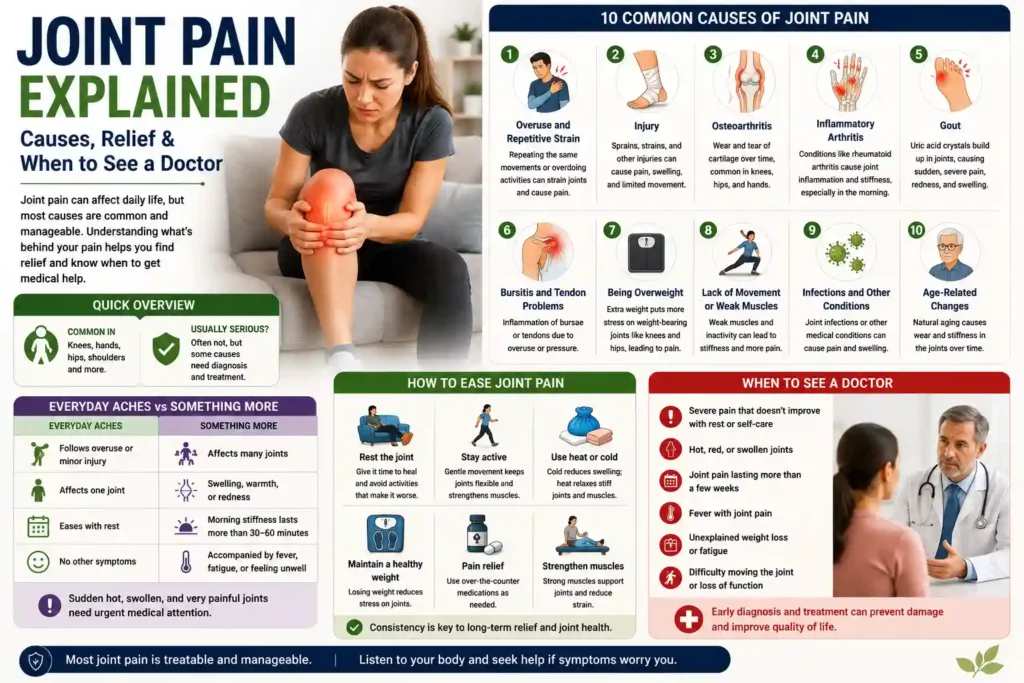
Joint pain is one of the most common physical complaints there is, and one of the most limiting, because our joints are involved in almost everything we do. When a knee aches with every stair, a shoulder protests when reaching, or fingers stiffen and hurt in the morning, it affects not just comfort but the simple freedom to move through the day. Joint pain ranges from a mild, occasional ache to persistent, disabling discomfort, and it has a wide range of causes — which is why understanding what is behind yours makes a real difference to easing it. The reassuring reality is that a great deal of joint pain comes from common, manageable causes: overuse, minor injuries, and wear-related changes that respond well to self-care and sensible adjustments. Some joint pain, though, relates to conditions like the various forms of arthritis, which benefit from proper diagnosis and management. Knowing the common causes, and the features that distinguish everyday aches from something needing medical attention, helps you respond effectively and know when to seek help. This guide covers the common causes of joint pain, how to ease it, and when joint pain warrants seeing a doctor. Quick Overview Question Short answer What is joint pain? Pain, aching, or stiffness in one or more joints Common causes Overuse, injury, osteoarthritis, inflammation Common in Knees, hands, hips, shoulders Usually serious? Often not, but some causes need diagnosis Easing it Rest, movement, weight management, pain relief When to worry Hot swollen joints, severe pain, fever, lasting symptoms Understanding Joint Pain A joint is where two bones meet, cushioned and supported by cartilage, ligaments, and other structures that allow smooth, comfortable movement. Joint pain — pain, aching, or stiffness in a joint — arises when any of these structures is irritated, inflamed, worn, or injured. It can affect a single joint or many, come on suddenly or gradually, and range from mild to severe. Because so many things can affect a joint, joint pain is a symptom with many possible causes rather than a single condition. The pattern often gives clues: pain in one joint after activity suggests overuse or injury, while pain and stiffness in many joints, particularly with morning stiffness, may point towards a form of arthritis. Understanding the likely cause guides both self-care and when to seek medical advice. Most everyday joint aches are manageable, but because some causes need proper diagnosis and treatment, persistent or concerning joint pain is worth having assessed. 10 Common Causes of Joint Pain 1. Overuse and repetitive strain. Repeating the same movements, or overdoing an activity, can strain a joint and the tissues around it, causing pain. This is common in the knees, shoulders, and elbows, and often eases with rest. 2. Injury. Sprains, strains, and other injuries to a joint or its surrounding ligaments and tendons commonly cause pain, swelling, and reduced movement. Most minor joint injuries recover with appropriate care. 3. Osteoarthritis. The most common form of arthritis, osteoarthritis involves wear-related changes to the cartilage cushioning the joints. It typically causes pain and stiffness that worsen with use, often in the knees, hips, and hands, and becomes more common with age. 4. Inflammatory arthritis. Conditions like rheumatoid arthritis involve inflammation of the joints driven by the immune system. These often cause pain, swelling, and stiffness in multiple joints, frequently with prolonged morning stiffness, and need medical diagnosis and management. 5. Gout. Gout is a form of arthritis caused by crystals forming in a joint, classically causing sudden, severe pain, redness, and swelling, often in the big toe. It comes in attacks and is treatable. 6. Bursitis and tendon problems. Inflammation of the small fluid-filled sacs that cushion joints (bursitis) or of the tendons around them can cause pain, often related to overuse or pressure on a joint. 7. Being overweight. Excess weight puts additional strain on weight-bearing joints like the knees and hips, contributing to pain and accelerating wear over time. 8. Lack of movement or weak muscles. Weak muscles around a joint provide less support, and inactivity can lead to stiffness. Paradoxically, too little movement can worsen joint pain. 9. Infections and other conditions. Occasionally a joint becomes infected, causing a hot, swollen, very painful joint that needs urgent attention. Various other conditions can also cause joint pain as part of their picture. 10. Age-related changes. With age, natural changes to the joints and their cartilage make aches and stiffness more common, though these are often manageable with the right approach. Everyday Aches vs Something More Telling apart ordinary joint aches from joint pain that needs medical attention is genuinely useful, and some features point one way or the other. Joint pain that follows obvious overuse or a minor injury, affects one joint, and eases with rest is usually an everyday ache that self-care handles well. Joint pain that affects many joints, comes with swelling, warmth, or redness, is accompanied by prolonged morning stiffness, or comes with feeling generally unwell is more likely to reflect an inflammatory condition needing diagnosis. A single joint that becomes suddenly hot, swollen, and severely painful, especially with a fever, needs urgent assessment, as this can indicate infection or gout. This is why paying attention to the pattern of your joint pain — how many joints, whether there is swelling, how long stiffness lasts, and whether you feel unwell — is so helpful. It guides whether simple self-care is appropriate or whether a doctor’s assessment is needed. Our guide on related aches, such as muscle pain causes, covers overlapping causes of general body discomfort. How to Ease Joint Pain For common, everyday joint pain, these measures often help: For persistent joint pain, or pain from a condition like arthritis, these measures work best alongside proper medical guidance, as specific treatments and exercises can make a substantial difference. Which Joints Are Affected and What It Suggests The location of joint pain, and whether it affects one joint or many, offers useful clues to the cause and is worth