Muscle Pain Causes: 10 Proven Reasons Your Muscles Ache
Muscle pain is something almost everyone experiences — the stiffness after an unaccustomed workout, the ache of a tense neck and shoulders after a stressful day, the deep soreness that comes with a bout of flu. Most of the time it is easily explained and passes on its own, but muscle pain can also be puzzling when it appears without an obvious reason or affects the whole body. Understanding the common causes helps you make sense of what you are feeling, ease it effectively, and recognise the less common situations that need a doctor.
The reassuring reality is that the vast majority of muscle pain comes from benign, temporary causes: overexertion, minor strains, tension, and the aches that accompany common illnesses. These respond well to simple self-care and settle within days. Only occasionally does muscle pain signal something needing medical attention, and this is usually suggested by specific features — pain that is severe, persistent, unexplained, or accompanied by other concerning symptoms. Knowing the difference lets you handle everyday muscle aches confidently while staying alert to the rest.
This guide covers the common causes of muscle pain, how to ease it, and when muscle pain warrants seeing a doctor.
Quick Overview
| Question | Short answer |
|---|---|
| What is muscle pain? | Aching, soreness, or discomfort in the muscles |
| Medical name | Myalgia |
| Most common causes | Overexertion, strain, tension, illness |
| Localised or widespread? | Both — the pattern gives clues to the cause |
| Usually serious? | No — most muscle pain is benign and temporary |
| Easing it | Rest, gentle movement, heat, hydration, pain relief |
| When to worry | Severe, unexplained, or persistent pain, or with other symptoms |
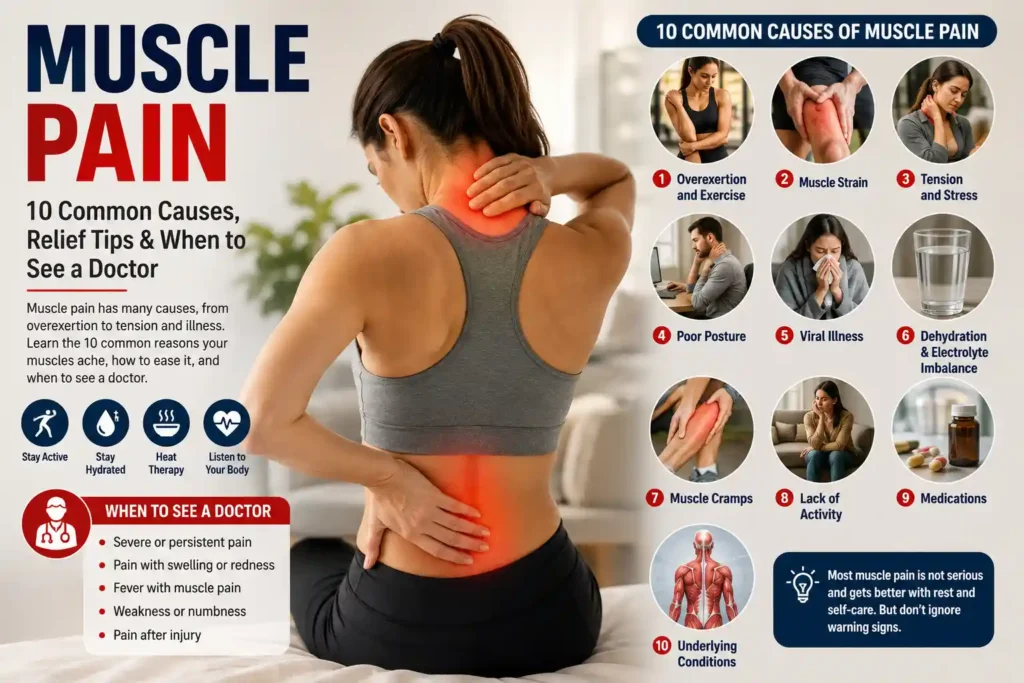
Understanding Muscle Pain
Muscle pain, known medically as myalgia, is aching, soreness, or discomfort felt in the muscles. It can affect a single muscle or muscle group — often after using or straining it — or be felt more widely across the body, which more often relates to illness, tension, or a general cause. It can be mild or intense, brief or lingering.
The pattern of muscle pain is one of the most useful clues to its cause. Pain in a specific muscle after physical activity almost always points to overuse or a minor strain. Widespread muscle aches all over the body, on the other hand, more commonly accompany illnesses like the flu, or relate to general causes. Understanding this distinction helps you interpret your own muscle pain and respond appropriately. The great majority of muscle pain is benign and temporary, which is why self-care resolves most of it, but knowing the causes also helps you recognise when something needs a doctor’s attention.
10 Common Causes of Muscle Pain
1. Overexertion and exercise. Using muscles harder or more than usual causes soreness, including the familiar delayed muscle soreness that appears a day or two after unaccustomed exercise. This is normal and settles within a few days.
2. Muscle strain. Overstretching or tearing muscle fibres, often during activity or lifting, causes localised pain, sometimes with swelling or stiffness. Most minor strains recover with rest and care.
3. Tension and stress. Stress and anxiety cause muscles to tense, particularly in the neck, shoulders, and back, leading to aching and tightness. Stress-related muscle pain is very common.
4. Poor posture. Sitting or standing with poor posture for long periods strains muscles and leads to aching, especially in the neck, shoulders, and back. Desk work and screen use are common contributors.
5. Viral illness. Widespread muscle aches are a classic feature of viral infections like the flu, part of the body’s response to the infection. These aches ease as the illness resolves. Our guides on home remedies for cold and home remedies for cough cover soothing illness symptoms.
6. Dehydration and electrolyte imbalance. Not drinking enough, or an imbalance in the body’s salts, can contribute to muscle aches and cramps, particularly around exercise.
7. Muscle cramps. Sudden, involuntary muscle contractions cause sharp, intense pain, often in the legs, and can relate to overuse, dehydration, or staying in one position. Some nutrients, such as magnesium, are involved in muscle function — see our guide on magnesium benefits.
8. Lack of activity. Too little movement can lead to stiff, achy muscles, and prolonged inactivity weakens muscles, making aches more likely.
9. Medications. Some medications can cause muscle pain as a side effect. If muscle pain began after starting a medication, mention it to your doctor rather than stopping on your own.
10. Underlying conditions. Less commonly, persistent or widespread muscle pain relates to specific medical conditions affecting the muscles or the body more generally, which is why unexplained, persistent muscle pain should be assessed.
Localised vs Widespread Muscle Pain
Distinguishing pain in one area from aching all over is one of the most helpful things you can do, because the two tend to have different causes.
Localised muscle pain — confined to one muscle or area — usually results from a specific cause affecting that muscle: overuse, a strain, tension, or poor posture. This kind is very common, easy to link to an activity or position, and typically responds well to rest, gentle movement, and self-care.
Widespread muscle pain — aching in many muscles or all over the body — more often relates to a general cause. Viral illnesses like the flu are a classic example, causing body-wide aches as part of the infection. Widespread aches can also accompany stress, poor sleep, or, less commonly, certain underlying conditions. Muscle pain that is widespread, persistent, and unexplained, or that comes with other symptoms, is more likely to warrant a doctor’s assessment than a simple localised ache after activity.
Paying attention to whether your pain is in one spot or all over, and what accompanies it, helps you interpret it and decide whether self-care is enough or medical advice is wise.
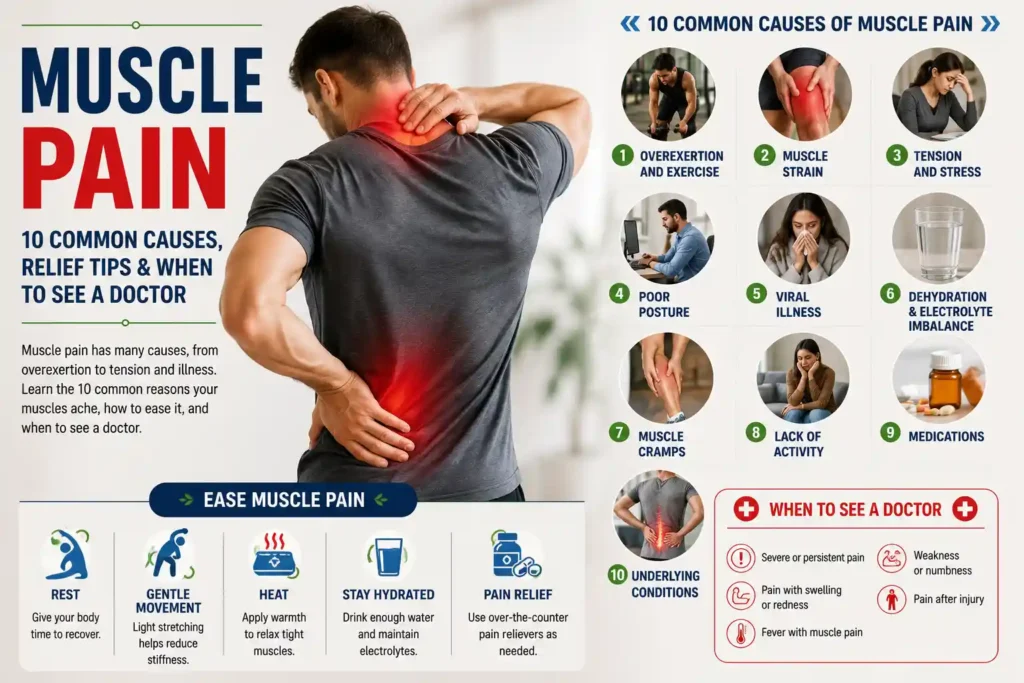
How to Ease Muscle Pain
For common, everyday muscle pain, these measures often help:
- Rest the affected muscle. Giving an overused or strained muscle a chance to recover helps, though complete inactivity is not necessary for mild soreness.
- Gentle movement and stretching. Light activity and gentle stretching can ease stiffness and aid recovery, especially for tension-related and post-exercise soreness.
- Apply heat or cold. Cold can help a fresh strain or injury; warmth soothes tense, aching muscles and stiffness.
- Stay hydrated. Adequate fluids support muscle function and can help with cramps and exercise-related aches.
- Massage and relaxation. Gentle massage and relaxation techniques ease tension-related muscle pain.
- Use pain relief sensibly. Over-the-counter pain relief can ease muscle pain for adults, used as directed.
- Address the cause. Improving posture, managing stress, and easing back into activity gradually all reduce recurring muscle pain.
Most everyday muscle pain settles within a few days with this kind of care. For post-exercise soreness, gentle movement often helps more than complete rest, and easing into new activities gradually prevents excessive soreness.
Post-Exercise Soreness: Normal or a Problem?
One of the most common forms of muscle pain is the soreness that follows exercise, and understanding it helps you tell normal recovery from a genuine problem.
The familiar soreness that appears a day or two after unaccustomed or intense exercise is called delayed onset muscle soreness. It is a normal response to challenging the muscles, particularly with new activities or greater intensity than usual, and it reflects the natural process by which muscles adapt and grow stronger. This kind of soreness typically peaks a day or two after exercise and eases over the following days. It is not a sign of harm, and gentle movement often helps it more than complete rest. Easing into new activities gradually, rather than doing too much too soon, keeps this soreness manageable.
This normal soreness is different from the pain of an acute muscle strain or injury, which tends to come on suddenly during activity, is often sharp and localised, and may come with swelling. A strain needs rest and appropriate care rather than pushing through. It is also different from muscle pain that is severe, comes with significant weakness, or is accompanied by very dark urine — the last of which, particularly after extreme exertion, can indicate a serious form of muscle breakdown needing urgent medical attention. For most people, though, post-exercise soreness is simply a sign of a good workout and part of getting fitter, settling on its own with time, hydration, and gentle movement.
Preventing Muscle Pain
While you cannot avoid all muscle aches, sensible habits reduce how often they occur, particularly for exercise-related and tension-related pain.
For activity, warming up before exercise, easing into new or more intense activities gradually rather than overdoing them, and cooling down afterwards all help prevent excessive soreness and strains. Staying well hydrated supports muscle function and reduces cramps and exercise-related aches. Building strength and fitness gradually means muscles are better prepared for the demands you place on them.
For tension and posture-related pain, being mindful of posture during desk work and screen use, taking regular breaks to move and stretch, and setting up your workspace comfortably all reduce the neck, shoulder, and back aches that come from sitting poorly for long periods. Managing stress, which causes muscles to tense, helps too, as does regular gentle activity to keep muscles supple and strong rather than stiff from inactivity. Getting enough sleep supports muscle recovery. For people prone to cramps, staying hydrated and gentle stretching may help. These everyday measures, combined with listening to your body and not pushing through sharp or unusual pain, keep most muscle aches to a minimum and support healthy, comfortable movement.
When to See a Doctor
See a doctor if:
- Muscle pain is severe, persistent, or unexplained
- Pain does not improve with rest and self-care over a reasonable time
- Muscle pain began after starting a new medication
- You have widespread muscle pain with no obvious cause
- Muscle pain comes with other symptoms that concern you
- Muscle weakness accompanies the pain
Seek urgent medical attention for muscle pain with any of these warning signs:
- Very dark urine with muscle pain and weakness (which can indicate serious muscle breakdown)
- Muscle pain with a high fever and feeling very unwell
- Signs of infection — a hot, red, swollen, tender area
- Sudden severe weakness
- Muscle pain with difficulty breathing or swallowing
- Muscle pain after a significant injury
These need prompt assessment. The NHS guidance on muscle pain explains when to seek help.
Final Thoughts
Muscle pain is one of the most universal physical experiences, and reassuringly, one of the most benign — most often the straightforward result of overexertion, a minor strain, tension, poor posture, or the body-wide aches that come with common illnesses. These everyday causes respond well to simple self-care: the right balance of rest and gentle movement, heat or cold, hydration, massage, and sensible pain relief, with most muscle pain settling within a few days.
The balanced approach is to treat ordinary muscle aches with these measures while staying alert to the features that suggest something more — pain that is severe, persistent, or unexplained, widespread pain without an obvious cause, or muscle pain with weakness or other concerning symptoms. And it is worth knowing the urgent signs, such as very dark urine with muscle weakness or muscle pain with a high fever, that need prompt care. For the common muscle aches most people know well, though, understanding the cause, addressing it, and giving the body a little time is usually all it takes to feel comfortable again.
Medical disclaimer: This article is for general educational information and is not a substitute for professional medical advice, diagnosis, or treatment. Seek urgent care for muscle pain with very dark urine and weakness, a high fever, or signs of infection, and see a doctor for severe, persistent, or unexplained muscle pain.
Frequently Asked Questions
What are the most common causes of muscle pain? The most common causes are overexertion and exercise, muscle strain, tension and stress, poor posture, and viral illnesses like the flu. Dehydration, muscle cramps, inactivity, and some medications can also cause it. Most muscle pain is benign and temporary.
Why do my muscles ache all over? Widespread muscle aches most often accompany viral illnesses like the flu, as part of the body’s response to infection. Stress, poor sleep, and, less commonly, certain underlying conditions can also cause body-wide aches. Widespread, persistent, or unexplained muscle pain should be assessed by a doctor.
How can I ease muscle pain at home? Rest the affected muscle, use gentle movement and stretching, apply heat or cold, stay hydrated, try gentle massage and relaxation, and use pain relief sensibly. Most everyday muscle pain settles within a few days. Addressing the cause, like posture or stress, prevents it recurring.
How long does muscle pain usually last? Muscle pain from overexertion or a minor strain usually eases within a few days. Aches from a viral illness settle as the illness resolves. Muscle pain that is severe, lasts longer than expected, or is unexplained should be assessed by a doctor rather than simply waited out.
When should I worry about muscle pain? Seek urgent care for muscle pain with very dark urine and weakness, a high fever with feeling very unwell, signs of infection like a hot red swollen area, sudden severe weakness, or difficulty breathing. See a doctor for severe, persistent, or unexplained muscle pain, or pain after starting a medication.
Can stress cause muscle pain? Yes. Stress and anxiety cause muscles to tense, particularly in the neck, shoulders, and back, leading to aching and tightness. Stress-related muscle pain is very common, and managing stress, along with relaxation and gentle movement, often eases it.
Why do I get muscle cramps? Muscle cramps — sudden, involuntary contractions — can relate to overuse, dehydration, staying in one position, or an imbalance in the body’s salts. They are usually harmless, though frequent or severe cramps are worth discussing with a doctor. Staying hydrated and gentle stretching can help.
Is it normal to be sore a day or two after exercise? Yes. Soreness that appears a day or two after unaccustomed or intense exercise is called delayed onset muscle soreness, and it is a normal part of how muscles adapt and grow stronger. It eases over a few days, and gentle movement often helps more than complete rest.