A urinary tract infection (UTI) is an infection that affects part of the urinary system, including the bladder, urethra, or kidneys. It often happens when bacteria enter the urinary tract and multiply. A UTI can cause burning during urination, frequent urination, and discomfort in the lower abdomen.
Most UTIs affect the bladder, but an untreated infection can sometimes spread to the kidneys. Knowing the symptoms of a UTI, its causes, and available treatment options can help you understand when to seek medical care.
What Is a Urinary Tract Infection (UTI)?
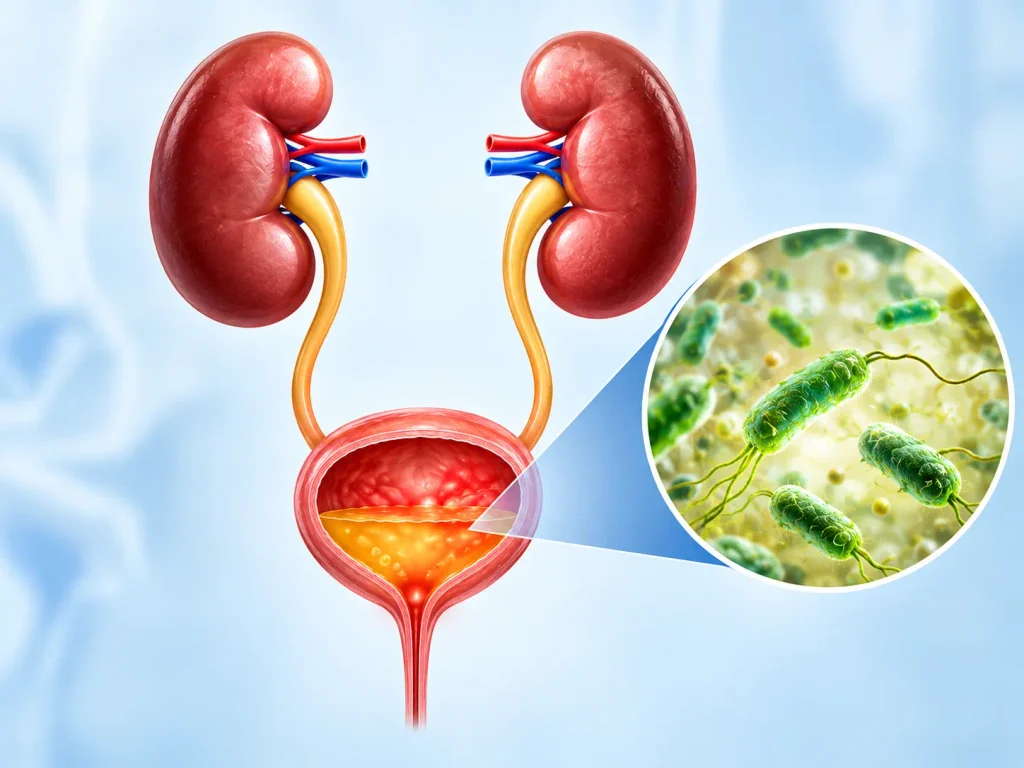
A urinary tract infection occurs when harmful bacteria enter the urinary system. The bladder stores urine, while the kidneys filter waste from the blood and produce urine. The ureters carry urine from the kidneys to the bladder, and the urethra carries it out of the body.
A bladder infection is a common type of UTI. A kidney infection is less common but can be more serious. Early diagnosis and suitable treatment can help reduce the risk of complications.
Common Symptoms of a UTI
The symptoms of a UTI may vary depending on which part of the urinary system is affected. Common signs include:
- Burning or pain during urination.
- Frequent urination, even when little urine comes out.
- A strong or sudden urge to urinate.
- Cloudy or strong-smelling urine.
- Pain or pressure in the lower abdomen.
- Blood in the urine, which may make it appear pink, red, or brown.
The phrase urination frequent describes a common symptom, but frequent urination can also occur with other health conditions. If you notice blood in the urine or have ongoing urinary discomfort, contact a healthcare professional.
A kidney infection may cause fever, chills, pain in the back or side, nausea, or vomiting. Seek prompt medical care if these symptoms occur, especially alongside urinary symptoms.
Causes and Risk Factors of UTIs
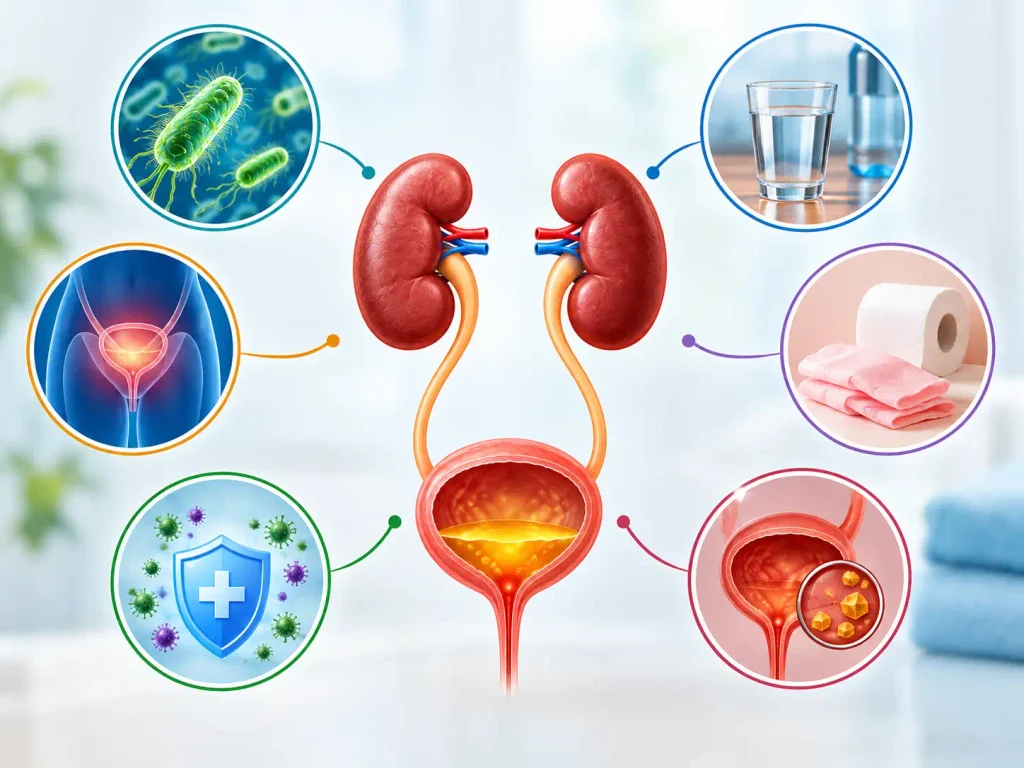
Most UTIs are caused by bacteria that enter the urinary tract through the urethra. These bacteria may come from the bowel area. Wiping from front to back after a bowel movement can help reduce the spread of bacteria toward the urethra.
Several factors can increase the risk of developing a UTI:
- Sexual activity: Sexual activity can move bacteria toward the urethra and increase the risk of infection.
- Urinary tract problems: Kidney stones may block urine flow or make infections harder to clear.
- Enlarged prostate: In men, an enlarged prostate can prevent the bladder from emptying fully, increasing the risk of infection.
- Certain health conditions: Some medical conditions, including diabetes, may increase the risk of UTIs.
- Urinary procedures: A catheter or other urinary procedure may introduce bacteria into the urinary tract.
- Previous UTIs: People who have had UTIs before may experience repeated infections.
Some medicines or medical treatments may also affect urinary health. However, a medication side effect should not be assumed to be the cause of urinary symptoms without medical advice.
How Is a UTI Diagnosed?
A healthcare professional usually reviews your symptoms and medical history before deciding whether testing is needed. Two common tests are a urine test and a urine culture.
Urine Test
A urine test can look for signs of infection, such as white blood cells or other substances that may suggest a UTI. The results are considered alongside your symptoms and medical history.
Urine Culture
A urine culture checks whether bacteria grow from a urine sample. It can help identify the bacteria causing the infection and guide the choice of antibiotic when needed.
Not everyone requires the same tests. Your healthcare professional will decide which tests are appropriate based on your symptoms, risk factors, and overall health.
Urinary Tract Infection Treatment Options
Treatment depends on the location and severity of the infection, your symptoms, and any other medical conditions you have.
Antibiotics
Bacterial UTIs are commonly treated with antibiotics prescribed by a healthcare professional. The medicine and treatment length depend on individual circumstances. Take the medication as directed, and do not use leftover antibiotics or share them with another person.
Contact your healthcare professional if your symptoms do not improve as expected or return after treatment. Fever, back or side pain, and vomiting may indicate a more serious infection that needs prompt assessment.
Drinking Fluids and Managing Discomfort
Drinking enough water can support normal urinary function, unless a healthcare professional has advised you to limit fluids. Water does not replace antibiotics when they are needed.
Your healthcare professional may also recommend ways to manage discomfort based on your symptoms and medical history. Do not rely on home remedies alone to treat a suspected bacterial infection.
How to Prevent UTIs
Although not every infection can be prevented, some habits may help reduce the risk:
- Drink enough water, unless you have been told to limit fluids.
- Avoid holding urine for long periods.
- Wipe from front to back after a bowel movement.
- Empty your bladder when you feel the need to urinate.
- Discuss repeated UTIs with a healthcare professional to identify possible causes.
- If UTIs seem linked to sexual activity, ask a healthcare professional about prevention options.
These steps may help prevent UTIs, but they cannot guarantee that an infection will never occur.
When Should You Seek Medical Care?
Speak with a healthcare professional if you have burning during urination, frequent urination, lower abdominal pain, or blood in the urine. Early assessment can help identify the cause and determine suitable treatment.
Seek urgent medical care if urinary symptoms occur with fever, chills, pain in the back or side, or vomiting. These signs may indicate a kidney infection. People with other health conditions or repeated UTIs may need an individual assessment.
Conclusion
A urinary tract infection (UTI) is a common medical condition that can affect the bladder, urethra, or kidneys. Common symptoms include burning during urination, frequent urination, lower abdominal discomfort, and sometimes blood in the urine. Bacteria entering the urinary tract are the main cause, while factors such as sexual activity, kidney stones, an enlarged prostate, and certain health conditions may increase the risk.
A urine test or urine culture may help confirm the diagnosis. With appropriate treatment and practical prevention habits, many people recover from a UTI. Seek medical advice when symptoms appear, worsen, or return to protect your urinary health and quality of life.
Medical disclaimer: This article is for general educational purposes only and is not a substitute for professional medical advice, diagnosis, or treatment. Consult a qualified healthcare professional about your symptoms.