Joint Pain Causes: 10 Proven Reasons Your Joints Hurt
Joint pain is one of the most common physical complaints there is, and one of the most limiting, because our joints are involved in almost everything we do. When a knee aches with every stair, a shoulder protests when reaching, or fingers stiffen and hurt in the morning, it affects not just comfort but the simple freedom to move through the day. Joint pain ranges from a mild, occasional ache to persistent, disabling discomfort, and it has a wide range of causes — which is why understanding what is behind yours makes a real difference to easing it.
The reassuring reality is that a great deal of joint pain comes from common, manageable causes: overuse, minor injuries, and wear-related changes that respond well to self-care and sensible adjustments. Some joint pain, though, relates to conditions like the various forms of arthritis, which benefit from proper diagnosis and management. Knowing the common causes, and the features that distinguish everyday aches from something needing medical attention, helps you respond effectively and know when to seek help.
This guide covers the common causes of joint pain, how to ease it, and when joint pain warrants seeing a doctor.
Quick Overview
| Question | Short answer |
|---|---|
| What is joint pain? | Pain, aching, or stiffness in one or more joints |
| Common causes | Overuse, injury, osteoarthritis, inflammation |
| Common in | Knees, hands, hips, shoulders |
| Usually serious? | Often not, but some causes need diagnosis |
| Easing it | Rest, movement, weight management, pain relief |
| When to worry | Hot swollen joints, severe pain, fever, lasting symptoms |
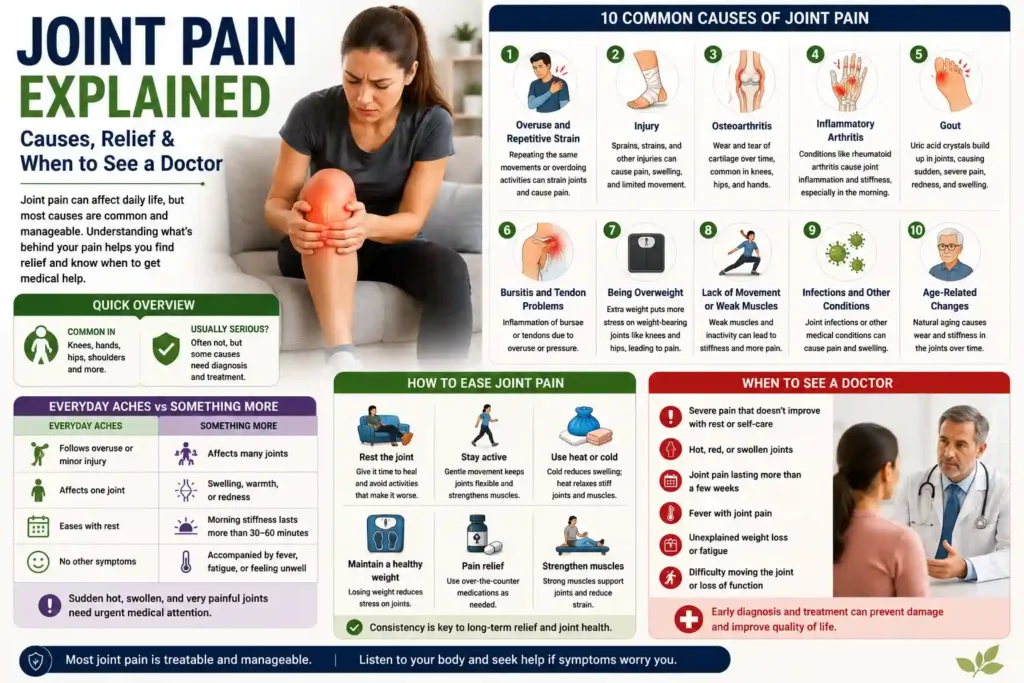
Understanding Joint Pain
A joint is where two bones meet, cushioned and supported by cartilage, ligaments, and other structures that allow smooth, comfortable movement. Joint pain — pain, aching, or stiffness in a joint — arises when any of these structures is irritated, inflamed, worn, or injured. It can affect a single joint or many, come on suddenly or gradually, and range from mild to severe.
Because so many things can affect a joint, joint pain is a symptom with many possible causes rather than a single condition. The pattern often gives clues: pain in one joint after activity suggests overuse or injury, while pain and stiffness in many joints, particularly with morning stiffness, may point towards a form of arthritis. Understanding the likely cause guides both self-care and when to seek medical advice. Most everyday joint aches are manageable, but because some causes need proper diagnosis and treatment, persistent or concerning joint pain is worth having assessed.
10 Common Causes of Joint Pain
1. Overuse and repetitive strain. Repeating the same movements, or overdoing an activity, can strain a joint and the tissues around it, causing pain. This is common in the knees, shoulders, and elbows, and often eases with rest.
2. Injury. Sprains, strains, and other injuries to a joint or its surrounding ligaments and tendons commonly cause pain, swelling, and reduced movement. Most minor joint injuries recover with appropriate care.
3. Osteoarthritis. The most common form of arthritis, osteoarthritis involves wear-related changes to the cartilage cushioning the joints. It typically causes pain and stiffness that worsen with use, often in the knees, hips, and hands, and becomes more common with age.
4. Inflammatory arthritis. Conditions like rheumatoid arthritis involve inflammation of the joints driven by the immune system. These often cause pain, swelling, and stiffness in multiple joints, frequently with prolonged morning stiffness, and need medical diagnosis and management.
5. Gout. Gout is a form of arthritis caused by crystals forming in a joint, classically causing sudden, severe pain, redness, and swelling, often in the big toe. It comes in attacks and is treatable.
6. Bursitis and tendon problems. Inflammation of the small fluid-filled sacs that cushion joints (bursitis) or of the tendons around them can cause pain, often related to overuse or pressure on a joint.
7. Being overweight. Excess weight puts additional strain on weight-bearing joints like the knees and hips, contributing to pain and accelerating wear over time.
8. Lack of movement or weak muscles. Weak muscles around a joint provide less support, and inactivity can lead to stiffness. Paradoxically, too little movement can worsen joint pain.
9. Infections and other conditions. Occasionally a joint becomes infected, causing a hot, swollen, very painful joint that needs urgent attention. Various other conditions can also cause joint pain as part of their picture.
10. Age-related changes. With age, natural changes to the joints and their cartilage make aches and stiffness more common, though these are often manageable with the right approach.
Everyday Aches vs Something More
Telling apart ordinary joint aches from joint pain that needs medical attention is genuinely useful, and some features point one way or the other.
Joint pain that follows obvious overuse or a minor injury, affects one joint, and eases with rest is usually an everyday ache that self-care handles well. Joint pain that affects many joints, comes with swelling, warmth, or redness, is accompanied by prolonged morning stiffness, or comes with feeling generally unwell is more likely to reflect an inflammatory condition needing diagnosis. A single joint that becomes suddenly hot, swollen, and severely painful, especially with a fever, needs urgent assessment, as this can indicate infection or gout.
This is why paying attention to the pattern of your joint pain — how many joints, whether there is swelling, how long stiffness lasts, and whether you feel unwell — is so helpful. It guides whether simple self-care is appropriate or whether a doctor’s assessment is needed. Our guide on related aches, such as muscle pain causes, covers overlapping causes of general body discomfort.
How to Ease Joint Pain
For common, everyday joint pain, these measures often help:
- Rest the joint — but not too much. Short-term rest helps an overused or injured joint, but prolonged inactivity stiffens joints, so gentle movement matters too.
- Stay active with gentle exercise. Low-impact activity like walking, swimming, or cycling keeps joints mobile and strengthens supporting muscles, which genuinely helps many kinds of joint pain.
- Apply heat or cold. Cold can ease a swollen, inflamed joint; warmth can soothe a stiff, aching one.
- Manage your weight. For weight-bearing joints, reducing excess weight relieves strain and can noticeably ease pain.
- Strengthen supporting muscles. Stronger muscles around a joint provide better support and reduce pain, so appropriate strengthening exercises help.
- Use pain relief sensibly. Over-the-counter pain relief can ease joint pain for adults, used as directed.
- Protect your joints. Good posture, sensible lifting, supportive footwear, and pacing activities all reduce joint strain.
For persistent joint pain, or pain from a condition like arthritis, these measures work best alongside proper medical guidance, as specific treatments and exercises can make a substantial difference.
Which Joints Are Affected and What It Suggests
The location of joint pain, and whether it affects one joint or many, offers useful clues to the cause and is worth paying attention to.
Pain in a single joint, particularly after activity or injury, often points to a local cause like overuse, a strain, or wear in that specific joint. The knees, being major weight-bearing joints, are a very common site of pain from overuse, injury, and osteoarthritis. The hips, also weight-bearing, commonly develop wear-related pain. Shoulders and elbows frequently suffer from overuse and tendon-related problems given how much we use our arms. The small joints of the hands and fingers are a classic site for osteoarthritis, causing stiffness and aching, and also for inflammatory arthritis.
When pain affects many joints at once, especially symmetrically — the same joints on both sides of the body — this pattern raises the possibility of an inflammatory arthritis and is an important clue for a doctor. Sudden, severe pain in a single joint, classically the big toe, may point to gout. Noticing which joints hurt, whether it is one or many, whether both sides are affected, and what brings the pain on gives valuable information that helps identify the cause. Bringing these details to a medical appointment makes assessment more efficient and accurate.
Protecting Your Joints for the Long Term
Beyond easing current joint pain, looking after your joints helps keep them healthy and comfortable over the years, which is worthwhile for everyone but especially those already prone to joint problems.
Staying physically active is one of the best things you can do for your joints. Regular, appropriate exercise keeps joints mobile, strengthens the muscles that support them, and helps maintain a healthy weight — all of which protect the joints. Low-impact activities like walking, swimming, and cycling are gentle on the joints while still providing these benefits. Building and maintaining strong muscles around key joints, particularly the knees and hips, provides better support and reduces strain.
Maintaining a healthy weight is especially important for the weight-bearing joints, since excess weight accelerates wear and increases pain in the knees and hips. Good posture, sensible lifting techniques, supportive footwear, and pacing demanding activities rather than overdoing them all reduce unnecessary joint strain. Warming up before exercise and not pushing through sharp joint pain helps prevent injury. For people with an existing joint condition, working with a doctor or physiotherapist on a tailored plan of exercise and joint protection can make a substantial long-term difference. These habits do not just ease pain today; they help preserve comfortable movement for the future.
When to See a Doctor
See a doctor if:
- Joint pain is persistent, or lasts beyond a couple of weeks
- Pain affects multiple joints, or comes with swelling and stiffness
- You have prolonged morning stiffness in your joints
- Joint pain is affecting your daily life or mobility
- Joint pain comes with feeling generally unwell
- Self-care measures are not helping
Seek urgent medical attention for these warning signs:
- A joint that is suddenly hot, red, swollen, and very painful
- Joint pain with a high fever
- A joint that looks deformed or you cannot use after an injury
- Severe pain, or inability to bear weight
- Sudden swelling of a joint
A hot, swollen, very painful joint, especially with fever, can indicate an infection needing urgent treatment. The NHS guidance on joint pain explains when to seek help.
Final Thoughts
Joint pain is common and, because our joints are central to almost every movement, genuinely disruptive — but understanding its many possible causes helps you deal with it effectively. A great deal of joint pain comes from everyday sources like overuse, minor injury, and wear-related changes, all of which respond well to sensible self-care: the right balance of rest and gentle movement, staying active, managing weight, strengthening supporting muscles, and using heat, cold, and pain relief appropriately.
The balanced approach is to manage everyday joint aches with these measures while recognising the patterns that need a doctor — pain in many joints, swelling and prolonged morning stiffness, or feeling unwell — which can point to conditions like arthritis that benefit greatly from proper diagnosis and treatment. And it is worth knowing the urgent signs, particularly a suddenly hot, swollen, severely painful joint with fever, that need prompt attention. For the common joint aches most people experience, though, a thoughtful combination of movement, self-care, and joint protection usually keeps them comfortable and mobile.
Medical disclaimer: This article is for general educational information and is not a substitute for professional medical advice, diagnosis, or treatment. Seek urgent care for a hot, swollen, severely painful joint, especially with fever, and see a doctor for persistent joint pain or pain affecting multiple joints.
Frequently Asked Questions
What are the most common causes of joint pain? Common causes include overuse and repetitive strain, injury, osteoarthritis (wear-related), inflammatory arthritis like rheumatoid arthritis, gout, bursitis and tendon problems, being overweight, and weak supporting muscles. The pattern of pain often gives clues to the cause.
How can I ease joint pain at home? Rest an overused joint briefly but keep gently moving, stay active with low-impact exercise, apply heat or cold, manage your weight to reduce strain on weight-bearing joints, strengthen supporting muscles, and use pain relief sensibly. These measures help most everyday joint pain.
When should I worry about joint pain? Seek urgent care for a joint that is suddenly hot, red, swollen, and very painful, joint pain with a high fever, a deformed joint after injury, or inability to bear weight. See a doctor for persistent pain, pain in multiple joints, swelling, or prolonged morning stiffness.
Does exercise help or worsen joint pain? Gentle, low-impact exercise generally helps joint pain by keeping joints mobile and strengthening supporting muscles, and too little movement can actually worsen stiffness. The key is choosing appropriate activity and not overdoing it. For pain from a specific condition, a doctor or physiotherapist can advise.
Can being overweight cause joint pain? Yes. Excess weight puts additional strain on weight-bearing joints like the knees and hips, contributing to pain and accelerating wear over time. Losing excess weight relieves this strain and can noticeably ease pain in these joints, making it a valuable step for many people.
What is the difference between osteoarthritis and rheumatoid arthritis? Osteoarthritis involves wear-related changes to joint cartilage, typically causing pain that worsens with use, often in specific joints. Rheumatoid arthritis is an inflammatory condition driven by the immune system, usually affecting multiple joints with swelling and prolonged morning stiffness. Both need proper assessment.
Why are my joints stiff in the morning? Brief morning stiffness that eases quickly can occur with osteoarthritis. Prolonged morning stiffness lasting a while, particularly in multiple joints, can point to an inflammatory arthritis and should be assessed by a doctor, as it is an important clue to the type of joint problem.
Can weather affect joint pain? Many people report that their joint pain feels worse in cold, damp, or changing weather. While the exact reasons are not fully understood and evidence is mixed, the experience is common and real for those who notice it. Keeping warm and staying active can help ease weather-related aches.
Does cracking my joints cause arthritis? Despite the common belief, there is no good evidence that habitually cracking your knuckles or other joints causes arthritis. It is generally harmless, though if joint cracking comes with pain or swelling, that is worth mentioning to a doctor, as pain is not a normal part of it.