Natural Remedies for Skin: 12 Gentle Ways to Soothe Skin
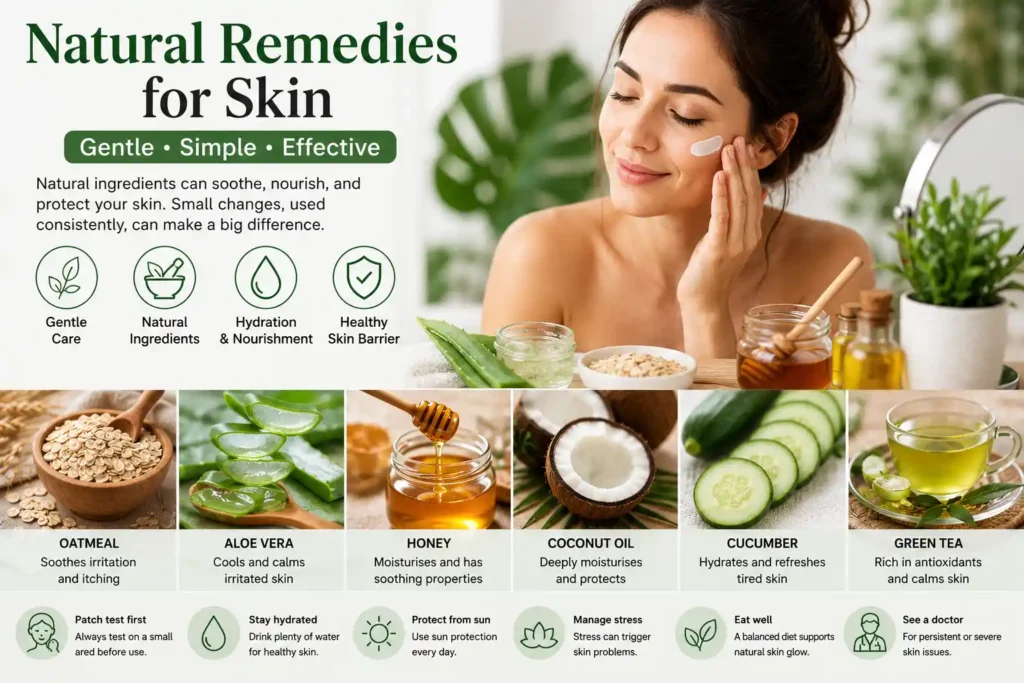
Natural Remedies for Skin: 12 Gentle Ways to Soothe Skin Your skin works hard every day. It protects you, keeps moisture in, and shields you from the world around you. So when it feels dry, itchy, irritated, or dull, it is natural to look for gentle ways to help. Many people prefer to start with simple, natural remedies before reaching for anything stronger. Natural remedies for skin are popular for good reason. They are often gentle, affordable, and easy to use at home. Many are based on long traditions of skin care, and some are supported by evidence too. Used sensibly, they can soothe irritation, support your skin’s natural barrier, and become part of a calm, caring routine. It helps to be realistic, though. Natural does not always mean risk-free, and no home remedy replaces medical care for a skin condition. This guide shares gentle, sensible natural remedies for skin, explains how to use them safely, and covers when it is best to see a doctor. Quick Overview Question Short answer What are natural skin remedies? Gentle, home-based ways to soothe and care for skin What can they help with? Dryness, mild irritation, general skin care Are they safe? Often, but natural does not mean risk-free Common remedies Moisturising, oats, aloe vera, gentle cleansing Key rule Patch test first, and be gentle When to see a doctor Persistent, severe, or spreading skin problems A Gentle Approach to Skin Care Before reaching for any single remedy, it helps to understand what healthy skin needs. Your skin has a natural barrier that keeps moisture in and irritants out. Much of good skin care is simply about protecting and supporting that barrier, rather than doing too much to it. This is why a gentle approach usually works best. Harsh products, hot water, and over-washing can strip the skin and make problems worse. Simple, kind habits often do more good than complicated routines. The natural remedies below work in this spirit. They aim to soothe, moisturise, and protect, rather than irritate. Keep in mind that everyone’s skin is different. What suits one person may not suit another. So it is wise to introduce new remedies slowly, one at a time, and to stop anything that causes irritation. If you have a specific skin condition, gentle care can support your skin, but it works best alongside proper medical advice. Our guide on hives on skin covers one common skin problem in detail. 12 Natural Remedies for Skin These gentle remedies can soothe and support the skin. Always patch test first, and stop if anything causes irritation. 1. Moisturise regularly. Keeping the skin moisturised is one of the most important steps. A good moisturiser helps lock in water and support the skin barrier. Apply it after washing, while the skin is still slightly damp, to trap moisture. 2. Use gentle cleansing. Wash with a mild, fragrance-free cleanser and lukewarm water. Avoid hot water and harsh soaps, which strip the skin. Gentle cleansing keeps skin clean without damaging its barrier. 3. Try an oat bath. Oats have long been used to soothe itchy, irritated skin. A colloidal oatmeal bath, made from finely ground oats, can calm dryness and itching. It is a classic, gentle remedy. 4. Aloe vera. Aloe vera gel is widely used to soothe and cool the skin. It can help with minor irritation and after sun exposure. Choose a pure gel and patch test first. 5. Stay hydrated. Drinking enough water supports your overall health, which includes your skin. Good hydration is a simple, natural habit that helps your body and skin function well. 6. Protect from the sun. Sun protection is one of the best things you can do for your skin. Protecting your skin from strong sun helps prevent damage and premature ageing. Use shade, clothing, and sun protection as advised. 7. Use a humidifier. Dry air, especially in winter or heated rooms, can dry out the skin. A humidifier adds moisture to the air and can help keep skin from drying out. 8. Choose gentle, fragrance-free products. Fragrances and harsh ingredients can irritate the skin. Simple, fragrance-free products are often kinder, especially for sensitive skin. 9. Eat a skin-friendly diet. A balanced diet with plenty of fruits, vegetables, and healthy fats supports your skin from within. Foods rich in vitamins and healthy fats are part of good overall skin care. 10. Avoid scratching. Scratching irritated skin can make things worse and damage the skin. Keeping the skin cool and moisturised, and using gentle soothing measures, helps reduce the urge. 11. Cool compresses. For hot, itchy, or irritated skin, a cool compress can bring relief. It is a simple, gentle way to calm the skin. 12. Manage stress. Stress can affect the skin and worsen some skin problems. Looking after your wellbeing, with rest and relaxation, supports your skin as part of your overall health. Natural Remedies for Dry Skin Dry skin is one of the most common skin complaints, and natural remedies can help a great deal. The key is to add moisture and protect the skin barrier. Moisturising is the most important step for dry skin. Apply a rich moisturiser regularly, especially after washing, while the skin is still damp. This traps water in the skin. Thicker creams and ointments are often better for very dry skin than thin lotions. Gentle cleansing matters too. Hot water and harsh soaps strip natural oils and make dryness worse. Use lukewarm water and a mild, fragrance-free cleanser, and avoid over-washing. Adding moisture to the air with a humidifier helps in dry or heated environments. Some natural ingredients can soothe dry skin, such as an oat bath for itching. Staying hydrated and protecting the skin from harsh weather also help. For most people, a simple routine of gentle cleansing and regular moisturising keeps dry skin comfortable. If dryness is severe, cracked, or does not improve, it is worth seeing a doctor. Natural Remedies for Irritated or Itchy Skin Irritated, itchy skin is uncomfortable,
Fatigue Causes: Best 12 Reasons You Feel Tired All the Time

Fatigue Causes: 12 Reasons You Feel Tired All the Time Everyone feels tired sometimes. A late night, a stressful week, a hard workout — these leave you drained, and a good rest sets things right. But there is a different kind of tiredness that does not lift, the sort where you wake up already exhausted, drag yourself through the day, and never quite feel restored no matter how much you sleep. When fatigue becomes your baseline rather than an occasional dip, something is usually driving it. The tricky part is that fatigue is one of the least specific symptoms in medicine. Dozens of things can cause it, from the entirely ordinary to the medically significant, and they often overlap — poor sleep feeding low mood, low mood worsening diet, a hidden deficiency quietly draining your energy underneath it all. Untangling the cause is what turns “I’m always tired” into something you can actually do something about. This guide walks through the most common reasons people feel tired all the time, how to start narrowing down yours, and the signs that mean it is worth seeing a doctor rather than simply pushing through. Quick Overview Category Common causes Lifestyle Poor sleep, stress, inactivity, poor diet, too much caffeine or alcohol Nutritional Iron, vitamin B12, or vitamin D deficiency Medical Thyroid problems, diabetes, anaemia, infections Mental health Depression, anxiety, chronic stress Sleep disorders Insomnia, sleep apnoea Other Certain medications, dehydration, being overweight Why Fatigue Is So Hard to Pin Down Fatigue is the body’s way of signalling that something is off, but because so many systems can produce that signal, it rarely points cleanly to one cause. Energy depends on good sleep, adequate nutrition, balanced hormones, healthy blood, a working thyroid, steady blood sugar, and reasonable mental wellbeing — and a problem in any of these can leave you drained. To make it harder, these causes interact. Someone who sleeps badly eats more poorly and moves less, which lowers mood, which worsens sleep — a self-reinforcing loop with no single obvious culprit. This is why the useful approach is not to hunt for one magic answer but to work through the common causes systematically, addressing what you can and testing for what you cannot see. Several of the causes below, such as vitamin deficiencies, are covered in depth in our guides on vitamin D deficiency symptoms and vitamin B12 deficiency symptoms. 12 Common Causes of Constant Fatigue 1. Poor or insufficient sleep. The most obvious cause, and the most common. Not just too few hours, but poor-quality sleep — frequent waking, irregular timing, screens late at night — leaves you unrefreshed. Many people are quietly running on less good sleep than they realise. 2. Chronic stress. Ongoing stress keeps the body in a heightened state that is genuinely exhausting, and it disrupts sleep, creating a draining cycle. Mental and emotional strain can be as tiring as physical exertion. 3. Poor diet. Skipping meals, relying on refined carbohydrates and sugar, or simply not eating enough leaves the body short of steady fuel. Blood sugar spikes and crashes produce that mid-afternoon slump many people know well. 4. Iron deficiency. One of the most common nutritional causes, especially in women. Low iron means fewer healthy red blood cells to carry oxygen, producing fatigue, weakness, and breathlessness. Our guide on iron deficiency covers this in detail. 5. Vitamin B12 or vitamin D deficiency. Both are frequently overlooked causes of persistent tiredness. B12 is vital for red blood cells and nerves, and vitamin D influences energy and immune function — deficiencies in either are common and easily missed without a blood test. 6. Thyroid problems. An underactive thyroid slows the body’s metabolism, causing fatigue, weight gain, and feeling cold. It is a common and very treatable cause that a simple blood test can identify. 7. Diabetes or high blood sugar. Persistent fatigue is a classic early sign of diabetes, as cells struggle to get the glucose they need for energy. Our guide on diabetes symptoms explains the wider warning signs. 8. Depression and anxiety. Mental health conditions very commonly cause fatigue, both directly and through disrupted sleep and appetite. Tiredness that comes with low mood, loss of interest, or persistent worry is worth taking seriously. 9. Sleep apnoea. This under-recognised condition interrupts breathing during sleep, fragmenting rest without the person realising. The tell-tale signs are loud snoring and daytime sleepiness despite a full night in bed. 10. Too much caffeine or alcohol. Both disrupt sleep quality. Caffeine late in the day delays sleep, while alcohol, though it may help you fall asleep, worsens sleep quality — leaving you more tired the next day. 11. Inactivity. It sounds counterintuitive, but too little physical activity actually worsens fatigue, while regular moderate exercise boosts energy over time. A sedentary routine tends to feed tiredness rather than relieve it. 12. Dehydration and other factors. Not drinking enough, certain medications with fatigue as a side effect, being significantly overweight, and ongoing infections can all contribute. Fatigue is often the sum of several small factors rather than one big one. How to Start Narrowing Down Your Fatigue Because the causes overlap, a systematic approach works better than guessing: Keeping a simple diary for a week or two — sleep, meals, activity, mood, and energy levels — often reveals patterns that memory alone misses, and it gives your doctor useful information. When Fatigue Needs a Blood Test Some causes of fatigue are invisible without testing. If lifestyle factors do not explain your tiredness, or it persists despite improving sleep and diet, a doctor may check for common medical causes with blood tests — looking at iron levels, vitamin B12 and vitamin D, thyroid function, blood sugar, and a full blood count to detect anaemia. These are straightforward tests that can reveal a treatable cause behind months of unexplained exhaustion. This is why persistent fatigue is worth investigating rather than simply enduring — the answer is sometimes a simple, correctable deficiency. Lifestyle Steps That
Taylor Farms and the 2026 Cyclospora Outbreak: What’s Confirmed, What’s Not, and How to Stay Safe

Taylor Farms and the 2026 Cyclospora Outbreak: What’s Confirmed, What’s Not, and How to Stay Safe Quick answer: Taylor Farms is trending because media reports have named the company as a possible supplier of the shredded iceberg lettuce linked to a major cyclospora outbreak in the United States — but as of July 17, 2026, there is no recall of any Taylor Farms product, and neither the CDC nor the FDA has officially confirmed Taylor Farms as the source. What is confirmed: the CDC has linked over 1,644 illnesses to shredded iceberg lettuce served at Taco Bell locations in five states, and nearly 7,000 suspected cyclospora cases have been reported nationally this year. Here is the full picture, separated into facts and speculation, plus the symptoms to watch for and how to protect your family. Why Is Taylor Farms Trending Right Now? Taylor Farms is one of the largest fresh produce companies in America, supplying salads and cut vegetables to major supermarkets and restaurant chains. Over the past 24 hours, its name has flooded search trends and social media — and the reason is a fast-growing outbreak of cyclosporiasis, an intestinal illness caused by a microscopic parasite. Here is the chain of events. The CDC’s official outbreak investigation has linked more than 1,644 illnesses, with 94 hospitalizations and no deaths, to shredded iceberg lettuce served at Taco Bell locations in five states: Indiana, Kentucky, Michigan, Ohio, and West Virginia. The CDC is now telling people not to eat shredded iceberg lettuce at Taco Bell locations in those states. Following that, The Washington Post and NBC News reported — citing unnamed sources — that Taco Bell told the FDA it sources lettuce for those restaurants from Taylor Farms. That single reported detail is why “Taylor Farms” is trending. But there is a very important difference between being named in a news report and being confirmed as the outbreak source. Taylor Farms Recall: Is There One? (No — Here Are the Facts) This is the question thousands of people are searching, and the answer matters, because several websites are falsely claiming a recall exists. As of July 17, 2026: There is no active recall of any Taylor Farms product. The company’s own official recall page states there are no active recalls, the FDA’s recall list shows no Taylor Farms recall in 2026, and the CDC’s outbreak notice explicitly states “Recall issued: No.” The CDC has not named Taylor Farms. The agency’s advisory identifies shredded iceberg lettuce from Mexico served at certain Taco Bell locations — it does not name the supplier. Fact-checkers at Snopes reviewed the claims and confirmed that the Taylor Farms connection so far rests on anonymous sourcing in media reports, not on any official finding. The wider outbreak’s source is still unconfirmed. Beyond the Taco Bell cluster, health officials investigating the national surge say lettuce or salad greens are the leading suspect based on patient interviews, but no specific food, farm, or supplier has been confirmed for the broader outbreak, and other foods have not been ruled out. So if you see a headline or social media post announcing a “massive Taylor Farms recall,” treat it with suspicion. If a real recall is issued, it will appear on the FDA, USDA, or Taylor Farms websites with specific product names, lot codes, and dates — that is what to look for, not screenshots. How Big Is the 2026 Cyclospora Outbreak? Very big by cyclosporiasis standards. The CDC has confirmed 1,645 laboratory-verified, domestically acquired cases across 34 states since May 1, with more than 5,100 additional reported illnesses still under review — a combined total approaching 7,000. For comparison, the United States recorded around 2,700 cases in all of 2025. Michigan is the epicenter, reporting more than 3,300 cases on its own, and a concentrated cluster of 400+ cases spans Michigan, Ohio, West Virginia, and Kentucky. Investigators also note the true number is almost certainly higher, because many people with diarrheal illness recover at home and are never tested — and cyclospora does not show up on a standard stool test unless a doctor specifically orders the right one. What Is Cyclosporiasis? Symptoms to Watch For Cyclosporiasis is an intestinal infection caused by the parasite Cyclospora cayetanensis. People typically get it by eating fresh produce contaminated with the parasite. It does not usually spread directly from person to person. Symptoms usually begin about one week after eating contaminated food, though onset can range from 2 days to 2 weeks or more. The classic signs are: Left untreated, symptoms can last several weeks to more than a month, and can return after seeming to improve. The good news: cyclosporiasis is treatable with a specific antibiotic, and no deaths have been reported in the current outbreak. When to See a Doctor — and What to Ask For If you have had ongoing or on-and-off watery diarrhea for more than a few days — especially if you live in or recently visited the affected states, or ate at a Taco Bell in Indiana, Kentucky, Michigan, Ohio, or West Virginia in recent weeks — contact your healthcare provider. One practical tip that genuinely matters: ask your doctor specifically to test for Cyclospora. Standard stool panels routinely miss this parasite; the lab needs to run a specific test for it. Many patients in past outbreaks went undiagnosed for weeks simply because the right test was never ordered. Treatment is straightforward once diagnosed — a course of antibiotics, plenty of fluids, and rest. People at higher risk of severe illness — young children, the elderly, pregnant women, and anyone with a weakened immune system — should see a doctor sooner rather than later if symptoms appear. How to Protect Yourself and Your Family Right Now Health officials in Michigan, the hardest-hit state, have issued practical produce-safety recommendations while the investigation continues: One important honest note: Cyclospora is stubborn. It is resistant to standard chemical disinfectants and routine washing does not reliably remove it from contaminated produce.
Health Healthy Heart: Best Foods,1st Exercises, Diet & Natural Home Remedies

Health Healthy Heart: Your Complete Guide to Better Heart Health Your heart works each 2nd of every day, pumping oxygen-rich blood at some stage in your frame. Keeping a fitness wholesome coronary heart is one of the maximum crucial steps you may take to revel in an extended, extra lively, and extra healthful existence. Coronary heart ailment stays one of the foremost reasons of loss of life global, but the precise news is that many coronary heart troubles may be averted through healthful behavior. Ingesting nutritious components, exercise frequently, dealing with stress, getting sufficient sleep, and preserving off smoking all make a contribution to higher cardiovascular health. On this whole manual from curetreat.Com, you can find out practical guidelines, the best ingredients for coronary coronary heart fitness, natural domestic treatments, exercising sporting events, and manner of existence modifications that would assist guard your coronary heart for future years. Desk of contents Exceptional sporting activities for coronary heart health Faqs What is heart fitness? Coronary heart health refers to how properly your heart and blood vessels function. A wholesome heart pumps blood efficiently, imparting oxygen and nutrients to every part of your frame. Suitable cardiovascular fitness additionally facilitates adjust blood strain, levels of cholesterol, and blood sugar. Whilst human beings look for health healthful coronary heart, they are generally looking for approaches to strengthen their coronary heart clearly and decrease the threat of coronary heart disorder. A healthy heart supports: Your coronary heart beats greater than one hundred,000 instances each day. Even small day by day behavior affect how well it performs over the years. Negative way of life choices can also boom the hazard of: Fortunately, a lot of these situations are preventable. With the aid of specializing in health healthy heart conduct, you can extensively decrease your risk at the same time as improving your average high-quality of lifestyles. Signs of a healthy coronary heart Many human beings wonder whether their coronary heart is functioning nicely. Despite the fact that simplest a healthcare expert can compare your heart completely, those symptoms often imply accurate heart fitness: If you experience chest ache, dizziness, fainting, abnormal heartbeat, or shortness of breath, are seeking scientific interest right away. Commonplace chance elements for coronary heart ailment Expertise what harms your heart is the first step closer to prevention. Major chance elements include: Smoking Family history of coronary heart sickness The more threat elements you reduce, the more healthy your coronary heart can emerge as. How to improve coronary heart fitness Improving coronary heart health does no longer require drastic adjustments. Small daily improvements could make a vast difference over the years. 1. Devour extra fruits and greens Colourful culmination and greens provide antioxidants, fiber, nutrients, and minerals that assist heart function. Excellent picks include: Leafy vegetables are mainly beneficial due to the fact they comprise nitrates that help support wholesome blood stress. 2. Select entire grains Update refined grains with complete grains together with: Entire grains offer fiber that allows decrease ldl cholesterol and improve digestion. 3. Devour healthy fats Now not all fat are dangerous. Coronary heart-friendly fat encompass: These meals assist lessen inflammation and help healthy cholesterol levels. 4. Live energetic every day Normal bodily interest strengthens the coronary heart muscle. Aim for at least: Even easy each day walks can enhance cardiovascular health. 5. Keep a wholesome weight Carrying extra frame weight increases the workload for your heart. Losing even a small amount of weight can improve blood strain, ldl cholesterol, and blood sugar degrees. Herbal domestic treatments for coronary heart fitness Many natural remedies can complement a healthful life-style. These have to not update clinical remedy however may also aid normal cardiovascular wellbeing. Garlic Garlic has been historically used to assist wholesome blood stress and cholesterol levels. Adding sparkling garlic to food may additionally advantage coronary heart fitness. Green tea Inexperienced tea carries antioxidants that may assist guard blood vessels and decrease oxidative strain. Enjoy one to 2 cups daily with out immoderate sugar. Lemon water Beginning the day with warm lemon water helps with hydration, that is crucial for healthful movement. Ginger Ginger consists of herbal compounds which can support wholesome blood float and reduce infection. Fresh ginger may be brought to tea, soups, or food. Turmeric Turmeric carries curcumin, a natural antioxidant known for its anti-inflammatory houses. Including turmeric to meals may additionally guide standard cardiovascular well-being. Flaxseeds Floor flaxseeds are rich in omega-3 fatty acids and fiber, making them an top notch addition to smoothies, yogurt, or oatmeal. Chia seeds Chia seeds provide fiber, wholesome fats, and minerals that support cardiovascular fitness. Soak them earlier than consuming or add them to smoothies and breakfast bowls. Beetroot juice Beetroot juice carries natural nitrates that could help guide healthy blood stress and improve blood waft. Daily Habits for a Healthy Heart Easy each day conduct will have a lasting effect: Consistency topics more than perfection. Wholesome choices made each day upload up over the years. Very last thoughts Building a fitness wholesome heart begins with ordinary choices. Nutritious foods, regular workout, strain management, and natural home treatments can all make a contribution to better cardiovascular health. Even as home remedies and healthful behavior can aid your heart, they ought to complement—no longer replace—professional scientific recommendation, especially when you have an present coronary heart circumstance. At curetreat.Com, our aim is to provide practical, evidence-knowledgeable health records that facilitates you’re making smarter life-style picks for lengthy-term health. In component 2, we’re going to discover the pleasant foods for heart fitness, coronary heart-healthy diets, workout exercises, inexperienced tea, omega-3 fatty acids, magnesium, vitamins, and supplements that could help assist a more potent heart. How to Improve Heart Health Improving heart health begins with making healthy way of life picks every day. Eat a balanced weight-reduction plan wealthy in end result, veggies, whole grains, lean proteins, and wholesome fats like olive oil and nuts. Workout for as a minimum half-hour most days of the week, hold a healthful weight, keep away