Back Pain Causes: 10 Proven Reasons Your Back Hurts
Back pain is one of the most common health complaints in the world — something the majority of people will experience at some point in their lives. It ranges from a mild, nagging ache to sharp, disabling pain, and it can make everyday activities like sitting, standing, bending, and sleeping genuinely difficult. Because the back is central to almost every movement, back pain has a way of dominating your day. Yet despite how common and disruptive it is, the reassuring truth is that most back pain is not caused by anything serious and improves with time and sensible self-care.
Understanding this is important, because back pain often causes worry out of proportion to its usual seriousness. The vast majority of back pain — particularly the common lower back pain most people experience — is what doctors call non-specific, meaning it is not due to any dangerous underlying condition, and it tends to settle within weeks. Knowing the common causes helps you ease the pain, look after your back, and recognise the small number of situations where back pain needs prompt medical attention.
This guide covers the common causes of back pain, how to ease it, how to look after your back, and when back pain warrants seeing a doctor.
Quick Overview
| Question | Short answer |
|---|---|
| How common is it? | Very — most people experience it at some point |
| Most common type | Non-specific lower back pain |
| Common causes | Posture, strain, lifting, inactivity, tension |
| Usually serious? | No — most back pain is not due to anything dangerous |
| Easing it | Staying active, gentle movement, heat, pain relief |
| Key modern message | Rest less, keep moving gently |
| When to worry | Specific warning signs (see below) |
Understanding Back Pain
The back is a complex structure of bones (the spine), discs that cushion them, muscles, ligaments, and nerves, all working together to support the body and allow movement. Back pain can arise from any of these structures, and often the exact source cannot be precisely identified — which is why most back pain is termed “non-specific.” Importantly, non-specific does not mean the pain is not real; it means there is no serious underlying disease causing it, which is actually reassuring.
Most back pain, particularly in the lower back, is mechanical — related to the muscles, ligaments, joints, and discs and how they are used — rather than caused by a dangerous condition. This kind typically improves within days to weeks. Understanding this helps counter the worry that back pain often provokes, and it shapes modern advice, which emphasises staying active rather than resting in bed. Only a small proportion of back pain relates to something needing specific medical treatment, usually signalled by particular warning signs. Knowing the common causes and the reassuring nature of most back pain helps you respond calmly and effectively.
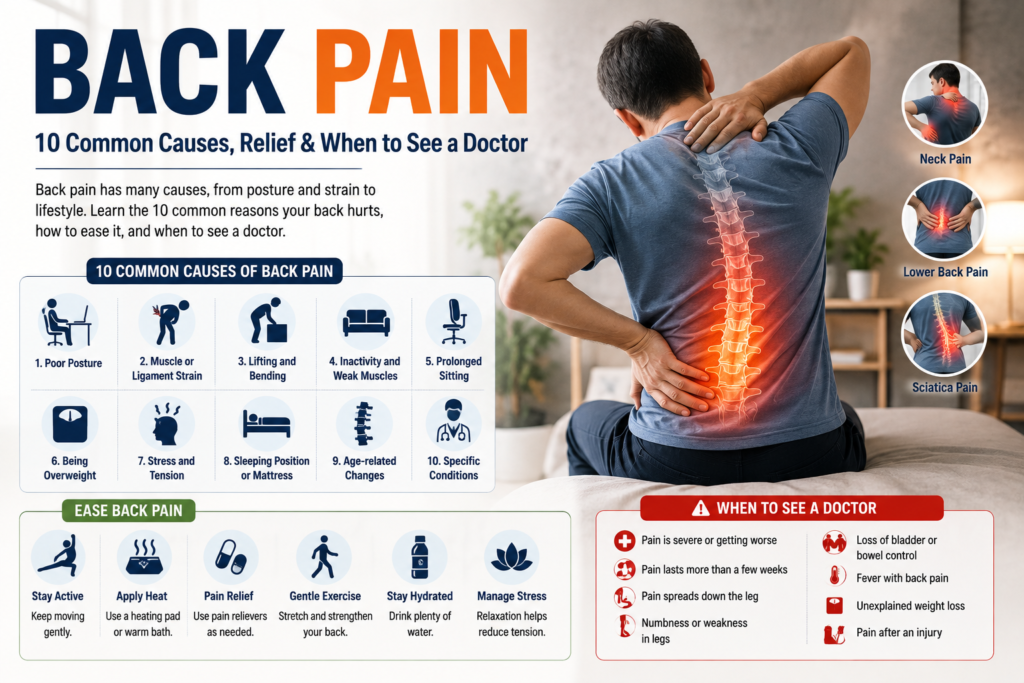
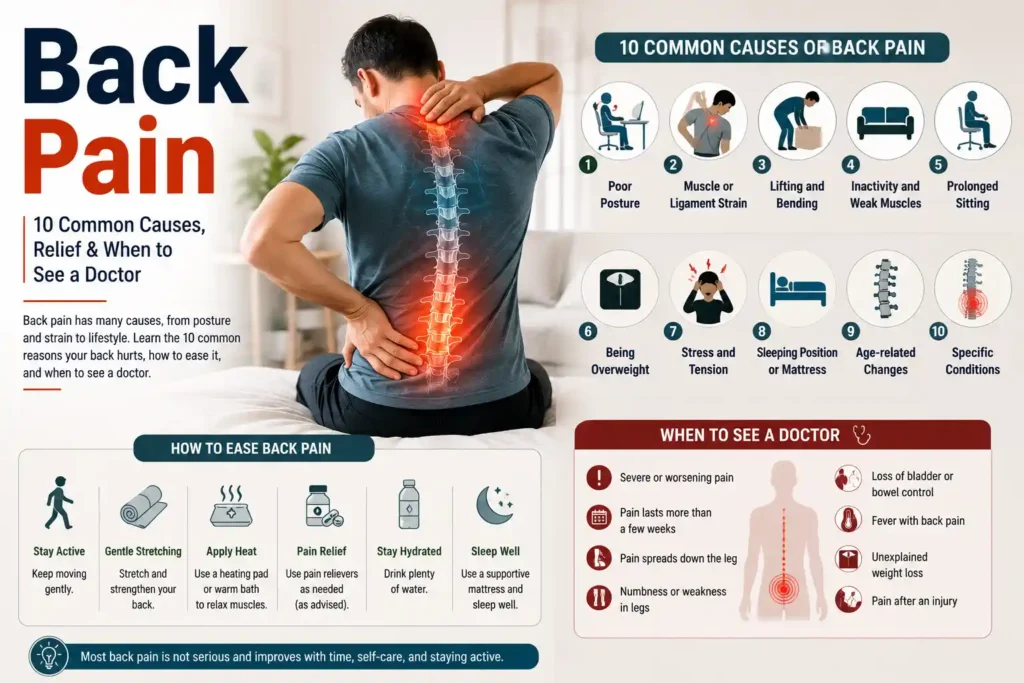
10 Common Causes of Back Pain
1. Poor posture. Sitting or standing with poor posture for long periods, particularly hunching over desks and screens, strains the back and is a very common contributor to back pain.
2. Muscle or ligament strain. Lifting incorrectly, a sudden awkward movement, or overdoing an activity can strain the muscles and ligaments of the back, causing pain and stiffness. This is one of the most common causes.
3. Lifting and bending. Lifting heavy objects, especially with poor technique — bending the back rather than the knees, or twisting while lifting — frequently triggers back pain.
4. Inactivity and weak muscles. A sedentary lifestyle and weak core and back muscles provide less support for the spine, making back pain more likely. Too little movement can both cause and worsen back pain.
5. Prolonged sitting. Sitting for long periods, particularly with poor posture and without breaks, places strain on the lower back and is a common feature of modern, desk-based life.
6. Being overweight. Excess weight, particularly around the middle, places additional strain on the back and can contribute to pain.
7. Stress and tension. Stress causes muscles to tense, including in the back, contributing to pain and tightness. The connection between stress and back pain is well recognised.
8. Sleeping position or mattress. An unsupportive mattress or awkward sleeping positions can contribute to back pain or stiffness, particularly on waking.
9. Age-related changes. With age, natural changes to the spine and its discs can contribute to back pain, though these are often manageable and not necessarily a cause for alarm.
10. Specific conditions. Less commonly, back pain relates to a specific condition, such as a problem with a disc pressing on a nerve (which can cause pain radiating down a leg), or other conditions. These are less common than everyday mechanical back pain but are why certain warning signs matter.
The Modern Approach: Keep Moving
One of the most important shifts in how back pain is understood is the move away from bed rest towards staying active — and it is worth explaining, because old advice still lingers.
It was once common to advise resting in bed for back pain, but we now know this is usually counterproductive. Prolonged rest can actually slow recovery, stiffen the back, and weaken the muscles that support the spine. The modern, evidence-based message is to stay as active as the pain allows, keep moving gently, and continue with normal activities as much as possible, even if you need to modify them at first. Movement helps the back recover, maintains flexibility, and keeps the supporting muscles strong.
This does not mean pushing through severe pain or doing vigorous activity that worsens things. It means avoiding the trap of complete rest, staying gently mobile, and gradually returning to full activity. Gentle walking, everyday movement, and specific back exercises all support recovery. For most people with common back pain, this active approach, combined with the self-care measures below, leads to improvement within days to weeks. Our guides on related aches, muscle pain causes and joint pain causes, reflect the same principle of sensible movement.
How to Ease Back Pain
For common, non-specific back pain, these measures often help:
- Stay active and keep moving. Continue gentle activity and normal routines as much as the pain allows, rather than resting in bed.
- Try gentle exercise and stretching. Walking, gentle stretching, and specific back exercises support recovery and prevent recurrence.
- Apply heat. A warm compress, heat pack, or warm bath can ease muscle tension and back pain.
- Use pain relief sensibly. Over-the-counter pain relief can ease back pain for adults, used as directed, allowing you to stay active.
- Improve your posture. Being mindful of posture when sitting, standing, and using screens reduces strain.
- Adjust your setup. A supportive chair, a good workspace setup, and regular breaks from sitting all help.
- Manage stress. Since tension contributes to back pain, relaxation and stress management can ease it.
- Check your sleep setup. A supportive mattress and comfortable sleeping position can help.
Most back pain improves within a few weeks with this kind of care. Staying active is the single most important element, countering the instinct to rest completely.
Lower Back Pain: The Most Common Kind
When people talk about back pain, they most often mean lower back pain, which is by far the most common type and worth understanding in its own right.
The lower back bears much of the body’s weight and is involved in almost every movement — bending, lifting, twisting, sitting, and standing — which is why it is so prone to strain and aching. Most lower back pain is non-specific and mechanical, arising from the muscles, ligaments, joints, and discs and how they are used, rather than from any serious condition. It commonly follows an awkward movement, lifting something poorly, prolonged sitting, or simply the cumulative effects of posture and daily life. The good news is that this common lower back pain, while genuinely uncomfortable, usually improves within days to weeks with the active, self-care approach described above.
Sometimes lower back pain is accompanied by pain travelling down a leg, which can occur when a disc or other structure irritates a nerve. Pain radiating below the knee, sometimes with numbness or tingling, is often described as sciatica-type pain. While this can be more uncomfortable and sometimes takes longer to settle, it too often improves with time and appropriate care, though it is worth having assessed, particularly if it is severe or persistent. The key point is that even most lower back pain with some leg involvement is not dangerous, though the specific warning signs listed earlier — especially numbness around the back passage or loss of bladder or bowel control — always need urgent attention.
Looking After Your Back for the Long Term
Preventing back pain, or reducing how often it recurs, comes down to a set of sensible habits that protect the back and keep it strong.
Staying physically active is one of the most protective things you can do. Regular activity, including exercises that strengthen the core and back muscles, provides better support for the spine and reduces the likelihood of back pain. Activities like walking, swimming, and specific back-strengthening exercises are particularly helpful. Maintaining a healthy weight reduces the strain excess weight places on the back.
Good posture matters throughout the day — being mindful of how you sit, particularly at a desk or screen, standing tall, and setting up your workspace to support good posture. Taking regular breaks from sitting to move and stretch counters the strain of prolonged sitting. When lifting, using good technique — bending the knees rather than the back, keeping the object close, and avoiding twisting while lifting — prevents many strains.
A supportive mattress and comfortable sleeping position help too. Managing stress reduces the muscle tension that contributes to back pain. For people prone to recurrent back pain, working with a physiotherapist on a tailored exercise programme can be especially valuable. These habits do not just prevent pain today; they help keep your back healthy and resilient over the years.
When to See a Doctor
See a doctor if:
- Back pain is severe, or does not improve within a few weeks
- Back pain is getting worse rather than better
- Pain radiates down one or both legs, particularly below the knee
- Back pain is affecting your daily life significantly
- You have back pain with numbness or tingling
- The pain followed a significant injury
Seek urgent medical attention for back pain with any of these warning signs, which need prompt assessment:
- Numbness around the back passage, genitals, or inner thighs
- Loss of control of your bladder or bowels
- Difficulty passing urine
- Numbness or weakness in one or both legs that is severe or worsening
- Back pain with a high fever, or feeling very unwell
- Back pain following a serious accident or injury
- Unexplained weight loss with back pain
Some of these, particularly numbness around the back passage or loss of bladder or bowel control, are medical emergencies needing immediate care. The NHS guidance on back pain explains when to seek help.
Final Thoughts
Back pain is so common that it is almost a universal human experience, and reassuringly, the vast majority of it — particularly everyday lower back pain — is not caused by anything dangerous and improves with time and sensible self-care. The most important modern insight is to resist the old instinct to rest in bed and instead stay gently active, since movement supports recovery while prolonged rest slows it. Combined with heat, appropriate pain relief, better posture, and stress management, this active approach resolves most back pain within days to weeks.
The balanced message is to manage common back pain confidently with these measures, looking after your back through good posture, sensible lifting, staying active, and keeping your supporting muscles strong. At the same time, it is essential to know the warning signs — particularly numbness around the back passage, loss of bladder or bowel control, severe or worsening leg weakness, or back pain with fever or after serious injury — that need prompt or emergency medical attention. For the ordinary back pain most people experience, though, staying active, being kind to your back, and giving it a little time is usually all it takes to recover.
Medical disclaimer: This article is for general educational information and is not a substitute for professional medical advice, diagnosis, or treatment. Seek emergency care for back pain with numbness around the back passage, loss of bladder or bowel control, or severe leg weakness, and see a doctor for severe, worsening, or persistent back pain.
Frequently Asked Questions
What are the most common causes of back pain? The most common causes are poor posture, muscle or ligament strain, incorrect lifting, inactivity and weak supporting muscles, prolonged sitting, being overweight, and stress-related tension. Most back pain is non-specific and mechanical, meaning it is not caused by anything dangerous and improves with time.
Should I rest or stay active with back pain? Modern, evidence-based advice is to stay as active as the pain allows rather than resting in bed. Prolonged rest can slow recovery, stiffen the back, and weaken supporting muscles. Gentle movement and continuing normal activities, modified if needed, support recovery for most back pain.
How can I ease back pain at home? Stay active and keep moving gently, try gentle exercise and stretching, apply heat, use pain relief sensibly, improve your posture, adjust your sitting setup, and manage stress. Most back pain improves within a few weeks with this care, and staying active is the most important element.
When should I worry about back pain? Seek urgent care for numbness around the back passage or genitals, loss of bladder or bowel control, severe or worsening leg weakness or numbness, back pain with a high fever, or pain after a serious injury. These are warning signs. See a doctor for severe, worsening, or persistent back pain.
How long does back pain usually last? Most common, non-specific back pain improves within a few weeks with sensible self-care and staying active. Back pain that is severe, lasts longer than a few weeks, or is getting worse should be assessed by a doctor rather than simply waited out.
Can poor posture cause back pain? Yes. Sitting or standing with poor posture for long periods, especially hunching over desks and screens, strains the back and is a very common contributor to back pain. Being mindful of posture, adjusting your workspace, and taking movement breaks all help reduce it.
Can stress cause back pain? Yes. Stress causes muscles to tense, including those in the back, contributing to pain and tightness. The connection between stress and back pain is well recognised, and relaxation, stress management, and gentle movement can help ease this kind of back pain.