Herbal Remedies for Health: Uses, Benefits & Safety
Herbal remedies for health are products made from plants or plant-based ingredients and used for health-related purposes. They have a long history in traditional health practices and are now available in many forms. You may find herbal products as teas, capsules, tablets, powders, extracts, and other dietary supplements. Some people use them to support their overall health, but natural does not always mean safe or effective. The effects of an herbal product can depend on the herb, preparation, amount, and person using it. Some products may also interact with medicines. This guide explains what herbal remedies are, what research says, and what to consider before using them. What Are Herbal Remedies? Herbal remedies contain ingredients that come from plants. They may use leaves, roots, flowers, seeds, or other parts of medicinal plants. Common herbal preparations include: The same herb can be prepared in different ways. Two products that contain the same herb may therefore have different ingredients, amounts, or effects. Herbal Remedies for Health and Natural Products Natural remedies is a broad term that can include many types of products and approaches. Herbal remedies are specifically based on plant ingredients. Herbs can also be used as food. This is different from taking a concentrated supplement. A supplement may contain a larger amount of an active ingredient than you would normally consume as part of a meal. For this reason, it is important to look at the exact product rather than assuming that all products containing an herb are the same. Examples of Herbal Remedies Many traditional herbal remedies are available today as foods, teas, or supplements. Examples include ginger, turmeric, peppermint, chamomile, and garlic. Each herb has different uses and research findings. The available scientific evidence can also vary depending on the herb, preparation, and health purpose. Ginger Ginger is used as a food and is also available in teas and herbal supplements. Researchers have studied ginger for several health-related purposes. If you choose a concentrated ginger product, read the label and check whether it could interact with medicines you take. Turmeric Turmeric is a common spice and is also sold as a supplement. Curcumin is an active ingredient in turmeric that has been studied in research. Turmeric products can vary in their formulation. Evidence about one preparation should not automatically be applied to every turmeric supplement. Peppermint Peppermint is used in foods, teas, and different herbal preparations. It has also been studied for certain health-related uses. The evidence depends on the specific preparation and purpose. Read the product information before using a concentrated product. Chamomile Chamomile is commonly consumed as tea and is also available in supplement form. Research has examined chamomile for different health purposes. If you use a supplement, check the ingredients and follow the product’s safety information. Garlic Garlic is widely used as food and is also available as a dietary supplement. Eating garlic as part of a normal diet is different from taking a concentrated garlic supplement. People who take medicines should consider possible interactions before using garlic supplements. Traditional Use and Scientific Evidence Traditional use does not automatically prove that an herb works for a particular health condition. Researchers study herbs in different ways. A clinical trial, for example, may examine a specific herb, preparation, amount, and group of people. Evidence can vary because studies may use: This means that claims about an herb should be considered in relation to the exact product and intended use. Are Herbal Supplements Safe? Herbal supplements are not automatically safe just because they are natural. They can contain active ingredients that affect the body. Some products may cause side effects or interact with medicines. The possible effects include unwanted reactions that depend on the herb, preparation, amount, and individual. Natural Does Not Always Mean Safe A product described as natural can still have risks. A high dose or concentrated preparation may be different from using the same plant as food. If you experience an allergic reaction or another unexpected reaction after taking a supplement, seek appropriate medical advice. Herbal Products and Medicines Some herbal products can interact with prescription or over-the-counter medicines. These interactions may affect how a medicine works or increase the risk of unwanted effects. Before taking a new herbal supplement, tell your doctor, pharmacist, or another healthcare professional about the supplements and medicines you use. This is especially important if you have a health condition or take medicines regularly. How to Choose Herbal Products If you decide to use an herbal product, read the label carefully. Check for: Be careful with products that promise guaranteed results, rapid cures, or treatment for many unrelated conditions. Also remember that different herbal medicines may contain different forms or amounts of an herb. The name of an herb alone does not tell you everything about a product. Can Herbal Remedies Replace Medical Treatment? Herbal remedies should not automatically replace medical care. If you have ongoing symptoms or a diagnosed health condition, discuss your options with a healthcare professional. An herbal supplement may affect medicines or other treatments. Some people use herbal products as part of complementary and integrative health approaches. However, using a supplement alongside medical care still requires attention to safety and possible interactions. Questions to Ask Before Using a Supplement Before taking a new herbal supplement, ask: These simple questions can help you make a more informed choice. Frequently Asked Questions What are herbal remedies? Herbal remedies are products made from plants or plant-derived ingredients for health-related purposes. They may be available as teas, capsules, tablets, powders, and extracts. What are medicinal herbs? Medicinal herbs are plants that have been used in traditional health practices or studied for health-related purposes. Their effects can vary depending on the herb, preparation, and intended use. Are herbal supplements safe? Herbal supplements are not automatically safe. Some may cause side effects or interact with medicines. Read the label and seek professional advice when needed. Can herbal remedies interact with medications? Yes. Some herbal products can interact with prescription and over-the-counter
Natural Remedies for Cough: Safe Home Remedies for Cough Relief
Looking for Natural Remedies for Cough Safe Relief? A cough can happen for many reasons. Some home remedies for cough may help with comfort, but they do not work for every cause. Some coughs also need medical care. This guide covers simple natural cough remedies, honey, ginger, herbal products, children’s safety, and when to see a doctor about a cough. What Causes a Cough? Understanding cough causes is important because a cough is a symptom, not a single illness. MedlinePlus provides information about common causes, cough care, and when to contact a healthcare professional. Your cough symptoms and general health can help you decide whether home care is suitable. If you have a persistent cough, do not rely only on home remedies. It is important to consider medical advice. Natural Remedies for Cough There is no single natural remedy for cough that works for everyone. The best approach depends on the possible cause of the cough and your health. When using Natural Remedies for Cough Safe Relief or other home remedies, remember: These simple steps can help you make safer choices. Honey for Cough Honey for cough is one natural option discussed by MedlinePlus. The source includes honey in information about cough relief and home care. Honey may be considered as part of home care, but it should not be called a cure for every cough. A cough can have different causes, so treating the symptom does not always treat the cause. Honey Safety for Babies Do not give honey to babies younger than 12 months. The CDC warns about the risk of infant botulism. This is an important point for parents looking for cough remedies for children. A remedy that may be suitable for an older child or adult is not automatically safe for a baby. Ginger for Cough Ginger for cough is another option you may see recommended online. NCCIH information can help separate traditional use from available research. Ginger should not be described as a guaranteed cure for cough. If you use ginger as an herbal product or supplement, check the safety information first. This is especially important if you take medicines because some herbs can affect how medicines work. Herbal Remedies for Cough Natural Remedies for Cough: Safe Relief are easy to find in teas, supplements, and other products. However, natural does not always mean safe or effective. NCCIH provides information about herbal products, including their possible benefits, safety concerns, and limits in the available evidence. The NIH Office of Dietary Supplements also provides information about supplement safety and interactions. Some products may cause side effects. Others may interact with medicines. Always check the product information before using an herbal supplement. Natural Cough Treatment for Children Parents often search for cough remedies for children, but children need extra care. The Food and Drug Administration provides information about children’s cough and cold products and related safety concerns. Do not assume that a product made for adults is also suitable for a child. Honey should not be given to children younger than 12 months because of the risk of infant botulism. If you are unsure about a product or remedy, ask a healthcare professional or pharmacist before giving it to a child. What Should You Avoid? When looking for a natural cough treatment, be careful with products that promise a fast or guaranteed cure. Do not assume a natural product is: A simple, natural product can still have risks. Read the label and check reliable health information before using it. When to See a Doctor About a Cough Knowing when to see a doctor about a cough is just as important as knowing about home care. MedlinePlus provides information about when to contact a healthcare professional. The CDC also provides information about cough and breathing illnesses and when medical care may be needed. Consider getting medical advice if your cough is persistent, severe, or concerning. You should also speak with a healthcare professional if you are unsure what is causing the cough or if your symptoms are not improving. The right treatment depends on the cause. Frequently Asked Questions What is the best natural remedy for cough? There is no single natural remedy for cough that is best for everyone. Honey is one option discussed by MedlinePlus, while herbal products need careful attention to safety and evidence. What are the best home remedies for cough? The right home-care option depends on the person and the possible cause.Natural Remedies for Cough: Safe Relief may provide comfort, but they should not be treated as a cure for every cough. Does honey help with cough? Honey for cough is discussed by MedlinePlus as part of cough relief and home care. It should not be described as a guaranteed cure. Can ginger cure a cough? Ginger for cough should not automatically be described as a cure. NCCIH information can help explain the difference between traditional use and available research. Are herbal remedies for cough safe? Safety depends on the product. Herbal remedies for cough can have side effects or interact with medicines. Check reliable safety information before using them. Are natural cough remedies safe for children? Children need special care. The FDA provides information about children’s cough and cold safety. Honey should not be given to babies younger than 12 months. When should I see a doctor about a cough? A persistent cough, severe cough, or concerning symptoms may need medical advice. MedlinePlus and the CDC provide information about when professional care may be needed. Final Thoughts Natural remedies for cough can be part of home care, but they should not automatically be treated as cures. Honey for cough is discussed by MedlinePlus. Ginger for cough and other herbal remedies for cough need careful attention to safety and available evidence. Parents should remember that honey must not be given to babies younger than 12 months because of the risk of infant botulism. If you take medicines, check for possible interactions before using an herbal product or supplement. Natural products can still
Natural Remedies: Types, Uses, Benefits, and Safety Tips
Natural remedies include plant-based products, food-based approaches, and traditional practices used for health and personal care. They may include herbal remedies, natural skin care, natural hair care, nutrition, and other forms of daily care. Natural does not always mean safe or effective. Some natural products can cause side effects or interact with medicines. It is important to check the evidence, ingredients, and safety before using them. What Are Natural Remedies? Natural remedies can include natural ingredients, plant-based products, herbal preparations, and food-based approaches. Herbal medicine is one type of natural approach. It uses plants or parts of plants for health purposes. There is no single list of natural remedies. Different products have different uses and levels of scientific evidence. Traditional use does not always mean that a product has been proven to work for a specific health problem. Herbal Remedies and Herbal Medicine Herbal remedies use plants or parts of plants. They are sometimes called herbal medicines. People use different herbs for different purposes, but their benefits and risks can vary. Some herbal products may interact with prescription or over-the-counter medicines. If you take medicines regularly, ask a doctor or pharmacist about possible interactions before using an herbal supplement. Natural Skin Care Natural skin care uses natural ingredients as part of a skin care routine. Some people choose plant-based products for everyday skin care. However, natural ingredients can affect people in different ways. A product may not suit every skin type or health condition. Check the label and follow the directions before using a new product. For ongoing or serious skin problems, a dermatologist can help you find suitable care. Natural Hair Care and Scalp Care Natural hair care may include products made with natural ingredients. Scalp care is also an important part of good hair care. Before using a new hair or scalp product, check what it contains and what it is designed to do. Do not assume that a natural product will work for everyone. If you have a lasting hair or scalp problem, consider speaking with a dermatologist. DIY Home Remedies People may use simple home approaches as part of daily care. However, not every home remedy has strong scientific evidence. Before trying one, ask: These questions can help you make a safer choice. Natural Wellness and Nutrition Food provides many nutrients, including vitamins and minerals. Eating a varied diet can help provide the nutrients your body needs. USDA MyPlate offers guidance on balanced eating. Natural foods can support good nutrition, but they should not be viewed as a cure for health problems. Dietary supplements may contain vitamins, minerals, herbs, or other substances. The Food and Drug Administration provides information about dietary supplements and their safety. Natural Body Care Natural body care may include products made with natural ingredients for everyday personal care. Read the label before using a product. Check its ingredients and follow the instructions. Natural products can still have active effects, so it is important to consider possible risks. Natural Oral Care Natural oral care can be part of a daily hygiene routine, but it should not replace proper dental care. Good oral care includes regular dental care and following advice from a dental professional. If you have ongoing dental pain, swelling, or another concern, speak with a dentist. How to Use Natural Remedies Safely 1. Check the evidence Look for reliable information about the specific product and the health concern. Evidence for one use does not prove that the same product works for another use. 2. Check for side effects Natural products can cause unwanted effects. Learn about possible side effects before using a product. 3. Check medicine interactions Some herbal products can interact with medicines. This is an important part of supplement safety. 4. Check product quality Choose products with clear labels and information about their ingredients. This is especially important when buying dietary supplements in the United States. 5. Consider long-term use If you plan to use a product long term, check whether there is enough information about its safety. 6. Ask a health professional A doctor, pharmacist, dentist, or dermatologist can help you decide whether a natural product is suitable for your needs. FAQs About Natural Remedies What are the 8 natural remedies? There is no standard list of eight natural remedies. Natural approaches include different herbal products, natural ingredients, food-based approaches, and traditional practices. What are 5 home remedies? There is no universal list of five home remedies. The safety and usefulness of a home remedy depend on the specific approach and health problem. What are the best natural remedies? There is no single natural remedy that is best for everyone. The right choice depends on the health concern, available evidence, and safety. What is the most powerful healing herb? No single herb is the most powerful for every health condition. Different herbs have different uses, evidence, and safety concerns. Conclusion Natural remedies cover many products and practices, including herbal remedies, natural ingredients, nutrition, and personal care. They may be useful in some situations, but natural does not always mean safe or effective. Before using a natural product, check the evidence, possible side effects, medicine interactions, and product quality. For ongoing or serious health conditions, seek advice from a qualified health professional.
Home Remedies for Constipation: 12 Natural Ways to Relief
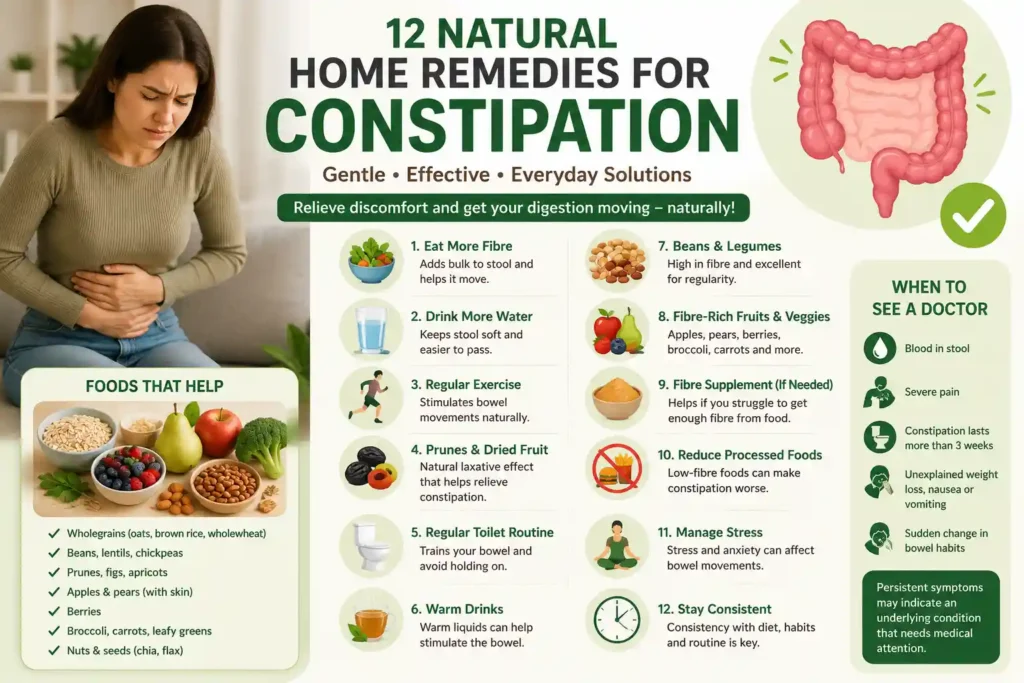
Home Remedies for Constipation: 12 Natural Ways to Relief Constipation is one of those health complaints people rarely talk about but almost everyone experiences at some point. The discomfort, the bloating, the straining, the feeling of never quite being finished — it is genuinely unpleasant, and it can quietly affect your mood and energy for days. The good news is that most constipation responds well to simple, natural measures you can start at home, and understanding what actually causes it makes those measures far more effective. At its heart, constipation usually comes down to a few everyday factors: not enough fibre, not enough fluid, too little movement, and sometimes ignoring the urge to go. Address these, and the situation often improves on its own. There is no need to reach immediately for strong laxatives, which are best kept for when gentler approaches fall short — and the natural remedies below tackle the root of the problem rather than just forcing a short-term result. This guide covers the most effective home remedies for constipation, how to use them well, and the signs that mean it is time to see a doctor rather than continue self-treating. Quick Overview Remedy How it helps More fibre Adds bulk and softens stool More water Keeps stool soft and moving Regular exercise Stimulates bowel movement Prunes and dried fruit Natural, gentle laxative effect A regular toilet routine Trains the bowel and avoids holding on Warm drinks Can stimulate the bowel Reducing certain foods Cutting back on low-fibre processed foods Why Constipation Happens Constipation means passing stools less often than is normal for you, or having hard, dry stools that are difficult or uncomfortable to pass. What counts as “normal” varies a lot between people, so it is defined relative to your own usual pattern rather than a fixed number. The most common causes are everyday and very fixable: a diet low in fibre, not drinking enough fluid, and too little physical activity. When there is not enough fibre and water, stool becomes hard and dry; when you move little, the bowel is less stimulated to push things along. Other contributors include ignoring the urge to go, changes in routine or travel, certain medications, stress, and some medical conditions. Because the common causes are so addressable, natural home remedies are genuinely effective for most constipation — targeting the underlying factors rather than just the symptom. 12 Home Remedies for Constipation 1. Eat more fibre. The single most effective long-term measure. Fibre adds bulk to stool and helps it move through the bowel. Good sources include wholegrains, fruits, vegetables, beans, lentils, nuts, and seeds. Increase fibre gradually to avoid bloating, and always with enough water. 2. Drink more water. Fibre works best with adequate fluid. Without enough water, extra fibre can actually make constipation worse, so the two go together. Staying well hydrated helps keep stool soft and easier to pass. 3. Move your body. Physical activity stimulates the natural muscle contractions that move stool through the bowel. Even a daily walk helps, and regular exercise is one of the most reliable ways to keep things regular. 4. Try prunes and dried fruit. Prunes are a well-known natural remedy for good reason — they contain fibre and a natural compound that has a gentle laxative effect. Other dried fruits like figs and apricots can help too. 5. Establish a regular toilet routine. The bowel responds to routine. Trying to go at the same time each day, often after a meal when the bowel is naturally more active, can help train it. Never ignore the urge to go, as holding on makes constipation worse. 6. Don’t rush or strain. Give yourself time and a relaxed setting. Straining is uncomfortable and can cause other problems. Raising your feet on a small stool while on the toilet, bringing your knees higher, can make passing stool easier for some people. 7. Have a warm drink. A warm drink, particularly in the morning, can stimulate the bowel for some people. Warm water or a caffeine-free warm drink is a gentle way to encourage movement. 8. Include beans and legumes. Lentils, chickpeas, and beans are excellent sources of fibre and are among the more effective foods for keeping the bowel regular. 9. Eat fibre-rich fruits and vegetables. Apples, pears, berries, broccoli, carrots, and leafy greens all add fibre and fluid. Pears and apples with their skin on are particularly helpful. 10. Consider a fibre supplement if needed. If you struggle to get enough fibre from food, a fibre supplement can help — taken with plenty of water. This is a gentler approach than stimulant laxatives. 11. Reduce low-fibre processed foods. Diets heavy in processed foods, white bread, and low-fibre snacks contribute to constipation. Shifting towards whole foods naturally increases fibre and improves regularity. 12. Manage stress and routine. Stress and disrupted routines, including travel, can affect the bowel. Keeping to regular meals, sleep, and movement, and managing stress, supports normal bowel function. Foods That Help With Constipation Fibre-rich foods to include Why they help Wholegrains — oats, brown rice, wholewheat Insoluble fibre adds bulk Beans, lentils, chickpeas High in fibre, keep things moving Prunes, figs, apricots Natural gentle laxative effect Apples and pears (with skin) Fibre and fluid Berries Fibre-rich and low in sugar Broccoli, carrots, leafy greens Fibre and nutrients Nuts and seeds — chia, flax Fibre and healthy fats A key point: increase fibre gradually and always with enough water. Adding a lot of fibre suddenly, or without enough fluid, can cause bloating and gas or even worsen constipation. A steady increase alongside good hydration is the way to get the benefit comfortably. What About Laxatives? Over-the-counter laxatives have their place for short-term relief when natural measures are not enough, but they are best used occasionally rather than relied upon. Different types work in different ways, and some are gentler than others. Because regular long-term use of certain laxatives without medical advice can cause problems, and because persistent constipation should be
Foods for Fatty Liver: 12 Best Choices to Support Your Liver
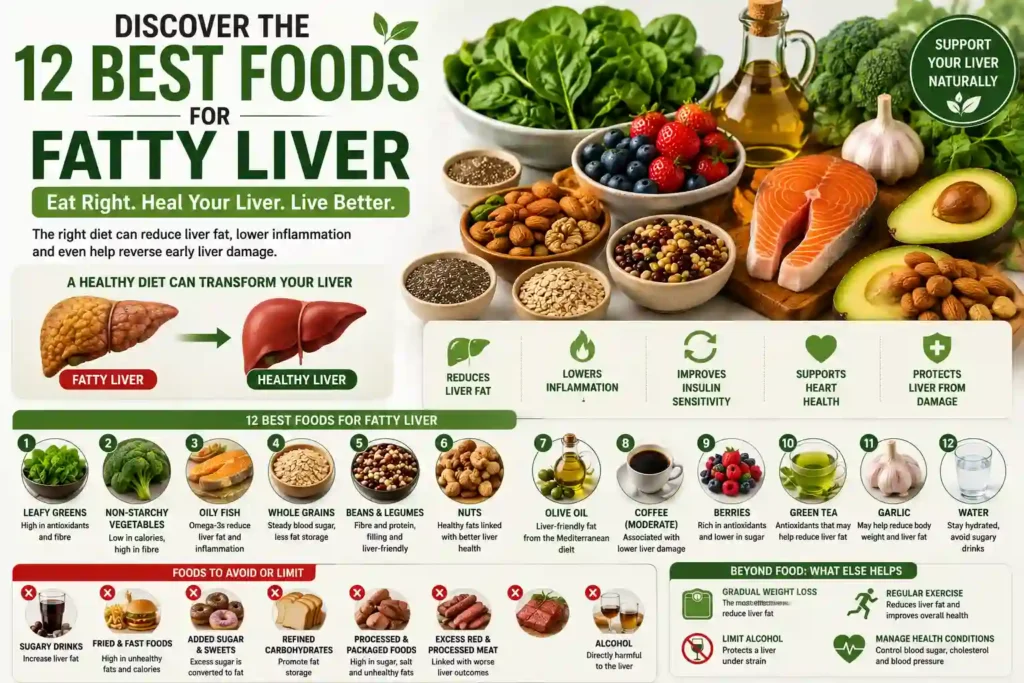
Foods for Fatty Liver: 12 Best Choices to Support Your Liver The liver is one of the few organs with a remarkable ability to repair itself — and in the case of fatty liver disease, what you eat is one of the most powerful tools you have to help it do exactly that. Unlike many conditions where diet plays a supporting role, in early fatty liver, food is close to the main event. The right eating pattern can reduce the fat stored in the liver, calm inflammation, and in its early stages, help reverse the condition altogether. That is genuinely encouraging news, because fatty liver is common and often silent, and many people feel powerless when they first hear the diagnosis. The truth is the opposite: the same everyday food choices that drive fat into the liver can, reversed, help clear it out. There is no single miracle food, but there is a clear, evidence-informed pattern of eating that supports liver health. This guide covers the best foods for a fatty liver, the ones worth limiting, and how to build meals that give your liver the best chance to recover. Quick Overview Food group Why it helps the liver Non-starchy vegetables Low in calories, high in fibre and antioxidants Whole grains Steadier blood sugar, less fat storage Oily fish Omega-3s that support liver fat balance Beans and legumes Fibre and protein, filling and liver-friendly Nuts Healthy fats linked with better liver health Olive oil A liver-friendly fat central to the Mediterranean diet Coffee (in moderation) Associated with lower liver damage in studies How Diet Affects Your Liver Fatty liver disease means too much fat has built up inside the liver cells. In the most common form, this is closely tied to weight, insulin resistance, and a diet high in sugar and refined carbohydrates — the same factors behind type 2 diabetes and heart disease. When you regularly eat more sugar and refined carbs than your body needs, the excess is converted to fat, much of which can end up stored in the liver. This is why diet is so central. Reducing the foods that promote liver fat, and increasing those that support the liver, directly targets the root of the problem. In its early stages, this can reduce liver fat and allow the liver to recover — a clear example of a condition that is often reversible through the right changes, as explored in our guide on fatty liver symptoms and how it develops. Because fatty liver shares its roots with diabetes and high blood pressure, the liver-friendly diet overlaps heavily with the advice in our guides on foods for diabetes and lowering blood pressure naturally. 12 Best Foods for Fatty Liver 1. Leafy greens. Spinach, kale, and other leafy greens are low in calories and rich in antioxidants and fibre. Some research suggests compounds in leafy greens may help reduce fat build-up in the liver, making them a valuable everyday choice. 2. Non-starchy vegetables. Broccoli, cauliflower, peppers, courgette, and similar vegetables add fibre, nutrients, and volume with very few calories, helping with the weight management that is central to reversing fatty liver. 3. Oily fish. Salmon, mackerel, and sardines provide omega-3 fatty acids, which help the body handle fats and are associated with reduced liver fat and inflammation. Including oily fish a couple of times a week is a smart move for liver health. 4. Whole grains. Oats, barley, brown rice, and quinoa raise blood sugar more slowly than refined grains, reducing the insulin spikes that drive fat storage in the liver. Their fibre also supports overall metabolic health. 5. Beans and legumes. Lentils, chickpeas, and beans combine fibre and plant protein, keeping you full and producing a gentle, steady effect on blood sugar. They are an excellent liver-friendly staple. 6. Nuts. Almonds, walnuts, and other nuts provide healthy fats, and studies link nut consumption with better liver health. Keep portions modest, as they are calorie-dense, but they are a genuinely beneficial food. 7. Olive oil. A cornerstone of the Mediterranean diet, olive oil is a healthy fat associated with lower liver fat compared with saturated fats. Using it in place of butter or refined oils supports the liver. 8. Coffee (in moderation). This surprises people, but research has consistently linked moderate coffee consumption with a lower risk of liver damage and scarring in people with fatty liver. Black or lightly sweetened coffee, without excess sugar and cream, appears most beneficial. 9. Berries. Blueberries, strawberries, and other berries are rich in antioxidants and lower in sugar than many fruits, making them a liver-friendly way to satisfy a sweet craving. 10. Green tea. Green tea contains antioxidants that some studies associate with reduced liver fat, though it is a supportive addition rather than a treatment on its own. 11. Garlic. Some research suggests garlic may help reduce body weight and fat in people with fatty liver. As a flavourful, low-calorie way to season food without salt, it is a useful kitchen ally. 12. Water. Not a food, but essential. Staying well hydrated and replacing sugary drinks with water is one of the single most impactful changes for a fatty liver, since sugary drinks are among the biggest drivers of liver fat. Foods to Avoid or Limit Limit or avoid Why Sugary drinks and fruit juice Among the biggest drivers of liver fat Added sugar and sweets Excess sugar is converted to liver fat Refined carbs (white bread, white rice) Fast-absorbed, promote fat storage Fried and fast foods High in unhealthy fats and calories Processed and packaged foods Often high in sugar, salt, and unhealthy fats Excess red and processed meat Linked with worse liver outcomes Alcohol Directly harmful to the liver Alcohol deserves special mention. In alcohol-related fatty liver, reducing or stopping drinking is essential. Even in non-alcohol-related fatty liver, alcohol adds strain to a liver that is already under pressure, so limiting it is wise. Sugary drinks are the other standout to cut — they deliver liver fat
Home Remedies for Cold: 12 Proven Ways to Ease Symptoms

12 Home Remedies for a Cold That May Help You Feel Better A common cold can cause a blocked or runny nose, sneezing, sore throat, cough, tiredness, and general discomfort. There is no instant cure for a cold, but simple home remedies for cold symptoms can help you feel more comfortable while your body recovers. Most colds are caused by viruses and get better on their own. Antibiotics do not treat the viruses that cause common colds, so cold treatment at home usually focuses on rest, fluids, and relieving individual symptoms. Quick Answer: What Helps With a Cold? The most useful home measures include: These remedies can ease symptoms but do not cure the underlying viral infection. What Is a Common Cold? The common cold is a viral infection that mainly affects the nose and throat. Symptoms can include a runny or blocked nose, sneezing, sore throat, cough, tiredness, and feeling generally unwell. Most people recover without specific medical treatment. According to the NHS, people generally start to feel better within 1 to 2 weeks, although some symptoms can last longer. NHS — Common cold Because a cold is caused by a virus, antibiotics do not make it go away faster. They should only be used when prescribed for a bacterial infection. 12 Home Remedies for a Cold 1. Get Plenty of Rest Rest and good sleep give your body time to recover. Avoid strenuous activity if you feel tired or unwell, and give yourself time to recover. 2. Drink Plenty of Fluids Drink enough water and other suitable fluids to stay hydrated. Water, warm drinks, and soup can all help you maintain your fluid intake while you are ill. 3. Try Warm Drinks Warm water, tea, or other warm drinks can soothe an irritated throat. Warm liquids may also make congestion feel more comfortable. 4. Use Honey for a Cough Honey can help soothe a cough and irritated throat. You can take it by itself or add it to a warm drink. Never give honey to babies under 12 months old. 5. Use Saline Nasal Spray or Drops Saline nasal spray or drops can help moisturise the nasal passages and relieve a blocked or runny nose. They can be particularly useful when congestion makes sleeping difficult. 6. Gargle With Warm Salt Water A warm saltwater gargle can soothe a sore throat. This is suitable for adults and older children who can gargle safely without swallowing the solution. 7. Use a Clean Humidifier A clean humidifier or cool-mist vaporizer can add moisture to the air and may make a dry throat or blocked nose feel more comfortable. Clean the humidifier regularly according to the manufacturer’s instructions. 8. Take a Warm Shower Warm, moist air from a shower may temporarily ease nasal congestion. Avoid leaning over a bowl of boiling water because hot water and steam can cause serious burns, particularly in children. 9. Eat Nourishing Foods and Soup You may have less appetite during a cold, but nutritious food can help maintain your energy. Warm soup can also provide fluids and comfort. Chicken soup may feel soothing, but it should be considered supportive food rather than a cure. 10. Keep Your Head Slightly Elevated If congestion makes it uncomfortable to lie flat, slightly raising your head while resting may help you breathe more comfortably. For babies, follow safe-sleep guidance and do not use loose pillows or unsafe sleep positioning. 11. Avoid Smoke Smoking and second-hand smoke can irritate the nose, throat, and airways and may make respiratory symptoms worse. Avoid smoky environments while recovering from a cold. 12. Ask a Pharmacist About Symptom Relief If home remedies are not enough, a pharmacist can advise you about suitable over-the-counter treatments for symptoms such as aches, fever, or congestion. Always check the label and ask a pharmacist if you are unsure whether a medicine is suitable, particularly for children, pregnancy, or existing health conditions. How to Treat a Cold at Home The best cold treatment at home is usually simple supportive care. Get enough rest, drink plenty of fluids, and use remedies that match your symptoms. For congestion, saline nasal spray, a humidifier, or a warm shower may help. For a sore throat, warm drinks, honey for people over 1 year old, and saltwater gargles can be soothing. For a cough, honey and warm drinks may provide relief. You can also read our guide to home remedies for cough for more information. There is no need to take antibiotics for an ordinary cold because they do not work against the viruses that cause it. Cold Cure Remedies: Can You Cure a Cold Quickly? If you are searching for cold cure remedies, it is important to know that there is no reliable home remedy that cures a common cold overnight. Rest, fluids, honey, saline nasal care, warm drinks, and humidified air can help manage symptoms, but they do not eliminate the virus immediately. Be cautious about products that promise an instant cold cure. Most colds simply need time to resolve. How Long Does a Cold Last? Most people begin to feel better within 1 to 2 weeks, although a cough or other symptoms may sometimes last longer. If your symptoms are getting worse instead of better, or you remain unwell for longer than expected, consider speaking with a healthcare professional. How to Prevent Colds You cannot prevent every cold, but good hygiene can reduce the spread of respiratory viruses. A healthy diet provides nutrients your body needs for normal immune function. You can also read our guides on vitamin C benefits and zinc benefits. When Should You See a Doctor? Most colds can be managed at home, but medical advice may be needed if: Seek urgent medical help if you have: These symptoms should not be treated with home remedies alone. Questions What are the best home remedies for a cold? Rest, fluids, warm drinks, honey for people over 1 year old, saline nasal spray or drops, saltwater gargles, and humidified air
Foods for Diabetes: 12 Best Choices to Control Blood Sugar
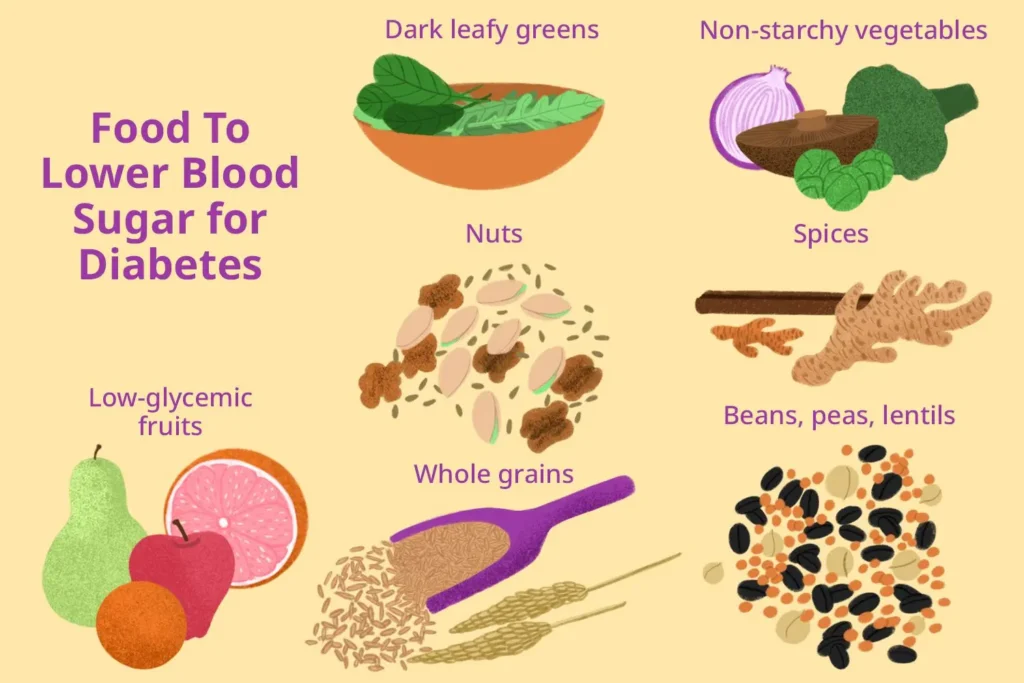
Foods for Diabetes: 12 Best Choices to Control Blood Sugar Few diagnoses come with as much food confusion as diabetes. One source says never touch fruit; another says fruit is fine. Rice is forbidden here, allowed there. Somewhere in the noise, people end up either terrified of eating or quietly ignoring the advice altogether — and both extremes miss the point. The reality is calmer and more practical than the internet suggests. Managing blood sugar through food is less about a rigid list of banned items and more about patterns: the balance of your plate, the type of carbohydrate you choose, and the fibre, protein, and healthy fat you pair it with. Get the pattern right and there is room for a wide, enjoyable range of foods. This guide focuses on the foods that genuinely help steady blood sugar, the ones worth limiting, and how to put them together into meals that work in real life. Quick Overview Food group Why it helps Non-starchy vegetables Low in carbs, high in fibre and nutrients Whole grains Slower, steadier rise in blood sugar than refined Beans and lentils Fibre and protein slow sugar absorption Berries Lower-sugar fruit rich in fibre and antioxidants Oily fish Protein and heart-protective omega-3s Nuts and seeds Healthy fats that blunt blood sugar spikes Plain yoghurt Protein-rich, minimal added sugar How Food Affects Blood Sugar When you eat carbohydrate, it breaks down into glucose and raises your blood sugar. In diabetes, the body either does not make enough insulin or does not respond to it well, so that rise is harder to manage. The goal of eating for diabetes is to keep blood sugar from spiking sharply and to keep it steadier over the day. The key insight is that not all carbohydrates behave the same way. A refined carbohydrate — white bread, sugary drinks — is absorbed quickly and spikes blood sugar. The same amount of carbohydrate from beans or whole grains, wrapped in fibre, is absorbed more slowly and produces a gentler rise. Pairing carbohydrate with protein, fat, and fibre slows things further. That is the whole strategy in one sentence: choose slower carbohydrates and balance the plate. It is worth being clear that food manages type 2 diabetes and, in some cases, can help push it into remission — but for most people it works alongside medical care rather than replacing it. Our guide on cure vs treat explains why control, rather than a one-time cure, is the realistic and effective goal for a condition like this. The Glycaemic Index: A Useful Tool, Not a Rulebook You will often see the glycaemic index, or GI, mentioned in diabetes advice, and it is worth understanding because it captures the core idea neatly. The GI ranks carbohydrate-containing foods by how quickly they raise blood sugar. High-GI foods — white bread, sugary drinks, white rice — cause a fast, sharp spike. Low-GI foods — beans, whole grains, most vegetables — release their sugar more slowly and gently. As a general guide, favouring lower-GI foods helps keep blood sugar steadier, and it lines up well with the food choices in this article. But GI is a tool, not a strict rulebook, and it has limits. It measures a food eaten alone, whereas in real meals you combine foods — and pairing a higher-GI carbohydrate with protein, fat, and fibre slows the whole meal’s effect. Portion size also matters as much as GI: a large serving of a low-GI food still delivers plenty of carbohydrate. So use the concept as a helpful lens — lean towards slower carbohydrates — without becoming a slave to the numbers. The plate-balance approach later in this article is a more practical way to apply the same principle in everyday life. 12 Best Foods for Diabetes 1. Leafy greens. Spinach, kale, and other leaves are very low in carbohydrate and calories while rich in fibre and nutrients. They fill the plate without raising blood sugar. 2. Non-starchy vegetables. Broccoli, peppers, courgette, cauliflower, green beans, and similar vegetables add volume, fibre, and nutrients with minimal impact on blood sugar. Aim to fill half your plate with them. 3. Beans and lentils. Their combination of fibre and protein slows sugar absorption, producing a gentle, steady rise. They are among the most useful staples for blood sugar control. 4. Whole grains. Oats, barley, quinoa, and brown rice raise blood sugar more slowly than their refined counterparts, thanks to their fibre. Portion still matters, but the quality is far better. 5. Berries. Strawberries, blueberries, and raspberries are lower in sugar than many fruits and high in fibre and antioxidants, making them a smart choice when you want something sweet. 6. Oily fish. Salmon, mackerel, and sardines provide protein with no carbohydrate, plus omega-3 fatty acids that support heart health — important because diabetes raises cardiovascular risk. 7. Nuts and seeds. Almonds, walnuts, chia, and flax offer healthy fats, fibre, and protein that blunt blood sugar spikes. Keep portions modest, as they are calorie-dense. 8. Plain unsweetened yoghurt. A protein-rich option with minimal added sugar. Add your own berries rather than buying pre-sweetened versions loaded with sugar. 9. Eggs. Carbohydrate-free, protein-rich, and versatile, eggs make a blood-sugar-friendly breakfast that keeps you fuller for longer. 10. Avocado. Rich in healthy fats and fibre with very little carbohydrate, avocado helps steady blood sugar and adds satisfying richness to meals. 11. Whole fruit in moderation. Apples, pears, and citrus, eaten whole with their fibre, are fine in sensible portions for most people. This is different from fruit juice, which spikes blood sugar quickly. 12. Extra-virgin olive oil. A healthy fat that supports heart health and, as part of a Mediterranean-style pattern, is linked with better blood sugar control. Don’t Forget What You Drink Food gets most of the attention, but drinks can quietly undo good eating. Sugary drinks — regular soft drinks, sweetened coffees, energy drinks, and even fruit juice — are among the fastest ways to spike blood sugar, precisely because
Home Remedies for Cough: 10 Proven Options for Fast Relief

Home Remedies for Cough: 10 Proven Options for Fast Relief A cough can be exhausting. It disturbs your sleep, tires your chest, and lingers long after you want it gone. Most coughs come from a cold or other minor illness, and they clear up on their own. But while you wait, simple home remedies can soothe the irritation and help you feel more comfortable. Coughing is actually your body’s way of clearing your airways. It helps remove mucus and irritants. So a cough is not always a bad thing. Still, when it is dry, tickly, or keeps you awake, you will want to ease it. Many gentle, natural remedies can help. The good news is that most coughs respond well to simple home care. This guide shares 12 natural ways to soothe a cough, explains what actually helps, and covers when a cough needs to be seen by a doctor. Quick Overview Question Short answer What causes most coughs? Colds and other minor viral illnesses Do coughs need antibiotics? Usually not, as most are viral Best home remedies Honey, warm drinks, fluids, rest, steam How long do coughs last? Often a few weeks, even after a cold clears Are cough medicines needed? Often not; simple remedies work well When to see a doctor A cough lasting weeks, or with warning signs Understanding Coughs A cough is a natural reflex that clears your airways of mucus, dust, and irritants. It is one of the body’s ways of protecting the lungs. Most coughs are caused by a viral illness, such as a common cold or flu, and they clear up as the illness resolves. Coughs are often described as dry or chesty. A dry cough does not bring up mucus and can feel tickly and irritating. A chesty cough brings up mucus or phlegm. Both are common with colds and usually settle on their own. It is worth knowing that a cough can linger for a while, even after a cold has cleared. This is normal, as the airways can stay sensitive for some time. Antibiotics do not help most coughs, because most are caused by viruses, not bacteria. This is why simple home remedies are often the best approach. Our guide on home remedies for cold covers soothing the wider symptoms of a cold. 12 Home Remedies for a Cough These gentle, natural remedies can soothe a cough while your body recovers. 1. Honey. Honey is one of the best-known and most effective home remedies for a cough. It coats and soothes the throat, and there is evidence it can ease coughing. Take a spoonful, or stir it into a warm drink. Never give honey to babies under 12 months. 2. Warm drinks. Warm drinks soothe an irritated throat and can loosen mucus. Warm water, or warm water with honey and lemon, is comforting and easy. 3. Stay hydrated. Drinking plenty of fluids keeps the throat moist and helps thin mucus, making it easier to clear. Good hydration supports recovery. 4. Honey and lemon. A classic combination. Honey soothes the throat, and lemon adds a refreshing taste and some vitamin C. Mix both into warm water for a comforting drink. 5. Steam inhalation. Breathing in warm, moist air can ease a cough and loosen mucus. A warm shower, or carefully breathing in steam from a bowl of warm water, can help. Take care to avoid burns. 6. Rest. Giving your body rest helps it recover from the illness causing the cough. Rest is simple but genuinely important. 7. A humidifier. Dry air can irritate the airways and worsen a cough. A humidifier adds moisture to the air, which can soothe a dry, tickly cough, especially at night. 8. Ginger. Ginger has long been used to soothe. Ginger tea, made with fresh ginger and warm water, can be comforting for a cough and throat. 9. Saltwater gargle. For a cough that comes with a sore throat, gargling warm salt water can soothe the throat. This suits adults and older children who can gargle safely. 10. Avoid irritants. Smoke, including second-hand smoke, and other irritants can worsen a cough. Avoiding them helps the airways settle. 11. Elevate your head at night. Propping yourself up slightly with pillows can ease a cough that is worse when lying down, helping you sleep. 12. Soothing lozenges. Sucking on a lozenge or a hard sweet can ease a tickly throat and cough for adults and older children, by keeping the throat moist. Home Remedies for a Dry Cough A dry, tickly cough that does not bring up mucus can be especially irritating. Certain remedies suit it well. Keeping the throat moist is key for a dry cough. Warm drinks, honey, and staying hydrated all help soothe the tickle. Honey is particularly good, as it coats the throat. A humidifier can ease a dry cough caused or worsened by dry air, especially overnight. Steam inhalation can also soothe a dry cough. Avoiding irritants like smoke is important, as they can worsen the tickle. Soothing lozenges keep the throat moist and can ease the urge to cough. For a dry cough that is worse at night, propping yourself up slightly and using a humidifier often helps you sleep. If a dry cough lasts more than a few weeks, it is worth seeing a doctor. Home Remedies for a Chesty Cough A chesty cough brings up mucus, and the aim is to help clear it gently. Staying well hydrated is one of the most helpful things, as fluids help thin the mucus and make it easier to clear. Warm drinks can also loosen mucus. Steam inhalation, from a warm shower or a bowl of warm water, can help loosen and clear mucus from the airways. Rest supports your body as it fights the illness. Avoiding irritants like smoke helps the airways recover. A chesty cough often settles as the illness clears, though it can linger for a while. If a chesty cough lasts a long time, produces discoloured or
How to Lower Blood Pressure Naturally: Best 10 Proven Steps

How to Lower Blood Pressure Naturally: 10 Proven Steps High blood pressure has earned its nickname — the silent condition. It rarely announces itself. There is usually no headache, no dizziness, no warning at all, which is exactly what makes it dangerous. Left unchecked over years, it quietly strains the heart, damages arteries, and raises the risk of stroke and kidney disease, often with no symptoms until something serious happens. The encouraging news is that blood pressure responds remarkably well to how you live. For many people with mildly or moderately raised readings, changes to diet, movement, sleep, and stress can lower blood pressure meaningfully — sometimes enough to avoid medication, sometimes enough to reduce how much is needed. These are not fringe remedies. They are the same lifestyle measures that doctors recommend first, backed by solid evidence. A crucial caveat sits alongside all of this, and it is worth stating up front: natural approaches manage blood pressure; they rarely cure the underlying tendency, and they work best alongside medical guidance rather than instead of it. With that in mind, here is what genuinely works. Quick Overview Approach Effect on blood pressure Reducing salt Meaningful reduction, especially in salt-sensitive people Regular aerobic exercise Consistent, well-proven reduction The DASH-style diet Among the most effective dietary patterns Losing excess weight Each few kilograms lost helps Limiting alcohol Lowers readings in heavier drinkers Increasing potassium Helps balance the effect of sodium Managing stress and sleep Supports overall control Quitting smoking Protects arteries and heart Why Blood Pressure Rises Blood pressure is the force of blood pushing against your artery walls. It naturally rises and falls through the day, but when it stays consistently high, the heart works harder and the arteries take ongoing strain. For most people with high blood pressure, there is no single cause — it develops from a combination of genetics, age, weight, diet, activity levels, alcohol, stress, and sleep. That multi-factor nature is actually good news, because it means there are many levers to pull. It also explains why high blood pressure is typically managed rather than cured: you are influencing an ongoing tendency, not removing a one-off problem. Our guide on cure vs treat explains why that distinction matters for how you approach a condition like this. 10 Proven Ways to Lower Blood Pressure Naturally 1. Cut back on salt. Excess sodium makes the body hold onto fluid, raising blood pressure. Reducing salt — especially the hidden salt in processed foods, bread, and restaurant meals — lowers readings, particularly in people who are salt-sensitive. Cooking from fresh ingredients is the single most effective way to control intake. 2. Move your body regularly. Aerobic activity — brisk walking, cycling, swimming — is one of the best-proven ways to lower blood pressure. Regular sessions across the week make arteries more flexible and strengthen the heart. Consistency matters more than intensity. 3. Eat a DASH-style diet. The DASH pattern — rich in vegetables, fruit, whole grains, beans, nuts, and low-fat dairy, with less red meat, salt, and sugar — is among the most effective dietary approaches for blood pressure, with strong trial evidence behind it. 4. Load up on potassium. Potassium helps counterbalance sodium and relaxes blood vessel walls. Bananas, leafy greens, sweet potatoes, beans, and avocados are good sources. If you have kidney disease, check with your doctor first, as potassium needs careful management then. 5. Lose excess weight. Carrying extra weight, particularly around the middle, raises blood pressure. Even a modest loss of a few kilograms can produce a measurable improvement, and it amplifies the benefit of every other change. 6. Limit alcohol. Regularly drinking more than moderate amounts raises blood pressure. Cutting back lowers readings in heavier drinkers, and it also improves sleep and supports weight loss. 7. Prioritise sleep. Poor and short sleep is linked with higher blood pressure. Conditions like sleep apnoea are a particularly important and treatable cause, so persistent loud snoring with daytime tiredness is worth mentioning to your doctor. 8. Manage stress. Chronic stress keeps the body in a heightened state that can contribute to raised blood pressure. Regular relaxation, breathing practice, and time outdoors help — not as a cure, but as genuine support. 9. Cut down on caffeine if you’re sensitive. Caffeine can cause a short-term spike, and some people are more sensitive than others. If yours rises noticeably after coffee, moderating your intake is reasonable. 10. Stop smoking. Each cigarette temporarily raises blood pressure, and smoking damages artery walls over time. Quitting is one of the most powerful things you can do for your heart and circulation overall. Foods That Help Lower Blood Pressure Food group Why it helps Leafy greens Rich in potassium and nitrates that relax vessels Berries Contain flavonoids linked with lower pressure Beans and lentils Fibre and potassium; filling and low in salt Oily fish Omega-3 fatty acids support heart health Beetroot Nitrates shown to modestly lower readings Unsalted nuts and seeds Magnesium, potassium, healthy fats Plain low-fat dairy Part of the evidence-based DASH pattern The pattern matters more than any single food. No one ingredient dramatically lowers blood pressure on its own — the benefit comes from an overall diet high in whole plants and low in salt and processed food. Our guide on natural remedies and what actually works explains why realistic expectations beat “miracle food” claims. Understanding Your Numbers To manage blood pressure, it helps to understand what the two numbers actually mean, because they are on every reading and yet rarely explained. Blood pressure is written as one number over another. The top number, systolic pressure, is the force in your arteries when the heart beats. The bottom number, diastolic pressure, is the force when the heart rests between beats. Both matter, and either being consistently high counts as raised blood pressure. The reason this matters for natural management is that it lets you track your own progress meaningfully. A home blood pressure monitor — a modest, worthwhile investment — lets