Insomnia Causes: 10 Proven Reasons You Can’t Sleep & Fixes
Few things are as draining as lying awake when your body wants to rest. You watch the hours pass. You work out how little sleep you will get. And the frustration builds with every restless minute. Insomnia means having trouble falling asleep or staying asleep. It is one of the most common health complaints there is, and one of the most tiring, because poor sleep affects everything: your mood, your energy, your focus, and your health. The good news is that understanding why you cannot sleep is the first step to sleeping better.
The reassuring truth is that most insomnia has clear, fixable causes. Stress, poor sleep habits, an unhelpful sleep environment, and lifestyle are the main ones. It is rarely a mysterious inability to sleep. Your body is built to sleep, guided by its internal circadian rhythm. Insomnia usually means something is getting in the way of that natural process and upsetting your normal sleep patterns. Once you know what is causing your trouble sleeping, you can deal with it. And for most people, good sleep habits and tackling the causes lead to real improvement in sleep quality.
This guide covers the common causes of insomnia, proven ways to sleep better, and when sleep problems warrant seeing a doctor.
Quick Overview
| Question | Short answer |
|---|---|
| What is insomnia? | Difficulty falling or staying asleep, or poor-quality sleep |
| Most common causes | Stress, anxiety, poor sleep habits, lifestyle |
| Usually serious? | No — most insomnia relates to addressable factors |
| Key fix | Good sleep habits (sleep hygiene) |
| Often overlooked | Caffeine, screens, irregular sleep times |
| When to see a doctor | Persistent insomnia affecting your daily life |
Understanding Insomnia
Insomnia means having difficulty falling asleep, staying asleep, or getting good-quality sleep, despite having the opportunity to sleep — and feeling the effects during the day, such as tiredness, low mood, or poor concentration. It can be short-term, often triggered by a specific stress or event and lasting days or weeks, or longer-term, persisting over months. Both are common.
The important thing to understand is that sleep is a natural process your body is designed to do. Insomnia usually means something is interfering with it, rather than a real inability to sleep. That “something” is most often stress, habits, environment, or lifestyle, and each of these can be addressed. This is why understanding the cause of your insomnia matters so much: it points you straight to the solution.
Persistent insomnia can also feed itself. Worry about not sleeping makes sleep harder, which creates a cycle. But understanding and addressing the causes, including that worry, breaks it. Our guide on fatigue causes covers the daytime tiredness that poor sleep produces.
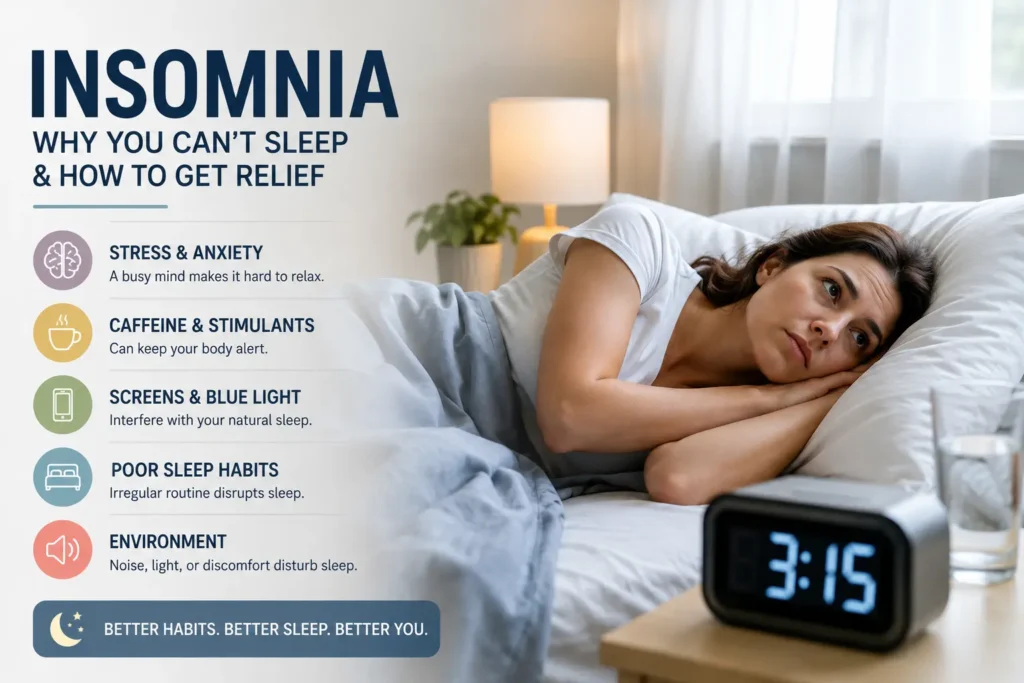
10 Common Causes of Insomnia
1. Stress. One of the biggest causes. A busy, worried mind makes it hard to switch off and fall asleep. Stress from work, relationships, finances, or life events commonly disrupts sleep, often temporarily.
2. Anxiety. Anxiety and a racing mind are closely linked with insomnia. Worrying thoughts at bedtime, including worry about sleep itself, keep the mind alert when it needs to wind down.
3. Poor sleep habits. Irregular sleep and wake times, napping too much, using the bed for activities other than sleep, and an inconsistent routine all disrupt the body’s sleep patterns.
4. Caffeine and stimulants. Caffeine, particularly later in the day, can interfere with sleep, as it is a stimulant that stays in the system for hours. Nicotine is also stimulating.
5. Screens and light before bed. Using phones, tablets, and other screens before bed, and exposure to bright light, can make it harder to fall asleep by interfering with the body’s natural wind-down.
6. An uncomfortable sleep environment. A room that is too warm, too bright, or noisy, or an uncomfortable mattress, can all disrupt sleep.
7. Irregular routine and shift work. Going to bed and waking at different times, or shift work that disrupts the body’s natural circadian rhythm, commonly causes disrupted sleep and ongoing sleep problems. Over time, this kind of irregular pattern can lead to genuine sleep deprivation.
8. Alcohol. While alcohol may make you feel drowsy initially, it disrupts the quality of sleep later in the night, leading to poorer, more broken sleep.
9. Eating patterns. Eating heavy meals late at night, or going to bed hungry, can interfere with sleep for some people.
10. Underlying medical conditions and medications. Physical discomfort or pain, certain medical conditions, some medications, and mental health issues can all affect sleep, which is why persistent insomnia is worth discussing with a doctor.
Trouble Falling Asleep vs Staying Asleep
The pattern of your insomnia can offer clues to what is behind it.
Difficulty falling asleep at the start of the night is often linked to a busy or anxious mind, stress, stimulation from caffeine or screens, or an irregular routine that means your body is not ready for sleep at bedtime. Addressing the wind-down before bed, reducing stimulation, and calming the mind often help this pattern.
Difficulty staying asleep — waking during the night and struggling to get back to sleep — can relate to factors like alcohol, an uncomfortable environment, needing the toilet, physical discomfort, or waking in the early hours with a worried mind. Some people experience both.
Noticing your particular pattern, and what tends to accompany your sleepless nights, helps you target the likely causes. Keeping a simple sleep diary — noting when you go to bed, how you slept, and factors like caffeine, stress, and screen use — often reveals patterns that point clearly to what is disrupting your sleep.
How to Sleep Better: Sleep Hygiene
The foundation of better sleep is good sleep habits, often called sleep hygiene. These genuinely work for most people and are the first-line approach to insomnia:
- Keep a regular schedule. Go to bed and wake up at the same times every day, including weekends. This trains your body’s internal clock.
- Create a wind-down routine. Spend the time before bed doing something relaxing — reading, gentle stretching, a warm bath — to signal to your body that sleep is coming.
- Limit screens before bed. Reduce phone, tablet, and screen use in the hour or so before sleep.
- Watch your caffeine. Avoid caffeine in the afternoon and evening, as it can disrupt sleep for hours.
- Make your bedroom sleep-friendly. Keep it dark, quiet, cool, and comfortable.
- Use the bed for sleep. Avoid working, scrolling, or watching TV in bed, so your mind associates it with sleep.
- Get daylight and activity. Natural light during the day and regular physical activity support healthy sleep.
- Limit alcohol and late heavy meals. Both can disrupt sleep quality.
- If you can’t sleep, get up. If you are lying awake and frustrated, get up, do something calm in low light, and return when sleepy, rather than lying there anxious.
Consistency is key — these habits work over time rather than instantly. For most people, sticking with good sleep hygiene leads to real improvement.
Breaking the Worry Cycle
A crucial part of tackling insomnia is addressing the anxiety about sleep itself that so often develops. When you have had poor nights, it is natural to start worrying about sleep, watching the clock, and dreading bedtime — but this worry is itself stimulating and makes sleep harder, creating a self-perpetuating cycle.
Breaking this cycle involves easing the pressure around sleep. Try not to clock-watch during the night, as it fuels anxiety. Remind yourself that one poor night is not a disaster and that your body will eventually get the sleep it needs.
Relaxation techniques, calming your mind before bed, and not forcing sleep all help, since trying hard to sleep tends to backfire. Getting up and doing something calm when you cannot sleep, rather than lying there frustrated, stops the bed from becoming linked with being awake and worried. For many people, easing the anxiety and pressure around sleep is as important as any other measure. It can be the key that finally allows natural sleep to return.
Why Sleep Matters So Much
Understanding just how much sleep affects your health can be a helpful motivator for taking insomnia seriously and prioritising the changes that improve it.
Sleep is not simply “rest” — it is an active period during which the body and brain carry out essential work. During good-quality sleep, the body repairs and restores itself, the brain processes and consolidates memories, and countless functions affecting mood, hormones, immunity, and metabolism are supported. This is why poor sleep has such wide-ranging effects, touching your energy, concentration, mood, and, over the longer term, your physical health.
In the short term, a poor night leaves most people tired, irritable, and less able to concentrate, with low mood and reduced motivation — effects our guide on fatigue causes explores. Persistent poor sleep can affect mood more deeply, make everyday functioning harder, and is linked with a range of health effects over time. The relationship also runs both ways: poor sleep can worsen stress, anxiety, and low mood, while those same states worsen sleep, creating cycles worth breaking. None of this is meant to add to the worry that already fuels insomnia — rather, it underlines why addressing sleep problems is genuinely worthwhile, and why the effort of building better sleep habits pays off across your whole wellbeing.
Common Sleep Myths That Don’t Help
Several widespread beliefs about sleep can actually make insomnia worse, so it is worth clearing them up.
One unhelpful myth is that everyone needs exactly eight hours, and that anything less is a disaster. In reality, sleep needs vary between individuals, and fixating on a specific number can create anxiety that itself harms sleep. What matters more is how rested you feel and how you function, not hitting an exact figure. Another myth is that lying in bed trying hard to sleep will eventually work — in fact, forcing sleep tends to backfire, and getting up to do something calm when you cannot sleep is usually more effective than lying there frustrated.
Some people believe alcohol is a good sleep aid because it makes them drowsy, but while it may help you drift off, it disrupts sleep quality later in the night, leading to poorer, more broken rest. Others think catching up on sleep at weekends fully undoes the effects of poor weekday sleep, but highly irregular sleep timing actually disrupts the body’s clock and can worsen insomnia; a consistent schedule serves you better. Finally, many assume that if they cannot sleep, the only answer is medication — yet good sleep habits and, where needed, specific therapies for insomnia are highly effective and are the recommended first approach. Letting go of these myths, and replacing them with a calmer, more realistic understanding of sleep, is itself part of sleeping better.
When to See a Doctor
See a doctor if:
- Insomnia is persistent, lasting weeks or longer despite good sleep habits
- Poor sleep is significantly affecting your daily life, mood, or functioning
- You suspect an underlying condition or medication is affecting your sleep
- You have symptoms like loud snoring with pauses in breathing, or excessive daytime sleepiness
- Anxiety or low mood is contributing to your sleep problems
- You feel you need help getting your sleep back on track
A doctor can look for underlying causes, offer or refer you for effective approaches such as specific therapy for insomnia, and address contributing conditions. Persistent insomnia is common and treatable, so it is worth seeking help rather than simply enduring it. The NHS guidance on insomnia explains the options.
Final Thoughts
Insomnia is exhausting and, at its worst, genuinely distressing — but the reassuring truth is that most sleep problems have identifiable, addressable causes, and the body is fundamentally built to sleep. Stress, anxiety, poor sleep habits, caffeine, screens, and an unhelpful environment are the usual culprits, and each can be tackled. The foundation of better sleep is good sleep hygiene: a regular schedule, a calming wind-down, a sleep-friendly bedroom, and sensible habits around caffeine, screens, and alcohol.
The balanced approach is to address the causes and build good habits patiently, since better sleep comes over time rather than overnight, while also easing the anxiety about sleep that so often makes it worse. For persistent insomnia that does not respond to these measures, effective help is available from a doctor, including specific therapies that work well. For the common sleep struggles most people face, though, understanding what is disrupting your sleep and addressing it, combined with consistent good habits and a calmer relationship with sleep, is usually enough to help natural, restful sleep return.
Medical disclaimer: This article is for general educational information and is not a substitute for professional medical advice, diagnosis, or treatment. See a doctor for persistent insomnia, or if poor sleep is significantly affecting your daily life or wellbeing.
Frequently Asked Questions
What are the most common causes of insomnia? The most common causes are stress and anxiety, poor sleep habits, caffeine and stimulants, screens and light before bed, an uncomfortable sleep environment, an irregular routine, and alcohol. Underlying conditions and medications can also affect sleep. Most causes are addressable.
Why can’t I fall asleep even when I’m tired? Struggling to fall asleep despite tiredness often results from a busy or anxious mind, stress, stimulation from caffeine or screens, or worry about sleep itself, which keeps the mind alert. Calming the mind, reducing stimulation before bed, and a consistent wind-down routine often help.
How can I fix my insomnia naturally? Good sleep habits are the foundation: a regular sleep schedule, a calming wind-down routine, limiting screens and caffeine, a dark, quiet, cool bedroom, using the bed only for sleep, and daytime activity and light. Easing anxiety about sleep is also important. These work over time with consistency.
Why do I wake up in the middle of the night? Waking during the night can relate to alcohol, an uncomfortable environment, needing the toilet, physical discomfort, or waking with a worried mind in the early hours. If you wake and can’t get back to sleep, getting up briefly to do something calm often works better than lying there frustrated.
Does caffeine genuinely affect sleep? Yes. Caffeine is a stimulant that stays in the system for hours, so caffeine in the afternoon and evening can interfere with falling and staying asleep, even if you feel you tolerate it. Limiting caffeine to earlier in the day is a simple, effective step for better sleep.
When should I see a doctor about insomnia? See a doctor if insomnia persists for weeks despite good sleep habits, significantly affects your daily life or mood, or comes with symptoms like loud snoring with breathing pauses or excessive daytime sleepiness. Persistent insomnia is common and treatable, so seeking help is worthwhile.
Can anxiety cause insomnia? Yes. Anxiety and a racing mind are closely linked with insomnia, as worrying thoughts at bedtime — including worry about sleep itself — keep the mind alert. Addressing anxiety, calming the mind before bed, and easing the pressure around sleep often improve it, and a doctor can help if anxiety is significant.