Introduction
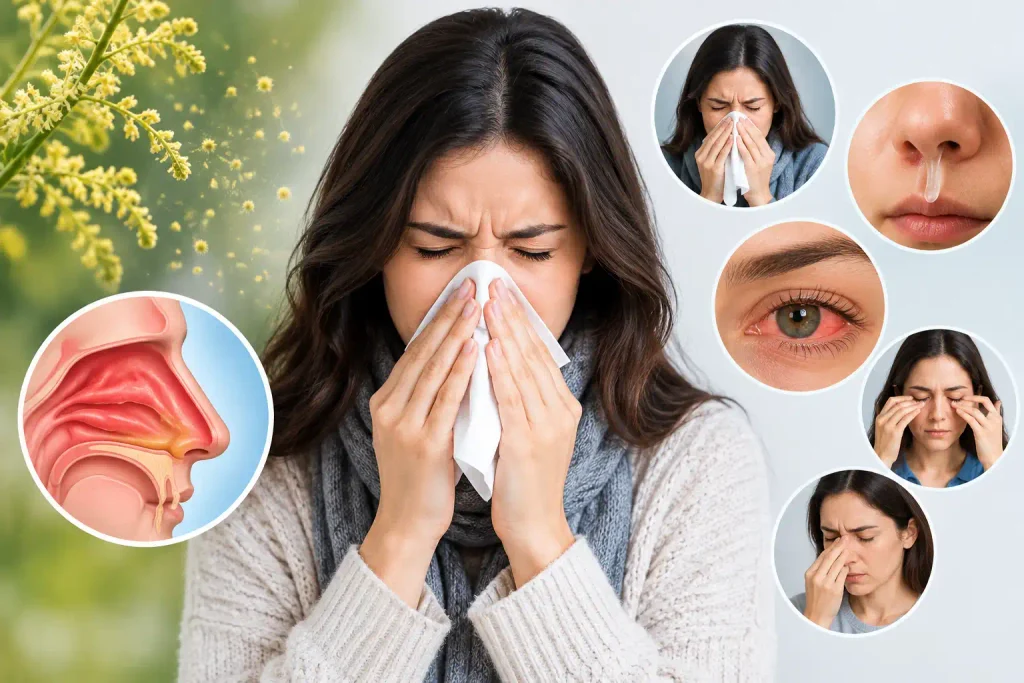
Allergic rhinitis occurs when the immune system reacts to airborne allergens such as pollen, dust mites, mold, or pet allergens. It can cause sneezing, a runny or blocked nose, an itchy nose, and watery eyes. Symptoms may occur during certain seasons or throughout the year. (sources)
Understanding allergic rhinitis symptoms, causes, and treatment options can help people manage their condition. Suitable care may reduce discomfort, improve sleep, and support quality of life.
What Is Allergic Rhinitis?
Allergic rhinitis, also called hay fever or nasal allergy, is an allergic reaction that affects the lining of the nose. When a sensitive person encounters an allergen, the immune system releases histamine and other chemicals. This response can cause irritation, swelling, sneezing, and extra mucus.
There are two main types:
- Seasonal allergic rhinitis: Symptoms occur during particular times of the year, often because of pollen exposure.
- Perennial allergic rhinitis: Symptoms may occur throughout the year due to ongoing exposure to allergens such as dust mites or pet allergens. (sources)
7 Common Allergic Rhinitis Symptoms
Symptoms vary from person to person. Common signs include:
1. Sneezing
Frequent sneezing is a common response to allergens that irritate the nasal passages. It may occur repeatedly after exposure to pollen, dust, or other triggers. (sources)
2. Runny Nose
A runny nose occurs when the nose produces extra fluid. The discharge is often thin and watery and may occur with sneezing or itching. (sources)
3. Nasal Congestion
Inflammation and swelling inside the nose can make breathing through the nostrils difficult. Congestion may also disturb sleep and cause discomfort during daily activities. (sources)
4. Itchy Nose
Nasal itching is a typical allergy symptom. It often occurs alongside sneezing and a runny nose. (sources)
5. Watery or Itchy Eyes
Allergies can affect the eyes, causing itching, watering, and irritation. Persistent eye symptoms may need professional advice. (sources)
6. Postnasal Drip
Postnasal drip happens when mucus moves from the back of the nose into the throat. It may cause throat irritation or a frequent need to clear the throat. Other conditions can also cause this symptom. (sources)
7. Fatigue and Dark Circles
Nasal symptoms may disturb sleep and contribute to daytime tiredness. Dark circles can also occur in people with nasal allergies, but they do not confirm allergic rhinitis on their own. (sources)
What Causes Allergic Rhinitis?
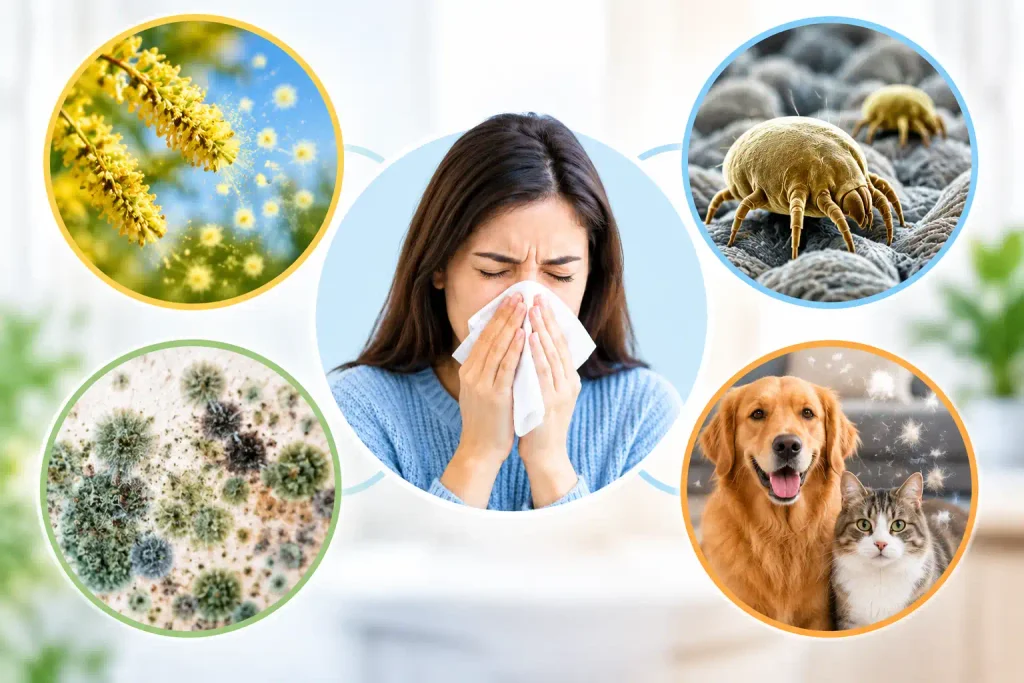
Allergic rhinitis develops when the immune system reacts to a substance that is usually harmless to most people.
Common triggers include:
- Pollen: Pollen from trees, grasses, and weeds can cause seasonal allergies.
- Dust mites: These tiny organisms and their allergen-containing particles can trigger symptoms in sensitive people.
- Mold: Airborne mold spores may cause symptoms in people with mold allergies.
- Pet allergens: Proteins associated with pets, including those found in skin flakes and saliva, can trigger allergic reactions. (sources)
Not everyone reacts to the same allergens. Identifying likely triggers can help guide prevention and treatment.
Risk Factors
A family history of allergies may increase the likelihood of allergic rhinitis. Other allergic conditions, including asthma and eczema, may also be associated with it. However, risk factors do not mean a person will definitely develop the condition. (sources)
Allergic Rhinitis vs. Common Cold
Allergic rhinitis and the common cold can cause sneezing, a runny nose, and congestion, but their causes differ.
FeatureAllergic RhinitisCommon Cold
CauseAllergensVirusesSneezingCommonCan occurItchy eyes or noseCommonLess typicalFeverNot typicalCan occurSymptom patternMay return after allergen exposureUsually temporary
(sources)
This comparison is general guidance. Similar symptoms can have different causes, so persistent or unclear symptoms may need medical assessment.
How Is Allergic Rhinitis Diagnosed?
A healthcare professional may ask about symptoms, medical history, and possible exposure to allergens. The timing of symptoms can help identify potential triggers.
Skin-prick tests and blood tests may help identify sensitivity to specific allergens. Results should be interpreted alongside symptoms and medical history because a positive test alone does not prove that an allergen causes every symptom. (sources)
Treatment for Allergic Rhinitis
The treatment for allergic rhinitis depends on the person’s symptoms, age, medical history, and response to treatment.
Antihistamines
Antihistamines reduce the effects of histamine and may help relieve sneezing, itching, and a runny nose. A pharmacist or healthcare professional can help select a suitable product. (sources)
Nasal Corticosteroid Sprays
These sprays reduce inflammation inside the nose and can help control nasal symptoms. Regular use may be needed before the full benefit becomes noticeable. Follow product instructions and seek professional advice about use in children. (sources)
Saline Nasal Rinses
Saline rinses can help clear mucus and irritants from the nasal passages. Use distilled, sterile, or previously boiled and cooled water for nasal rinsing. Follow the device instructions carefully. (sources)
Decongestants
Decongestants may provide temporary relief from nasal congestion. However, overusing certain decongestant nasal sprays can make congestion worse. Follow the product instructions and ask a healthcare professional if you are unsure about safe use. (sources)
Allergen Immunotherapy
Allergen immunotherapy may be suitable for selected people whose symptoms remain troublesome. It involves a planned course of treatment directed at specific allergens. Eligibility, duration, risks, and long-term benefits vary, so specialist advice is important. (sources)
Allergic Rhinitis Prevention
Allergic rhinitis prevention focuses on reducing exposure to triggers that cause symptoms. Complete avoidance may not be possible, but practical steps can help:
- Track symptoms and possible triggers.
- Check local pollen information if pollen causes your symptoms.
- Clean household surfaces and bedding regularly when dust mites are a suspected trigger.
- Reduce indoor moisture and address mold problems safely.
- Discuss ways to reduce pet allergen exposure if pets trigger symptoms.
- Follow treatment instructions and seek advice if symptoms continue. (sources)
The most useful steps depend on the allergens involved. Avoid unnecessary changes to your home or routine unless they address a likely trigger.
When to Seek Medical Advice
Consult a healthcare professional if symptoms persist, interfere with sleep or daily activities, or do not improve with appropriate care. Medical advice can help distinguish allergic rhinitis from other conditions and identify suitable treatments.
Seek emergency medical help for severe breathing difficulty or swelling of the tongue or throat, as these may indicate a serious allergic reaction. (sources)
Frequently Asked Questions
What are the main symptoms of allergic rhinitis?
Common symptoms include sneezing, a runny or blocked nose, nasal itching, and watery or itchy eyes. Some people also experience postnasal drip or tiredness related to disturbed sleep. (sources)
Can allergic rhinitis occur throughout the year?
Yes. Perennial allergic rhinitis can occur throughout the year when a person is repeatedly exposed to relevant allergens, such as dust mites or pet allergens. (sources)
Can allergic rhinitis affect quality of life?
Yes. Nasal symptoms may interfere with sleep and daily activities. Appropriate treatment and trigger management may help improve comfort and quality of life. (sources)
Can allergic rhinitis be cured permanently?
Treatment can help control symptoms. Immunotherapy may provide long-term benefits for selected people, but results vary, and no treatment guarantees a permanent cure for everyone. (sources)
Conclusion
Allergic rhinitis can cause sneezing, nasal congestion, a runny nose, and itchy or watery eyes. Recognizing triggers, following suitable treatment, and taking practical prevention steps may help control symptoms. Consult a healthcare professional if symptoms persist or affect your quality of life. (sources)
Medical Disclaimer: This article is for general educational purposes only and is not a substitute for professional medical advice, diagnosis, or treatment. Consult a qualified healthcare professional about persistent symptoms or treatment decisions.