Acne Clogged Pores: Causes, Treatment & Prevention
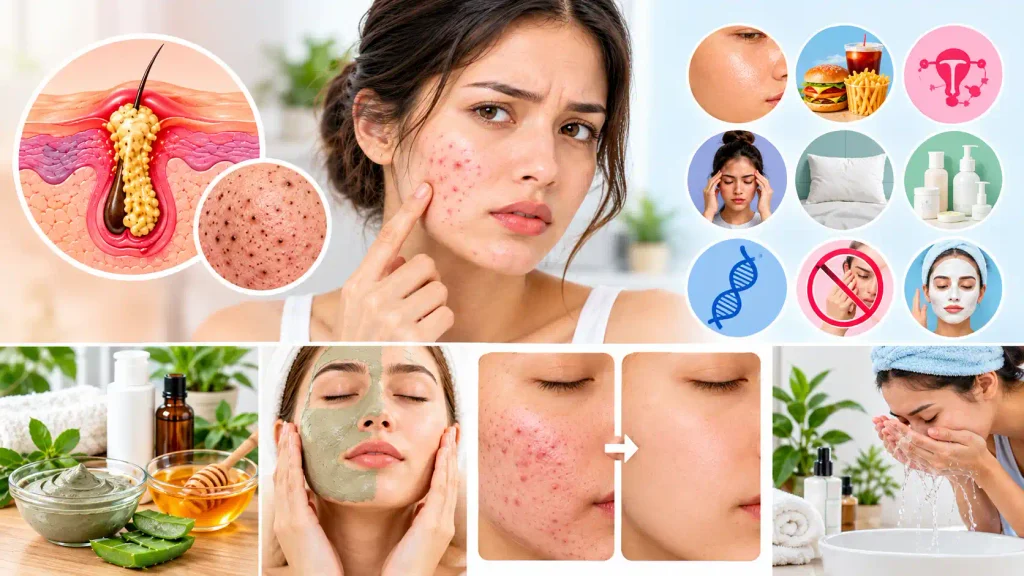
Acne clogged pores are closely linked to blackheads, whiteheads, and other acne lesions. When excess oil and dead skin cells build up inside a hair follicle, the follicle can become blocked and form a comedone. Blackheads are open comedones, while whiteheads are closed comedones. Understanding clogged pores and acne can help you recognize different breakouts and understand which acne treatment options may help. What Are Acne Clogged Pores? Clogged pores develop when material builds up inside a hair follicle. Excess sebum and changes in the cells lining the follicle can contribute to this blockage. A clogged follicle can form a comedone. If the follicle stays open, it forms a blackhead, also called an open comedone. If it closes, it forms a whitehead, also called a closed comedone. These are forms of comedonal acne. (DermNet: Comedonal Acne) Why Do Pores Become Clogged? The main causes of clogged pores are linked to oil production and changes inside the hair follicle. Excess Oil and Dead Skin Cells Excess oil and dead skin cells can contribute to blocked follicles. When this material builds up inside the follicle, a comedone can form. Certain oily or occlusive products can also contribute to comedonal acne. (DermNet: Comedonal Acne) Can Skincare Products Cause Clogged Pores? Some products may contribute to comedone formation. If you are concerned about skincare products that cause clogged pores, look for non-comedogenic products or products labeled “won’t clog pores.” The American Academy of Dermatology recommends products labeled non-comedogenic, oil-free, or “won’t clog pores” for people with acne. (AAD: Acne Overview) How Do Acne Clogged Pores Contribute to Acne? Clogged follicles can be linked to different types of acne. Blackheads and whiteheads develop when follicles become clogged. Acne can also become inflammatory. When inflammation develops deeper in the skin, lesions such as papules and pustules can appear. More severe acne can include nodules and cysts. These deeper acne pimples can cause scarring and may require professional treatment. (AAD: How to Treat Different Types of Acne) Different Types of Acne Knowing the different types of acne matters because each type may need a different treatment option. (AAD: How to Treat Different Types of Acne) How to Unclog Pores If you want to know how to unclog pores, the right approach depends on the type of acne you have. Several acne treatment ingredients are used to treat clogged pores and acne. Salicylic Acid for Clogged Pores Salicylic acid for clogged pores can help with blackheads and whiteheads. DermNet explains that salicylic acid helps reduce the buildup of cells inside hair follicles. It can also help break down blackheads and whiteheads. (DermNet: Salicylic Acid) This makes salicylic acid for acne useful when comedones are a major concern. Salicylic acid can cause skin irritation, especially when overused, so follow the product instructions. Retinoids for Acne Retinoids for acne are another important treatment option. Topical retinoids help prevent dead skin cells from building up inside hair follicles. They can treat comedonal acne and are also used for inflammatory acne. (DermNet: Topical Retinoids) Examples include adapalene and tretinoin. Improvement can take several weeks, so consistent use is important. The NHS states that topical retinoids should not be used during pregnancy. (NHS: Acne Treatment) Benzoyl Peroxide for Acne Benzoyl peroxide for acne can reduce acne-causing bacteria and inflammation. It can also help with blackheads and whiteheads. (NHS: Acne Treatment) Benzoyl peroxide may cause dryness, redness, peeling, burning, or itching. Using more than recommended can increase irritation. How Can You Prevent Clogged Pores? You cannot always prevent clogged pores, but suitable products and acne treatment can help manage breakouts. Choose Non-Comedogenic Products Use non-comedogenic products when possible if you are prone to acne. These products are designed to be less likely to clog pores. Check labels for terms such as “non-comedogenic,” “oil-free,” or “won’t clog pores.” (AAD: Acne Overview) Avoid Aggressive Scrubbing Washing your face can be part of an acne-friendly routine, but aggressive scrubbing is not recommended. The AAD advises against scrubbing blackheads because this can worsen acne. (AAD: How to Treat Different Types of Acne) The goal is not simply removing dead skin cells by scrubbing harder. Acne treatment should address the processes that contribute to blocked follicles. Give Treatments Time Effective treatments usually need time to work. The AAD says it can take about 6 to 8 weeks before you begin to see fewer breakouts. The NHS notes that some acne treatments can take 2 to 3 months to work. (AAD: Acne Diagnosis and Treatment; NHS: Acne Treatment) Changing treatments too quickly can make it difficult to know whether a treatment is working. When Should You See a Dermatologist? Professional advice may be appropriate if acne is severe, painful, scarring, or does not improve with pharmacy treatments. Deep nodules and cysts can cause permanent scarring and may require professional acne treatment. (AAD: How to Treat Different Types of Acne) A dermatologist can also help determine whether the affected areas are caused by acne or another skin condition. Frequently Asked Questions What are the main causes of clogged pores? The main causes include excess oil and changes in the cells inside hair follicles. Oily or occlusive products can also contribute to comedonal acne. (DermNet: Comedonal Acne) How do you unclog pores? If you want to unclog pores, treatment depends on the type of acne. Salicylic acid can help with blackheads and whiteheads, while topical retinoids can help prevent buildup inside hair follicles. Are blackheads clogged pores? Yes. Blackheads are open comedones associated with clogged hair follicles. Are whiteheads clogged pores? Yes. Whiteheads are closed comedones that develop when a follicle becomes blocked. Can clogged pores cause acne pimples? Clogged follicles are associated with blackheads and whiteheads. Acne can also become inflammatory acne, producing lesions such as papules and pustules. (AAD: How to Treat Different Types of Acne) What is the best acne treatment? There is no single treatment that works for every type of acne. Salicylic acid, topical retinoids, and benzoyl peroxide are established acne treatment ingredients, but the appropriate
Hives on Skin: 9 Causes & Quick Relief
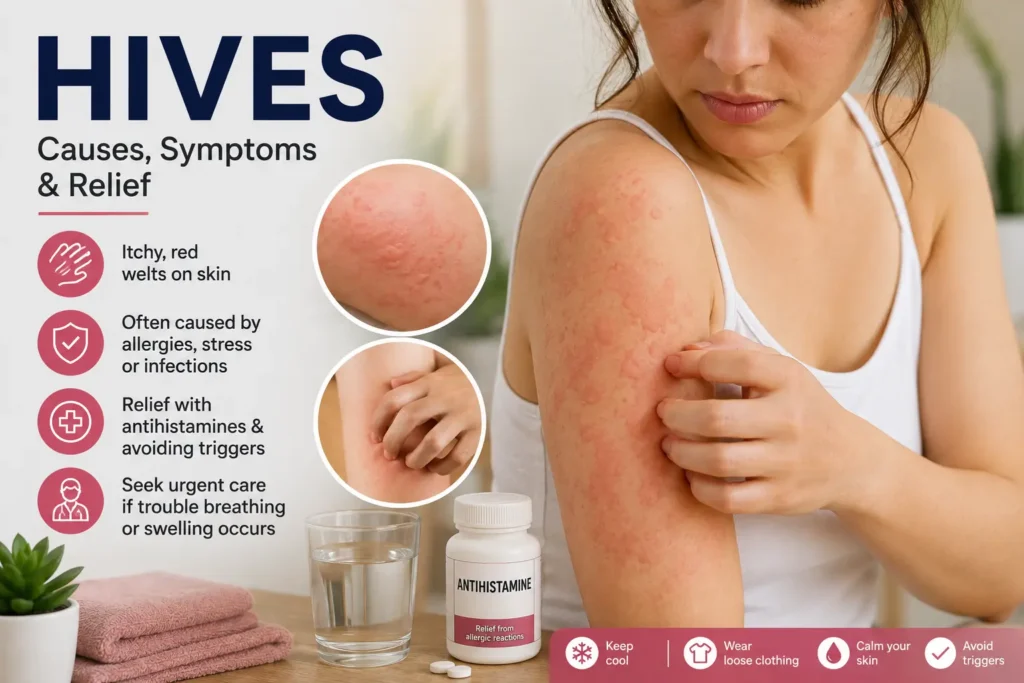
Hives are one of the most common skin problems, and one of the most alarming when they first appear. Raised, itchy welts can show up on the skin suddenly, often for no obvious reason, and then fade just as quickly. They can be uncomfortable, itchy, and worrying, especially if you do not know what is causing them. The medical name for hives is urticaria. They can appear anywhere on the body, come in different sizes, and change shape or move around. Most of the time, hives are harmless and settle on their own. But they can be very itchy, and in some cases they point to an allergy or another trigger worth understanding. The good news is that most hives are easy to manage and often clear up quickly. This guide explains what hives are, their common causes and symptoms, how to treat them, simple ways to get relief, and when to see a doctor. Quick Overview Question Short answer What are hives? Raised, itchy welts on the skin (urticaria) What do they look like? Red or skin-coloured raised patches, often itchy Common causes Allergies, infections, stress, heat, medications Are they serious? Usually not, but severe reactions need urgent care How long do they last? Often hours to days; sometimes longer How to treat them Antihistamines, avoiding triggers, soothing the skin When to worry Swelling of the face or throat, or trouble breathing What Are Hives? Hives are raised, itchy welts that appear on the skin. They happen when the body releases a chemical called histamine. This causes small blood vessels to leak fluid under the skin. The fluid builds up and forms the raised welts. Hives can be red, pink, or skin-coloured. They can be small or large, and they often join together to form bigger patches. A key feature is that they can change shape, move around, and come and go over hours. If you press the centre of a hive, it often turns pale. Hives are usually very itchy. They can appear on any part of the body. Most hives are what doctors call acute, meaning they last a short time. Some people get long-lasting or repeated hives, known as chronic hives. Our guide on how long hives last explains the difference in more detail. Common Symptoms of Hives The main symptoms of hives are usually easy to recognise: Hives can range from a few small spots to large areas of the skin. Sometimes they come with a deeper swelling under the skin, often around the eyes or lips. This is called angioedema. Our guide on hives on the face covers this. Most hives are uncomfortable but harmless. However, if hives come with swelling of the face, lips, tongue, or throat, or with difficulty breathing, this can be a sign of a serious allergic reaction that needs emergency care. 9 Common Causes of Hives Hives have many possible triggers. Sometimes the cause is clear, and sometimes it is never found. Here are the common ones. 1. Allergies. Allergic reactions are a common cause. Foods, medicines, insect stings, and other allergens can trigger hives in people who are sensitive to them. 2. Foods. Certain foods can cause hives in some people. Common examples include nuts, shellfish, eggs, and milk, though any food can be a trigger. 3. Medications. Some medicines can cause hives as a reaction. If hives appear after starting a new medicine, mention it to your doctor. Do not stop a prescribed medicine on your own. 4. Infections. Many cases of hives, especially in children, are triggered by an infection, such as a common cold or other viral illness. Our guide on baby hives covers hives in children. 5. Insect stings and bites. Stings and bites can cause hives in some people, either around the site or more widely. 6. Stress. Emotional stress can trigger hives or make them worse. The link between stress and hives is well recognised. Our guide on stress hives explains this. 7. Heat, cold, and physical triggers. In some people, hives are triggered by physical factors such as heat, cold, sunlight, pressure on the skin, or exercise. 8. Contact with certain substances. Touching certain plants, chemicals, latex, or other substances can cause hives in sensitive people. 9. Unknown causes. In many cases, especially with long-lasting hives, no clear cause is found. This can be frustrating, but the hives can still be managed. Our guide on what causes hives explores the triggers in more depth. Acute vs Chronic Hives Hives are often grouped by how long they last, and this difference matters. Acute hives are short-lived. They come on suddenly and usually clear within hours to a few days, and by definition within six weeks. Most hives are acute. They are frequently linked to a clear trigger, such as an allergy, infection, or food. Chronic hives last longer. They continue or come back over six weeks or more. In many cases of chronic hives, no clear cause is found, which can be frustrating. Chronic hives are less common and often need medical assessment and longer-term management. Our guide on chronic hives covers this in detail. Knowing whether your hives are acute or chronic helps guide what to do. Acute hives often settle on their own or with simple treatment. Chronic hives usually benefit from seeing a doctor to manage them and look for any triggers. How to Treat Hives Most hives can be managed at home, and they often settle on their own. Here are the main approaches. Antihistamines. These are the main treatment for hives. Antihistamines work against histamine, the chemical that causes hives. They reduce itching and welts. Many are available from a pharmacy, and a pharmacist can advise on a suitable one. Avoid known triggers. If you know what triggers your hives, avoiding it is the most effective step. This might be a food, a medicine, or a physical trigger like heat. Soothe the skin. Cool compresses, a cool bath, and loose, comfortable clothing can ease the itching.
Baby Hives: 8 Common Causes & How to Soothe Them Safely
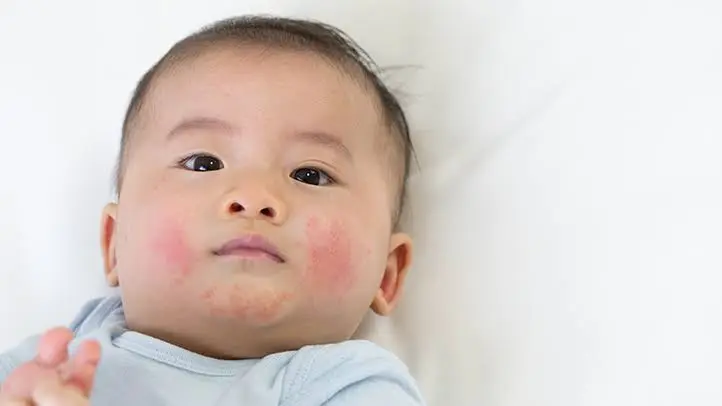
Few things send a parent’s heart racing like spotting raised, blotchy welts spreading across their baby’s skin — especially when they seem to appear from nowhere, fade in one spot, and pop up somewhere else minutes later. It looks dramatic, the baby may be fussing and scratching, and every instinct says something is badly wrong. Here is the reassurance most parents need first: hives in babies and toddlers are common, and in the vast majority of cases they are harmless and short-lived. The most frequent cause is not a scary allergy but an ordinary viral infection — the same kind of bug that causes coughs and colds. That said, because babies cannot tell you how they feel, it is worth knowing how to soothe them safely and, importantly, the specific signs that do mean a trip to the doctor or emergency care. This guide is written for exactly that moment: what baby hives are, why they happen, what you can safely do at home, and when to seek help. Quick Overview Question Short answer What are they? Raised, itchy welts from histamine release in the skin How common? Very common in babies and toddlers Most common cause Viral infections — more often than allergies How long do they last? Individual welts under 24 hours; episodes days to a week or so Are they dangerous? Usually not, but watch for breathing or swelling signs Safe home care Cool compress, loose clothing, keeping baby comfortable Medication Only give antihistamines if a doctor or pharmacist advises Seek emergency help immediately if your baby has any difficulty breathing, swelling of the lips, tongue, or face, becomes floppy or unusually drowsy, or is struggling in any way. When in doubt with a baby, always err on the side of getting help. What Are Baby Hives? Baby hives are raised welts that appear when immune cells in the skin, called mast cells, release a chemical called histamine. The histamine makes tiny blood vessels leaky, fluid gathers under the skin, and a raised, itchy welt forms. On a baby they often look like raised pink or red blotches on lighter skin, and skin-toned or slightly darker raised patches on brown and Black skin, sometimes with a paler centre. The most telltale feature is that they move. A welt on the tummy may fade within an hour while new ones appear on the legs. This shifting, blotchy pattern is characteristic of hives and is actually reassuring — it is how ordinary hives behave. A rash that stays completely fixed in one place for days is more likely something else. For the underlying biology, our main guide on hives on skin explains the process in more detail. 8 Common Causes of Baby Hives 1. Viral infections — the most common cause. This surprises most parents. Ordinary viruses — colds, tummy bugs, sore throats — very frequently trigger hives in babies and toddlers as their immune system responds. The hives often appear during or just after a mild illness and settle as the infection clears. If your baby was recently a bit unwell, this is the most likely explanation. 2. Food. Genuine food-triggered hives usually appear within two hours of eating and often involve the same food each time. Common triggers in young children include cow’s milk, eggs, peanuts, tree nuts, wheat, soy, and fish. This is especially relevant when introducing new foods. 3. Medications. Some medicines, including certain antibiotics, can cause hives in babies. Never stop a prescribed medication on your own — contact the prescriber for advice. 4. Insect bites and stings. Bites and stings can produce localised welts, and some babies react more strongly than others. 5. Contact with irritants. New soaps, lotions, detergents, or certain fabrics against a baby’s sensitive skin can trigger welts where the substance touched. 6. Temperature changes. Heat, cold, or a sudden temperature change can bring on hives in some babies, particularly on exposed skin. 7. Plants and animals. Contact with certain plants, or animal saliva and dander, can trigger reactions in sensitive little ones. 8. Sometimes no clear cause. As with adults, a trigger is not always found, particularly in longer-lasting cases. This does not mean anything is seriously wrong. How to Soothe Baby Hives Safely at Home For hives without any emergency signs, gentle comfort measures are the priority. The goal is to keep your baby comfortable while the hives settle on their own. A crucial point on medication: do not give your baby antihistamines or any over-the-counter allergy medicine unless a doctor or pharmacist has specifically advised it and told you the correct product and dose. Many adult and older-child remedies are not suitable for babies, and dosing must be exact. Always ask a professional first. Our general guide on how to get rid of hives is written mainly for adults — for babies, professional advice on any medicine is essential. Understanding Viral Hives in Babies Because viral infection is the leading cause, it is worth understanding this pattern in a bit more depth — it explains a lot of the baby hives parents worry about. When a baby catches an ordinary virus, their immune system swings into action to fight it. That immune activity can, as a side effect, trigger the mast cells in the skin to release histamine, producing hives. This is why a baby who had a runny nose or was a little off a few days ago may suddenly break out in welts. The hives are not a reaction to anything they touched or ate — they are a knock-on effect of the body fighting the infection. These viral hives typically appear as the blotchy, shifting welts described earlier, may come and go for several days, and settle as the infection resolves. They can look particularly dramatic and sometimes form ring or map-like shapes, which parents occasionally mistake for something more serious. As long as the baby is otherwise coping — feeding, alert when awake, breathing comfortably — this pattern is usually nothing to
Causes of Hives and How to Get Fast Relief
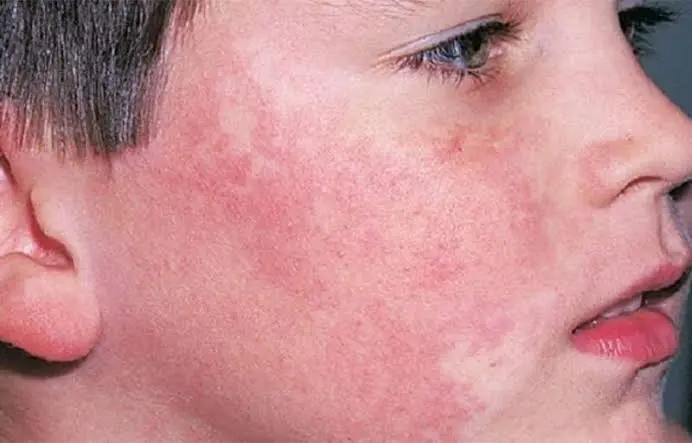
Hives are itchy, patchy, irregular raised bumps on the skin that can grow, shrink, and change shape. They have many possible triggers, such as cold, heat, stress, contact with certain plants, some medications, and some viral infections. Sometimes they are idiopathic, meaning no cause can be found. This guide explains the possible causes of hives and offers ways to get fast relief from the itching while you wait to see a licensed healthcare professional. Quick Overview Urticaria is the medical name for hives. Hives usually appear as pink, red, or skin-coloured circles or ovals on the skin. They can be triggered by infections, stress, extremes of temperature (hot or cold), or medicines. Hives often clear up on their own, but if they get worse or keep coming back, contact your doctor. How Long Do Symptoms Last? How long symptoms last depends on the cause. Hives may last a few hours, a few days, a few weeks, or, in some cases, many years. What Is the Treatment for Hives? Treatment usually involves avoiding the trigger (for example, stopping a medicine that is causing hives, on a doctor’s advice) and using medication such as antihistamines to relieve symptoms. Go to the emergency room if the person is having trouble breathing or is not responding. Swelling of the mouth, throat, or face also means you should go to the emergency room. What Are Hives? Hives form when substances such as histamine are released in the skin, making small blood vessels leak fluid into the surrounding tissue. Hives are swellings that can range in colour from pink to red or skin colour. They may be large swellings, many small swellings, or a combination of the two. Individual hives can move around and may quickly be replaced by new ones elsewhere. Hives often clear up quickly. When hives last longer than 6 weeks, they are called chronic urticaria. Typical Symptoms of Hives Three things usually happen: 1. The skin swells and can be very itchy and red, pink, or pale. 2. Swelling and discolouration can appear again and again on different areas of the skin. 3. When you press on a swelling, the skin turns paler (blanches). Hives can occur anywhere on the body, including the face. They can also occur with deeper swelling of the lips and eyes, which is called angioedema. Swelling of the lips, throat, cheeks, or tongue can block the airway and stop you from breathing. This is very dangerous and must be treated as an emergency. Different Causes of Hives Hives are often caused by allergic reactions. These may be reactions to foods, substances that touch the skin, insect bites or stings, or medicines. Searching for a trigger can be long and frustrating, so learning to recognise the pattern of a food allergy (for example, hives appearing soon after eating the same food) can help. Drug reactions follow a similar pattern to food allergies. Medicines such as NSAIDs, opioids, and some antibiotics can be involved. Some viral infections can also trigger hives, which is especially common in children with colds or flu-like illnesses. Our guide to baby hives covers this in more detail. Most insect stings or bites cause only a local reaction, but some can cause severe or whole-body reactions. Stress is also a well-known trigger of hives. Extreme Temperatures or Pressure Hives can also be caused by many non-allergic factors, including: Contact With Certain Substances Some people develop hives when their skin touches certain substances, even without a true allergy. Different people can react differently to the same substance, depending on how sensitive their skin is. No Identifiable Cause Flare-ups of chronic spontaneous urticaria can occur with no known cause. Short-Term vs Chronic Hives Short-term (acute) hives A sudden outbreak of hives that clears within days to a few weeks is called acute urticaria. It is often caused by an infection or an allergy. Chronic hives Hives that keep coming back for more than 6 weeks are called chronic urticaria. Chronic hives can last for months or even years. The treatment of chronic hives depends on the cause, so it should be planned with your doctor. Antihistamines that can relieve the itch of hives are available over the counter. Ask your pharmacist which one is suitable for you. Manage Your Symptoms Knowing your possible triggers can help you manage flare-ups. Triggers can include foods, substances, or medicines. Talk to your doctor about what might be triggering your hives, and follow their advice for relieving skin symptoms. For quick relief, rinse the skin with cool water and then apply a cold compress. Cool baths can also reduce itching. Avoid hot showers and hot baths, because hot water can make itching worse. Comfortable Clothing Avoid tight-fitting clothes, which can make itching worse; loose, comfortable clothing can help. Try not to scratch, because scratching starts an itch-scratch cycle that makes itching worse. At Home You can reduce the itch by keeping your skin cool, taking cool baths, wearing loose cotton clothing, and applying cool compresses to itchy areas. Avoid Your Personal Triggers Pay attention to situations that seem to bring on hives for you, such as stress, heat, strenuous exercise, exhaustion, or alcohol. Self-Care Remedies Talk to your pharmacist about using an antihistamine to reduce the itch. Describe your symptoms so they can recommend a suitable product. How to Find Your Hives Trigger Paying attention to what happened during your day is key to finding your trigger. Ask yourself: Were you out in the sun or exposed to the weather? Were you exposed to a sudden change in temperature? How stressed were you? Do you have a new infection? How to Avoid Hives To reduce the chance of hives, avoid your known triggers, such as sudden changes in temperature, pressure on the skin, or stressful situations. Foods and medicines that have caused hives before should also be avoided. Although you cannot remove stress from your life completely, you can manage it by taking things one step at a time. Keeping
How Long Do Hives Last? 6 Key Timelines You Must Know
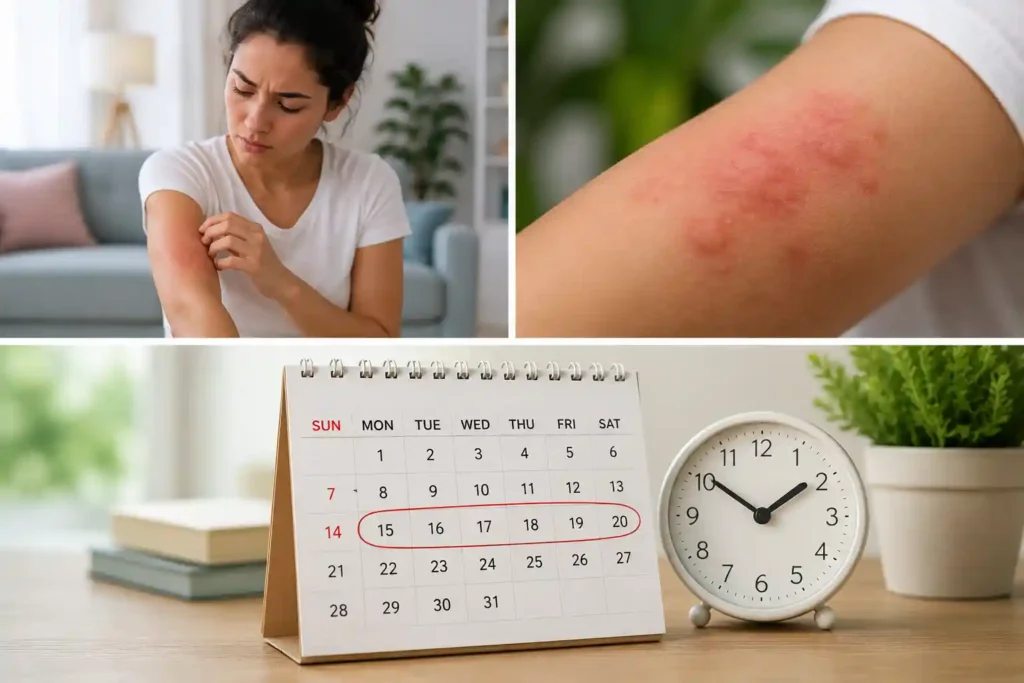
You are staring at a welt on your arm and doing the mental maths. It showed up an hour ago. Is it supposed to fade by tonight? Tomorrow? Should you be worried that it is still there? And the ones from yesterday keep being replaced by new ones — does that mean this is going to last for weeks? The timeline of hives confuses almost everyone, and for a good reason: two different clocks are running at once. There is the clock on each individual welt, and there is the clock on the whole episode. They tick at completely different speeds, and mixing them up is why people panic unnecessarily — or, occasionally, why they wait too long to get help. Let us untangle both. Quick Overview Timeline Typical duration A single welt Under 24 hours, often just a few hours An acute episode A few hours to a few weeks Allergic-reaction hives Fade within hours once the trigger clears Infection-related hives Resolve as the illness clears, over 1–2 weeks Chronic hives Six weeks or longer, sometimes years A welt lasting over 24 hours Not typical — see a doctor The Two Clocks: Individual Welts vs the Whole Episode Here is the single most useful fact about hives timelines: each individual welt is short-lived, but the overall episode can last much longer because new welts keep forming. A single hive appears when mast cells release histamine into one patch of skin, making the small blood vessels leaky. Fluid pools, the welt rises, and then — as that fluid is gradually reabsorbed — the welt flattens and disappears. This whole cycle for one welt takes a few hours to at most 24 hours. Meanwhile, the underlying process that is triggering the mast cells may keep going, setting off fresh welts in new locations even as the old ones fade. That is why you can have hives “for two weeks” while no single welt ever lasts more than a day. The episode is long; each welt is short. This distinction matters because a welt that stays fixed in exactly the same spot for more than 24 hours is behaving abnormally, and points towards something other than ordinary hives. For the full picture of how welts form, see our main guide on hives on skin. 6 Key Hives Timelines 1. A single welt: under 24 hours. This is the defining feature. Trace around a welt with a skin-safe pen and check it later — a normal hive will have faded or moved out of the outline within a day. 2. Acute hives from a clear trigger: hours to a couple of days. When hives follow an obvious cause — a food, a medication, an insect sting — they typically settle within hours to a day or two once the trigger is gone and you start an antihistamine. 3. Infection-related hives: one to two weeks. The most common cause of sudden hives, especially in children, is a viral infection. These hives rise and fall alongside the illness and clear as the infection resolves. This surprises people who spend the week hunting for a food cause. 4. Hives with treatment: faster, but not instant. A daily second-generation antihistamine speeds resolution and prevents new welts, but it does not erase existing ones in minutes. Expect gradual improvement over days. Our guide on how to get rid of hives covers how to use antihistamines correctly. 5. Chronic hives: six weeks or longer. When welts keep appearing beyond six weeks, the condition is classed as chronic urticaria. This can last months or, in some cases, years — but it is controllable throughout and often resolves on its own eventually. See our detailed guide on chronic hives and how to control them. 6. A welt lasting over 24 hours: a warning sign. If individual welts stay put for more than a day, feel painful rather than itchy, or leave a bruise, that suggests urticarial vasculitis rather than ordinary hives, and needs medical assessment. Why Some Hives Last Longer Than Others Several factors stretch out the timeline: Do Hives Go Away on Their Own? Often, yes. Acute hives frequently resolve without any treatment as the trigger clears or the infection passes. Antihistamines make you more comfortable and can shorten the course, but many mild cases would settle on their own within days regardless. Chronic hives are different — they persist precisely because the underlying process keeps going, and while they may eventually resolve on their own after months or years, treatment is worthwhile in the meantime to control symptoms and protect sleep and quality of life. Simple Steps to Help Hives Clear Faster When to See a Doctor Book an appointment if: Seek emergency care immediately for difficulty breathing, throat tightness, swelling of the tongue or mouth, hoarseness, dizziness, or fainting — these signal a serious allergic reaction. Guidance on widespread outbreaks is in our article on hives all over the body. Final Thoughts The reassuring headline is that most hives are short-lived: individual welts fade within a day, and the majority of episodes clear within hours to a couple of weeks. The two-clock idea is the key to not panicking — a long episode made of short-lived welts is normal and expected. The two situations that genuinely warrant attention are welts that stay fixed for more than 24 hours, and episodes that push past the six-week mark. The first suggests a different diagnosis; the second means it is time to move from waiting to treating. Everything in between is usually the ordinary, self-limiting nuisance that hives most often are. Medical disclaimer: This article is for general information and is not a substitute for professional medical advice, diagnosis, or treatment. Always consult a qualified healthcare provider about your individual circumstances. Frequently Asked Questions How long does it take for hives to go away? Individual welts fade within 24 hours, usually within a few hours. A full acute episode typically clears within a few days to a couple of weeks.
Chronic Hives: 8 Proven Steps to Control Urticaria for Good
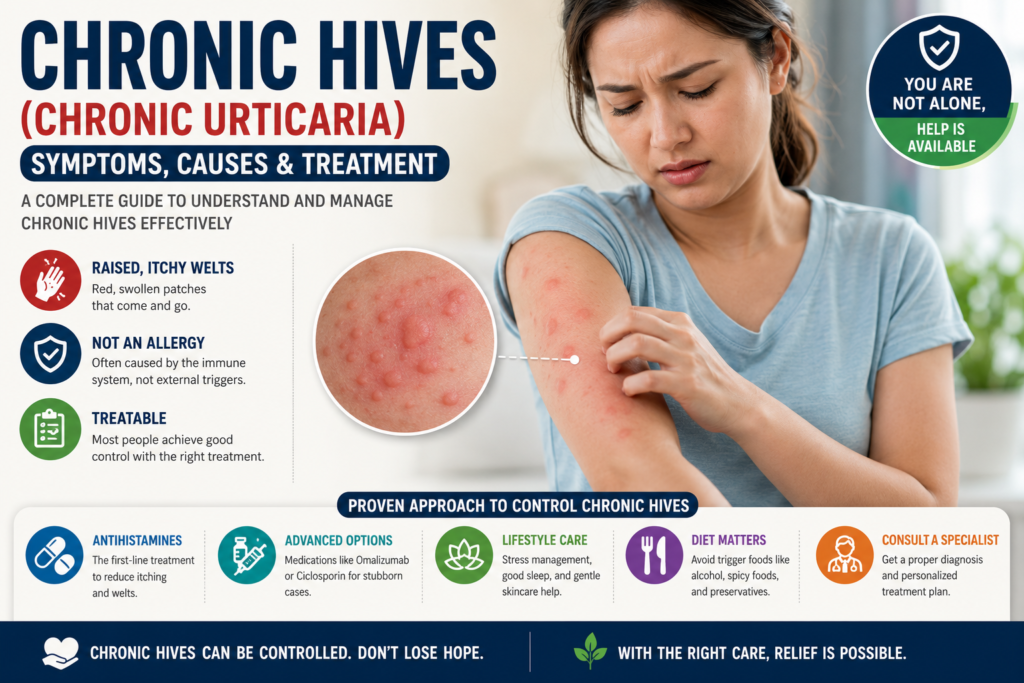
There is a particular exhaustion that sets in around week seven. The welts that felt alarming on day one have become a grim routine. You have cut out foods, changed your washing powder, bought three different antihistamines, and none of it has made the hives stop. You have started to wonder whether anyone actually knows what is going on — or whether you will simply have to live like this. Here is what you most need to hear at that point: chronic hives are common, they are well understood by specialists, and they are treatable even when no cause is ever found. The frustration you feel is real, but the hopelessness is not warranted. Most people with chronic urticaria get good control once they reach the right step on the treatment ladder — and the usual reason it takes so long is that people never get past the first rung. Quick Overview Question Short answer What counts as chronic? Hives lasting six weeks or longer Most common type Chronic spontaneous urticaria — no identifiable external trigger Underlying mechanism Often the immune system activating the body’s own mast cells Is a cause usually found? No, in the majority of cases — and that does not prevent treatment First-line treatment Daily second-generation antihistamines, dose increased if needed If that fails Omalizumab injections or ciclosporin under specialist care Typical course Often resolves on its own within a few years; controllable throughout Is it dangerous? Usually not, but see a doctor to rule out other causes What Are Chronic Hives? Chronic hives — known medically as chronic urticaria — are raised, itchy welts that keep appearing for six weeks or longer. That six-week line is not arbitrary. It marks the point where the condition stops behaving like a one-off reaction and starts behaving like an ongoing process that needs a different approach. The welts themselves look and feel the same as any hives: raised patches, pink or red on lighter skin and often skin-toned or darker on brown and Black skin, intensely itchy, and blanching pale when pressed. Individual welts still come and go within 24 hours. What defines the chronic form is not the appearance but the persistence — new welts keep forming, day after day, week after week. For the full picture of how hives form in the skin, see our main guide on hives on skin: symptoms, causes, and relief. There are two broad categories: Chronic spontaneous urticaria is the more common form. Welts appear with no identifiable external trigger — they simply come and go. This is the type that frustrates people most, because there is nothing obvious to avoid. Chronic inducible urticaria is reproducibly triggered by a specific physical stimulus: pressure, cold, heat, sunlight, or scratching. Here there is a trigger, but it is a physical one rather than an allergen. Why Chronic Hives Happen The single most important thing to understand is that chronic hives are usually not an allergy, which is why allergy testing so often comes back clean and leaves people more confused than before. In a large proportion of chronic spontaneous cases, the immune system produces autoantibodies that bind to and activate the person’s own mast cells — the histamine-storing cells in the skin. There is no external allergen. The trigger is internal and continuous, which is exactly why the welts appear daily with no discernible pattern. This autoimmune mechanism explains several things that otherwise seem contradictory: Our detailed guide to what causes hives works through the full range of triggers, but for the chronic form specifically, “no external cause found” is the norm rather than a failure of investigation. Symptoms and How They Affect Life Beyond the visible welts, chronic urticaria takes a toll that is easy to underestimate: That last group is not incidental. Studies consistently find that chronic urticaria damages quality of life to a degree comparable with serious heart disease, largely through relentless sleep disruption. If your hives are wrecking your rest and your mood, that is a legitimate medical reason to push for better treatment — not something to endure quietly. How Chronic Hives Are Diagnosed Most of the diagnosis comes from your history, not from a battery of tests. A clinician will ask how long each welt lasts, when the episodes began, what medications you take, whether swelling accompanies the welts, and whether any physical stimulus reliably brings them on. For chronic hives, guidelines from dermatology and allergy bodies suggest a limited, targeted set of tests rather than a broad fishing expedition: Further testing is driven by specific clues. Broad allergy panels ordered without a matching history are actively unhelpful here — they throw up incidental positives that send people down months of pointless dietary restriction. The American Academy of Dermatology’s hives resource sets out this stepwise approach for patients. One red flag worth knowing: if individual welts last longer than 24 hours, feel painful rather than itchy, and leave a bruise behind, that points away from ordinary urticaria and towards urticarial vasculitis, which needs a skin biopsy and different treatment. 8 Proven Steps to Control Chronic Hives This is the core of getting better. These steps follow the evidence-based treatment ladder — most people gain control somewhere along it. 1. Take a second-generation antihistamine every single day. Cetirizine, loratadine, fexofenadine, or levocetirizine — taken daily, not just when welts appear. Chronic hives need continuous receptor blockade to prevent welts from forming. 2. If a standard dose is not enough, ask about increasing it. International guidelines support raising the dose up to four times the standard amount under medical supervision. This is normal practice, not an off-label gamble, and it is where most people who “failed” antihistamines actually succeed. 3. Give each step enough time. Antihistamine adjustments need two to four weeks to show their full effect. Switching too quickly means never knowing what would have worked. 4. Add a second agent if needed. A leukotriene receptor antagonist such as montelukast is sometimes added, particularly if NSAIDs aggravate
Stress Hives: 7 Proven Ways to Stop Anxiety Welts Fast
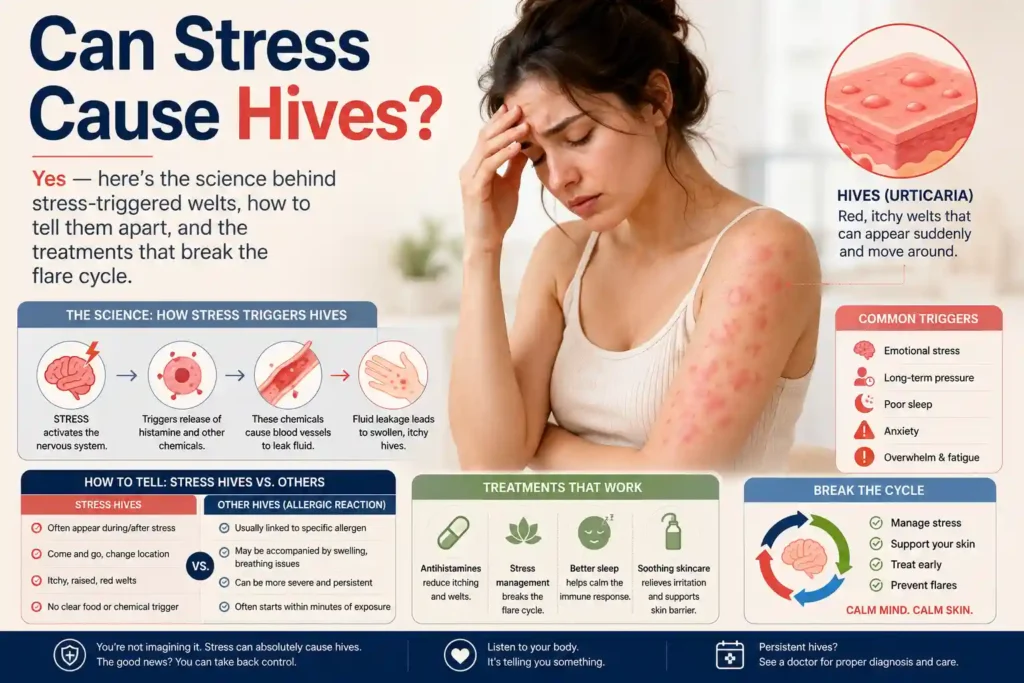
The timing is what convinces most people. The welts show up the week of a court date, three days into a family crisis, the night before a presentation you have been dreading. You have not eaten anything unusual. You have not started any medication. Yet there they are — raised, itchy, spreading. Then the loop tightens. The hives make you anxious. The anxiety makes the hives worse. You lie awake scratching at two in the morning, which wrecks your sleep, which raises your stress the following day, which brings a fresh outbreak by evening. Stress hives are real. The connection is not imagined, and it is not a polite way of saying the problem is in your head. But the relationship works differently from how most people assume, and understanding that difference is what makes it treatable. Quick Overview Question Short answer Can stress cause hives? It rarely creates them from nothing, but it strongly lowers the threshold at which they appear How fast do they show up? Hours to a few days after a stressful period, sometimes during What do they look like? Identical to other hives — raised, itchy, blanching welts that move Common locations Chest, neck, face, arms, back How long do they last? Individual welts under 24 hours; episodes days to weeks First-line treatment Regular non-drowsy antihistamines, plus stress reduction Do they need a doctor? Yes if lasting over six weeks, or with any swelling or breathing difficulty What Is Actually Happening in Your Skin To understand stress hives, you first need to know that your skin is not a passive covering. It is densely wired with nerve endings, and those nerve endings sit right alongside your mast cells — the immune cells that store histamine. That physical proximity is the whole story. When you are under stress, several things happen at once: Nerve endings in the skin release neuropeptides. The most important is substance P, which binds directly to receptors on mast cells and triggers them to degranulate. No allergen required. Your nervous system is talking straight to your immune cells, and histamine floods into the skin. Corticotropin-releasing hormone rises. This stress hormone, released during activation of the HPA axis, also activates mast cells directly. It is a second independent pathway to the same outcome. Skin barrier function declines. Sustained stress measurably slows barrier repair, making skin more reactive to irritants it would normally shrug off. Body temperature and sweating change. Acute anxiety raises core temperature and triggers sweating, which in people with cholinergic urticaria is itself a direct trigger. Sleep collapses. Sleep deprivation increases inflammatory signalling and, separately, amplifies how intensely the brain perceives itch. The same welt feels considerably worse on four hours of sleep. So the honest framing is this: stress does not usually invent hives in someone with no tendency towards them. What it does is lower the activation threshold so dramatically that triggers you would normally tolerate now produce a full outbreak. For a broader look at the underlying biology, see our main guide on hives on skin and how they form. Common Symptoms of Stress Hives Visually, stress hives are indistinguishable from any other kind. That is worth stating plainly, because there is no test that identifies stress as the cause — the diagnosis comes from the pattern, not the appearance. What you will see: Patterns that specifically suggest stress involvement: Stress hives versus other stress skin reactions Reaction What it looks like Key difference Stress hives (urticaria) Raised welts that move and blanch Individual spots resolve within 24 hours Stress-flared eczema Dry, scaly, cracked patches Stays in fixed locations; skin texture changes Anxiety flushing Diffuse redness, no raised edges Flat, no distinct welts Cholinergic urticaria Tiny pinpoint welts with red flush Triggered by the temperature rise, not the emotion Stress-related psoriasis flare Thick, silvery, scaly plaques Chronic and fixed, does not migrate Is It Stress or Something Else? Before settling on stress as your explanation, rule out the more concrete causes. Stress is a plausible diagnosis, which makes it an easy one to reach for prematurely. Ask yourself: If any of those fit, stress may be a contributing factor rather than the driver. Our detailed breakdown of what causes hives and how to identify your trigger works through each possibility systematically. There is also an important distinction between stress triggering an episode and stress unmasking an underlying chronic condition. Many people with chronic spontaneous urticaria — an autoimmune process where the body activates its own mast cells — have their first outbreak during a period of significant strain. The stress did not cause the autoimmunity; it revealed it. If your hives have continued beyond six weeks, this is the more likely picture, and our guide to chronic hives and long-term management covers what happens next. Diagnosis There is no blood test for stress hives. Diagnosis is clinical, and it rests on history: what you were experiencing when the welts began, how long individual welts last, what medications you take, and whether anything physical reproduces them. Your doctor may stroke your forearm firmly to check for dermographism, or apply an ice cube to test for cold urticaria — both physical triggers that stress can amplify. For acute stress-related hives, extensive testing is usually unnecessary. Broad allergy panels ordered without a matching history throw up incidental positives and send people down months of pointless dietary restriction. If the hives have passed six weeks, guidelines support a limited workup: a full blood count, an inflammatory marker such as CRP, and thyroid antibodies. The thyroid check matters — autoimmune thyroid disease has the strongest and most consistent association with chronic urticaria. Conventional Medical Treatment Here is the point people most often get wrong: stress hives are still hives, and they respond to the same medication. Managing your stress is important, but it is not a substitute for treating the histamine reaction that is already happening. Antihistamines, taken correctly Second-generation antihistamines — cetirizine, loratadine, fexofenadine, levocetirizine — are first-line. Two practical points:
Cure vs Treat: 5 Crucial Differences That Change Your Health
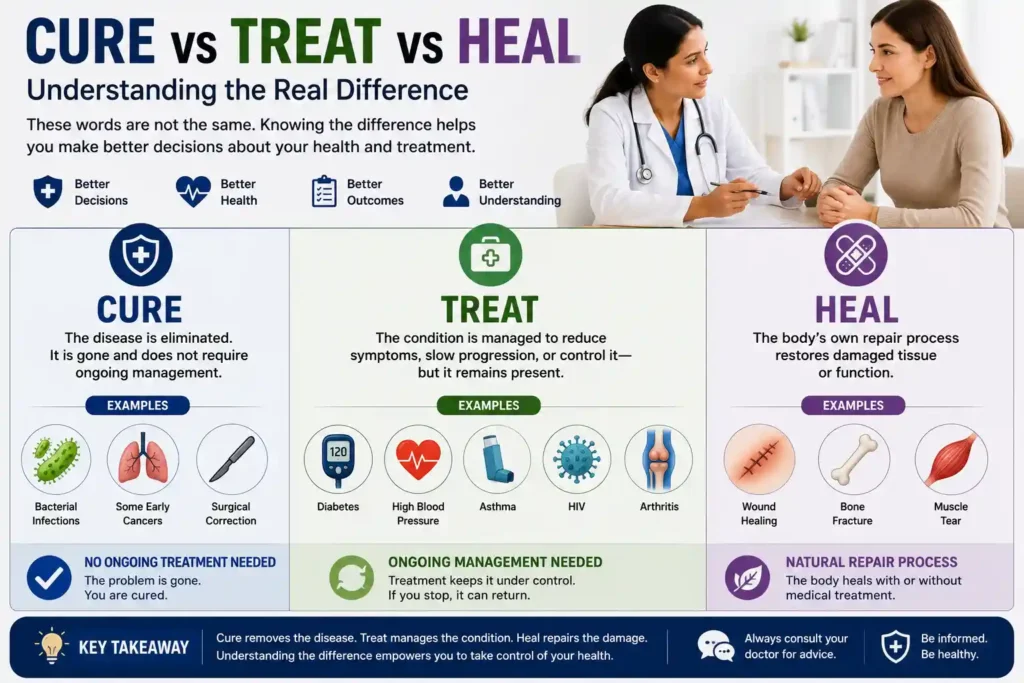
A doctor tells one patient their infection is “cured.” She tells another that their condition is “well treated” and “under control.” To most people those two phrases sound almost the same — good news, problem handled, move on. But they describe two completely different situations, and mistaking one for the other leads to some of the most common and costly misunderstandings in medicine. The person who thinks they are cured when they are only treated stops taking their medication and relapses. The person who thinks their condition can never be cured lives with more fear than the facts warrant. And the person shopping for a product that promises to “cure” something medicine can only manage is a target for exactly the kind of claim that regulators spend their days chasing down. The words cure and treat carry real weight. Understanding what separates them — and where a third word, heal, fits in — genuinely changes how you make decisions about your own care. Quick Overview Term What it means Example Cure The disease is eliminated; it is gone and does not require ongoing management Bacterial infection cleared by antibiotics Treat The condition is managed to reduce symptoms, slow progression, or control it — but it remains present Type 2 diabetes managed with medication and lifestyle Heal The body’s own repair process restores damaged tissue or function A wound closing, a fracture knitting back together Manage Ongoing control of a long-term condition to keep it stable Asthma kept in check with inhalers Comfort / palliate Relieving symptoms and suffering without altering the disease Pain relief in advanced illness What Does “Cure” Actually Mean? A cure means a disease has been eliminated. The underlying cause is gone, the condition is not expected to return on its own, and you do not need continuing treatment to keep it away. The clearest examples are infections caused by bacteria. Strep throat, a urinary tract infection, or bacterial pneumonia can usually be cured with a course of antibiotics — the bacteria are killed, the infection resolves, and once you have recovered you are no longer carrying the disease. Certain cancers caught early and removed completely are described as cured after enough disease-free years pass. A surgeon repairing a specific structural problem can, in the right case, offer a genuine cure. But cure is a stronger word than it first appears, and doctors use it carefully. Even after a genuine cure, some conditions can occur again as a new episode — being cured of one urinary tract infection does not protect you from catching another. That is not the disease coming back; it is a fresh one. The distinction matters because “cured” refers to this instance of this disease being eliminated, not lifelong immunity. What Does “Treat” Actually Mean? To treat a condition is to manage it — to reduce its symptoms, slow its progression, prevent complications, or keep it stable — while the underlying condition remains present in the body. This is where the majority of modern medicine actually operates, and it is worth sitting with that fact. Most of the common conditions people live with today are treated rather than cured: None of these is a failure of medicine. Treatment that turns a life-threatening or disabling condition into a manageable background presence is one of the great achievements of modern healthcare. But it depends on something a cure does not: continuation. Stop treating a treated condition and it typically returns, sometimes worse than before. This single point explains an enormous amount of avoidable harm. People feel well because their treatment is working, conclude they no longer need it, stop, and relapse. The feeling of wellness was produced by the treatment — removing it removes the wellness. Cure vs Treat: A Direct Comparison Feature Cure Treatment Disease after intervention Eliminated Still present Ongoing action needed No Usually yes, often lifelong Symptoms Gone permanently Controlled while treatment continues If you stop Stays gone (barring a new episode) Typically returns Typical conditions Many bacterial infections, some early cancers Diabetes, hypertension, asthma, HIV, arthritis Realistic goal for most chronic disease Rarely achievable The standard, effective aim The most useful takeaway from this table is the last row. For most long-term conditions, treatment is the realistic and appropriate goal — and that is genuinely good news, not a consolation prize. A well-treated chronic condition can allow a full, normal life. 5 Crucial Differences Between Curing and Treating If you remember nothing else, remember these five. They are the differences that actually change decisions. 1. The disease itself. A cure eliminates the underlying disease entirely. Treatment leaves the disease present in the body and works around it, keeping it controlled. This is the root difference from which the others follow. 2. Whether you can stop. After a genuine cure, you stop — the job is done. With treatment, stopping usually brings the condition back, often because the wellness you feel was produced by the treatment itself, not by the disease disappearing. 3. How long it lasts. A cure is typically a finite event: a course of antibiotics, a surgery, a defined endpoint. Treatment is frequently ongoing, sometimes for life, because it is managing rather than removing. 4. What “success” looks like. Success in a curable condition means the disease is gone. Success in a treatable condition means it is well controlled and stable — a different but equally real victory that too many people mistake for failure. 5. What it means for your choices. The cure-versus-treat distinction determines whether you can safely walk away from medication, how you judge a product’s claims, and whether “there’s no cure” should frighten you or simply redirect you toward excellent control. It is the most practically useful piece of information in this entire article. Where “Heal” Fits In Heal is the third word people blur together, and it means something distinct again. Healing is the body’s own biological repair process. A cut closes because skin cells divide and rebuild. A broken bone knits because
What Causes Hives? 12 Common Triggers & How to Identify Yours
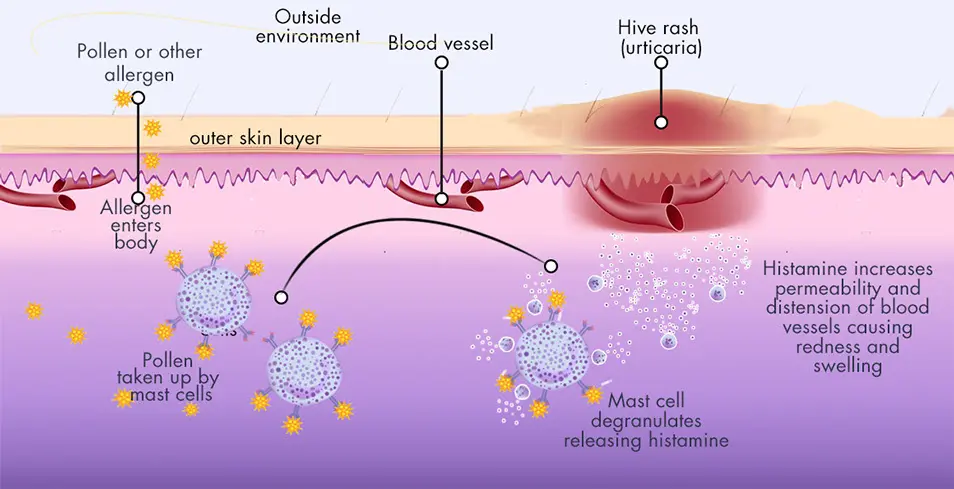
The question almost everyone asks within the first hour of an outbreak is the same: what did I do? You mentally rewind through the day. The new shampoo. The prawns at lunch. That painkiller you took for a headache. Somewhere in there must be the culprit, and if you can just identify it, this will not happen again. Sometimes that works. A person eats peanuts, breaks out in welts within twenty minutes, and the answer is obvious. But here is the part that frustrates people: in a large share of cases, especially the ones that drag on for weeks, no external trigger is ever found — and that is not a failure of investigation. It reflects how hives actually work. Understanding the real mechanism changes how you hunt for your trigger, and stops you from chasing false leads for months. Quick Overview Category Examples How fast it appears Infections Colds, stomach viruses, strep throat, UTIs Hours to days into the illness Foods Shellfish, nuts, eggs, milk, wheat, sesame Usually within 2 hours Medications NSAIDs, antibiotics, ACE inhibitors, opioids Minutes to weeks Physical triggers Pressure, cold, heat, sunlight, water, scratching Minutes Insect stings Bees, wasps, fire ants Minutes Autoimmune activity Self-directed antibodies on mast cells Ongoing, no clear trigger Stress Emotional strain, poor sleep Variable, worsens existing hives The Mechanism Behind Every Cause Every cause on this page ends in the same place: mast cells release histamine into your skin. Mast cells sit throughout your skin like scattered alarm systems, each packed with granules of histamine and other inflammatory chemicals. When they degranulate, histamine makes tiny blood vessels leaky. Fluid seeps into the surrounding tissue, and you get a raised welt. It also fires the sensory nerves that produce that maddening itch. The key insight is this: mast cells have many different triggers, and only some of them are allergic. People assume hives always mean allergy. They do not. A mast cell can be set off by an antibody, by an infection-related immune signal, by direct chemical action from a drug, by physical pressure, or by nerve signals. That is why allergy testing so often comes back clean in someone with obvious, ongoing welts. For the full picture of what is happening in the skin, see our main guide on hives on skin: symptoms, treatment, and relief. 1. Infections — The Most Underestimated Cause This is the leading trigger of sudden hives, particularly in children, and almost nobody guesses it. An ordinary viral illness — a cold, a stomach bug, a sore throat, hand-foot-and-mouth — puts your immune system into a heightened state. Circulating immune complexes and inflammatory signals lower the mast cell threshold, and welts appear. In children presenting to emergency departments with new hives, viral infection is the single most common identified cause. Bacterial infections do the same. Streptococcal throat infections, urinary tract infections, dental abscesses, and sinus infections all appear in the literature as triggers. Chronic infections such as Helicobacter pylori in the stomach have been linked to long-running urticaria in some studies, though the connection remains debated. How to recognise it: the hives start during or just after an illness, or the child was mildly unwell a few days earlier. They typically settle as the infection clears, often over one to two weeks. What this means practically: if your child breaks out in welts during a cold, you probably do not need to interrogate every food in the house. 2. Foods — Real, But Over-Blamed Genuine food-triggered hives follow a specific pattern that is worth memorising: The common culprits are shellfish, tree nuts, peanuts, eggs, cow’s milk, wheat, soy, sesame, and fish. Now the caution. When hives appear out of nowhere and you spend a week scrutinising every meal, you will find a suspect whether or not one exists. This is how people end up on unnecessarily restrictive diets for months. If your welts started on Tuesday and continue every day for three weeks, food allergy is an unlikely explanation — allergic reactions do not run continuously in the background. There is also a separate phenomenon worth knowing about: food-dependent exercise-induced urticaria, where a food (classically wheat) causes no reaction on its own but triggers hives when eaten within a few hours of exercise. Histamine-rich foods versus true allergy Some foods contain high levels of histamine themselves, or prompt the body to release it, without any allergic antibody involved. Aged cheese, cured meats, fermented foods, alcohol, tomatoes, and strawberries fall into this group. The reaction is dose-dependent — a small portion may be fine, a large one not — which is quite unlike a true allergy. 3. Medications Drugs cause hives through two different routes, and telling them apart matters. True allergic reactions involve IgE antibodies and typically appear within minutes to an hour of a dose, often on repeat exposure rather than the very first course. Penicillins and sulfa antibiotics are the classic examples. Non-allergic reactions happen when a drug acts directly on mast cells or interferes with inflammatory pathways, no antibodies required. Drug group Typical pattern NSAIDs (aspirin, ibuprofen, naproxen) Trigger hives directly and worsen existing urticaria in a significant minority Penicillins, sulfa antibiotics True allergic reaction, minutes to an hour ACE inhibitors (-pril drugs) Angioedema rather than welts, sometimes after years of use Opioid painkillers Direct histamine release, often localised itching Contrast dyes Reaction during or shortly after imaging Vaccines Uncommon, usually within hours NSAIDs deserve particular attention because they are so freely available. A person with underlying chronic urticaria may take ibuprofen for the discomfort of their hives and make the outbreak substantially worse — a loop that is easy to miss. Never stop a prescribed medication on your own. Report the reaction to your prescriber and let them manage any switch, especially with blood pressure and heart medications. 4. Physical Triggers Some people’s mast cells respond to physical stimuli rather than chemical ones. This group is called inducible urticaria, and it is more common than most people realise. Dermographism is the
How to Get Rid of Hives: Fast Relief and Long-Term Treatment That Works
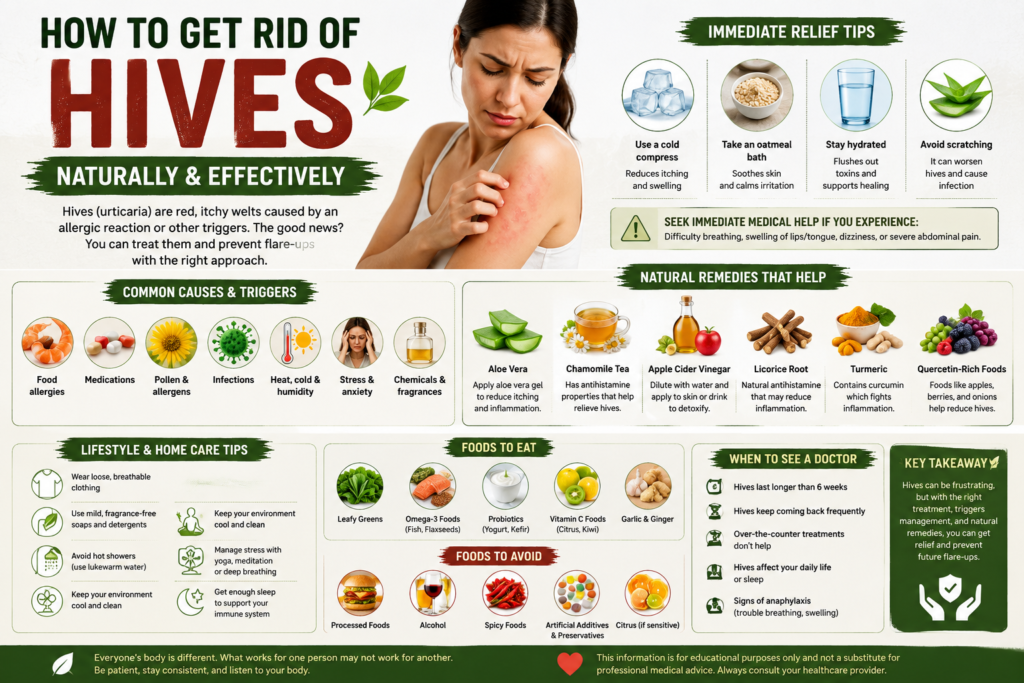
You wake up, glance in the mirror, and there they are — raised pink patches across your chest that were not there when you went to bed. They itch. You press one and it fades to white, then flushes back. An hour later that patch has disappeared entirely, but two new ones have shown up on your forearm. That travelling, shape-shifting quality is the signature of hives, and it is also what makes them so unsettling. Most rashes stay put. Hives behave more like weather moving across the skin. Roughly one in five people will experience them at some point, and for the majority it is a brief, harmless episode that clears within a few days. But not always. Some people live with hives for months. Some develop swelling of the lips or eyelids alongside them. And in a small number of cases, hives are the opening act of a serious allergic reaction that needs emergency care within minutes. This guide walks through all of it — what hives actually are at a cellular level, why they appear, what medicine can do, and where herbal and home approaches genuinely fit in versus where they are oversold. Quick Overview Question Short answer What are they? Raised, itchy welts caused by histamine release in the skin Medical name Urticaria Typical appearance Pink, red, or skin-coloured raised patches that blanch when pressed How long does one welt last? Usually under 24 hours; often just a few hours Acute vs chronic Acute = under 6 weeks; chronic = 6 weeks or longer Most common causes Viral infections, foods, medications, insect stings, physical triggers First-line treatment Non-drowsy (second-generation) antihistamines ICD-10 code L50 (with subcodes such as L50.0 allergic, L50.1 idiopathic, L50.8 other) Emergency signs Trouble breathing, throat tightness, tongue swelling, dizziness, vomiting What Are Hives on Skin? Hives are raised patches of swollen skin that appear when a chemical called histamine leaks into the upper layers of the skin. Doctors call the condition urticaria, and the individual bumps are called wheals. Here is what is happening underneath. Scattered throughout your skin are immune cells called mast cells, each one loaded with tiny granules of histamine and other inflammatory chemicals. Normally they sit quietly. When something activates them — an allergen, an infection, pressure, cold, or an internal immune signal — they degranulate, dumping their contents into the surrounding tissue. Histamine does two things immediately. It makes nearby small blood vessels leaky, so fluid seeps out into the skin and creates the raised, puffy welt. And it stimulates sensory nerve endings, which is why the itch is so intense and so hard to ignore. That leaked fluid gets reabsorbed within hours, which explains the most distinctive feature of hives: individual welts move. A wheal that appears on your shoulder at noon may be gone by five o’clock, while fresh ones bloom elsewhere. If a spot stays fixed in the same place for more than 24 hours, that is a clue pointing away from ordinary hives and towards something else — more on that below. Hives versus angioedema The same process can happen deeper down, in the lower dermis and subcutaneous tissue. When it does, you get angioedema — swelling rather than welts, typically around the eyelids, lips, hands, feet, or genitals. It feels more like tightness or burning than itching. Angioedema shows up alongside hives in roughly 40% of people with chronic urticaria. On its own it is usually harmless, but swelling of the tongue or throat is a medical emergency. What Do Hives Look Like? Hives are visually variable, which is part of why people misidentify them. Common features: One useful home test is the circle test. Trace around a welt with a skin-safe pen, then check that outline six and twelve hours later. If the welt has faded or moved out of its circle, it is behaving like typical urticaria. If it is still sitting inside the same outline a day later, mention that to your doctor. Common Symptoms Beyond the welts themselves, people commonly report: That last point is worth sitting with. Studies consistently find that chronic urticaria damages quality of life about as much as coronary artery disease does, largely through sleep disruption. If your hives are affecting your work or your rest, that is a legitimate medical reason to seek treatment — not something to tough out. Warning symptoms that require emergency care Call emergency services immediately if hives appear together with: These suggest anaphylaxis. If you carry an epinephrine auto-injector, use it first, then call for help. Antihistamines are not a substitute for epinephrine in anaphylaxis. Causes and Risk Factors Hives are a reaction pattern, not a single disease, which is why so many different things can produce them. For a fuller breakdown, see our detailed guide on what causes hives and how to identify your trigger. Infections This is the leading cause of sudden hives, particularly in children — and it surprises most people. Ordinary viral illnesses (colds, stomach bugs, sore throats) frequently produce hives while the immune system is revved up. Bacterial infections such as strep throat and urinary tract infections can do the same. The hives typically resolve as the infection clears. Foods Genuine food-triggered hives usually appear within two hours of eating, and the same food reliably produces the same result. The usual suspects are shellfish, tree nuts, peanuts, eggs, cow’s milk, wheat, soy, and sesame. A caution here: people often blame food when the timing does not actually fit. If your hives started on a Tuesday and you spend the week scrutinising every meal, you will find a “culprit” whether or not one exists. Reaction within two hours, repeatable — that is the standard worth applying. Medications Never stop a prescribed medication on your own. Report the reaction to your prescriber and let them manage the switch. Physical and environmental triggers These produce a group called inducible urticaria, where a specific physical stimulus reliably reproduces the welts: Type Trigger Dermographism Scratching or firm stroking