Foods for Diabetes: 12 Best Choices to Control Blood Sugar
Few diagnoses come with as much food confusion as diabetes. One source says never touch fruit; another says fruit is fine. Rice is forbidden here, allowed there. Somewhere in the noise, people end up either terrified of eating or quietly ignoring the advice altogether — and both extremes miss the point.
The reality is calmer and more practical than the internet suggests. Managing blood sugar through food is less about a rigid list of banned items and more about patterns: the balance of your plate, the type of carbohydrate you choose, and the fibre, protein, and healthy fat you pair it with. Get the pattern right and there is room for a wide, enjoyable range of foods.
This guide focuses on the foods that genuinely help steady blood sugar, the ones worth limiting, and how to put them together into meals that work in real life.
Quick Overview
| Food group | Why it helps |
|---|---|
| Non-starchy vegetables | Low in carbs, high in fibre and nutrients |
| Whole grains | Slower, steadier rise in blood sugar than refined |
| Beans and lentils | Fibre and protein slow sugar absorption |
| Berries | Lower-sugar fruit rich in fibre and antioxidants |
| Oily fish | Protein and heart-protective omega-3s |
| Nuts and seeds | Healthy fats that blunt blood sugar spikes |
| Plain yoghurt | Protein-rich, minimal added sugar |
How Food Affects Blood Sugar
When you eat carbohydrate, it breaks down into glucose and raises your blood sugar. In diabetes, the body either does not make enough insulin or does not respond to it well, so that rise is harder to manage. The goal of eating for diabetes is to keep blood sugar from spiking sharply and to keep it steadier over the day.
The key insight is that not all carbohydrates behave the same way. A refined carbohydrate — white bread, sugary drinks — is absorbed quickly and spikes blood sugar. The same amount of carbohydrate from beans or whole grains, wrapped in fibre, is absorbed more slowly and produces a gentler rise. Pairing carbohydrate with protein, fat, and fibre slows things further. That is the whole strategy in one sentence: choose slower carbohydrates and balance the plate.
It is worth being clear that food manages type 2 diabetes and, in some cases, can help push it into remission — but for most people it works alongside medical care rather than replacing it. Our guide on cure vs treat explains why control, rather than a one-time cure, is the realistic and effective goal for a condition like this.
The Glycaemic Index: A Useful Tool, Not a Rulebook
You will often see the glycaemic index, or GI, mentioned in diabetes advice, and it is worth understanding because it captures the core idea neatly. The GI ranks carbohydrate-containing foods by how quickly they raise blood sugar. High-GI foods — white bread, sugary drinks, white rice — cause a fast, sharp spike. Low-GI foods — beans, whole grains, most vegetables — release their sugar more slowly and gently.
As a general guide, favouring lower-GI foods helps keep blood sugar steadier, and it lines up well with the food choices in this article. But GI is a tool, not a strict rulebook, and it has limits. It measures a food eaten alone, whereas in real meals you combine foods — and pairing a higher-GI carbohydrate with protein, fat, and fibre slows the whole meal’s effect. Portion size also matters as much as GI: a large serving of a low-GI food still delivers plenty of carbohydrate.
So use the concept as a helpful lens — lean towards slower carbohydrates — without becoming a slave to the numbers. The plate-balance approach later in this article is a more practical way to apply the same principle in everyday life.
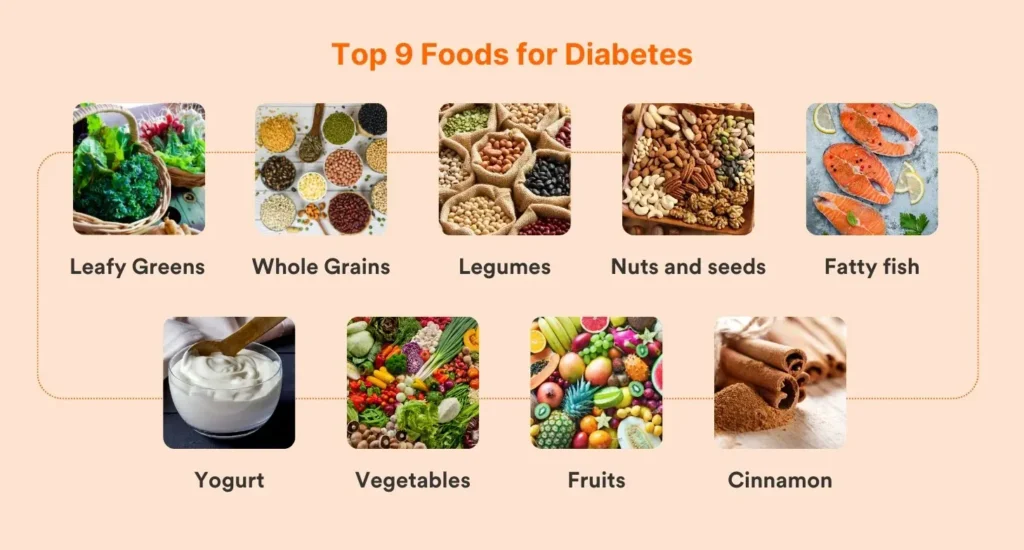
12 Best Foods for Diabetes
1. Leafy greens. Spinach, kale, and other leaves are very low in carbohydrate and calories while rich in fibre and nutrients. They fill the plate without raising blood sugar.
2. Non-starchy vegetables. Broccoli, peppers, courgette, cauliflower, green beans, and similar vegetables add volume, fibre, and nutrients with minimal impact on blood sugar. Aim to fill half your plate with them.
3. Beans and lentils. Their combination of fibre and protein slows sugar absorption, producing a gentle, steady rise. They are among the most useful staples for blood sugar control.
4. Whole grains. Oats, barley, quinoa, and brown rice raise blood sugar more slowly than their refined counterparts, thanks to their fibre. Portion still matters, but the quality is far better.
5. Berries. Strawberries, blueberries, and raspberries are lower in sugar than many fruits and high in fibre and antioxidants, making them a smart choice when you want something sweet.
6. Oily fish. Salmon, mackerel, and sardines provide protein with no carbohydrate, plus omega-3 fatty acids that support heart health — important because diabetes raises cardiovascular risk.
7. Nuts and seeds. Almonds, walnuts, chia, and flax offer healthy fats, fibre, and protein that blunt blood sugar spikes. Keep portions modest, as they are calorie-dense.
8. Plain unsweetened yoghurt. A protein-rich option with minimal added sugar. Add your own berries rather than buying pre-sweetened versions loaded with sugar.
9. Eggs. Carbohydrate-free, protein-rich, and versatile, eggs make a blood-sugar-friendly breakfast that keeps you fuller for longer.
10. Avocado. Rich in healthy fats and fibre with very little carbohydrate, avocado helps steady blood sugar and adds satisfying richness to meals.
11. Whole fruit in moderation. Apples, pears, and citrus, eaten whole with their fibre, are fine in sensible portions for most people. This is different from fruit juice, which spikes blood sugar quickly.
12. Extra-virgin olive oil. A healthy fat that supports heart health and, as part of a Mediterranean-style pattern, is linked with better blood sugar control.
Don’t Forget What You Drink
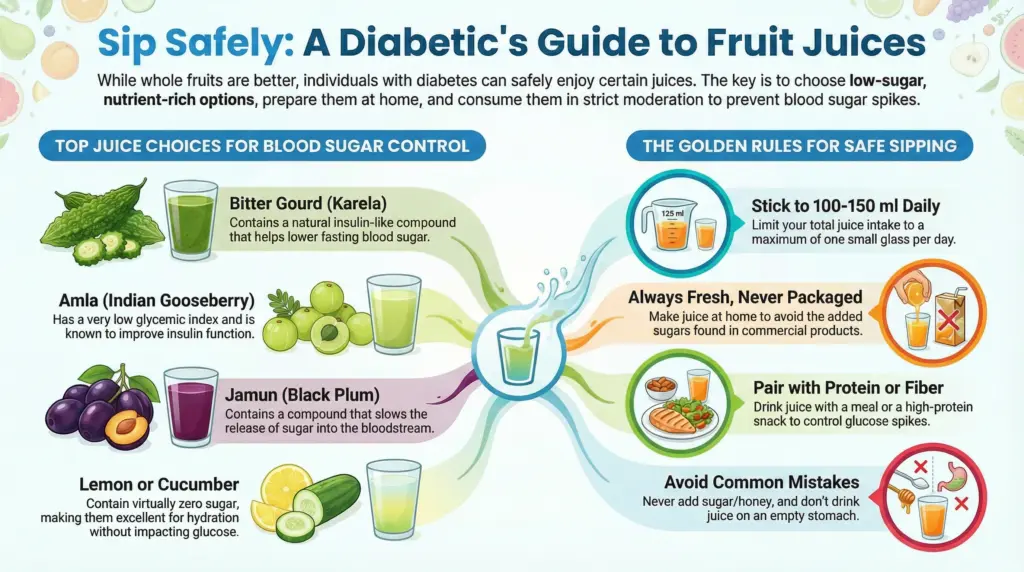
Food gets most of the attention, but drinks can quietly undo good eating. Sugary drinks — regular soft drinks, sweetened coffees, energy drinks, and even fruit juice — are among the fastest ways to spike blood sugar, precisely because the sugar arrives without any fibre to slow it down. Fruit juice surprises people: even without added sugar, it delivers concentrated fruit sugar minus the fibre of whole fruit, so it behaves very differently from eating the fruit itself.
The best everyday choices are simple: water, sparkling water, and unsweetened tea or coffee. If you find plain water dull, adding slices of lemon, cucumber, or a few berries makes it more appealing without the sugar hit. Being mindful of alcohol matters too — it can affect blood sugar in both directions and is often calorie-dense — so moderation and coordinating with your care team is wise. Swapping sugary drinks for these alternatives is one of the single highest-impact changes many people can make.
Foods to Limit
| Limit or avoid | Why |
|---|---|
| Sugary drinks and fruit juice | Spike blood sugar rapidly |
| White bread, white rice, refined carbs | Fast-absorbed, sharp rises |
| Sweets, cakes, and biscuits | High sugar with little nutrition |
| Processed and fried foods | Affect weight and heart health |
| Sweetened breakfast cereals | Often high in hidden sugar |
| Large portions of any carbohydrate | Portion size affects the total rise |
Limiting is not the same as banning. An occasional treat within an otherwise balanced pattern is realistic and sustainable — and sustainability is what actually controls blood sugar over years.
Building a Blood-Sugar-Friendly Plate
A simple, reliable model:
- Half the plate: non-starchy vegetables
- A quarter: lean protein — fish, poultry, eggs, beans, tofu
- A quarter: slow carbohydrate — whole grains, beans, or starchy vegetables
- A little healthy fat: olive oil, avocado, nuts
This structure naturally balances the meal, slows the blood sugar rise, and keeps you satisfied without requiring you to count every gram. Pairing carbohydrate with protein and fibre — never eating it “naked” — is the single most useful habit. Since diabetes, blood pressure, and fatty liver share so many roots, these same choices support all three; see our guides on lowering blood pressure naturally and fatty liver symptoms.
Beyond What You Eat: How and When Matters Too
Managing blood sugar is not only about which foods you choose — a few habits around how and when you eat make a real difference.
Eating at fairly regular times helps keep blood sugar steadier than a chaotic pattern of skipped meals followed by large ones. Big gaps followed by oversized portions tend to produce sharper swings, whereas a steadier rhythm of balanced meals keeps things more even. This does not mean rigid clock-watching, just avoiding the extremes.
Portion size deserves attention even with healthy foods. Whole grains, beans, and fruit are all good choices, but eaten in very large amounts they still deliver a lot of carbohydrate. The plate model is useful precisely because it builds in sensible proportions automatically.
The order you eat foods in can even play a small part. Some research suggests that eating vegetables and protein before the carbohydrate portion of a meal leads to a gentler blood sugar rise than eating the carbohydrate first. It is a minor tweak, but an easy one to try.
Finally, pairing carbohydrate with movement helps. A gentle walk after a meal can blunt the blood sugar rise, which is one reason regular activity works so well alongside dietary changes — a theme that overlaps with the advice in our guide on lowering blood pressure naturally, since the same habits benefit both conditions.
Staying Motivated Over the Long Term
The hardest part of eating for diabetes is not knowing what to do — it is keeping it up over years. A few principles make that far more achievable. Aim for consistency rather than perfection; one indulgent meal does not undo your progress, and treating it as failure often leads people to abandon the whole effort. Make changes gradually, letting new habits settle before adding more, rather than overhauling everything overnight. And focus on foods to add and enjoy, not only foods to cut, so that eating well feels generous rather than punishing. Sustainable habits, kept up imperfectly over time, control blood sugar far better than a strict plan that lasts three weeks.
When to See a Doctor or Dietitian
Speak to a healthcare professional if:
- You have been newly diagnosed and want a personalised eating plan
- Your blood sugar readings remain high despite dietary changes
- You take diabetes medication and are changing your diet significantly, as doses may need adjusting
- You experience symptoms of very high or very low blood sugar
- You want to attempt remission of type 2 diabetes through diet, which is best done with support
A registered dietitian can tailor advice to your medication, preferences, and other conditions. Never adjust diabetes medication on your own when changing your diet — coordinate it with your doctor. The NHS guidance on eating with diabetes is a reliable starting point.
Final Thoughts
Eating for diabetes is far less restrictive than the fear around it suggests. The foundation is simple and generous: plenty of non-starchy vegetables, slow carbohydrates in place of refined ones, protein and healthy fat at every meal, and whole fruit in sensible portions. Build meals around that pattern and blood sugar tends to look after itself far better than any single “superfood” could manage.
The honest framing is that food is one of the most powerful tools for managing type 2 diabetes — capable, for some, of driving it into remission — while working alongside medical care rather than replacing it. Focus on the pattern rather than perfection, coordinate any medication changes with your doctor, and you turn eating from a source of anxiety into one of your most effective allies.
Medical disclaimer: This article is for general educational information and is not a substitute for professional medical advice, diagnosis, or treatment. Always consult a qualified healthcare provider or dietitian about your individual diet, and never change diabetes medication without medical advice.
Frequently Asked Questions
What are the best foods for diabetes? Non-starchy vegetables, leafy greens, beans and lentils, whole grains, berries, oily fish, nuts, plain yoghurt, and eggs are among the best. They share slow-releasing carbohydrate, fibre, protein, or healthy fats that help keep blood sugar steady.
What foods lower blood sugar quickly? No food dramatically lowers blood sugar on its own — the benefit comes from an overall pattern of slow carbohydrates, fibre, and balanced meals. Choosing beans, vegetables, and whole grains over refined carbs produces steadier levels over time.
What foods should diabetics avoid? Sugary drinks, fruit juice, sweets, white bread and rice, refined and processed foods, and large portions of any carbohydrate are best limited. Occasional treats within a balanced pattern are realistic rather than banned.
Can I eat fruit if I have diabetes? Yes, whole fruit in sensible portions is fine for most people, since its fibre slows sugar absorption. Berries, apples, pears, and citrus are good choices. Fruit juice, which spikes blood sugar quickly, is the one to limit.
Can diet reverse type 2 diabetes? For some people, significant dietary change and weight loss can push type 2 diabetes into remission, meaning blood sugar returns to a normal range without medication. This is best attempted with medical support, and results vary.
How should I build a meal for diabetes? Fill half your plate with non-starchy vegetables, a quarter with lean protein, and a quarter with slow carbohydrate, adding a little healthy fat. Pairing carbohydrate with protein and fibre slows the blood sugar rise.
Is rice bad for diabetes? Rice is not banned, but the type and portion matter. White rice is quickly absorbed and raises blood sugar sharply, while brown or other whole-grain rice, in sensible portions and paired with protein and vegetables, has a gentler effect. Portion size is just as important as the type.
Can people with diabetes eat sweet foods at all? Occasional treats can fit within an otherwise balanced pattern for most people. The goal is not total elimination but keeping sugary foods and drinks infrequent and modest, since sustainability matters more than strict banning. Anyone on medication should coordinate this with their care team.
What is the best breakfast for diabetes? A protein-rich, lower-carbohydrate breakfast tends to keep blood sugar steadiest — for example eggs with vegetables, plain yoghurt with berries and nuts, or oats topped with seeds. Sugary cereals and pastries, by contrast, cause sharp early-morning spikes.
Does eating late at night affect blood sugar? Large, carbohydrate-heavy meals late at night can raise blood sugar overnight in some people. A steadier pattern of balanced meals through the day, avoiding very large late meals, generally supports better control, though individual responses vary.