12 Home Remedies for a Cold That May Help You Feel Better
A common cold can cause a blocked or runny nose, sneezing, sore throat, cough, tiredness, and general discomfort. There is no instant cure for a cold, but simple home remedies for cold symptoms can help you feel more comfortable while your body recovers.
Most colds are caused by viruses and get better on their own. Antibiotics do not treat the viruses that cause common colds, so cold treatment at home usually focuses on rest, fluids, and relieving individual symptoms.
Quick Answer: What Helps With a Cold?
The most useful home measures include:
- Getting enough rest and sleep
- Drinking plenty of fluids
- Having warm drinks
- Using honey for a cough if you are over 1 year old
- Using saline nasal spray or drops
- Gargling with warm salt water
- Using a clean humidifier
- Taking a warm shower
- Eating nourishing foods and soup
- Avoiding smoke and other irritants
These remedies can ease symptoms but do not cure the underlying viral infection.
What Is a Common Cold?
The common cold is a viral infection that mainly affects the nose and throat. Symptoms can include a runny or blocked nose, sneezing, sore throat, cough, tiredness, and feeling generally unwell.
Most people recover without specific medical treatment. According to the NHS, people generally start to feel better within 1 to 2 weeks, although some symptoms can last longer. NHS — Common cold
Because a cold is caused by a virus, antibiotics do not make it go away faster. They should only be used when prescribed for a bacterial infection.
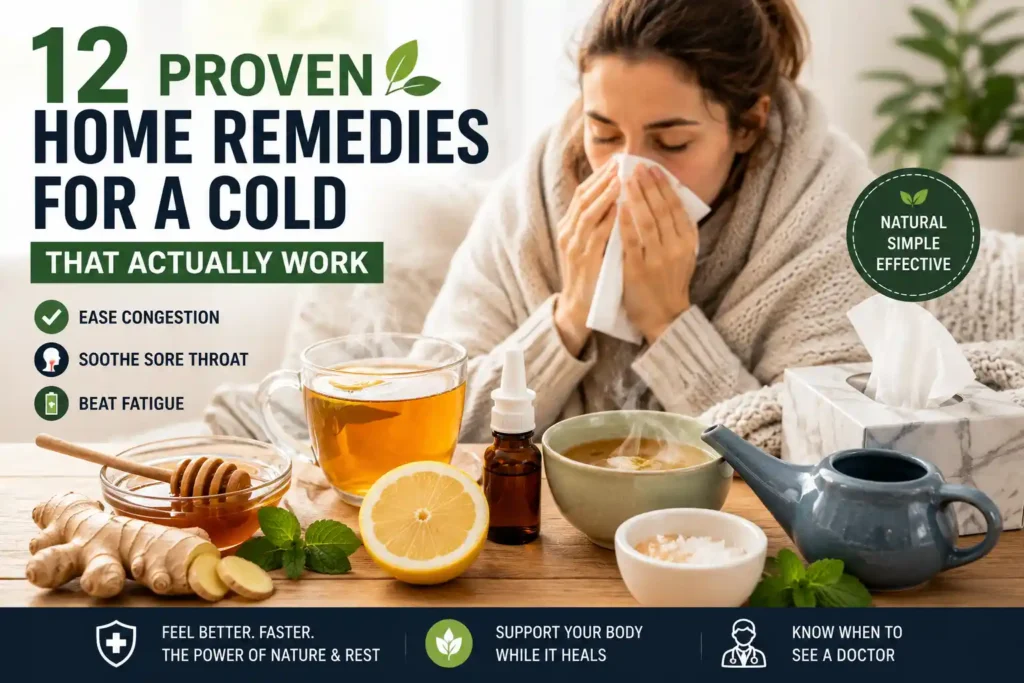
12 Home Remedies for a Cold
1. Get Plenty of Rest
Rest and good sleep give your body time to recover. Avoid strenuous activity if you feel tired or unwell, and give yourself time to recover.
2. Drink Plenty of Fluids
Drink enough water and other suitable fluids to stay hydrated. Water, warm drinks, and soup can all help you maintain your fluid intake while you are ill.
3. Try Warm Drinks
Warm water, tea, or other warm drinks can soothe an irritated throat. Warm liquids may also make congestion feel more comfortable.
4. Use Honey for a Cough
Honey can help soothe a cough and irritated throat. You can take it by itself or add it to a warm drink.
Never give honey to babies under 12 months old.
5. Use Saline Nasal Spray or Drops
Saline nasal spray or drops can help moisturise the nasal passages and relieve a blocked or runny nose. They can be particularly useful when congestion makes sleeping difficult.
6. Gargle With Warm Salt Water
A warm saltwater gargle can soothe a sore throat. This is suitable for adults and older children who can gargle safely without swallowing the solution.
7. Use a Clean Humidifier
A clean humidifier or cool-mist vaporizer can add moisture to the air and may make a dry throat or blocked nose feel more comfortable.
Clean the humidifier regularly according to the manufacturer’s instructions.
8. Take a Warm Shower
Warm, moist air from a shower may temporarily ease nasal congestion.
Avoid leaning over a bowl of boiling water because hot water and steam can cause serious burns, particularly in children.
9. Eat Nourishing Foods and Soup
You may have less appetite during a cold, but nutritious food can help maintain your energy. Warm soup can also provide fluids and comfort.
Chicken soup may feel soothing, but it should be considered supportive food rather than a cure.
10. Keep Your Head Slightly Elevated
If congestion makes it uncomfortable to lie flat, slightly raising your head while resting may help you breathe more comfortably.
For babies, follow safe-sleep guidance and do not use loose pillows or unsafe sleep positioning.
11. Avoid Smoke
Smoking and second-hand smoke can irritate the nose, throat, and airways and may make respiratory symptoms worse.
Avoid smoky environments while recovering from a cold.
12. Ask a Pharmacist About Symptom Relief
If home remedies are not enough, a pharmacist can advise you about suitable over-the-counter treatments for symptoms such as aches, fever, or congestion.
Always check the label and ask a pharmacist if you are unsure whether a medicine is suitable, particularly for children, pregnancy, or existing health conditions.
How to Treat a Cold at Home
The best cold treatment at home is usually simple supportive care.
Get enough rest, drink plenty of fluids, and use remedies that match your symptoms. For congestion, saline nasal spray, a humidifier, or a warm shower may help. For a sore throat, warm drinks, honey for people over 1 year old, and saltwater gargles can be soothing.
For a cough, honey and warm drinks may provide relief. You can also read our guide to home remedies for cough for more information.
There is no need to take antibiotics for an ordinary cold because they do not work against the viruses that cause it.
Cold Cure Remedies: Can You Cure a Cold Quickly?
If you are searching for cold cure remedies, it is important to know that there is no reliable home remedy that cures a common cold overnight.
Rest, fluids, honey, saline nasal care, warm drinks, and humidified air can help manage symptoms, but they do not eliminate the virus immediately.
Be cautious about products that promise an instant cold cure. Most colds simply need time to resolve.
How Long Does a Cold Last?
Most people begin to feel better within 1 to 2 weeks, although a cough or other symptoms may sometimes last longer.
If your symptoms are getting worse instead of better, or you remain unwell for longer than expected, consider speaking with a healthcare professional.
How to Prevent Colds
You cannot prevent every cold, but good hygiene can reduce the spread of respiratory viruses.
- Wash your hands regularly.
- Cover coughs and sneezes.
- Avoid touching your face with unwashed hands.
- Avoid close contact with people who are sick when possible.
- Avoid smoking and second-hand smoke.
- Get enough sleep and maintain a balanced diet.
A healthy diet provides nutrients your body needs for normal immune function. You can also read our guides on vitamin C benefits and zinc benefits.
When Should You See a Doctor?
Most colds can be managed at home, but medical advice may be needed if:
- Your symptoms are getting worse rather than better.
- Your symptoms are not improving after around 10 days.
- You have a high temperature that lasts for several days.
- You have a cough lasting more than 3 weeks.
- You feel unusually or seriously unwell.
- You have a long-term health condition or weakened immune system.
Seek urgent medical help if you have:
- Severe difficulty breathing
- Chest pain
- Coughing up blood
- Confusion or severe illness
These symptoms should not be treated with home remedies alone.
Questions
What are the best home remedies for a cold?
Rest, fluids, warm drinks, honey for people over 1 year old, saline nasal spray or drops, saltwater gargles, and humidified air can help relieve common cold symptoms.
How can I treat a cold at home?
Rest, drink enough fluids, and treat your symptoms individually. Saline can help congestion, while warm drinks and honey may soothe a sore throat or cough.
How do I get rid of a cold fast?
There is no reliable way to cure a cold overnight. Rest, hydration, and appropriate symptom relief can help you feel more comfortable while your body recovers.
Do antibiotics help a cold?
No. Common colds are caused by viruses, while antibiotics treat bacterial infections. Antibiotics do not cure an ordinary cold.
How long does a cold last?
Many people start feeling better within 1 to 2 weeks, although some symptoms, particularly a cough, can last longer.
Does honey help with a cold?
Honey may soothe a cough and irritated throat in adults and children over 1 year old. Never give honey to babies under 12 months.
Final Thoughts
The best home remedies for cold symptoms are usually simple: rest, fluids, warm drinks, saline nasal care, honey for suitable ages, and humidified air.
There is no instant cold cure, but good cold treatment at home can make symptoms easier to manage while your body recovers.
If symptoms become severe, worsen, last longer than expected, or include breathing difficulty or chest pain, seek medical advice.
SOURCES https://www.healthline.com/health/cold-flu/home-remedies#echinacea