Iron is an essential mineral that helps your body produce hemoglobin, a protein in red blood cells that carries oxygen throughout the body. It also supports energy production, muscle function, and brain development. Eating foods high in iron can help you meet your nutritional needs and maintain overall health.
There are many natural Iron-rich foods, including meat, seafood, lentils, beans, vegetables, seeds, and fortified cereals. Understanding the best sources of iron and how to improve iron absorption can help you maintain an iron-rich diet.
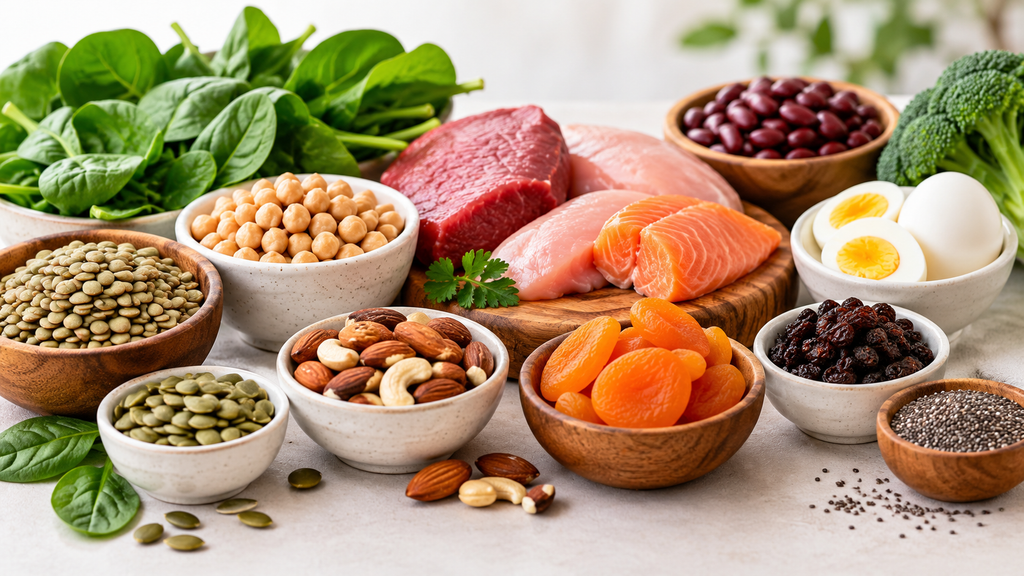
What Does Iron Do in the Body?
Iron supports hemoglobin production, oxygen transport, muscle function, and normal cell activity. It also contributes to brain development, particularly during childhood.
Low iron levels can lead to iron-deficiency anemia, which may cause fatigue, weakness, dizziness, and difficulty concentrating. Eating iron-rich foods can help prevent inadequate intake, although some cases of iron deficiency require medical treatment.
Types of Iron in Food
There are two main types of dietary iron:
- Heme iron: Found in meat, poultry, and seafood. The body generally absorbs it more efficiently.
- Non-heme iron: Found in plant foods and fortified products, including lentils, beans, spinach, tofu, nuts, and cereals.
Vegetarians can obtain iron from plant-based foods. Combining these foods with vitamin C can improve non-heme iron absorption.
Iron-Rich Foods List: 12 Healthy Sources
Here are 12 good sources of iron to include in your daily meals.
1. Red Meat
Beef and lamb provide heme iron and protein. Lean cuts can be included in a balanced diet alongside vegetables and whole grains.
2. Liver
Liver contains iron and vitamin B12. However, it is high in vitamin A, so pregnant individuals should avoid liver and liver products.
3. Chicken and Turkey
Poultry provides protein and some heme iron. Serve it with beans, lentils, or vegetables for a nutritious meal.
4. Sardines and Shellfish
Sardines, clams, and oysters provide iron, protein, and other nutrients. Shellfish can be particularly rich sources of iron.
5. Lentils
Lentils are affordable, plant-based sources of iron, protein, and fiber. Half a cup of cooked lentils contains approximately 3 mg of iron.
6. Beans and Chickpeas
White beans, kidney beans, and chickpeas supply non-heme iron and fiber. Add them to soups, salads, rice dishes, or vegetable curries.
7. Tofu
Tofu provides plant-based protein and iron. Combine it with tomatoes, broccoli, or bell peppers to help improve iron absorption.
8. Spinach
Spinach contains iron and folate. However, the body does not absorb all its iron, so include it alongside other iron-rich foods.
9. Pumpkin Seeds and Nuts
Pumpkin seeds and cashews contribute iron and healthy fats. Sprinkle them over salads or oatmeal, or enjoy them as a snack.
10. Iron-Fortified Cereals
Some breakfast cereals contain substantial amounts of added iron. Check nutrition labels because iron content varies between products.
11. Oats and Whole-Grain Bread
Oats and whole-grain bread provide some iron and other nutrients. Choose fortified products when appropriate.
12. Dried Fruits
Raisins and certain other dried fruits contain small amounts of iron. Add them to oatmeal or combine them with nuts and seeds.
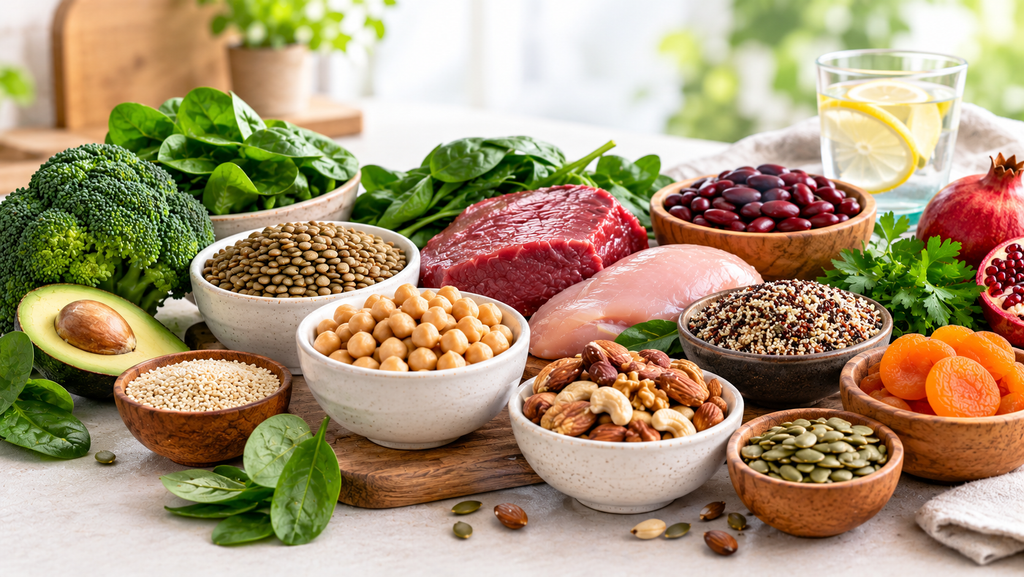
Iron-Rich Foods and Their Benefits
Including iron-rich foods in a balanced diet offers several benefits:
- Healthy red blood cells: Iron helps produce hemoglobin and transport oxygen.
- Energy production: Adequate iron supports normal energy metabolism.
- Brain development: Iron supports neurological development and cognitive function.
- Muscle function: Iron helps deliver oxygen to muscles.
- Overall nutrition: Many iron-rich foods also provide protein, fiber, folate, and other essential nutrients.
How to Increase Iron Levels Naturally
Learning how to increase iron levels naturally starts with choosing a variety of iron-containing foods.
Eat vitamin C-rich foods: Oranges, guava, tomatoes, strawberries, and bell peppers improve the absorption of non-heme iron. Combine them with lentils, beans, or tofu.
Choose varied iron sources: Include legumes, seeds, fortified cereals, meat, or seafood according to your dietary preferences.
Pay attention to tea and coffee: These beverages can reduce non-heme iron absorption when consumed with meals. Drinking them between meals may help if you have low iron levels.
Avoid unnecessary supplements: Iron supplements are not suitable for everyone and should be taken with professional guidance.
Daily Iron Requirements
Daily iron requirements vary by age and life stage. General US recommendations include:
- Children aged 1–3: 7 mg daily
- Children aged 4–8: 10 mg daily
- Teenage boys aged 14–18: 11 mg daily
- Teenage girls aged 14–18: 15 mg daily
- Adult men aged 19–50: 8 mg daily
- Adult women aged 19–50: 18 mg daily
- Adults aged 51 and older: 8 mg daily
- Pregnant individuals: 27 mg daily
These recommendations are general guidelines and may differ between countries. Individual needs can vary.
Frequently Asked Questions
What are the best sources of iron?
Shellfish, meat, fortified cereals, lentils, beans, tofu, and seeds are useful sources of dietary iron.
Can vegetarians get enough iron?
Yes. Lentils, beans, chickpeas, tofu, seeds, and fortified cereals provide iron. Eating vitamin C-rich foods alongside them improves absorption.
What are the side effects of too much iron?
Excessive iron can cause nausea, constipation, and abdominal pain. High doses can be dangerous, so avoid unnecessary supplements.
Conclusion
Foods high in iron, including lentils, beans, seafood, meat, tofu, seeds, and fortified cereals, can help support healthy blood cells, energy production, and brain development. Choose a variety of natural sources of iron and combine plant-based foods with vitamin C to improve absorption.
If you experience persistent fatigue or suspect iron deficiency, consult a healthcare professional. Food supports good nutrition, but some cases require testing and medical treatment.
Medical disclaimer: This article is for educational purposes only and does not replace professional medical advice.