Vitamin E: Benefits, Food Sources & Daily Needs

Vitamin E is an essential nutrient that helps protect cells from damage. It also supports immune function and other important processes in the body. You can get vitamin E from foods such as nuts, seeds, vegetable oils, and green vegetables. Most people can get enough vitamin E through a balanced diet. However, some health conditions can affect how the body absorbs this nutrient. Understanding vitamin E benefits, food sources, daily needs, and supplement safety can help you make informed choices. What Is Vitamin E? Vitamin E is a fat-soluble vitamin. This means it dissolves in fat and can be stored in the body. The term vitamin E refers to a group of eight related compounds: four tocopherols and four tocotrienols. Alpha-tocopherol is the form of vitamin E that the human body uses to meet its requirements. It acts as an antioxidant, helping protect cells from damage caused by free radicals. Vitamin E is also important for normal immune function. Getting enough through food helps the body maintain its usual functions. Health Benefits of Vitamin E 1. Helps Protect Cells One of the main roles of vitamin E is its antioxidant activity. It helps protect cell membranes from oxidative damage caused by free radicals. These unstable molecules form naturally in the body and can also result from environmental exposure. Vitamin E supports the body’s natural defenses against this damage. However, this does not mean that taking extra vitamin E supplements will prevent disease. 2. Supports Immune Function Vitamin E helps the immune system work properly. Getting enough of this nutrient is important for maintaining normal immune function. A balanced diet that includes vitamin E-rich foods can help you meet your nutritional needs. 3. Supports Normal Body Functions Vitamin E plays a role in protecting cell membranes and supporting normal functions in different parts of the body. Severe deficiency can affect nerves, muscles, and vision. These benefits are linked to getting enough vitamin E. Taking more than the recommended amount does not automatically provide extra health benefits. Foods Rich in Vitamin E Food is usually the best place to start when trying to meet your vitamin E needs. Many common foods contain this nutrient, including nuts, seeds, oils, and green vegetables. Here are some good sources of vitamin E: FoodApproximate vitamin E per servingWheat germ oil, 1 tablespoon20.3 mgDry-roasted sunflower seeds, 1 ounce7.4 mgDry-roasted almonds, 1 ounce6.8 mgSunflower oil, 1 tablespoon5.6 mgDry-roasted hazelnuts, 1 ounce4.3 mgPeanut butter, 2 tablespoons2.9 mgDry-roasted peanuts, 1 ounce2.2 mgCooked spinach, ½ cup1.9 mgCooked broccoli, ½ cup1.2 mg Values are approximate and may vary by product and preparation method. Other sources include avocado, kiwi, and certain fortified foods. Eating a variety of these foods can help you get vitamin E as part of a balanced diet. For a simple approach, add nuts or seeds to meals, use suitable vegetable oils in cooking, and include green vegetables regularly. How Much Vitamin E Do You Need Daily? The amount of vitamin E you need depends on your age and life stage. The following table shows the recommended daily intake used in US nutrition guidance. Age or life stageRecommended daily amountChildren aged 1–3 years6 mgChildren aged 4–8 years7 mgChildren aged 9–13 years11 mgTeenagers aged 14–18 years15 mgAdults aged 19 years and older15 mgPregnancy15 mgBreastfeeding19 mg These values are reference amounts, not targets that everyone must meet through supplements. Individual needs may differ depending on health and other factors. Vitamin E Deficiency: Causes and Symptoms Vitamin E deficiency is uncommon in healthy people who eat a varied diet. It is more likely to occur when the body cannot absorb fat properly or when certain medical conditions interfere with nutrient absorption. Possible causes include conditions that affect fat digestion or absorption. In these cases, the body may struggle to absorb enough vitamin E from food. Symptoms of Vitamin E Deficiency A serious deficiency can affect the nervous system and muscles. Possible symptoms include: These symptoms can have many causes and do not confirm vitamin E deficiency on their own. A healthcare professional can assess symptoms, medical history, and appropriate tests to determine whether a deficiency is present. How Is Deficiency Managed? Treatment depends on the cause and severity of the deficiency. A healthcare professional may recommend vitamin E supplements when needed, particularly if a condition affects nutrient absorption. Do not take high doses on your own to treat unexplained symptoms. The correct approach depends on your individual situation. Vitamin E Supplements: Benefits and Safety Vitamin E supplements are available in different forms and doses. However, most people who eat a varied diet do not need high-dose supplements unless a healthcare professional identifies a specific need. Taking more vitamin E than your body needs does not guarantee better health. High doses from supplements can increase the risk of bleeding, especially when combined with certain medicines. Vitamin E may interact with anticoagulant medicines, such as warfarin, which affect blood clotting. If you take medicines or have a health condition, ask a qualified healthcare professional before using vitamin E supplements. The adult upper limit in US guidance is 1,000 mg per day of supplemental alpha-tocopherol. This is a safety limit, not a recommended daily intake. It is not a reason to take large doses. Vitamin E from ordinary foods is generally the preferred way to meet daily needs. Simple Ways to Get Enough Vitamin E You can support your vitamin E intake with a few practical food choices: These habits can help you obtain vitamin E alongside other nutrients your body needs. Frequently Asked Questions What is vitamin E good for? Vitamin E acts as an antioxidant and supports normal immune function. It also helps protect cell membranes from oxidative damage. Which foods contain the most vitamin E? Wheat germ oil, sunflower seeds, almonds, and sunflower oil are good sources. The amount you get depends on the serving size and the product. How much vitamin E do adults need daily? The US recommended daily amount for adults is 15 mg. Pregnant adults also need 15
Vitamin D Deficiency: Symptoms, Causes & Treatment

Vitamin D deficiency occurs when the body does not have enough vitamin D to support its normal needs. Vitamin D helps the body absorb calcium and phosphorus, which are important for healthy bones. Low vitamin D levels can contribute to bone problems and muscle weakness, although some people may not notice clear symptoms. Limited sunlight exposure and inadequate dietary intake can contribute to low levels. Understanding the symptoms, diagnosis, and treatment options can help readers know when to seek medical advice and how to manage vitamin D deficiency safely. What Is Vitamin D Deficiency? Vitamin D deficiency means the body does not have enough vitamin D. This nutrient helps the body absorb calcium and phosphorus from food and supports bone health. When vitamin D levels are too low, bones can become weak and soft. In children, this condition is called rickets. In adults, the related condition is called osteomalacia. Long-term vitamin D deficiency can also contribute to muscle weakness and an increased risk of falls and fractures in older people. A person’s symptoms alone cannot establish whether they have vitamin D deficiency. A healthcare professional can assess their circumstances and recommend a blood test when appropriate. Common Symptoms of Vitamin D Deficiency Vitamin D deficiency does not always cause obvious symptoms. When problems develop, they may affect the bones and muscles. Possible symptoms associated with rickets or osteomalacia include: In children, rickets may also affect bone development and cause bowed legs. These symptoms do not automatically mean that someone has vitamin D deficiency. If bone pain or muscle weakness persists, a healthcare professional can assess the symptoms and determine whether further testing is needed. What Causes Vitamin D Deficiency? Vitamin D levels can become low when the body does not receive or produce enough vitamin D. Some people may have more than one contributing factor. Limited Sun Exposure The skin produces vitamin D when exposed to sunlight. People who spend little time outdoors or cover most of their skin when outside may be at greater risk of low vitamin D levels. People with darker skin may also produce less vitamin D from sunlight. The amount of vitamin D produced varies with individual circumstances and the sunlight available. Sun exposure should not result in sunburn. Follow appropriate sun-protection guidance rather than relying on prolonged, unprotected exposure to treat a suspected deficiency. Low Dietary Vitamin D Intake The body gets vitamin D from both sunlight and food. Some foods, including oily fish and products with added vitamin D, can contribute to dietary intake. People whose diets contain few vitamin D sources may find it difficult to obtain enough from food alone. However, diet is only one part of vitamin D status. For more information about food sources and daily needs, read our related article on vitamin D benefits, food sources, and daily requirements. Other Factors Certain circumstances can increase the likelihood of low vitamin D levels. These include spending little time outdoors, covering most of the skin when outside, having darker skin, and being in groups for whom supplementation is recommended in relevant medical guidance. A risk factor does not confirm that a person has a deficiency. Individual needs can differ, so supplementation and testing decisions should be made according to appropriate medical advice. Who Is at Risk of Vitamin D Deficiency? Vitamin D deficiency can affect people of different ages. The NHS identifies several groups for whom vitamin D supplementation may be recommended, including people who rarely go outdoors, people who cover most of their skin outside, people with darker skin, pregnant or breastfeeding people, and certain young children. Older adults may also experience consequences of long-term deficiency, including muscle weakness, falls, and fractures. People who are concerned about their vitamin D intake or have symptoms that may relate to bone health should discuss their circumstances with a healthcare professional. They should not assume that a risk factor alone proves a deficiency. How Is Vitamin D Deficiency Diagnosed? A healthcare professional may recommend a blood test when vitamin D deficiency is suspected. According to the NHS, a doctor can check vitamin D and calcium levels when assessing someone who may have rickets or osteomalacia. The blood test helps determine whether vitamin D levels are low. Depending on the person’s symptoms and circumstances, the healthcare professional may recommend further tests to investigate bone problems. Not everyone needs testing. If you are concerned about a possible deficiency, ask a healthcare professional whether a blood test is appropriate for you. Vitamin D Deficiency Treatment Treatment depends on the person’s vitamin D levels and health needs. The main options include supplements, dietary changes, and addressing factors that contribute to low levels. Vitamin D Supplements Vitamin D supplements may be recommended to treat a confirmed deficiency. The NHS explains that a doctor may prescribe a course of higher-strength vitamin D when levels are severely low. This treatment is different from taking a routine supplement to help prevent deficiency. The appropriate dose and duration depend on the individual’s circumstances. Follow the instructions provided by a healthcare professional, and do not take high doses without medical guidance. Taking too much vitamin D can cause calcium and phosphate to build up in the body, potentially leading to harmful effects. Some people receiving treatment may need follow-up blood tests to check their levels. Dietary Changes A balanced diet can help provide vitamin D and calcium. Oily fish and foods fortified with vitamin D can contribute to vitamin D intake. Calcium is also important for bone health. Dietary changes may support treatment, but they may not be enough to correct every deficiency. Some people need supplements as part of their treatment plan. See our related article on vitamin D food sources for more information about including this nutrient in your diet. Safe Sun Exposure Sunlight helps the body produce vitamin D. Spending time outdoors can contribute to vitamin D production, but the amount produced varies. Avoid sunburn and follow appropriate sun-safety guidance. Do not rely on excessive sun exposure to
Vitamin D Foods: 8 Best Sources for Better Health
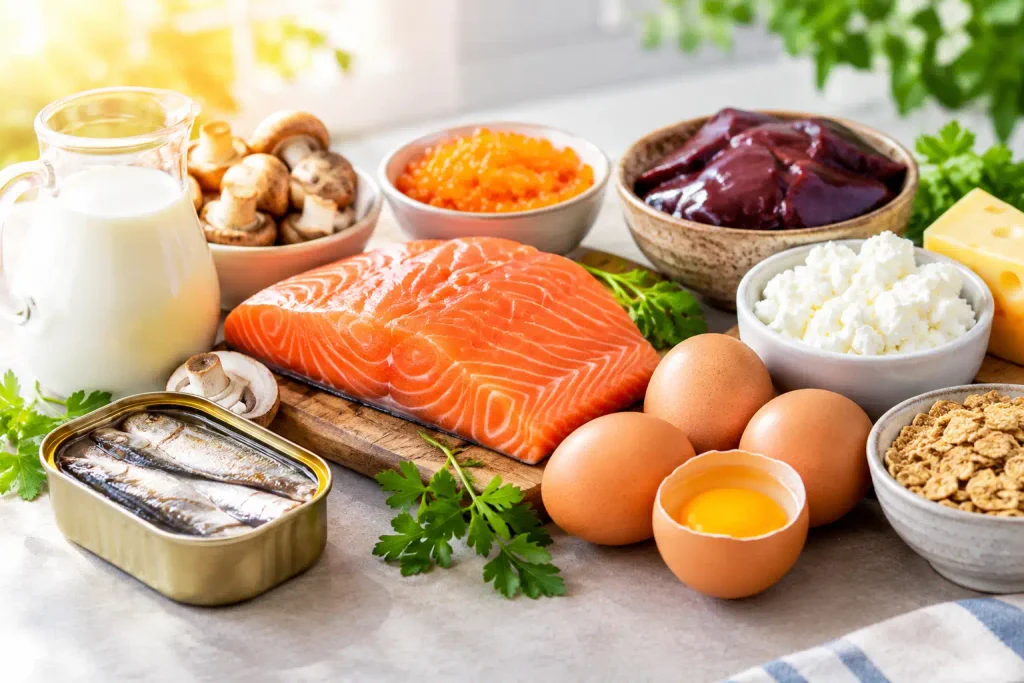
Vitamin D foods include fatty fish, egg yolks, certain mushrooms, and products fortified with vitamin D. This nutrient helps your body absorb calcium and supports healthy bones. It also plays a role in normal muscle and immune function. Few foods naturally contain large amounts of vitamin D. Some products, such as milk, breakfast cereals, and plant-based drinks, may contain added vitamin D. Knowing which foods provide this nutrient can help you make informed choices and maintain a balanced diet. What Is Vitamin D? Vitamin D is a fat-soluble vitamin that helps the body absorb calcium and maintain normal calcium and phosphorus levels. These minerals are important for healthy bones and teeth. There are two main forms of vitamin D: Both forms can increase vitamin D levels in the body. The amount you get from food depends on the type of food, serving size, and whether the product has been fortified. Why Does Your Body Need Vitamin D? Vitamin D has several important functions. Supports Bone Health Vitamin D helps the intestines absorb calcium from food. Calcium and phosphorus help build and maintain bones. Severe vitamin D deficiency can cause rickets in children and osteomalacia in adults. Both conditions affect bone health. Helps Maintain Muscle Function Vitamin D plays a role in normal muscle function. Severe deficiency can contribute to muscle weakness, although muscle symptoms can have many other causes. Supports Normal Immune Function Vitamin D also contributes to normal immune system function. However, getting extra vitamin D does not guarantee protection against infections. The main established nutritional role discussed here is its contribution to bone health and calcium absorption. 8 Best Food Sources of Vitamin D Adding foods that contain vitamin D to your meals can help increase your dietary intake. The following options include natural sources and products that may contain added vitamin D. 1. Fatty Fish Fatty fish are among the best natural food sources of vitamin D. They also provide protein and other nutrients. Examples include: The vitamin D content varies by fish type and serving size. According to the US National Institutes of Health (NIH), a 3-ounce serving of cooked sockeye salmon provides about 570 IU (14.2 micrograms) of vitamin D. The same serving size of cooked rainbow trout provides about 645 IU (16.2 micrograms). Fish can be prepared in different ways, including baking, grilling, or cooking in a curry. The vitamin D content of a meal will depend on the fish used and the serving size. 2. Egg Yolks Egg yolks contain small amounts of vitamin D. The amount can vary depending on the hen’s diet and other factors. According to NIH food data, one large scrambled egg provides about 44 IU (1.1 micrograms) of vitamin D. Eggs are also a source of protein and other nutrients. You can include boiled eggs, scrambled eggs, or omelets in a balanced diet. However, eggs generally provide less vitamin D per serving than fatty fish. 3. Fortified Milk Some milk products contain added vitamin D. This process is called fortification, which means that a nutrient is added to a food during production. In the United States, many milk products are fortified with vitamin D. One cup of fortified 2% milk provides about 120 IU (3 micrograms), according to NIH data. However, milk fortification varies between countries and brands. Do not assume that every milk product contains added vitamin D. Check the nutrition label to see whether the product provides this nutrient. 4. Fortified Plant-Based Milk Plant-based drinks may also provide vitamin D when manufacturers add it during production. Examples include: The amount varies by brand. Some products contain added vitamin D, while others do not. For example, NIH data for selected fortified plant-based drinks lists approximately 100–144 IU (2.5–3.6 micrograms) per cup. These values do not apply to every product. Check the nutrition label before choosing a plant-based drink as a vitamin D source. 5. Mushrooms Mushrooms can provide vitamin D2. Their vitamin D content varies according to the type of mushroom and its exposure to ultraviolet light. Some commercially available mushrooms are exposed to UV light to increase their vitamin D content. NIH data lists about 366 IU (9.2 micrograms) in half a cup of sliced white mushrooms exposed to UV light. Ordinary mushrooms may contain much less. For this reason, do not assume that all mushrooms provide the same amount of vitamin D. Mushrooms can be added to soups, omelets, vegetable dishes, and other meals. When available, check the packaging for information about UV treatment and vitamin D content. 6. Fortified Breakfast Cereals Some breakfast cereals contain added vitamin D. The amount depends on the product and the level of fortification. For example, the NIH lists approximately 80 IU (2 micrograms) per serving for a ready-to-eat cereal fortified with 10% of the US Daily Value for vitamin D. This figure applies to that stated fortification level, not every breakfast cereal. Check the nutrition label for vitamin D per serving. It is also useful to compare sugar and fiber content when selecting a cereal. 7. Fortified Orange Juice Some orange juice products contain added vitamin D, but many do not. If you want orange juice to contribute to your vitamin D intake, check the product label. The amount can vary between brands, so there is no single value that applies to every serving. Fortified orange juice can contribute to your daily intake, but it should be considered one option among several dietary sources. 8. Beef Liver and Cheese Beef liver and cheese contain small amounts of vitamin D. They also provide other nutrients, but their vitamin D content is generally lower than that of fatty fish. NIH food data lists approximately 42 IU (1 microgram) in a 3-ounce serving of braised beef liver and about 17 IU (0.4 micrograms) in 1.5 ounces of cheddar cheese. The amounts vary with the food and serving size. These foods can contribute to your intake, but they are not as concentrated a source as certain fatty fish. How Much Vitamin
Vitamin C Serum: Benefits, Uses & Skin Care Tips

Vitamin C serum is a popular skin care product that may help improve dark spots, uneven skin tone, and fine lines. Vitamin C is an antioxidant that helps protect the skin from free radical damage. Research suggests that topical vitamin C may support collagen production and improve some visible signs of skin aging. However, results vary depending on the product’s formula, and more clinical research is needed. What Is Vitamin C Serum? Vitamin C serum is a skin care product that contains vitamin C or one of its derivatives. It is commonly used to improve the appearance of uneven skin tone, dark spots, and signs of aging. Vitamin C acts as an antioxidant. It helps protect the skin against oxidative damage caused by free radicals. These unstable molecules can contribute to skin damage over time. Topical vitamin C has been studied for its potential skin benefits. However, different products may produce different results because their ingredients, concentrations, and formulations vary. How Vitamin C Works on the Skin Vitamin C plays a role in collagen production. Collagen is a protein that helps maintain the skin’s structure and firmness. Vitamin C may also help reduce melanin formation. Melanin is the pigment that gives skin its color, and excess pigment can contribute to dark spots. Research suggests that topical vitamin C may improve some skin concerns. However, the available clinical evidence is limited, so results cannot be guaranteed for every product. L-Ascorbic Acid and Other Vitamin C Forms L-ascorbic acid is a form of vitamin C commonly studied in skin care research. Other products contain derivatives, such as magnesium ascorbyl phosphate and ascorbyl-6-palmitate. These forms have been investigated for their potential skin benefits. However, the stability of the ingredient and the product’s ability to deliver vitamin C to the skin can affect its performance. When choosing a serum, check the ingredient list and follow the manufacturer’sinstructions. A product containing vitamin C does not guarantee a particular result. Benefits of Vitamin C Serum for Skin Helps Improve the Appearance of Dark Spots Dark spots can develop after sun exposure and may become more noticeable with age. Other factors can also cause uneven skin pigmentation. Vitamin C may help reduce the appearance of some dark spots by limiting melanin production. Some clinical research has reported improvements in pigmentation with topical vitamin C, although further studies are needed. Vitamin C serum will not necessarily remove every dark spot. If a spot changes in size, shape, or color, consult a qualified health professional rather than treating it only with cosmetic products. Supports Collagen Production Collagen helps maintain the skin’s structure and firmness. Vitamin C plays an important role in the body’s collagen production. Research reviews suggest that topical vitamin C may support collagen synthesis and improve some visible signs of skin aging. However, these findings do not mean that every serum will produce noticeable results. The product’s formulation and the available clinical evidence are important. May Reduce the Appearance of Fine Lines Fine lines are a common feature of skin aging. Sun exposure can also contribute to wrinkles and changes in skin texture. Harvard Health describes a clinical study in which daily use of a particular vitamin C formulation for at least three months improved the appearance of wrinkles and skin texture. This finding does not guarantee the same results with every serum. Provides Antioxidant Support Vitamin C is an antioxidant that helps protect the skin against free radical damage. Researchers have studied topical vitamin C for its potential role in reducing some effects associated with sun exposure. However, the benefits depend on the formulation, and clinical evidence remains limited. Vitamin C serum should complement a skin care routine rather than replace established sun protection. How to Use Vitamin C Serum Follow the product label when applying vitamin C serum. A simple morning routine includes these steps: Avoid applying more serum than recommended. Using extra product does not guarantee better results and may increase discomfort. If you have sensitive skin, introduce the serum carefully. Stop using it if you experience persistent irritation. Should You Use It in the Morning or at Night? Vitamin C serum is commonly used in the morning because its antioxidant properties may complement sun protection. However, the appropriate application time depends on the product’s directions and your skin’s tolerance. Choose a routine you can follow consistently. If you experience irritation, reduce use or stop applying the product and seek professional advice if symptoms continue. Why Sunscreen Is Important Sun exposure can contribute to wrinkles, dark spots, and other visible signs of skin aging. Sunscreen helps protect the skin against ultraviolet (UV) radiation. Use a broad-spectrum sunscreen with an SPF of at least 30 as part of your daytime routine. Follow the product instructions for reapplication, particularly after swimming, sweating, or spending extended periods outdoors. Vitamin C serum does not replace sunscreen. Consistent sun protection is especially important if you want to reduce the appearance of sun-related pigmentation. How to Choose a Vitamin C Serum Understanding Ingredients and Concentrations Check the ingredient list to identify the form of vitamin C in the product. L-ascorbic acid is one of the forms studied in topical skin care. Harvard Health discusses formulations containing 10% to 20% L-ascorbic acid with a pH below 3.5. These conditions have been studied in clinical research, but they are not a universal requirement for every user or product. A higher concentration does not automatically mean better results. Consider the product’s instructions and choose a formula your skin can tolerate. Why Packaging and Product Stability Matter Vitamin C stability is an important consideration when choosing a serum. Research has identified the development of stable formulations that can deliver vitamin C into the skin as a challenge. Follow the manufacturer’s storage instructions and check the expiry date. Read the ingredient list carefully, especially if you have known sensitivities. If the product changes noticeably in color, smell, or texture, check the manufacturer’s guidance before continuing to use it. Choosing a Product for Sensitive Skin
Vitamin C: Benefits, Food Sources & Daily Needs

Vitamin C is an essential nutrient that supports collagen production, wound healing, immune function, and iron absorption. The body cannot make vitamin C, so you need to get it from food or supplements. Fruits and vegetables, such as oranges, strawberries, kiwi, bell peppers, and broccoli, are useful sources. This guide explains vitamin C benefits, daily requirements, deficiency symptoms, and supplement safety. What Is Vitamin C? Vitamin C, also called ascorbic acid, is a water-soluble vitamin. This means it dissolves in water, and the body removes much of the excess through urine. The body keeps only a limited reserve, so regular intake is important. Fruits and vegetables are the main dietary sources. Some fortified foods and drinks also contain vitamin C. Supplements are another option for people who cannot get enough from their diet. Health Benefits of Vitamin C 1. Supports Collagen Production Vitamin C helps the body make collagen, a protein found in skin, blood vessels, tendons, and ligaments. Collagen also helps maintain cartilage, bones, and teeth. The body needs collagen to repair tissues and heal wounds. Getting enough vitamin C helps support these normal processes. 2. Provides Antioxidant Protection Vitamin C acts as an antioxidant. Antioxidants help protect cells from damage caused by unstable molecules called free radicals. Free radicals form during normal body processes. Exposure to tobacco smoke and pollution can also increase exposure to them. Vitamin C is one part of the body’s natural antioxidant defenses. 3. Helps the Body Absorb Iron Iron is needed to make hemoglobin, a protein in red blood cells that carries oxygen. Vitamin C improves the absorption of non-heme iron, which is found in plant foods. You can increase iron absorption by eating vitamin C-rich foods alongside meals containing beans, lentils, or other plant sources of iron. For example, adding tomatoes or bell peppers to a meal with lentils provides vitamin C with plant-based iron. 4. Supports Normal Immune Function Vitamin C supports several functions of the immune system. Getting enough vitamin C helps the body maintain its normal defenses. However, vitamin C is not a guaranteed way to prevent infections. Regular use of vitamin C supplements may slightly shorten the duration of a common cold or make symptoms milder for some people. Starting supplements after cold symptoms appear has not shown consistent benefits. 5. Helps With Wound Healing The body needs vitamin C to produce collagen and repair tissues. A deficiency can slow wound healing and affect the health of the gums and other tissues. Eating enough vitamin C supports normal healing. However, taking extra supplements does not mean wounds will heal faster if you already get enough vitamin C. Foods High in Vitamin C Fruits and vegetables are the best dietary sources of vitamin C. Eating a variety of these foods can help you meet your daily needs. Fruits Rich in Vitamin C Good fruit sources include: Vegetables Rich in Vitamin C Useful vegetable sources include: Some cereals, juices, and other products have added vitamin C. Check the nutrition label to see whether a product is fortified and how much it provides. How to Preserve Vitamin C in Food Vitamin C content can decrease during long storage and cooking. Exposure to light can also reduce the amount in some foods. To help preserve vitamin C: These steps can help reduce vitamin C losses, although the amount retained depends on the food and preparation method. How Much Vitamin C Do You Need Daily? The recommended amount depends on age, sex, and life stage. The following recommendations apply to adults aged 19 and older under US dietary guidelines. GroupRecommended daily intakeAdult men90 mgAdult women75 mgPregnant adults85 mgBreastfeeding adults120 mgAdults who smokeAn additional 35 mg These amounts are not intended for children or teenagers, whose requirements differ by age and life stage. People who smoke need additional vitamin C because smoking increases the body’s requirement. Many people can meet their daily needs through a varied diet that includes fruits and vegetables. Vitamin C Deficiency: Symptoms and Causes Vitamin C deficiency develops when the body does not get enough vitamin C over time. A diet with very few fruits and vegetables can increase the risk. People with a very limited food variety or certain medical conditions that affect nutrient absorption may also be at greater risk. Common Signs of Vitamin C Deficiency Possible symptoms include: These symptoms can have other causes, so they do not confirm a vitamin C deficiency on their own. A healthcare professional can assess the symptoms and determine whether further testing is needed. What Is Scurvy? Scurvy is a disease caused by severe vitamin C deficiency. It can cause weakness, anemia, gum disease, bruising, and poor wound healing. Although uncommon in populations with access to a varied diet, scurvy can develop when someone receives very little vitamin C for a prolonged period. Suspected deficiency requires appropriate medical assessment and treatment. Vitamin C Supplements: Benefits and Safety Vitamin C supplements are available as tablets, capsules, chewable products, and powders. Some people may need supplements when their diet does not provide enough vitamin C or when a healthcare professional recommends them. However, supplements are not necessary for everyone. Foods provide vitamin C along with other nutrients and, in many cases, fiber. How Much Vitamin C Is Too Much? For adults, the tolerable upper intake level is 2,000 mg per day from all sources, including food and supplements. This is a safety limit, not a recommended daily target. The upper limits for children and teenagers are lower. High doses of vitamin C supplements can cause: High intakes may also increase the risk of kidney stones in some people. Those with hereditary hemochromatosis, a condition that causes excess iron to build up in the body, should be especially careful because high doses of vitamin C can worsen iron overload. Vitamin C supplements may also interact with some medical treatments, including chemotherapy and radiation therapy. Anyone receiving cancer treatment should discuss supplements with their healthcare team before taking them. Does the Body Absorb All
Vitamin B: Benefits, Food Sources, Deficiency & Supplements

Vitamin B refers to a group of eight essential vitamins that help the body use food for energy, support normal nerve function, and produce red blood cells. Good sources include whole grains, beans, leafy green vegetables, eggs, fish, meat, and dairy products. Some foods also contain added B vitamins. A balanced diet can provide many of these nutrients. However, some people may need supplements because of their diet, pregnancy-related needs, or certain medical conditions. What Are B Vitamins? B vitamins are water-soluble nutrients. Each has a different role in keeping the body functioning normally. The eight B vitamins are: Most B vitamins are stored in limited amounts in the body. Vitamin B12 can be stored in the liver. Eating a variety of foods helps you obtain these nutrients. Benefits of the Eight B Vitamins 1. Vitamin B1 (Thiamine) Vitamin B1 helps the body use carbohydrates for energy and supports normal nerve function. Food sources: Whole grains, beans, peas, nuts, seeds, and pork. A severe deficiency can cause beriberi, a condition that affects the nervous system and cardiovascular system. 2. Vitamin B2 (Riboflavin) Vitamin B2 helps release energy from food. It also supports normal skin, eye, and nervous system function. Food sources: Milk, yogurt, eggs, meat, leafy green vegetables, mushrooms, and fortified cereals. Riboflavin deficiency may occur alongside other nutritional deficiencies. 3. Vitamin B3 (Niacin) Vitamin B3 helps the body use carbohydrates, fats, and proteins. It also supports normal skin, digestive system, and nerve function. Food sources: Fish, poultry, meat, peanuts, whole grains, and mushrooms. Severe niacin deficiency can cause pellagra. Symptoms may include skin problems, diarrhea, and changes in mental function. 4. Vitamin B5 (Pantothenic Acid) Vitamin B5 helps the body process fats, carbohydrates, and proteins. Food sources: Meat, eggs, milk, mushrooms, peanuts, and legumes. Vitamin B5 is found in many foods, so deficiency is uncommon. 5. Vitamin B6 (Pyridoxine) Vitamin B6 helps the body use protein. It also supports brain and immune function and helps produce hemoglobin, which carries oxygen in red blood cells. Food sources: Fish, poultry, potatoes, bananas, chickpeas, nuts, and fortified cereals. A deficiency can contribute to anemia and other health problems. However, taking excessive amounts of vitamin B6 supplements can damage nerves. 6. Vitamin B7 (Biotin) Biotin helps the body process fats, carbohydrates, and proteins. Food sources: Cooked eggs, nuts, seeds, meat, fish, and sweet potatoes. Biotin deficiency is rare. Although supplements are often promoted for hair, skin, and nails, extra biotin does not necessarily provide additional benefits when intake is already adequate. 7. Vitamin B9 (Folate) Folate supports DNA production, cell division, and red blood cell formation. Folate occurs naturally in foods, while folic acid is used in supplements and many fortified foods. Food sources: Spinach, broccoli, beans, lentils, peas, and fortified cereals. Folate is especially important during early pregnancy. Adequate folic acid intake helps reduce the risk of certain congenital disabilities. People planning a pregnancy or who may become pregnant should follow appropriate medical guidance. A lack of folate can cause anemia. 8. Vitamin B12 (Cobalamin) Vitamin B12 supports normal nerve function, DNA production, and red blood cell formation. Food sources: Fish, meat, eggs, milk, cheese, and foods fortified with vitamin B12. People following vegan diets need a reliable source of B12 because unfortified plant foods are not reliable natural sources. Fortified foods or suitable supplements can help provide this vitamin. Vitamin B12 deficiency can cause anemia and nerve problems. Which Foods Are Rich in Vitamin B? Different foods provide different B vitamins. Include a variety of these options in your diet: Fruits are not reliable sources of vitamin B12. People who avoid animal products need to obtain B12 from fortified foods or an appropriate supplement. Check food labels to see which vitamins fortified products contain. What Happens When Vitamin B Is Low? Vitamin B deficiency occurs when the body does not receive or absorb enough of a particular B vitamin. Symptoms depend on which vitamin is lacking. Possible signs include: Different deficiencies can cause different conditions. For example, vitamin B1 deficiency can cause beriberi, while severe vitamin B3 deficiency can cause pellagra. Folate or vitamin B12 deficiency can also cause anemia. These symptoms can have other causes, so they do not automatically mean you have a vitamin deficiency. A healthcare professional can assess your symptoms and decide whether testing is needed. Who May Be at Risk of Vitamin B Deficiency? Some people may have a higher risk of particular deficiencies, including: People following vegan diets should pay particular attention to their vitamin B12 intake. Vitamin B Supplements: Tablets, Capsules, and Injections Vitamin B supplements come in different forms. Some contain one vitamin, while vitamin B-complex products contain several B vitamins. The ingredients and amounts vary by product. Supplements may help people who do not get enough of a nutrient from food or who have a medical condition affecting absorption. However, not everyone needs a supplement. Vitamin B12 injections may be used to treat B12 deficiency when clinically appropriate. Depending on the cause of the deficiency and how well the body absorbs the vitamin, a healthcare professional may recommend injections, tablets, or another treatment. What Are the Side Effects of Vitamin B Supplements? Taking high doses of certain B vitamins can cause harmful effects: Avoid taking high-dose supplements without appropriate advice. Ask a healthcare professional which product and dose, if any, are suitable for you. How Can You Maintain Healthy Vitamin B Levels? These simple steps can help you obtain B vitamins through your diet: Frequently Asked Questions About Vitamin B Which food is rich in vitamin B? Fish, meat, eggs, dairy products, beans, lentils, nuts, whole grains, and leafy green vegetables provide different B vitamins. The best choices depend on which vitamin you need. What is vitamin B good for? B vitamins help the body use nutrients from food, support normal nerve function, contribute to red blood cell formation, and support DNA production and cell growth. Which vitamin B is best? No single B vitamin is best for everyone. Each has
Vitamin A Deficiency and Toxicity: Symptoms & Safety
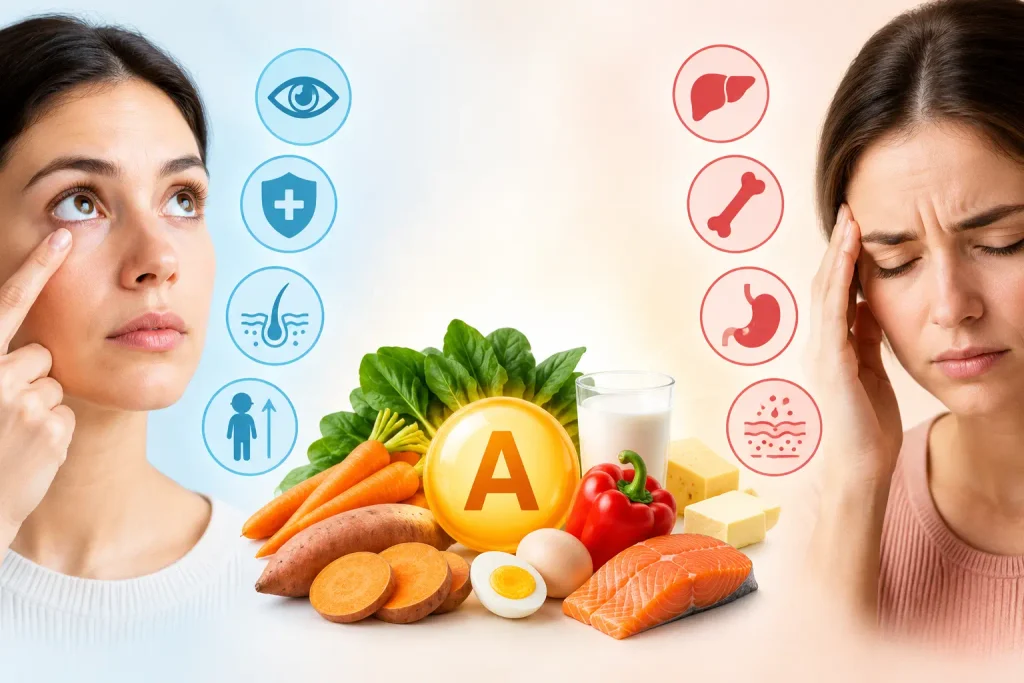
Vitamin A Deficiency and Toxicity can affect vision and immune function, while excessive intake can cause toxicity and liver damage. Understanding the symptoms, causes, and safe intake limits can help you make informed decisions about vitamin A foods and supplements. Why Vitamin A Balance Matters Vitamin A is a fat-soluble vitamin that supports vision, immune function, growth, and development. The body stores it mainly in the liver. There are two main forms of vitamin A: Too little vitamin A can cause deficiency, while excessive preformed vitamin A can cause toxicity. Vitamin A Deficiency Vitamin A deficiency occurs when the body does not get enough vitamin A. It remains a public health concern in some parts of the world, particularly where nutritious food is limited. Young children are among the groups at risk. (1, 2) Common Causes of Vitamin A Deficiency Several factors can contribute to deficiency: Symptoms of Vitamin A Deficiency Symptoms depend on the severity of the deficiency. Common signs include: Dry skin may also occur, but it has many possible causes. Night blindness or persistent eye problems require medical assessment because untreated severe deficiency can damage vision. How Is Vitamin A Deficiency Diagnosed? A healthcare professional may review your diet, medical history, and symptoms. An eye examination and blood test may also help assess vitamin A status. Blood retinol levels can support diagnosis, but they do not always reflect the body’s total vitamin A stores. Results should be considered alongside other clinical findings. Prevention and Treatment of Vitamin A Deficiency A varied diet can help provide enough vitamin A. Useful food sources include: Plant foods provide carotenoids, while animal foods provide preformed vitamin A. If deficiency is diagnosed, a healthcare professional may recommend supplements and assess whether an underlying health condition is affecting absorption. Treatment depends on the person’s needs and should be medically guided. Vitamin A Toxicity Vitamin A toxicity, also called hypervitaminosis A, occurs when excessive amounts of vitamin A build up in the body. The risk is mainly associated with excessive preformed vitamin A from supplements and certain foods. (1) What Causes Excess Vitamin A? Excessive intake may result from: Beta-carotene from ordinary foods does not carry the same established toxicity risk as excessive preformed vitamin A. However, high-dose beta-carotene supplements have been linked to increased lung cancer risk in smokers and certain other high-risk groups. Symptoms of Vitamin A Toxicity Possible symptoms include: Symptoms vary according to the amount taken and the duration of excessive intake. These signs can have other causes, so they do not confirm toxicity on their own. Seek medical advice if you suspect excessive vitamin A intake. Acute vs. Chronic Vitamin A Toxicity Both forms can be serious. Do not take additional vitamin A to treat suspected deficiency without professional guidance. Vitamin A Supplement Safety Recommended Intake and Upper Limits The following are US dietary reference intakes for adults aged 19 and older. Requirements may differ according to age and life stage. Group Daily recommended intakeAdult men900 mcg RAEAdult women700 mcg RAEPregnant women770 mcg RAEBreastfeeding women1,300 mcg RAE. RAE means retinol activity equivalents. This unit accounts for differences in how the body uses vitamin A from different sources. The tolerable upper intake level for preformed vitamin A is 3,000 mcg RAE per day for adults aged 19 and older. This includes preformed vitamin A from food and supplements combined. It is a safety limit, not a recommended daily target. Children and teenagers have lower upper limits. Who Should Be Careful With Vitamin A Supplements? Vitamin A Medication Interactions Orlistat can reduce the absorption of fat-soluble vitamins, including vitamin A. Retinoid medicines may also increase the risk of adverse effects when combined with vitamin A supplements. Tell your doctor or pharmacist about all medicines, multivitamins, and supplements you use before starting additional vitamin A. Frequently Asked Questions What are the first signs of vitamin A deficiency? Night blindness, or difficulty seeing in dim light, is a recognized early sign. Dry eyes may also occur. Other conditions can cause similar symptoms, so medical assessment is important. Can too much vitamin A be harmful? Yes. Excessive preformed vitamin A can cause nausea, headaches, blurred vision, skin changes, and liver damage. Can vitamin A supplements damage the liver? Yes. Taking excessive amounts of preformed vitamin A over time can damage the liver. Is beta-carotene safer than retinol? Beta-carotene from foods does not carry the same established toxicity risk as excessive preformed vitamin A. However, high-dose beta-carotene supplements can increase lung cancer risk in certain high-risk groups, including smokers. Should you take vitamin A supplements every day? Not everyone needs supplements. A varied diet may provide enough vitamin A. Supplements may be appropriate for people with a diagnosed deficiency or specific medical needs, but the dose should be professionally guided. Conclusion Vitamin A supports vision, immune function, growth, and development. Deficiency can cause night blindness and serious eye problems, while excessive preformed vitamin A can lead to toxicity and liver damage. Eat a varied diet, avoid unnecessary high-dose supplements, and seek professional advice if you have possible deficiency symptoms or take medicines that may interact with vitamin A. Medical disclaimer: This article is for general educational purposes only. It does not replace professional medical advice, diagnosis, or treatment. Consult a qualified healthcare professional before starting or changing a supplement
Vitamin A: Benefits, Sources & Daily Requirements
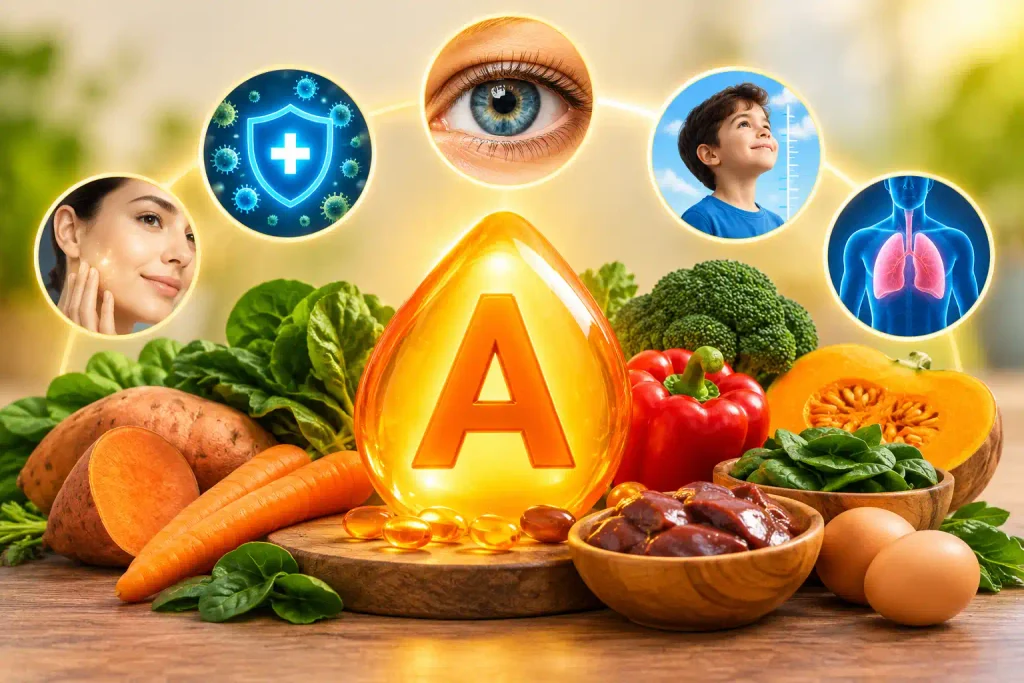
Vitamin A is an essential nutrient that supports healthy vision, immune function, skin, and normal growth. Vitamin A is found in animal foods such as eggs, milk, and fish, as well as plant foods like carrots, spinach, and sweet potatoes. A balanced diet can help you get enough vitamin A. This guide covers the main vitamin A benefits, food sources, daily requirements, and supplement safety. What Is Vitamin A? Vitamin A is a fat-soluble vitamin. This means the body can store it, mainly in the liver, and use it when needed. It helps maintain normal vision, supports cell growth, and contributes to healthy body tissues. There are two main forms of vitamin A: Both forms contribute to your vitamin A intake, but the body processes them differently. Health Benefits of Vitamin A Vitamin A supports several important body functions. Getting enough helps maintain normal health and development. 1. Supports Healthy Vision Vitamin A is essential for normal vision, especially in low light. It helps the body produce rhodopsin, a protein in the retina that allows the eyes to respond to light. It also helps maintain the cornea, the clear outer surface of the eye. A lack of vitamin A can cause difficulty seeing in dim light and may lead to serious eye problems if the deficiency becomes severe. 2. Supports the Immune System Vitamin A helps the immune system work properly. It supports immune cell function and maintains protective tissues, including the skin and the linings of the nose and respiratory tract. Getting enough vitamin A is important for normal immune function. However, taking extra supplements does not necessarily provide additional benefits when your nutritional needs are already met. 3. Helps With Growth and Development Vitamin A supports cell growth and differentiation. These processes help cells develop specific functions and allow body tissues and organs to develop and function normally. Children and teenagers need enough vitamin A as part of a balanced diet. Adequate intake is also important for normal reproduction and development throughout life. 4. Helps Maintain Healthy Skin Vitamin A supports normal skin cell growth and helps maintain skin tissue. It also contributes to the body’s protective barriers. Although vitamin A is important for skin health, eating vitamin A-rich foods is not a guaranteed treatment for acne, wrinkles, or other skin conditions. High-dose supplements should not be used for cosmetic purposes without professional advice. 5. Supports Normal Cell Function Vitamin A helps cells grow and develop normally. These functions support the maintenance of tissues and the normal operation of different organs. Your daily needs depend on factors such as age, sex, and life stage. Best Food Sources of Vitamin A Vitamin A comes from both animal and plant foods. Eating a variety of these foods can help you meet your daily needs. Animal Sources of Vitamin A Animal foods provide preformed vitamin A, or retinol. Common sources include: Liver requires special care because it contains high levels of vitamin A. The UK NHS advises pregnant women and those who may be pregnant to avoid liver and liver products because too much vitamin A can harm an unborn baby. Plant Sources of Vitamin A Many colourful fruits and vegetables contain provitamin A carotenoids, including beta-carotene. The body converts these compounds into vitamin A. Good plant sources include: You do not need to eat every food on this list daily. Choosing different fruits and vegetables throughout the week can help provide a range of nutrients. Vitamin A is fat-soluble, so including some dietary fat in a meal with carotenoid-rich vegetables can help the body absorb these compounds. How Much Vitamin A Do You Need Daily? Your vitamin A requirements depend on your age, sex, and stage of life. Recommended amounts may also differ between countries. According to US dietary recommendations, the recommended daily allowance for adults aged 19 and older is: For teenagers aged 14–18, the recommended amounts are 900 mcg RAE daily for males and 700 mcg RAE daily for females. These are US recommendations, not universal values. Pregnancy and breastfeeding can also change vitamin A requirements. What Does RAE Mean? RAE stands for retinol activity equivalents. It is a measurement used to account for differences in how the body uses preformed vitamin A and converts carotenoids from plant foods. Both animal and plant foods can contribute to your total vitamin A intake. How to Get Enough Vitamin A From Food A varied diet is a practical way to obtain vitamin A. You can: The amount of vitamin A in food varies according to the food type and serving size. Do You Need Vitamin A Supplements? Not everyone needs a vitamin A supplement. Many people can meet their nutritional needs through a balanced diet. A healthcare professional can help determine whether supplementation is necessary. Vitamin A is stored in the body, so excessive intake of preformed vitamin A from supplements or frequent liver consumption can be harmful. If you are pregnant, planning a pregnancy, or taking medicines that may interact with vitamin A, seek professional advice before using supplements. Check multivitamin labels to avoid taking several products that contain vitamin A. Avoid high-dose supplements unless a qualified healthcare professional recommends them. Frequently Asked Questions About Vitamin A Which foods are rich in vitamin A? Beef liver is a particularly rich source. Eggs, dairy products, and some fish also provide vitamin A. Sweet potatoes, carrots, and spinach supply provitamin A carotenoids. Which fruits contain vitamin A? Mangoes, papaya, apricots, and cantaloupe contain carotenoids that contribute to vitamin A intake. The amount varies by fruit and serving size. How much vitamin A do adults need daily? Under US recommendations, adult men need 900 mcg RAE per day, while adult women need 700 mcg RAE per day. Requirements vary by age, sex, and life stage. Can you get enough vitamin A from food alone? Many people can meet their needs through a varied diet containing suitable animal foods and colourful fruits and vegetables. Some people may need professional advice about supplements.
Essential Vitamins and Minerals: Types, Benefits & Food Sources
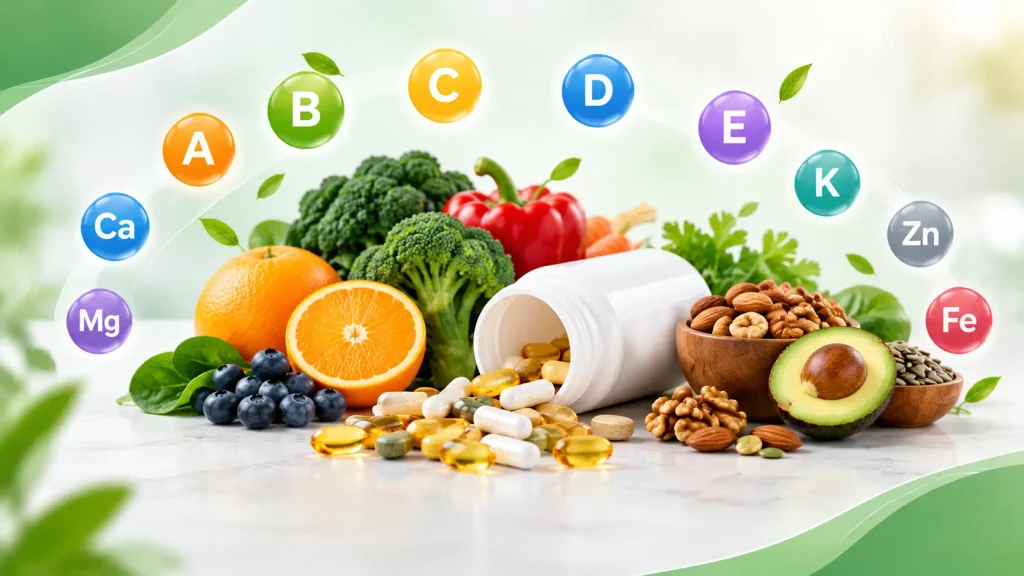
Vitamins and minerals are essential nutrients that help the body grow, repair itself, and work properly. They support healthy bones, normal vision, blood production, and other important body functions. A balanced diet that includes fruits, vegetables, whole grains, protein foods, and dairy products can provide many of these nutrients. There are 13 essential vitamins and several important minerals. Each nutrient has a different role, and the body needs the right amount of each. A lack of certain nutrients can cause health problems, while taking too much of some vitamins and minerals through supplements can be harmful. This guide explains the main types of vitamins and minerals, their functions, food sources, and the importance of a balanced diet. What Are Vitamins and Minerals? Vitamins and minerals are called micronutrients because the body needs them in small amounts. They do not provide energy directly, but they help the body use energy from food and support normal body functions. Vitamins are organic substances, while minerals are elements found in food, water, and the environment. Both are important for growth, tissue repair, and general health. Eating different types of nutritious foods helps provide a range of essential nutrients. No single food contains everything the body needs, so variety is important. Types of Vitamins and Their Functions There are 13 essential vitamins. These include vitamins A, C, D, E, and K, along with eight B vitamins. Vitamin A Vitamin A supports normal vision, skin health, growth, and immune function. Food sources include carrots, sweet potatoes, leafy green vegetables, eggs, and some dairy products. A serious deficiency can affect vision. B Vitamins The B-group contains eight vitamins: B1, B2, B3, B5, B6, B7, B9, and B12. They help the body use nutrients from food and support normal cell function. Sources include whole grains, meat, eggs, legumes, and vegetables. Vitamin B12 is found naturally mainly in animal foods and some fortified products. Vitamin C Vitamin C supports wound healing and helps the body absorb iron from plant foods. Good sources include oranges, guavas, tomatoes, peppers, and other fruits and vegetables. A severe lack of vitamin C can cause scurvy. Eating a variety of fruits and vegetables helps provide this vitamin. Vitamin D Vitamin D helps the body absorb calcium and supports healthy bones and muscles. The skin can produce vitamin D after exposure to sunlight. Food sources include fatty fish, eggs, and some fortified foods. A serious deficiency in children can cause rickets, a condition that affects bone development. Vitamin E Vitamin E helps protect cells from damage. Sources include nuts, seeds, and vegetable oils. A balanced diet can help provide the vitamin E the body needs. Vitamin K Vitamin K is important for normal blood clotting and bone health. It is found in green vegetables such as spinach, kale, and broccoli. People taking warfarin should ask their healthcare professional before making major changes to vitamin K intake or using supplements. Types of Minerals and Their Functions Minerals support healthy bones, muscles, nerves, blood, and other body processes. Important minerals include calcium, iron, zinc, magnesium, potassium, sodium, and iodine. Calcium Calcium helps build and maintain strong bones and teeth. It also supports normal muscle and nerve function. Sources include milk, yogurt, cheese, and some green vegetables. Iron Iron helps red blood cells carry oxygen around the body. Food sources include meat, fish, beans, lentils, and iron-fortified cereals. Low iron levels can cause iron-deficiency anemia. Tiredness and weakness may occur, but these symptoms can have other causes. Zinc Zinc supports normal immune function, growth, and wound healing. Sources include meat, seafood, dairy products, beans, nuts, and seeds. Magnesium Magnesium supports muscle and nerve function and helps the body carry out normal processes. It is found in nuts, seeds, whole grains, legumes, and green vegetables. Potassium Potassium helps maintain fluid balance and supports normal muscle and nerve function. Sources include potatoes, bananas, beans, tomatoes, and other vegetables. Sodium Sodium helps maintain fluid balance and supports nerve and muscle function. Table salt and many packaged foods contain sodium. Too much sodium can contribute to high blood pressure, so limiting excessive salt intake is important. Iodine Iodine helps the body produce thyroid hormones. Sources include iodized salt, seafood, dairy products, and eggs. Both too little and too much iodine can cause problems, so supplements should be used with appropriate advice. Other minerals, including phosphorus, selenium, copper, and manganese, also support normal body functions. Food Sources of Vitamins and Minerals A varied diet is a practical way to get different vitamins and minerals. Include fruits, vegetables, whole grains, beans, lentils, nuts, seeds, and suitable protein foods in your meals. Dairy products and fortified alternatives can provide nutrients such as calcium. Meat, fish, eggs, and legumes supply several vitamins and minerals. Choosing different foods helps provide a wider range of nutrients. Vitamin and Mineral Deficiencies A nutrient deficiency occurs when the body does not get or absorb enough of a nutrient. Different deficiencies can affect health in different ways. For example, severe vitamin C deficiency can cause scurvy, vitamin D deficiency can cause rickets in children, and iron deficiency can lead to anemia. Symptoms alone cannot confirm a deficiency because many health problems can cause similar signs. If you are concerned about your nutrient levels, consult a healthcare professional for advice and appropriate assessment. Should You Take Vitamin and Mineral Supplements? Many people can obtain most essential nutrients from a balanced diet. However, some people may need supplements because of specific dietary needs, health conditions, or a confirmed deficiency. Supplements are not a replacement for nutritious food. Taking large amounts of certain vitamins and minerals can be harmful, and some supplements may interact with medicines. Ask a qualified healthcare professional whether a supplement is suitable for you, especially before taking high doses. Frequently Asked Questions How many essential vitamins are there? There are 13 essential vitamins, including vitamins A, C, D, E, and K and the eight B vitamins. Why are vitamins and minerals important? They support normal body functions, including growth,
Fat-Soluble Vitamins: A, D, E and K
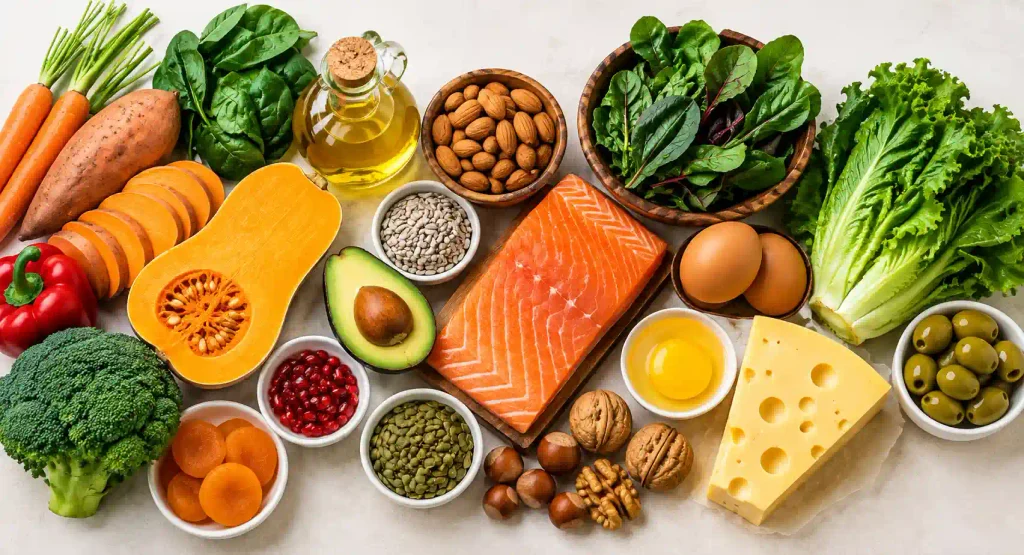
Fat-soluble vitamins are essential nutrients that include vitamins A, D, E, and K. Each has a different job in the body. They also come from different foods and have different safety concerns. This guide covers the four fat-soluble vitamins, their food sources, deficiencies, supplements, and safety. What Are Fat-Soluble Vitamins? The four fat-soluble vitamins are: They are called fat-soluble because their absorption is linked to dietary fat. These types of vitamins support different functions. Vitamin A supports vision and immune function. Vitamin D helps the body absorb calcium. Vitamin E has antioxidant activity. Vitamin K supports normal blood clotting. Fat-Soluble Vitamins at a Glance For nutrient amounts, USDA FoodData Central provides food composition information for people in the United States and elsewhere. Vitamin A Foods and Vitamin A Deficiency Vitamin A supports normal vision, immune function, growth, and development. Vitamin A Foods Vitamin A foods include certain animal foods. Other foods contain carotenoids that contribute to vitamin A nutrition. Some foods, including egg yolk, provide vitamin A. Fruits and vegetables can also provide carotenoids. Vitamin A Deficiency Vitamin A deficiency can affect normal vision and immune function. Symptoms can have other causes, so they cannot confirm a deficiency by themselves. Both low and excessive intake can be a concern. Needs vary with age and life stage. Vitamin D Foods and Vitamin D Deficiency Vitamin D helps the body absorb calcium and supports bone health. The body can also produce vitamin D after sunlight exposure. Vitamin D Foods Vitamin D foods include certain foods and foods fortified with vitamin D. Vitamin D Deficiency Vitamin D deficiency can affect bone health and calcium regulation. A healthcare professional may use a blood test to assess vitamin D status when appropriate. A vitamin D supplement may be useful for some people. Supplement needs depend on individual circumstances and total intake. Vitamin E Foods Vitamin E has antioxidant activity. It helps protect cells from oxidative damage involving free radicals. Vitamin E Foods Common vitamin E foods include: A variety of foods can provide vitamin E from different sources. Vitamin K Foods Vitamin K supports normal blood clotting. Vitamin K Foods Vitamin K foods include leafy greens and other vegetables. Vitamin K is also important if you take certain medicines that affect blood clotting. Talk with a healthcare professional before making major changes to vitamin K supplements or your diet. Fat-Soluble Vitamins vs Water-Soluble Vitamins Fat-soluble vitamins and water-soluble vitamins are two different vitamin groups. Fat-soluble vitamins are A, D, E, and K. Water-soluble vitamins include vitamin C and the B vitamins. The body handles these groups differently. Each vitamin also has its own function. Fat-Soluble Vitamin Deficiency There is no single sign of fat-soluble vitamin deficiency. The effects depend on the vitamin: If you are concerned about deficiency, a healthcare professional can decide whether further evaluation is needed. Fat-Soluble Vitamin Safety Fat-soluble vitamin safety matters because excessive intake can be harmful for some vitamins. High-dose vitamin supplements can greatly increase total intake. Consider nutrients from food, fortified foods, multivitamins, and individual supplements together. Possible side effects depend on the vitamin and amount consumed. The benefit of vitamin intake comes from getting an appropriate amount. Taking more does not always provide more benefit. Fat-Soluble Vitamin Supplements Fat-soluble vitamin supplements are not needed by everyone. Some people may need supplements because of their diet or nutritional needs. Others may get enough from food and fortified foods. If you take medicines or plan to use high-dose supplements, speak with a healthcare professional first. Vitamin D3 Without K2 The question of vitamin D3 without K2 is common. Vitamin D and vitamin K have different roles. Vitamin D helps with calcium absorption and bone health. Vitamin K supports normal blood clotting. NIH information discusses vitamin D and vitamin K separately. It does not establish that everyone taking vitamin D3 must also take vitamin K2. If you are considering either supplement, discuss your needs with a healthcare professional. Fat-Soluble Vitamin Food Sources Fat-soluble vitamin food sources vary by vitamin: Eating a variety of foods can help provide different nutrients and support overall health. Frequently Asked Questions What are the four fat-soluble vitamins? The four fat-soluble vitamins are vitamins A, D, E, and K. What are fat-soluble vitamin food sources? Vitamin A comes from certain animal foods and carotenoids. Vitamin D comes from certain foods and fortified foods. Vitamin E is found in nuts, seeds, and vegetable oils. Vitamin K is found in leafy greens and other vegetables. What are the signs of fat-soluble vitamin deficiency? Signs depend on the vitamin. Vitamin A deficiency may affect vision, while vitamin D deficiency may affect bone health. Vitamin E and K deficiency can also cause problems in certain circumstances. Do you need fat-soluble vitamin supplements? Not everyone needs supplements. Some people may benefit from them, while others can meet their needs through food and fortified foods. Can you take vitamin D3 without K2? NIH information does not establish that everyone taking vitamin D3 must also take vitamin K2. These are separate nutrients with different functions. Final Thoughts The fat-soluble vitamins are vitamins A, D, E, and K. They support vision, immune function, calcium absorption, bone health, antioxidant activity, and normal blood clotting. Good fat-soluble vitamin food sources include vegetables, nuts, seeds, certain animal foods, and fortified foods. If you are concerned about vitamin A deficiency, vitamin D deficiency, or supplement safety, speak with a healthcare professional. Written by the Curetreat Editorial Team Our articles are researched and written by a small team of health writers and editors who summarize guidance from reputable public health sources such as the WHO, CDC, NIH and NHS in plain language. Our writers are not licensed healthcare professionals, and articles are not medically reviewed before publication. Learn more about our team and editorial process.