Vitamin E is an essential nutrient that helps protect cells from damage. It also supports immune function and other important processes in the body. You can get vitamin E from foods such as nuts, seeds, vegetable oils, and green vegetables.
Most people can get enough vitamin E through a balanced diet. However, some health conditions can affect how the body absorbs this nutrient. Understanding vitamin E benefits, food sources, daily needs, and supplement safety can help you make informed choices.

What Is Vitamin E?
Vitamin E is a fat-soluble vitamin. This means it dissolves in fat and can be stored in the body. The term vitamin E refers to a group of eight related compounds: four tocopherols and four tocotrienols.
Alpha-tocopherol is the form of vitamin E that the human body uses to meet its requirements. It acts as an antioxidant, helping protect cells from damage caused by free radicals.
Vitamin E is also important for normal immune function. Getting enough through food helps the body maintain its usual functions.
Health Benefits of Vitamin E
1. Helps Protect Cells
One of the main roles of vitamin E is its antioxidant activity. It helps protect cell membranes from oxidative damage caused by free radicals. These unstable molecules form naturally in the body and can also result from environmental exposure.
Vitamin E supports the body’s natural defenses against this damage. However, this does not mean that taking extra vitamin E supplements will prevent disease.
2. Supports Immune Function
Vitamin E helps the immune system work properly. Getting enough of this nutrient is important for maintaining normal immune function.
A balanced diet that includes vitamin E-rich foods can help you meet your nutritional needs.
3. Supports Normal Body Functions
Vitamin E plays a role in protecting cell membranes and supporting normal functions in different parts of the body. Severe deficiency can affect nerves, muscles, and vision.
These benefits are linked to getting enough vitamin E. Taking more than the recommended amount does not automatically provide extra health benefits.
Foods Rich in Vitamin E
Food is usually the best place to start when trying to meet your vitamin E needs. Many common foods contain this nutrient, including nuts, seeds, oils, and green vegetables.
Here are some good sources of vitamin E:
FoodApproximate vitamin E per servingWheat germ oil, 1 tablespoon20.3 mgDry-roasted sunflower seeds, 1 ounce7.4 mgDry-roasted almonds, 1 ounce6.8 mgSunflower oil, 1 tablespoon5.6 mgDry-roasted hazelnuts, 1 ounce4.3 mgPeanut butter, 2 tablespoons2.9 mgDry-roasted peanuts, 1 ounce2.2 mgCooked spinach, ½ cup1.9 mgCooked broccoli, ½ cup1.2 mg
Values are approximate and may vary by product and preparation method.
Other sources include avocado, kiwi, and certain fortified foods. Eating a variety of these foods can help you get vitamin E as part of a balanced diet.
For a simple approach, add nuts or seeds to meals, use suitable vegetable oils in cooking, and include green vegetables regularly.
How Much Vitamin E Do You Need Daily?
The amount of vitamin E you need depends on your age and life stage. The following table shows the recommended daily intake used in US nutrition guidance.
Age or life stageRecommended daily amountChildren aged 1–3 years6 mgChildren aged 4–8 years7 mgChildren aged 9–13 years11 mgTeenagers aged 14–18 years15 mgAdults aged 19 years and older15 mgPregnancy15 mgBreastfeeding19 mg
These values are reference amounts, not targets that everyone must meet through supplements. Individual needs may differ depending on health and other factors.
Vitamin E Deficiency: Causes and Symptoms
Vitamin E deficiency is uncommon in healthy people who eat a varied diet. It is more likely to occur when the body cannot absorb fat properly or when certain medical conditions interfere with nutrient absorption.
Possible causes include conditions that affect fat digestion or absorption. In these cases, the body may struggle to absorb enough vitamin E from food.
Symptoms of Vitamin E Deficiency
A serious deficiency can affect the nervous system and muscles. Possible symptoms include:
- Muscle weakness
- Problems with balance or coordination
- Nerve-related problems
- Changes in vision
These symptoms can have many causes and do not confirm vitamin E deficiency on their own. A healthcare professional can assess symptoms, medical history, and appropriate tests to determine whether a deficiency is present.
How Is Deficiency Managed?
Treatment depends on the cause and severity of the deficiency. A healthcare professional may recommend vitamin E supplements when needed, particularly if a condition affects nutrient absorption.
Do not take high doses on your own to treat unexplained symptoms. The correct approach depends on your individual situation.
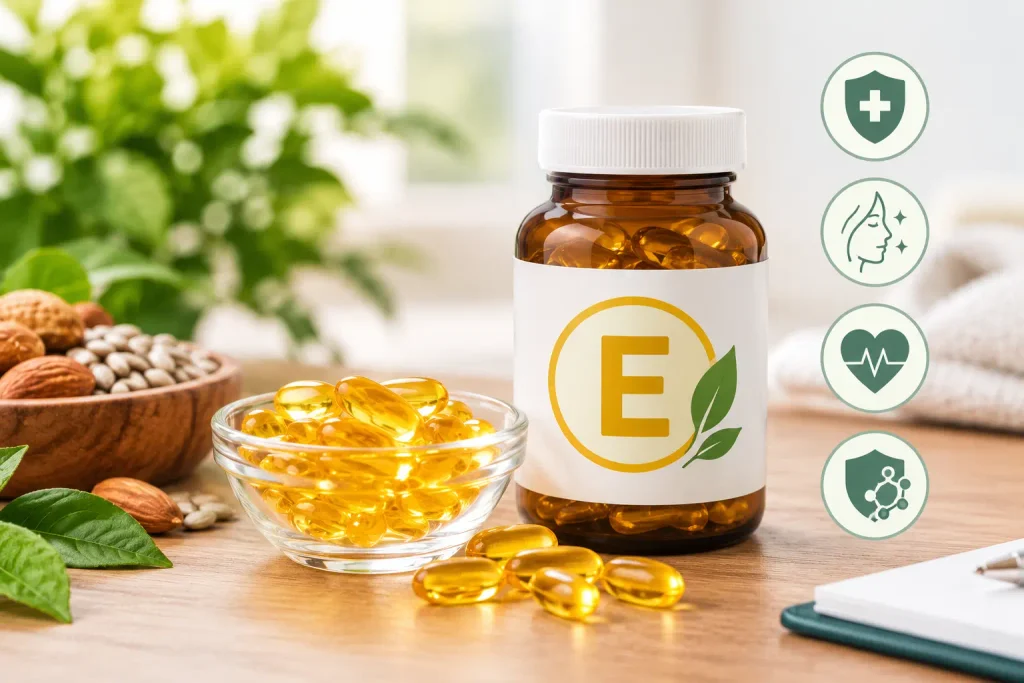
Vitamin E Supplements: Benefits and Safety
Vitamin E supplements are available in different forms and doses. However, most people who eat a varied diet do not need high-dose supplements unless a healthcare professional identifies a specific need.
Taking more vitamin E than your body needs does not guarantee better health. High doses from supplements can increase the risk of bleeding, especially when combined with certain medicines.
Vitamin E may interact with anticoagulant medicines, such as warfarin, which affect blood clotting. If you take medicines or have a health condition, ask a qualified healthcare professional before using vitamin E supplements.
The adult upper limit in US guidance is 1,000 mg per day of supplemental alpha-tocopherol. This is a safety limit, not a recommended daily intake. It is not a reason to take large doses.
Vitamin E from ordinary foods is generally the preferred way to meet daily needs.
Simple Ways to Get Enough Vitamin E
You can support your vitamin E intake with a few practical food choices:
- Eat almonds, peanuts, or sunflower seeds as part of your meals or snacks.
- Use suitable vegetable oils in cooking.
- Include green vegetables such as spinach and broccoli in your diet.
- Add foods such as avocado to meals when available.
- Choose a varied diet rather than relying on one food or supplement.
These habits can help you obtain vitamin E alongside other nutrients your body needs.
Frequently Asked Questions
What is vitamin E good for?
Vitamin E acts as an antioxidant and supports normal immune function. It also helps protect cell membranes from oxidative damage.
Which foods contain the most vitamin E?
Wheat germ oil, sunflower seeds, almonds, and sunflower oil are good sources. The amount you get depends on the serving size and the product.
How much vitamin E do adults need daily?
The US recommended daily amount for adults is 15 mg. Pregnant adults also need 15 mg, while breastfeeding adults need 19 mg under this guidance.
Is it necessary to take vitamin E supplements?
Not usually. Many people can get enough vitamin E from food. Supplements may be needed in some cases, such as when a medical condition affects absorption.
Can too much vitamin E be harmful?
Yes. High-dose vitamin E supplements can increase bleeding risk and may interact with medicines such as warfarin. Seek professional advice before taking high doses.
Conclusion
Vitamin E is an essential nutrient that helps protect cells and supports normal immune function. Nuts, seeds, vegetable oils, and green vegetables are useful food sources. Most people can meet their needs through a balanced diet, while supplements may be appropriate for certain medical conditions.
Focus on food sources first, and consult a qualified healthcare professional before using high-dose vitamin E supplements.
Disclaimer: This article is for general educational purposes only and is not medical advice. Consult a qualified healthcare professional for personal medical guidance.