Vitamins and minerals are essential nutrients that help the body grow, repair itself, and work properly. They support healthy bones, normal vision, blood production, and other important body functions. A balanced diet that includes fruits, vegetables, whole grains, protein foods, and dairy products can provide many of these nutrients.
There are 13 essential vitamins and several important minerals. Each nutrient has a different role, and the body needs the right amount of each. A lack of certain nutrients can cause health problems, while taking too much of some vitamins and minerals through supplements can be harmful.
This guide explains the main types of vitamins and minerals, their functions, food sources, and the importance of a balanced diet.
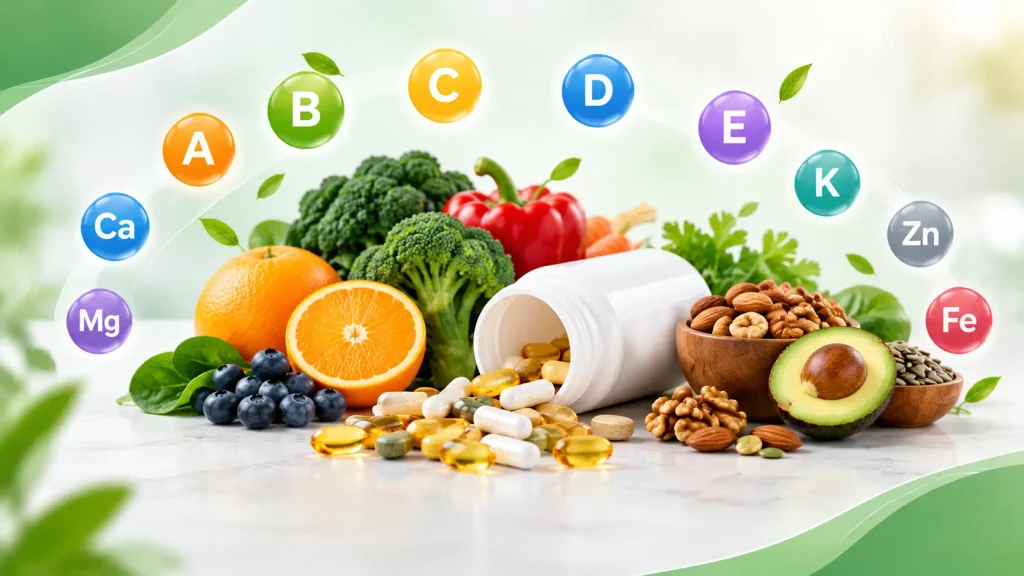
What Are Vitamins and Minerals?
Vitamins and minerals are called micronutrients because the body needs them in small amounts. They do not provide energy directly, but they help the body use energy from food and support normal body functions.
Vitamins are organic substances, while minerals are elements found in food, water, and the environment. Both are important for growth, tissue repair, and general health.
Eating different types of nutritious foods helps provide a range of essential nutrients. No single food contains everything the body needs, so variety is important.
Types of Vitamins and Their Functions
There are 13 essential vitamins. These include vitamins A, C, D, E, and K, along with eight B vitamins.
Vitamin A
Vitamin A supports normal vision, skin health, growth, and immune function. Food sources include carrots, sweet potatoes, leafy green vegetables, eggs, and some dairy products. A serious deficiency can affect vision.
B Vitamins
The B-group contains eight vitamins: B1, B2, B3, B5, B6, B7, B9, and B12. They help the body use nutrients from food and support normal cell function.
Sources include whole grains, meat, eggs, legumes, and vegetables. Vitamin B12 is found naturally mainly in animal foods and some fortified products.
Vitamin C
Vitamin C supports wound healing and helps the body absorb iron from plant foods. Good sources include oranges, guavas, tomatoes, peppers, and other fruits and vegetables.
A severe lack of vitamin C can cause scurvy. Eating a variety of fruits and vegetables helps provide this vitamin.
Vitamin D
Vitamin D helps the body absorb calcium and supports healthy bones and muscles. The skin can produce vitamin D after exposure to sunlight.
Food sources include fatty fish, eggs, and some fortified foods. A serious deficiency in children can cause rickets, a condition that affects bone development.
Vitamin E
Vitamin E helps protect cells from damage. Sources include nuts, seeds, and vegetable oils. A balanced diet can help provide the vitamin E the body needs.
Vitamin K
Vitamin K is important for normal blood clotting and bone health. It is found in green vegetables such as spinach, kale, and broccoli. People taking warfarin should ask their healthcare professional before making major changes to vitamin K intake or using supplements.
Types of Minerals and Their Functions
Minerals support healthy bones, muscles, nerves, blood, and other body processes. Important minerals include calcium, iron, zinc, magnesium, potassium, sodium, and iodine.
Calcium
Calcium helps build and maintain strong bones and teeth. It also supports normal muscle and nerve function. Sources include milk, yogurt, cheese, and some green vegetables.
Iron
Iron helps red blood cells carry oxygen around the body. Food sources include meat, fish, beans, lentils, and iron-fortified cereals. Low iron levels can cause iron-deficiency anemia. Tiredness and weakness may occur, but these symptoms can have other causes.
Zinc
Zinc supports normal immune function, growth, and wound healing. Sources include meat, seafood, dairy products, beans, nuts, and seeds.
Magnesium
Magnesium supports muscle and nerve function and helps the body carry out normal processes. It is found in nuts, seeds, whole grains, legumes, and green vegetables.
Potassium
Potassium helps maintain fluid balance and supports normal muscle and nerve function. Sources include potatoes, bananas, beans, tomatoes, and other vegetables.
Sodium
Sodium helps maintain fluid balance and supports nerve and muscle function. Table salt and many packaged foods contain sodium. Too much sodium can contribute to high blood pressure, so limiting excessive salt intake is important.
Iodine
Iodine helps the body produce thyroid hormones. Sources include iodized salt, seafood, dairy products, and eggs. Both too little and too much iodine can cause problems, so supplements should be used with appropriate advice.
Other minerals, including phosphorus, selenium, copper, and manganese, also support normal body functions.
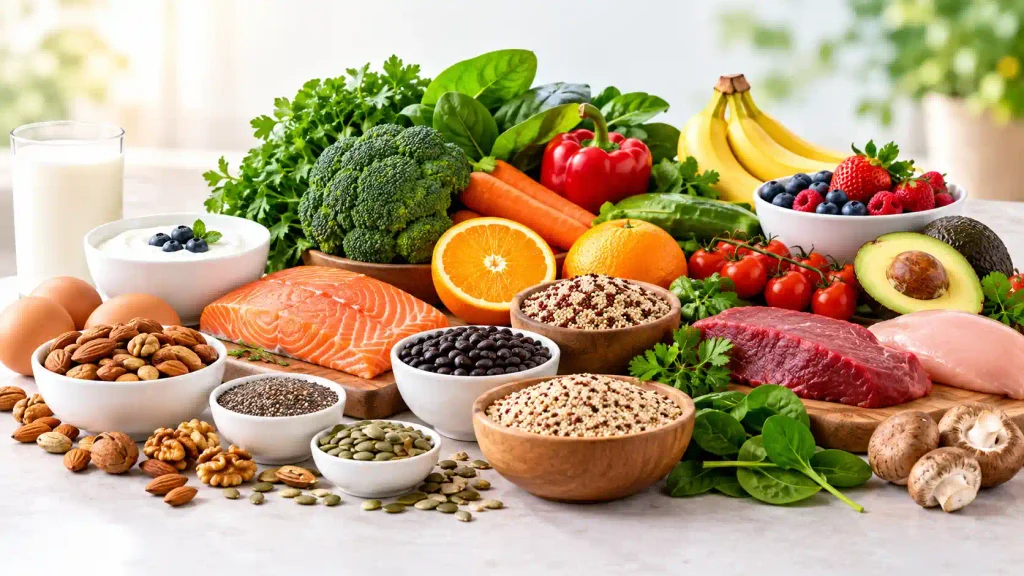
Food Sources of Vitamins and Minerals
A varied diet is a practical way to get different vitamins and minerals. Include fruits, vegetables, whole grains, beans, lentils, nuts, seeds, and suitable protein foods in your meals.
Dairy products and fortified alternatives can provide nutrients such as calcium. Meat, fish, eggs, and legumes supply several vitamins and minerals. Choosing different foods helps provide a wider range of nutrients.
Vitamin and Mineral Deficiencies
A nutrient deficiency occurs when the body does not get or absorb enough of a nutrient. Different deficiencies can affect health in different ways.
For example, severe vitamin C deficiency can cause scurvy, vitamin D deficiency can cause rickets in children, and iron deficiency can lead to anemia.
Symptoms alone cannot confirm a deficiency because many health problems can cause similar signs. If you are concerned about your nutrient levels, consult a healthcare professional for advice and appropriate assessment.
Should You Take Vitamin and Mineral Supplements?
Many people can obtain most essential nutrients from a balanced diet. However, some people may need supplements because of specific dietary needs, health conditions, or a confirmed deficiency.
Supplements are not a replacement for nutritious food. Taking large amounts of certain vitamins and minerals can be harmful, and some supplements may interact with medicines.
Ask a qualified healthcare professional whether a supplement is suitable for you, especially before taking high doses.
Frequently Asked Questions
How many essential vitamins are there?
There are 13 essential vitamins, including vitamins A, C, D, E, and K and the eight B vitamins.
Why are vitamins and minerals important?
They support normal body functions, including growth, tissue repair, bone health, vision, and blood production.
Can food provide enough vitamins and minerals?
A varied, balanced diet can provide many essential nutrients. Some people may need supplements because of their individual needs or a diagnosed deficiency.
Can too many supplements be harmful?
Yes. Excessive amounts of certain vitamins and minerals can cause harmful effects. Professional advice can help you choose suitable supplements and avoid unnecessary high doses.
Conclusion
Vitamins and minerals are essential for normal body function and overall health. Each nutrient has a different role, and various foods provide different nutrients.
Eating a balanced diet with fruits, vegetables, whole grains, and suitable protein foods can help meet many nutritional needs. Supplements may be useful in certain situations, but they should not replace a healthy diet or professional advice.
Disclaimer: This article is for general educational purposes only and is not a substitute for professional medical advice. Consult a qualified healthcare professional about suspected deficiencies or supplement use.