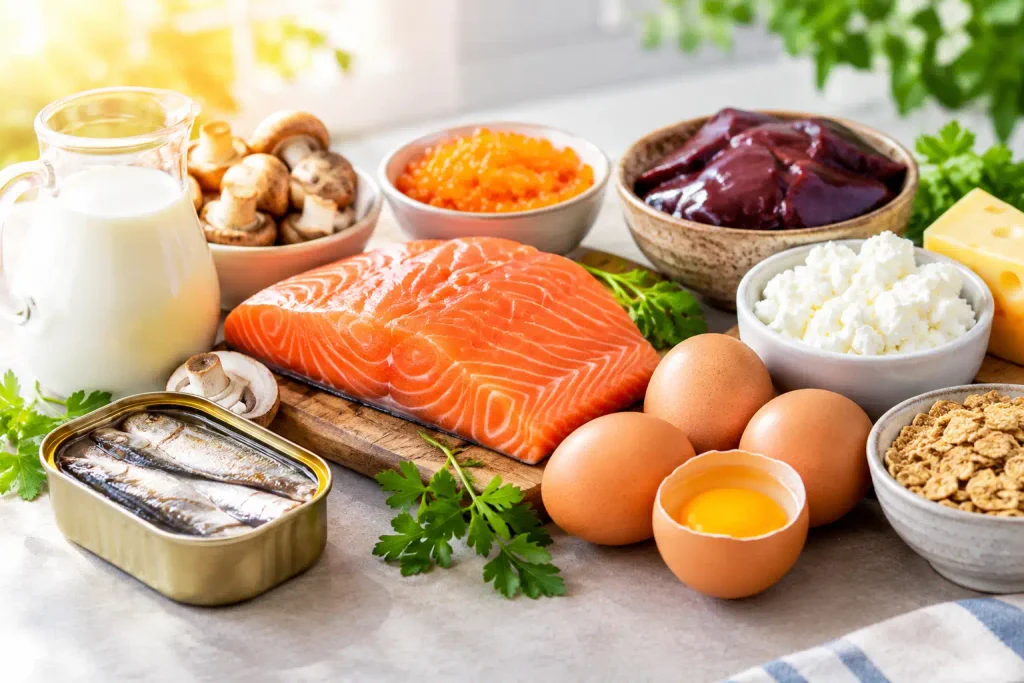
Vitamin D foods include fatty fish, egg yolks, certain mushrooms, and products fortified with vitamin D. This nutrient helps your body absorb calcium and supports healthy bones. It also plays a role in normal muscle and immune function.
Few foods naturally contain large amounts of vitamin D. Some products, such as milk, breakfast cereals, and plant-based drinks, may contain added vitamin D. Knowing which foods provide this nutrient can help you make informed choices and maintain a balanced diet.
What Is Vitamin D?
Vitamin D is a fat-soluble vitamin that helps the body absorb calcium and maintain normal calcium and phosphorus levels. These minerals are important for healthy bones and teeth.
There are two main forms of vitamin D:
- Vitamin D2 (ergocalciferol): Found in some mushrooms and used in certain fortified foods and supplements.
- Vitamin D3 (cholecalciferol): Found in some animal-based foods and produced by the skin when it is exposed to ultraviolet B (UVB) rays from sunlight.
Both forms can increase vitamin D levels in the body. The amount you get from food depends on the type of food, serving size, and whether the product has been fortified.
Why Does Your Body Need Vitamin D?
Vitamin D has several important functions.
Supports Bone Health
Vitamin D helps the intestines absorb calcium from food. Calcium and phosphorus help build and maintain bones. Severe vitamin D deficiency can cause rickets in children and osteomalacia in adults. Both conditions affect bone health.
Helps Maintain Muscle Function
Vitamin D plays a role in normal muscle function. Severe deficiency can contribute to muscle weakness, although muscle symptoms can have many other causes.
Supports Normal Immune Function
Vitamin D also contributes to normal immune system function. However, getting extra vitamin D does not guarantee protection against infections. The main established nutritional role discussed here is its contribution to bone health and calcium absorption.
8 Best Food Sources of Vitamin D
Adding foods that contain vitamin D to your meals can help increase your dietary intake. The following options include natural sources and products that may contain added vitamin D.
1. Fatty Fish
Fatty fish are among the best natural food sources of vitamin D. They also provide protein and other nutrients.
Examples include:
- Salmon
- Trout
- Mackerel
- Sardines
- Tuna
The vitamin D content varies by fish type and serving size. According to the US National Institutes of Health (NIH), a 3-ounce serving of cooked sockeye salmon provides about 570 IU (14.2 micrograms) of vitamin D. The same serving size of cooked rainbow trout provides about 645 IU (16.2 micrograms).
Fish can be prepared in different ways, including baking, grilling, or cooking in a curry. The vitamin D content of a meal will depend on the fish used and the serving size.
2. Egg Yolks
Egg yolks contain small amounts of vitamin D. The amount can vary depending on the hen’s diet and other factors.
According to NIH food data, one large scrambled egg provides about 44 IU (1.1 micrograms) of vitamin D.
Eggs are also a source of protein and other nutrients. You can include boiled eggs, scrambled eggs, or omelets in a balanced diet. However, eggs generally provide less vitamin D per serving than fatty fish.
3. Fortified Milk
Some milk products contain added vitamin D. This process is called fortification, which means that a nutrient is added to a food during production.
In the United States, many milk products are fortified with vitamin D. One cup of fortified 2% milk provides about 120 IU (3 micrograms), according to NIH data.
However, milk fortification varies between countries and brands. Do not assume that every milk product contains added vitamin D. Check the nutrition label to see whether the product provides this nutrient.
4. Fortified Plant-Based Milk
Plant-based drinks may also provide vitamin D when manufacturers add it during production.
Examples include:
- Soy milk
- Almond milk
- Oat milk
The amount varies by brand. Some products contain added vitamin D, while others do not.
For example, NIH data for selected fortified plant-based drinks lists approximately 100–144 IU (2.5–3.6 micrograms) per cup. These values do not apply to every product.
Check the nutrition label before choosing a plant-based drink as a vitamin D source.
5. Mushrooms
Mushrooms can provide vitamin D2. Their vitamin D content varies according to the type of mushroom and its exposure to ultraviolet light.
Some commercially available mushrooms are exposed to UV light to increase their vitamin D content. NIH data lists about 366 IU (9.2 micrograms) in half a cup of sliced white mushrooms exposed to UV light.
Ordinary mushrooms may contain much less. For this reason, do not assume that all mushrooms provide the same amount of vitamin D.
Mushrooms can be added to soups, omelets, vegetable dishes, and other meals. When available, check the packaging for information about UV treatment and vitamin D content.
6. Fortified Breakfast Cereals
Some breakfast cereals contain added vitamin D. The amount depends on the product and the level of fortification.
For example, the NIH lists approximately 80 IU (2 micrograms) per serving for a ready-to-eat cereal fortified with 10% of the US Daily Value for vitamin D.
This figure applies to that stated fortification level, not every breakfast cereal.
Check the nutrition label for vitamin D per serving. It is also useful to compare sugar and fiber content when selecting a cereal.
7. Fortified Orange Juice
Some orange juice products contain added vitamin D, but many do not.
If you want orange juice to contribute to your vitamin D intake, check the product label. The amount can vary between brands, so there is no single value that applies to every serving.
Fortified orange juice can contribute to your daily intake, but it should be considered one option among several dietary sources.
8. Beef Liver and Cheese
Beef liver and cheese contain small amounts of vitamin D. They also provide other nutrients, but their vitamin D content is generally lower than that of fatty fish.
NIH food data lists approximately 42 IU (1 microgram) in a 3-ounce serving of braised beef liver and about 17 IU (0.4 micrograms) in 1.5 ounces of cheddar cheese.
The amounts vary with the food and serving size. These foods can contribute to your intake, but they are not as concentrated a source as certain fatty fish.
How Much Vitamin D Do You Need Each Day?
The recommended daily intake depends on age. According to the NIH, the recommended amounts for healthy people are:
Age groupDaily amountBirth to 12 months400 IU (10 micrograms)Ages 1–70 years600 IU (15 micrograms)Older than 70 years800 IU (20 micrograms)
These recommendations include vitamin D from food, drinks, and supplements. Individual medical circumstances may affect what a healthcare professional recommends.
Because few foods naturally contain high amounts of vitamin D, it may be difficult to meet your needs through food alone. Fatty fish and verified fortified products can help increase your intake.
Eating vitamin D-rich foods does not guarantee that your blood vitamin D level will be adequate. Sunlight exposure, absorption problems, and other health factors can also affect vitamin D status.
Can Sunlight Help Your Body Make Vitamin D?
Your skin can produce vitamin D when exposed to UVB rays from sunlight. The amount produced varies with factors such as skin pigmentation, clothing, location, season, and time spent outdoors.
Sunlight through a window does not provide the UVB exposure needed for vitamin D production in the skin.
Although sunlight is a natural source of vitamin D, too much ultraviolet exposure can damage the skin and increase skin cancer risk. Avoid sunburn and follow appropriate sun-protection guidance instead of spending excessive time in direct sunlight to increase vitamin D levels.
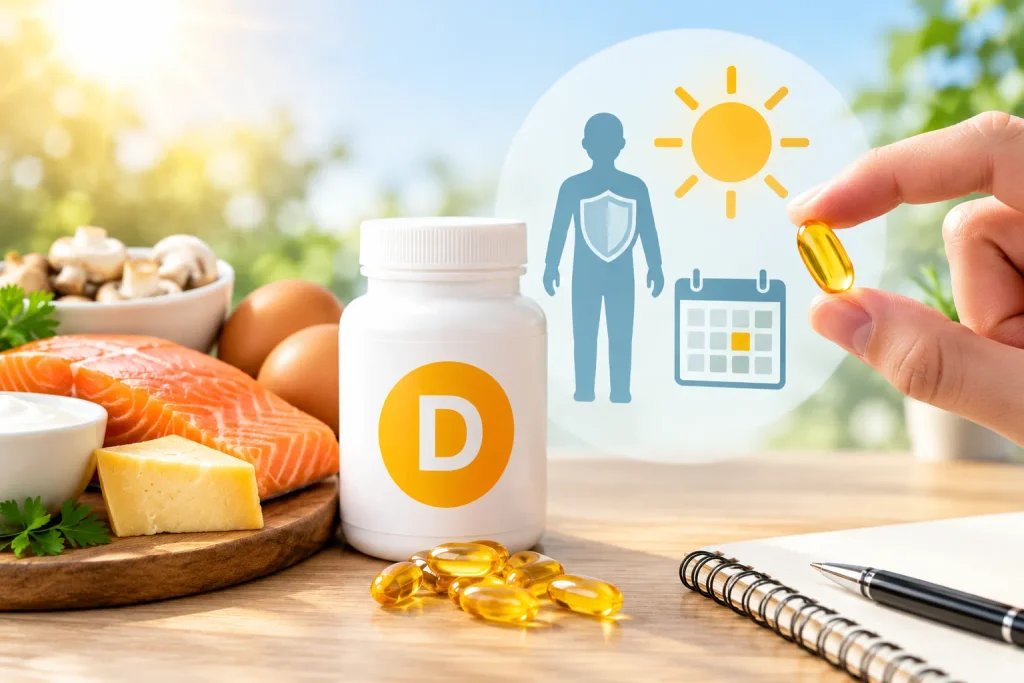
Food remains an important part of vitamin D intake, and supplements may be appropriate for some people when recommended by a healthcare professional.
When Might Vitamin D Supplements Be Needed?
Some people may need vitamin D supplements when their intake or natural production is insufficient. People with certain conditions that affect nutrient absorption may also need medical advice about their vitamin D status.
Vitamin D supplements commonly contain vitamin D2 or D3. Both forms can raise vitamin D levels in the blood.
However, more is not always better. Excessive vitamin D from supplements can cause calcium levels in the blood to become too high and may damage the kidneys and other organs.
Do not take high-dose supplements without professional advice. If you are concerned about vitamin D deficiency, a healthcare professional can assess your situation and decide whether testing or supplementation is appropriate.
Frequently Asked Questions
What foods are richest in vitamin D?
Fatty fish, including salmon and trout, are among the best natural food sources. Some UV-exposed mushrooms also provide useful amounts. Fortified milk, plant-based drinks, and breakfast cereals can contribute when vitamin D has been added.
Which fruits contain vitamin D?
Most fruits naturally contain little or no vitamin D. Some orange juice products have added vitamin D, so check the nutrition label rather than assuming all orange juice contains it.
Do vegetables contain vitamin D?
Most vegetables contain little or no vitamin D. Mushrooms are an exception because they can provide vitamin D2. Their content varies, especially according to exposure to ultraviolet light.
Can I get enough vitamin D from food alone?
Food can contribute to your vitamin D needs, but it may not provide enough for everyone. Fatty fish and fortified products can help increase intake. Whether food alone is sufficient depends on your diet and individual circumstances.
Is vitamin D3 better than vitamin D2?
Both forms can increase vitamin D levels. Research summarized by the NIH indicates that vitamin D3 generally raises blood vitamin D levels more and maintains them longer than vitamin D2. The most suitable supplement depends on individual needs and professional advice.
Conclusion
Vitamin D helps the body absorb calcium and maintain healthy bones. Fatty fish are among the best natural food sources, while egg yolks, beef liver, cheese, and some mushrooms provide smaller or variable amounts. Fortified milk, plant-based drinks, cereals, and orange juice can also contribute when vitamin D has been added.
Check nutrition labels because vitamin D content varies by product, brand, and serving size. A balanced diet can help improve your intake, but some people may need professional advice about testing or supplements.
Disclaimer: This article is for general educational purposes only and is not a substitute for medical advice, diagnosis, or treatment. Consult a qualified healthcare professional about your individual vitamin D needs.