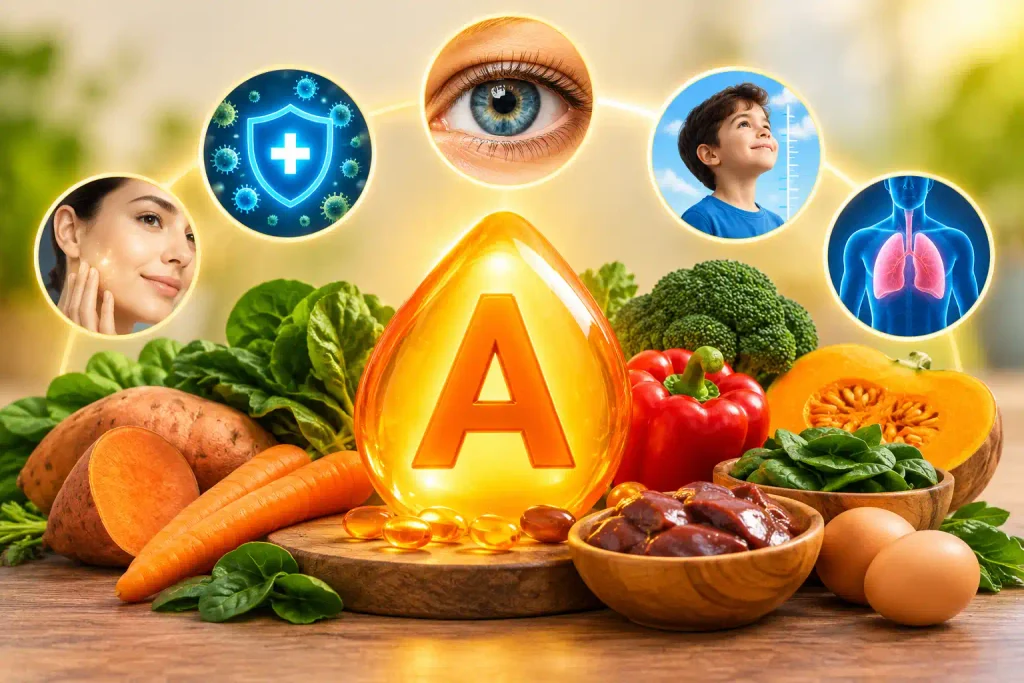
Vitamin A is an essential nutrient that supports healthy vision, immune function, skin, and normal growth. Vitamin A is found in animal foods such as eggs, milk, and fish, as well as plant foods like carrots, spinach, and sweet potatoes. A balanced diet can help you get enough vitamin A.
This guide covers the main vitamin A benefits, food sources, daily requirements, and supplement safety.
What Is Vitamin A?
Vitamin A is a fat-soluble vitamin. This means the body can store it, mainly in the liver, and use it when needed. It helps maintain normal vision, supports cell growth, and contributes to healthy body tissues.
There are two main forms of vitamin A:
- Preformed vitamin A: Also called retinol, it is found in animal foods such as liver, eggs, dairy products, and fish.
- Provitamin A carotenoids: These plant compounds include beta-carotene, which the body can convert into vitamin A.
Both forms contribute to your vitamin A intake, but the body processes them differently.
Health Benefits of Vitamin A
Vitamin A supports several important body functions. Getting enough helps maintain normal health and development.
1. Supports Healthy Vision
Vitamin A is essential for normal vision, especially in low light. It helps the body produce rhodopsin, a protein in the retina that allows the eyes to respond to light.
It also helps maintain the cornea, the clear outer surface of the eye. A lack of vitamin A can cause difficulty seeing in dim light and may lead to serious eye problems if the deficiency becomes severe.
2. Supports the Immune System
Vitamin A helps the immune system work properly. It supports immune cell function and maintains protective tissues, including the skin and the linings of the nose and respiratory tract.
Getting enough vitamin A is important for normal immune function. However, taking extra supplements does not necessarily provide additional benefits when your nutritional needs are already met.
3. Helps With Growth and Development
Vitamin A supports cell growth and differentiation. These processes help cells develop specific functions and allow body tissues and organs to develop and function normally.
Children and teenagers need enough vitamin A as part of a balanced diet. Adequate intake is also important for normal reproduction and development throughout life.
4. Helps Maintain Healthy Skin
Vitamin A supports normal skin cell growth and helps maintain skin tissue. It also contributes to the body’s protective barriers.
Although vitamin A is important for skin health, eating vitamin A-rich foods is not a guaranteed treatment for acne, wrinkles, or other skin conditions. High-dose supplements should not be used for cosmetic purposes without professional advice.
5. Supports Normal Cell Function
Vitamin A helps cells grow and develop normally. These functions support the maintenance of tissues and the normal operation of different organs.
Your daily needs depend on factors such as age, sex, and life stage.
Best Food Sources of Vitamin A
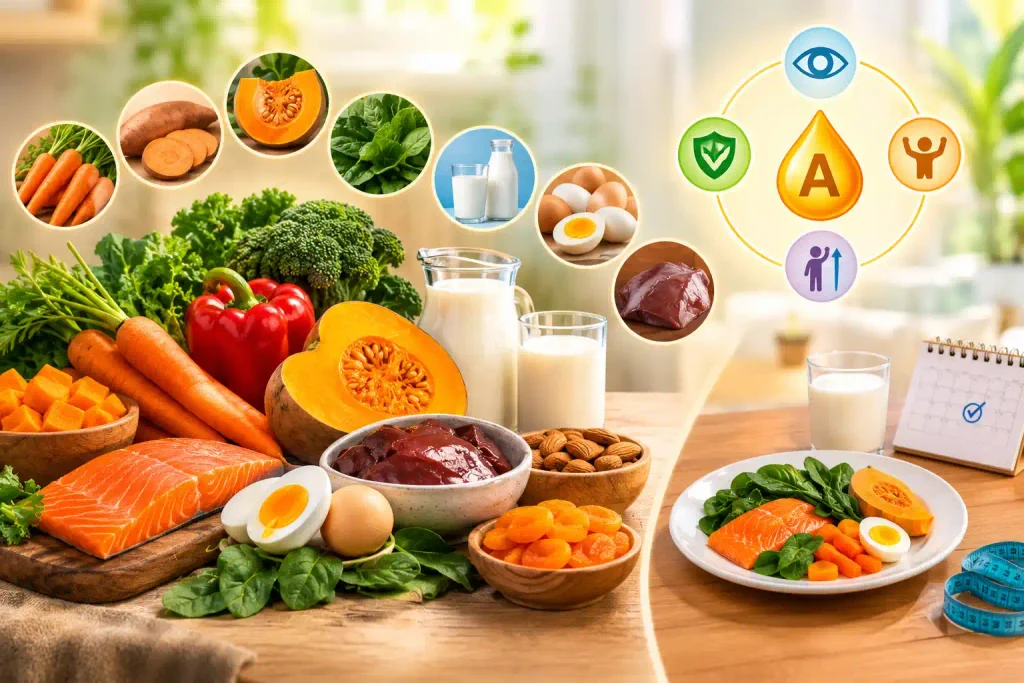
Vitamin A comes from both animal and plant foods. Eating a variety of these foods can help you meet your daily needs.
Animal Sources of Vitamin A
Animal foods provide preformed vitamin A, or retinol. Common sources include:
- Liver: Beef liver contains very high amounts of vitamin A.
- Eggs: Egg yolks provide vitamin A.
- Dairy products: Milk, cheese, and yogurt contribute to vitamin A intake.
- Fish: Some fish, including oily fish, provide vitamin A in varying amounts.
Liver requires special care because it contains high levels of vitamin A. The UK NHS advises pregnant women and those who may be pregnant to avoid liver and liver products because too much vitamin A can harm an unborn baby.
Plant Sources of Vitamin A
Many colourful fruits and vegetables contain provitamin A carotenoids, including beta-carotene. The body converts these compounds into vitamin A.
Good plant sources include:
- Sweet potatoes: Rich in beta-carotene, especially orange-fleshed varieties.
- Carrots: Provide beta-carotene.
- Spinach: Contains provitamin A carotenoids.
- Red bell peppers: Provide carotenoids and other nutrients.
- Mangoes and papaya: Supply carotenoids.
- Apricots: Also contribute provitamin A carotenoids.
You do not need to eat every food on this list daily. Choosing different fruits and vegetables throughout the week can help provide a range of nutrients.
Vitamin A is fat-soluble, so including some dietary fat in a meal with carotenoid-rich vegetables can help the body absorb these compounds.
How Much Vitamin A Do You Need Daily?
Your vitamin A requirements depend on your age, sex, and stage of life. Recommended amounts may also differ between countries.
According to US dietary recommendations, the recommended daily allowance for adults aged 19 and older is:
- Adult men: 900 micrograms of retinol activity equivalents (mcg RAE) per day.
- Adult women: 700 mcg RAE per day.
For teenagers aged 14–18, the recommended amounts are 900 mcg RAE daily for males and 700 mcg RAE daily for females.
These are US recommendations, not universal values. Pregnancy and breastfeeding can also change vitamin A requirements.
What Does RAE Mean?
RAE stands for retinol activity equivalents. It is a measurement used to account for differences in how the body uses preformed vitamin A and converts carotenoids from plant foods.
Both animal and plant foods can contribute to your total vitamin A intake.
How to Get Enough Vitamin A From Food
A varied diet is a practical way to obtain vitamin A. You can:
- Include carrots, spinach, or sweet potatoes in your meals.
- Eat fruits such as mangoes and apricots.
- Include eggs, dairy products, or suitable fish in your diet.
- Choose a variety of foods instead of relying on one source.
- Check nutrition labels when vitamin A content is listed.
The amount of vitamin A in food varies according to the food type and serving size.
Do You Need Vitamin A Supplements?
Not everyone needs a vitamin A supplement. Many people can meet their nutritional needs through a balanced diet. A healthcare professional can help determine whether supplementation is necessary.
Vitamin A is stored in the body, so excessive intake of preformed vitamin A from supplements or frequent liver consumption can be harmful.
If you are pregnant, planning a pregnancy, or taking medicines that may interact with vitamin A, seek professional advice before using supplements. Check multivitamin labels to avoid taking several products that contain vitamin A.
Avoid high-dose supplements unless a qualified healthcare professional recommends them.
Frequently Asked Questions About Vitamin A
Which foods are rich in vitamin A?
Beef liver is a particularly rich source. Eggs, dairy products, and some fish also provide vitamin A. Sweet potatoes, carrots, and spinach supply provitamin A carotenoids.
Which fruits contain vitamin A?
Mangoes, papaya, apricots, and cantaloupe contain carotenoids that contribute to vitamin A intake. The amount varies by fruit and serving size.
How much vitamin A do adults need daily?
Under US recommendations, adult men need 900 mcg RAE per day, while adult women need 700 mcg RAE per day. Requirements vary by age, sex, and life stage.
Can you get enough vitamin A from food alone?
Many people can meet their needs through a varied diet containing suitable animal foods and colourful fruits and vegetables. Some people may need professional advice about supplements.
Should you take vitamin A supplements every day?
Not everyone needs a supplement. Excessive intake of preformed vitamin A can be harmful, so ask a healthcare professional whether a supplement is suitable for you.
Conclusion
Vitamin A supports healthy vision, immune function, skin, cell growth, and normal development. Good sources include liver, eggs, dairy products, fish, carrots, spinach, and sweet potatoes.
Eating a varied diet can help you meet your daily vitamin A needs. Because the body stores this vitamin, avoid unnecessary high-dose supplements and seek professional advice if you are unsure about your intake.
Medical disclaimer: This article is for general educational purposes only. It is not a substitute for medical advice, diagnosis, or treatment. Consult a qualified healthcare professional for personal advice about vitamin A intake or supplements.