Hives on Skin: 9 Causes & Quick Relief
Hives are one of the most common skin problems, and one of the most alarming when they first appear. Raised, itchy welts can show up on the skin suddenly, often for no obvious reason, and then fade just as quickly. They can be uncomfortable, itchy, and worrying, especially if you do not know what is causing them.
The medical name for hives is urticaria. They can appear anywhere on the body, come in different sizes, and change shape or move around. Most of the time, hives are harmless and settle on their own. But they can be very itchy, and in some cases they point to an allergy or another trigger worth understanding.
The good news is that most hives are easy to manage and often clear up quickly. This guide explains what hives are, their common causes and symptoms, how to treat them, simple ways to get relief, and when to see a doctor.
Quick Overview
| Question | Short answer |
|---|---|
| What are hives? | Raised, itchy welts on the skin (urticaria) |
| What do they look like? | Red or skin-coloured raised patches, often itchy |
| Common causes | Allergies, infections, stress, heat, medications |
| Are they serious? | Usually not, but severe reactions need urgent care |
| How long do they last? | Often hours to days; sometimes longer |
| How to treat them | Antihistamines, avoiding triggers, soothing the skin |
| When to worry | Swelling of the face or throat, or trouble breathing |
What Are Hives?
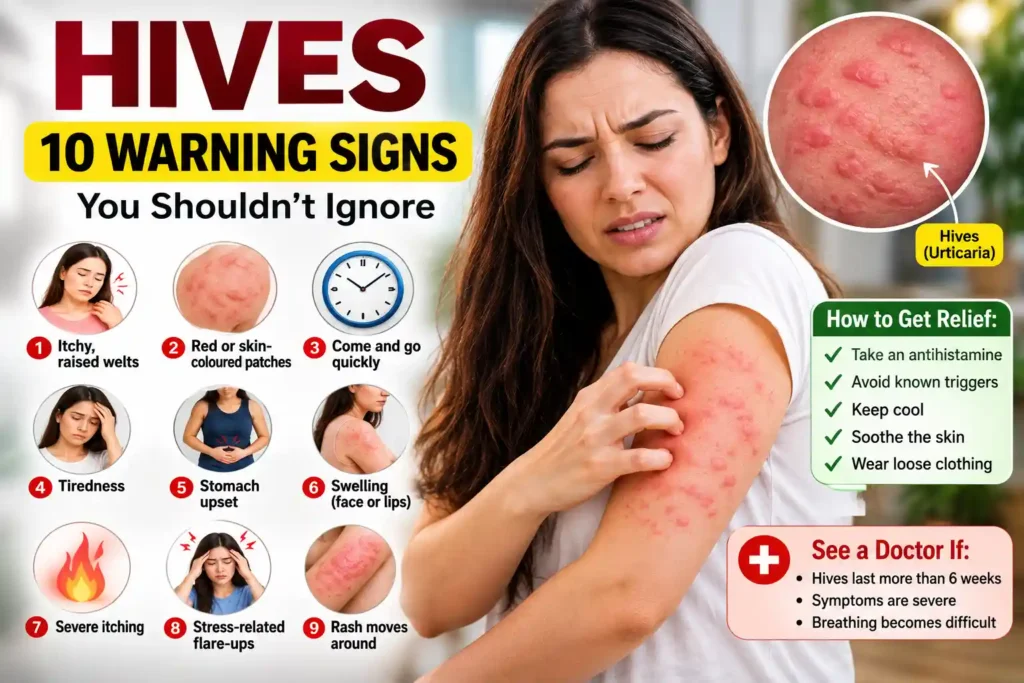
Hives are raised, itchy welts that appear on the skin. They happen when the body releases a chemical called histamine. This causes small blood vessels to leak fluid under the skin. The fluid builds up and forms the raised welts.
Hives can be red, pink, or skin-coloured. They can be small or large, and they often join together to form bigger patches. A key feature is that they can change shape, move around, and come and go over hours. If you press the centre of a hive, it often turns pale.
Hives are usually very itchy. They can appear on any part of the body. Most hives are what doctors call acute, meaning they last a short time. Some people get long-lasting or repeated hives, known as chronic hives. Our guide on how long hives last explains the difference in more detail.
Common Symptoms of Hives
The main symptoms of hives are usually easy to recognise:
- Raised welts on the skin, which may be red, pink, or skin-coloured
- Itching, which can be mild or intense
- Welts that change shape, size, or location
- Welts that come and go, often within hours
- Blanching, where the centre turns pale when pressed
- Welts that can appear anywhere on the body
Hives can range from a few small spots to large areas of the skin. Sometimes they come with a deeper swelling under the skin, often around the eyes or lips. This is called angioedema. Our guide on hives on the face covers this.
Most hives are uncomfortable but harmless. However, if hives come with swelling of the face, lips, tongue, or throat, or with difficulty breathing, this can be a sign of a serious allergic reaction that needs emergency care.
9 Common Causes of Hives
Hives have many possible triggers. Sometimes the cause is clear, and sometimes it is never found. Here are the common ones.
1. Allergies. Allergic reactions are a common cause. Foods, medicines, insect stings, and other allergens can trigger hives in people who are sensitive to them.
2. Foods. Certain foods can cause hives in some people. Common examples include nuts, shellfish, eggs, and milk, though any food can be a trigger.
3. Medications. Some medicines can cause hives as a reaction. If hives appear after starting a new medicine, mention it to your doctor. Do not stop a prescribed medicine on your own.
4. Infections. Many cases of hives, especially in children, are triggered by an infection, such as a common cold or other viral illness. Our guide on baby hives covers hives in children.
5. Insect stings and bites. Stings and bites can cause hives in some people, either around the site or more widely.
6. Stress. Emotional stress can trigger hives or make them worse. The link between stress and hives is well recognised. Our guide on stress hives explains this.
7. Heat, cold, and physical triggers. In some people, hives are triggered by physical factors such as heat, cold, sunlight, pressure on the skin, or exercise.
8. Contact with certain substances. Touching certain plants, chemicals, latex, or other substances can cause hives in sensitive people.
9. Unknown causes. In many cases, especially with long-lasting hives, no clear cause is found. This can be frustrating, but the hives can still be managed. Our guide on what causes hives explores the triggers in more depth.
Acute vs Chronic Hives
Hives are often grouped by how long they last, and this difference matters.
Acute hives are short-lived. They come on suddenly and usually clear within hours to a few days, and often within six weeks. Most hives are acute. They are frequently linked to a clear trigger, such as an allergy, infection, or food.
Chronic hives last longer. They continue or come back over six weeks or more. In many cases of chronic hives, no clear cause is found, which can be frustrating. Chronic hives are less common and often need medical assessment and longer-term management. Our guide on chronic hives covers this in detail.
Knowing whether your hives are acute or chronic helps guide what to do. Acute hives often settle on their own or with simple treatment. Chronic hives usually benefit from seeing a doctor to manage them and look for any triggers.
How to Treat Hives
Most hives can be managed at home, and they often settle on their own. Here are the main approaches.
Antihistamines. These are the main treatment for hives. Antihistamines work against histamine, the chemical that causes hives. They reduce itching and welts. Many are available from a pharmacy, and a pharmacist can advise on a suitable one.
Avoid known triggers. If you know what triggers your hives, avoiding it is the most effective step. This might be a food, a medicine, or a physical trigger like heat.
Soothe the skin. Cool compresses, a cool bath, and loose, comfortable clothing can ease the itching. Avoid hot water and tight clothes, which can make itching worse.
Avoid scratching. Scratching can make hives worse and irritate the skin further. Keeping cool and using soothing measures helps reduce the urge.
Reduce things that worsen itching. Heat, alcohol, and stress can make hives feel worse for some people. Keeping cool and calm can help.
For many people, antihistamines and simple self-care are enough to manage hives until they clear. Our guides on how to get rid of hives and antihistamines for hives cover treatment in more detail.
Simple Ways to Get Relief at Home
Alongside treatment, these simple measures can ease the discomfort of hives:
- Keep cool. Heat can make hives and itching worse. Stay in a cool environment and use cool compresses.
- Wear loose clothing. Soft, loose, breathable clothing avoids irritating the skin.
- Take a cool bath. A cool or lukewarm bath can soothe itchy skin. Some people find a soothing bath product helps.
- Avoid triggers. Steer clear of anything you know sets off your hives, including heat, certain foods, or alcohol if they affect you.
- Stay calm. Since stress can worsen hives, relaxation can help. This is easier said than done, but it genuinely matters for some people.
- Use a pharmacy antihistamine. For itching and welts, an antihistamine from the pharmacy is often effective.
These steps help most people feel more comfortable while their hives settle. Our guide on natural remedies for skin covers gentle, soothing approaches for irritated skin.
How to Find Your Hives Trigger
For many people, the most useful step is working out what sets off their hives. This is not always easy, but it is worth trying, because avoiding a trigger is the most effective way to prevent hives.
Keeping a simple diary can help. Note when your hives appear, and what happened before. Record what you ate, any new medicines, your stress levels, the weather, and any physical factors like heat or exercise. Over time, patterns may appear. For example, you might notice that hives follow a certain food, or come on when you are stressed or hot.
Some triggers are easier to spot than others. An allergic reaction to a food or medicine often appears fairly soon after exposure, which makes it easier to link. Physical triggers, like heat or pressure, may also be clear once you look for them. Stress-related hives can be harder to pin down, but a diary often reveals the connection.
It is worth being realistic, though. In many cases, especially with long-lasting hives, no clear trigger is ever found. This is common and does not mean anything is being missed. Even without a known trigger, hives can still be managed well with treatment. If you are struggling to identify a trigger, or your hives keep returning, a doctor can help look into it. Our guide on what causes hives explains the range of triggers in more detail.
Preventing Hives
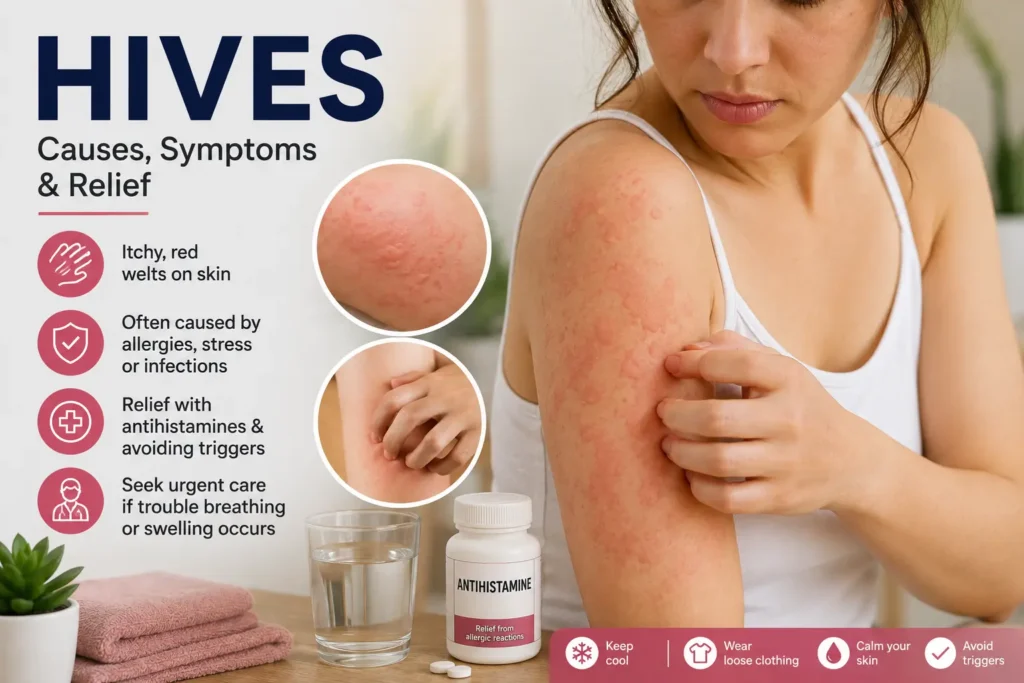
While you cannot always prevent hives, some steps can reduce how often they happen, especially if you know your triggers.
The most effective step is avoiding known triggers. If a food, medicine, or physical factor sets off your hives, steering clear of it prevents many outbreaks. For physical triggers like heat, cold, or pressure, being aware and taking care in those situations helps.
Managing stress can help people whose hives are stress-related. Relaxation, good sleep, and looking after your wellbeing all support this. Our guide on stress hives covers this link.
Keeping the skin cool and comfortable also helps, since heat and irritation can bring on or worsen hives. Wearing loose, breathable clothing, avoiding very hot showers, and staying cool all reduce skin irritation. For people with frequent or chronic hives, a doctor can help with a longer-term plan to keep them under control, which may include regular antihistamines. Even when hives cannot be fully prevented, these measures reduce how often and how badly they occur, and make them easier to live with.
When to See a Doctor
Most hives are harmless and clear on their own. But sometimes you should see a doctor. See a doctor if:
- Your hives keep coming back, or last longer than six weeks
- Hives are severe, or not helped by pharmacy antihistamines
- Hives are affecting your sleep or daily life
- You also feel generally unwell
- You are unsure what is causing your hives, or they keep returning
Call emergency services immediately if hives come with any signs of a serious allergic reaction, such as:
- Swelling of the face, lips, tongue, or throat
- Difficulty breathing or swallowing
- A tight chest or wheezing
- Feeling faint, dizzy, or losing consciousness
- A rapidly spreading, severe reaction
These are signs of a severe allergic reaction called anaphylaxis, which is a medical emergency. Do not wait. The NHS guidance on hives explains when to seek help.
Final Thoughts
Hives are common, often alarming, but usually harmless. Those raised, itchy welts that appear suddenly are caused by the release of histamine in the skin. They are often triggered by an allergy, infection, food, stress, or a physical factor. Sometimes the cause is never found, but the hives can still be managed.
The reassuring news is that most hives settle on their own or with simple treatment. Antihistamines, avoiding known triggers, keeping cool, and soothing the skin help most people find relief. Acute hives usually clear quickly. Chronic hives that last more than six weeks benefit from seeing a doctor.
What matters most is knowing the warning signs of a serious allergic reaction, such as swelling of the face or throat or difficulty breathing, which need emergency care. For the common, everyday hives most people experience, though, understanding the cause, using an antihistamine, and soothing the skin is usually all it takes to get comfortable again while they fade.
Medical disclaimer: This article is for general educational information only. It is not a substitute for professional medical advice, diagnosis, or treatment. Call emergency services for swelling of the face or throat, or difficulty breathing, and see a doctor for hives that are severe or long-lasting.
Frequently Asked Questions
What are hives? Hives, also called urticaria, are raised, itchy welts on the skin. They happen when the body releases histamine, causing fluid to leak under the skin and form welts. They can be red, pink, or skin-coloured, and they often change shape and come and go.
What causes hives on the skin? Common causes include allergies to foods, medicines, or insect stings, infections such as colds, stress, and physical triggers like heat, cold, or pressure. In many cases, especially with long-lasting hives, no clear cause is found, though they can still be managed.
How do you get rid of hives? Most hives settle with antihistamines, avoiding known triggers, keeping cool, and soothing the skin with cool compresses and loose clothing. A pharmacist can advise on a suitable antihistamine. Hives that are severe or last more than six weeks should be seen by a doctor.
How long do hives last? Acute hives usually clear within hours to a few days, and often within six weeks. Chronic hives last or keep returning over six weeks or more. Most hives are short-lived, but long-lasting ones benefit from medical assessment to manage them and look for triggers.
Are hives dangerous? Most hives are harmless and settle on their own. However, if hives come with swelling of the face, lips, tongue, or throat, or with difficulty breathing, this can be a sign of a serious allergic reaction called anaphylaxis, which is a medical emergency needing immediate help.
Can stress cause hives? Yes. Emotional stress can trigger hives or make them worse in some people. The link between stress and hives is well recognised. Managing stress, alongside other measures, can help reduce hives for people whose hives are affected by it.
Should I see a doctor for hives? See a doctor if your hives keep coming back, last more than six weeks, are severe, or are not helped by pharmacy antihistamines. Seek emergency care for swelling of the face or throat, or difficulty breathing, which are signs of a serious allergic reaction.