Natural Remedies for Skin: 12 Gentle Ways to Soothe Skin
Your skin works hard every day. It protects you, keeps moisture in, and shields you from the world around you. So when it feels dry, itchy, irritated, or dull, it is natural to look for gentle ways to help. Many people prefer to start with simple, natural remedies before reaching for anything stronger.
Natural remedies for skin are popular for good reason. They are often gentle, affordable, and easy to use at home. Many are based on long traditions of skin care, and some are supported by evidence too. Used sensibly, they can soothe irritation, support your skin’s natural barrier, and become part of a calm, caring routine.
It helps to be realistic, though. Natural does not always mean risk-free, and no home remedy replaces medical care for a skin condition. This guide shares gentle, sensible natural remedies for skin, explains how to use them safely, and covers when it is best to see a doctor.
Quick Overview
| Question | Short answer |
|---|---|
| What are natural skin remedies? | Gentle, home-based ways to soothe and care for skin |
| What can they help with? | Dryness, mild irritation, general skin care |
| Are they safe? | Often, but natural does not mean risk-free |
| Common remedies | Moisturising, oats, aloe vera, gentle cleansing |
| Key rule | Patch test first, and be gentle |
| When to see a doctor | Persistent, severe, or spreading skin problems |
A Gentle Approach to Skin Care
Before reaching for any single remedy, it helps to understand what healthy skin needs. Your skin has a natural barrier that keeps moisture in and irritants out. Much of good skin care is simply about protecting and supporting that barrier, rather than doing too much to it.
This is why a gentle approach usually works best. Harsh products, hot water, and over-washing can strip the skin and make problems worse. Simple, kind habits often do more good than complicated routines. The natural remedies below work in this spirit. They aim to soothe, moisturise, and protect, rather than irritate.
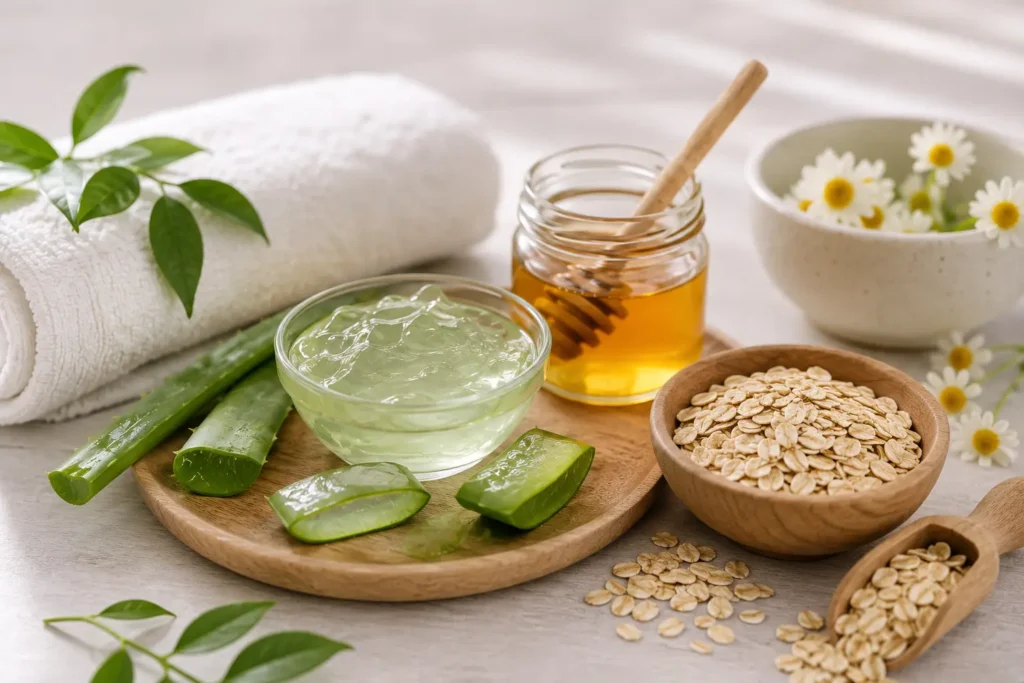
Keep in mind that everyone’s skin is different. What suits one person may not suit another. So it is wise to introduce new remedies slowly, one at a time, and to stop anything that causes irritation. If you have a specific skin condition, gentle care can support your skin, but it works best alongside proper medical advice. Our guide on hives on skin covers one common skin problem in detail.
12 Natural Remedies for Skin
These gentle remedies can soothe and support the skin. Always patch test first, and stop if anything causes irritation.
1. Moisturise regularly. Keeping the skin moisturised is one of the most important steps. A good moisturiser helps lock in water and support the skin barrier. Apply it after washing, while the skin is still slightly damp, to trap moisture.
2. Use gentle cleansing. Wash with a mild, fragrance-free cleanser and lukewarm water. Avoid hot water and harsh soaps, which strip the skin. Gentle cleansing keeps skin clean without damaging its barrier.
3. Try an oat bath. Oats have long been used to soothe itchy, irritated skin. A colloidal oatmeal bath, made from finely ground oats, can calm dryness and itching. It is a classic, gentle remedy.
4. Aloe vera. Aloe vera gel is widely used to soothe and cool the skin. It can help with minor irritation and after sun exposure. Choose a pure gel and patch test first.
5. Stay hydrated. Drinking enough water supports your overall health, which includes your skin. Good hydration is a simple, natural habit that helps your body and skin function well.
6. Protect from the sun. Sun protection is one of the best things you can do for your skin. Protecting your skin from strong sun helps prevent damage and premature ageing. Use shade, clothing, and sun protection as advised.
7. Use a humidifier. Dry air, especially in winter or heated rooms, can dry out the skin. A humidifier adds moisture to the air and can help keep skin from drying out.
8. Choose gentle, fragrance-free products. Fragrances and harsh ingredients can irritate the skin. Simple, fragrance-free products are often kinder, especially for sensitive skin.
9. Eat a skin-friendly diet. A balanced diet with plenty of fruits, vegetables, and healthy fats supports your skin from within. Foods rich in vitamins and healthy fats are part of good overall skin care.
10. Avoid scratching. Scratching irritated skin can make things worse and damage the skin. Keeping the skin cool and moisturised, and using gentle soothing measures, helps reduce the urge.
11. Cool compresses. For hot, itchy, or irritated skin, a cool compress can bring relief. It is a simple, gentle way to calm the skin.
12. Manage stress. Stress can affect the skin and worsen some skin problems. Looking after your wellbeing, with rest and relaxation, supports your skin as part of your overall health.
Natural Remedies for Dry Skin
Dry skin is one of the most common skin complaints, and natural remedies can help a great deal. The key is to add moisture and protect the skin barrier.
Moisturising is the most important step for dry skin. Apply a rich moisturiser regularly, especially after washing, while the skin is still damp. This traps water in the skin. Thicker creams and ointments are often better for very dry skin than thin lotions.
Gentle cleansing matters too. Hot water and harsh soaps strip natural oils and make dryness worse. Use lukewarm water and a mild, fragrance-free cleanser, and avoid over-washing. Adding moisture to the air with a humidifier helps in dry or heated environments.
Some natural ingredients can soothe dry skin, such as an oat bath for itching. Staying hydrated and protecting the skin from harsh weather also help. For most people, a simple routine of gentle cleansing and regular moisturising keeps dry skin comfortable. If dryness is severe, cracked, or does not improve, it is worth seeing a doctor.
Natural Remedies for Irritated or Itchy Skin
Irritated, itchy skin is uncomfortable, and gentle remedies can soothe it while you work out the cause.
Cool compresses are one of the simplest and most effective ways to calm hot, itchy skin. An oat bath can also soothe widespread itching. Keeping the skin moisturised helps, as dry skin often itches more. Aloe vera gel can cool and soothe minor irritation.
It is important to avoid scratching, even though it is tempting. Scratching damages the skin and can make itching worse, creating a cycle. Keeping cool, moisturised, and calm helps reduce the urge. Wearing loose, soft clothing avoids further irritation.
Try to identify and avoid anything that triggers your irritation, such as a harsh product, a fabric, or heat. If itchy skin is persistent, severe, spreading, or comes with other symptoms, see a doctor, as it may need specific treatment. Our guide on natural remedies for hives covers soothing one particular itchy skin problem.
How to Use Natural Remedies Safely
Natural remedies are often gentle, but they still need to be used sensibly. A few simple rules keep them safe.
Patch test first. Before using a new remedy on a larger area, apply a small amount to a small patch of skin and wait to see how your skin reacts. This helps avoid a wider reaction.
Introduce one at a time. Try one new remedy at a time. If you use several at once and your skin reacts, you will not know which caused it.
Stop if it irritates. If a remedy causes redness, stinging, or worsening symptoms, stop using it. Natural does not mean it suits everyone.
Be careful with essential oils. Some natural products, including essential oils, can irritate the skin, especially undiluted. Use them with care, and patch test first.
Remember natural has limits. Home remedies can soothe and support the skin, but they do not replace medical treatment for a skin condition. Know when to see a doctor.
Used with these simple precautions, natural remedies can be a gentle, helpful part of caring for your skin.
Simple Kitchen Ingredients for Skin Care
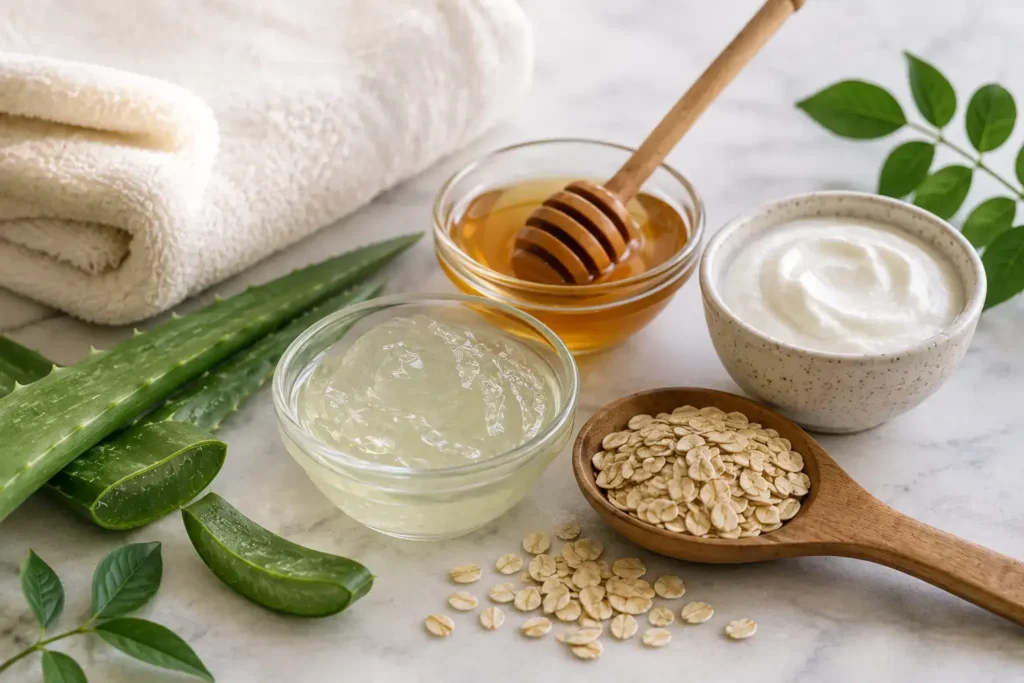
Some of the gentlest natural skin remedies come from ingredients you may already have at home. These are popular for good reason, though they should still be used with care and patch tested first.
Oats are one of the best-known. Finely ground oats, used in a bath or as a soak, have a long history of soothing itchy, irritated skin. Honey is another traditional favourite, valued for its soothing qualities, though it should be used gently and rinsed off. Aloe vera, whether from a plant or a pure gel, is widely used to cool and calm minor irritation and skin exposed to the sun.
Certain natural oils, such as coconut oil, are used by some people to moisturise the skin, though they do not suit everyone and can block pores in some skin types. Plain, cool cucumber or a cool compress can refresh tired or puffy skin around the eyes.
The appeal of these ingredients is that they are simple, affordable, and gentle. Still, natural does not mean they suit every skin. Always patch test a new ingredient on a small area first, use it in moderation, and stop if it causes any irritation. Used sensibly, these everyday ingredients can be a pleasant, gentle part of caring for your skin.
Building a Simple Natural Skin Care Routine
You do not need a complicated routine or lots of products for healthy skin. In fact, keeping things simple is often kinder to your skin. A gentle daily routine, built around a few good habits, works well for most people.
Start with gentle cleansing, using a mild, fragrance-free cleanser and lukewarm water. Cleanse once or twice a day, and avoid over-washing, which strips the skin. After cleansing, while the skin is still slightly damp, apply a moisturiser to lock in water and support the skin barrier. This simple cleanse-and-moisturise routine is the foundation of good skin care.
During the day, protect your skin from strong sun, which is one of the most important steps for long-term skin health. Through the week, support your skin from within with good hydration, a balanced diet, and enough sleep. Add soothing remedies like cool compresses or an oat bath only when your skin needs them, for dryness or irritation.
The key is consistency and gentleness rather than doing too much. A steady, simple routine supports your skin far better than frequent changes or harsh products. If you have a specific skin condition, build your routine around your doctor’s advice, using gentle natural care to support, not replace, proper treatment. For most people, a calm, simple routine keeps skin comfortable and healthy over time.
When to See a Doctor
Natural remedies can soothe and support the skin, but some skin problems need medical care. See a doctor if:
- A skin problem is persistent, severe, or spreading
- The skin is very painful, cracked, or bleeding
- There are signs of infection, such as increasing redness, warmth, swelling, or pus
- A rash comes with feeling generally unwell or a fever
- Home remedies are not helping, or the problem is getting worse
- You are unsure what is causing a skin problem
Seek urgent medical care if a skin reaction comes with swelling of the face, lips, or throat, or difficulty breathing, as this can be a serious allergic reaction.
A doctor can diagnose the cause of a skin problem and recommend the right treatment. Many skin conditions need specific care, so it is worth getting persistent or severe problems assessed rather than relying on home remedies alone. The NHS guidance on skin conditions can help you know when to seek advice.
Final Thoughts
Natural remedies for skin can be a gentle, affordable, and comforting way to care for your skin at home. Simple habits like regular moisturising, gentle cleansing, sun protection, and soothing measures such as oat baths and cool compresses support your skin’s natural barrier and ease everyday dryness and irritation. Looking after your skin from within, with good hydration, a balanced diet, and stress management, helps too.
The key is to keep things gentle and sensible. Patch test new remedies, introduce them one at a time, and stop anything that irritates your skin. Remember that natural does not always mean risk-free, and that home care works best alongside good sense about when to seek help.
For everyday skin care and minor irritation, these gentle natural remedies are often all you need to keep your skin comfortable and healthy. But for skin problems that are persistent, severe, spreading, or worrying, a doctor can find the cause and provide the right treatment. Caring for your skin is a mix of gentle daily habits and knowing when to ask for help.
Medical disclaimer: This article is for general educational information only. It is not a substitute for professional medical advice, diagnosis, or treatment. See a doctor for persistent, severe, or spreading skin problems, and seek urgent care for swelling of the face or throat or difficulty breathing.
Frequently Asked Questions
What are the best natural remedies for skin? Gentle, effective natural remedies include regular moisturising, gentle cleansing, oat baths for itching, aloe vera for minor irritation, cool compresses, sun protection, staying hydrated, and using fragrance-free products. The best approach is gentle and simple, supporting the skin’s natural barrier.
How can I soothe irritated skin naturally? Cool compresses, an oat bath, keeping the skin moisturised, and aloe vera gel can all soothe irritated, itchy skin. Avoid scratching, wear loose soft clothing, and steer clear of anything that triggers the irritation. If irritation persists or spreads, see a doctor.
What is good for dry skin at home? For dry skin, moisturise regularly, especially after washing while the skin is damp, and use thicker creams for very dry skin. Cleanse gently with lukewarm water, avoid harsh soaps, and use a humidifier in dry air. Staying hydrated and protecting the skin from harsh weather also help.
Are natural skin remedies safe? Natural remedies are often gentle, but natural does not always mean risk-free. Some ingredients, including essential oils, can irritate the skin. Always patch test a new remedy first, introduce one at a time, and stop anything that causes irritation. Home remedies do not replace medical care.
Does drinking water help your skin? Staying hydrated supports your overall health, which includes your skin. Good hydration helps your body and skin function well. While drinking water is not a cure for skin problems on its own, it is a simple, healthy habit that supports skin health as part of a balanced lifestyle.
When should I see a doctor about my skin? See a doctor if a skin problem is persistent, severe, spreading, painful, or shows signs of infection, or if home remedies are not helping. Seek urgent care for swelling of the face or throat or difficulty breathing, which can signal a serious allergic reaction needing immediate help.
Can stress affect my skin? Yes. Stress can affect the skin and worsen some skin problems. Looking after your wellbeing, with rest, relaxation, and stress management, supports your skin as part of your overall health. For skin problems clearly linked to stress, managing stress can be a helpful part of caring for your skin.