Herbal remedies and their uses vary from skin care to support for common health problems. Some herbs may help ease certain symptoms, while others have limited scientific evidence. Examples include aloe vera, chamomile, cranberry, and echinacea.
Herbal products are not always safe for everyone. They may cause side effects or interact with medicines. Learn about these 10 herbal remedies, their common uses, and the safety steps to follow.
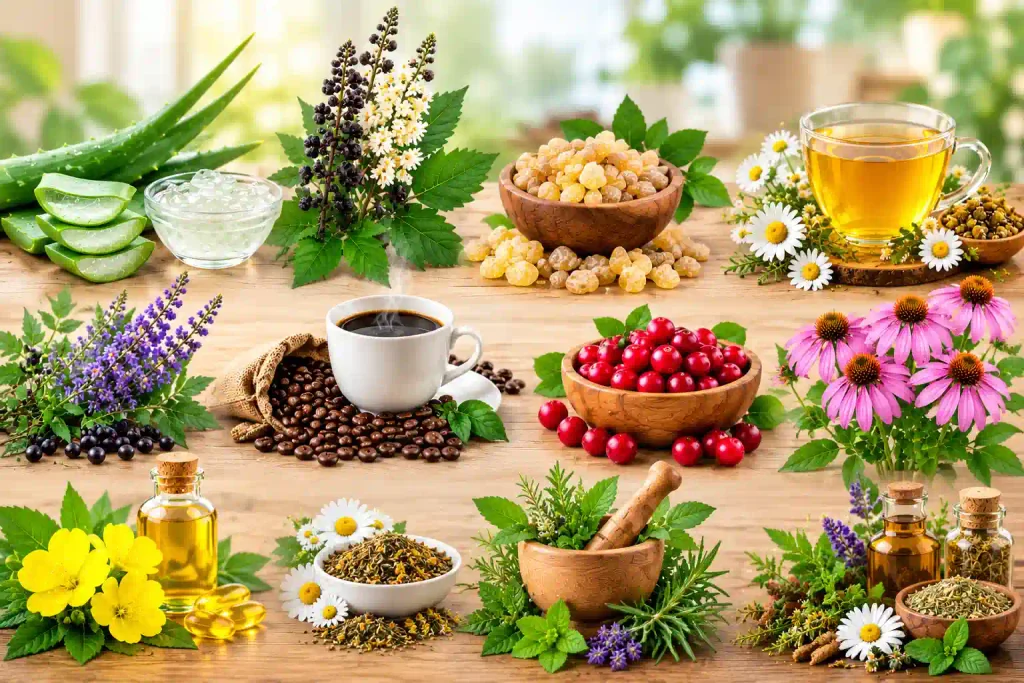
What Are Herbal Remedies?
Herbal remedies are products made from plants. They may come as teas, oils, creams, capsules, or extracts. People use them for many reasons, such as skin care, digestion, and symptom relief.
However, a traditional use does not always mean a remedy works. Research also varies from one herb to another. It is important to check the evidence before using any herbal product.
1. Aloe Vera for Skin Care
Aloe vera is a plant often used in skin care products. Its clear gel is found in many creams and lotions.
Some products containing aloe vera may help soothe minor skin irritation. However, evidence for treating burns depends on the product and the type of burn.
Do not rely on aloe vera for serious burns or deep wounds. Seek medical advice if a burn is severe or shows signs of infection.
2. Black Cohosh for Menopause Symptoms
Black cohosh is an herbal product used by some people to manage menopause symptoms, such as hot flashes.
Research results are mixed. Some studies suggest it may help with overall menopause symptoms, but the evidence is not clear for every symptom.
Rare reports have linked black cohosh products to liver problems. Talk to a healthcare professional before using it, especially if you take medicines or have a liver condition.
3. Boswellia for Joint Discomfort
Boswellia is an extract made from the resin of a tree. It is often used in herbal products for joint pain and inflammation.
Some small studies suggest that boswellia may help ease pain from osteoarthritis. However, larger and better studies are needed to confirm its effects.
Boswellia may also interact with medicines. Ask a healthcare professional before taking it as a supplement.
4. Chamomile for Digestive Discomfort
Chamomile is commonly used to make herbal tea. Many people drink it to relax or ease mild digestive discomfort.
However, strong evidence for chamomile alone is limited for many health conditions. Some studies have tested products that contain chamomile along with other ingredients.
Chamomile tea is generally safe for many adults. People allergic to plants such as daisies may have an allergic reaction. It may also interact with some medicines.
5. Chaste Tree for PMS Symptoms
Chaste tree, also called chasteberry, is used in some herbal products for premenstrual syndrome (PMS).
Some studies suggest it may ease symptoms such as breast tenderness. However, more high-quality research is needed.
It may not be suitable for people with certain hormone-sensitive conditions. People who are pregnant, breastfeeding, or taking hormone-related medicines should seek medical advice before using it.
6. Coffee for Alertness
Coffee comes from the seeds of the coffee plant. It is not usually classed as a medicinal herb, but it is a widely used plant-based product.
Coffee contains caffeine, which can increase alertness and help people feel less tired for a short time. Too much caffeine may cause sleep problems, anxiety, or a fast heartbeat.
Limit caffeine if it affects your sleep or makes you feel unwell. Remember that energy drinks and some medicines may also contain caffeine.
7. Cranberry for Urinary Tract Health
Cranberries are fruits used in foods, drinks, and supplements. Some cranberry products may help reduce the risk of repeated urinary tract infections (UTIs) in certain people.
However, cranberry products do not treat an existing UTI. Symptoms such as pain when urinating, fever, or back pain need medical attention.
Cranberry supplements may not be suitable for everyone and can interact with some medicines. Ask a healthcare professional if you take regular medication.
8. Echinacea for Common Cold Symptoms
Echinacea is a plant found in many herbal supplements made for colds.
Research suggests that some echinacea products may slightly lower the chance of catching a cold. However, it is unclear whether they help shorten a cold. Results may differ because products contain different plant types and ingredients.
Echinacea may cause stomach problems or allergic reactions. Check with a healthcare professional before using it if you take medicines or have known plant allergies.
9. Evening Primrose Oil
Evening primrose oil comes from the seeds of the evening primrose plant. It is sold as a supplement and is often promoted for different health concerns.
Claims about its benefits for conditions such as rheumatoid arthritis and high cholesterol need careful review. Do not assume that it can treat these conditions without reliable evidence.
Ask a healthcare professional before taking evening primrose oil, especially if you use other medicines or supplements.
10. Feverfew for Migraine Prevention
Feverfew is a plant used in some herbal products for migraine prevention.
Research findings are mixed. Some studies suggest it may help prevent migraines, but the evidence is not strong enough to confirm the benefit for everyone.
Feverfew may cause digestive problems or allergic reactions. It may also affect blood clotting and interact with medicines. Avoid using it during pregnancy unless a qualified healthcare professional advises otherwise.
How to Use Herbal Remedies Safely
Follow these simple safety steps before trying an herbal product:
- Check the evidence: Look for reliable information about its uses and risks.
- Read the label: Follow the product directions and do not take more than recommended.
- Check for interactions: Herbs may affect prescription medicines and other supplements.
- Ask for advice: Speak with a healthcare professional if you have a health condition.
- Choose carefully: Products can vary in quality, strength, and ingredients.
Do not use herbal remedies as a replacement for medical care. Seek professional help if symptoms are severe, continue, or get worse.
Frequently Asked Questions
Are herbal remedies always safe?
No. Some can cause side effects or interact with medicines. Safety depends on the herb, the product, and the person using it.
Do herbal remedies work for every condition?
No. Evidence varies. Some herbs may help with certain symptoms, while others have not been studied enough.
Can I take herbal supplements with medicines?
Not without checking first. Ask a healthcare professional or pharmacist to review possible interactions.
Conclusion
Herbal remedies such as aloe vera, chamomile, cranberry, and echinacea have different uses. However, not all claimed benefits are supported by strong research. Learn about each product before using it, check for possible risks, and seek professional advice when needed.
Disclaimer: This article is for general education only. It is not a substitute for medical advice, diagnosis, or treatment. Consult a qualified healthcare professional before using herbal supplements.