Heart disease includes conditions that affect the heart and how it works. These conditions may affect blood flow, heart valves, the heart muscle, or its electrical system. Some develop over time, while others are present from birth.
Understanding heart disease symptoms, causes, and risk factors can help people make informed health decisions. Early diagnosis and proper treatment can help manage many heart conditions.
What Is Heart Disease?
Heart disease is a general term for conditions that affect the heart. Coronary artery disease is one common type. It occurs when plaque builds up inside the arteries that supply blood to the heart.
Other types affect the heart’s rhythm, valves, muscle, or structure. Symptoms and treatment depend on the specific condition.
A heart attack is different from heart disease as a general term. It occurs when blood flow to part of the heart muscle becomes severely reduced or blocked. Cardiac arrest happens when the heart suddenly stops pumping blood effectively.
7 Types of Heart Disease
There are several types of heart disease. The following are seven important examples.
1. Coronary Artery Disease
Coronary artery disease (CAD) affects the arteries that supply blood to the heart muscle. Plaque can build up inside these arteries and narrow them. This may reduce blood flow to the heart.
Some people experience chest discomfort, especially during activity. A severe blockage can cause a heart attack.
2. Heart Attack
A heart attack occurs when blood flow to part of the heart muscle is severely reduced or blocked. It is a medical emergency.
Common warning signs include chest pressure, shortness of breath, discomfort in the arms or back, nausea, cold sweats, and lightheadedness. Symptoms can vary from person to person.
If you think someone is having a heart attack, contact local emergency medical services immediately.
3. Heart Failure
Heart failure means the heart cannot pump blood as well as the body needs. It does not mean the heart has stopped working.
Symptoms may include shortness of breath, tiredness, and swelling in the legs, ankles, or feet. Treatment depends on the cause and severity of the condition.
4. Arrhythmias
Arrhythmias are problems with the heart’s electrical system. They can make the heart beat too fast, too slowly, or irregularly.
Some people notice a racing or fluttering heartbeat. Others may experience dizziness, tiredness, or fainting. A healthcare professional can use an electrocardiogram (ECG) to check the heart’s electrical activity.
5. Heart Valve Disease
Heart valve disease affects the valves that control blood flow through the heart. A valve may not open fully or may not close properly.
Some people have no symptoms. Others may experience shortness of breath, tiredness, chest discomfort, or dizziness. Treatment depends on the affected valve and the severity of the problem.
6. Congenital Heart Disease
Congenital heart disease refers to heart problems that are present at birth. These problems vary in type and severity.
Some are identified before or soon after birth, while others are discovered later. Treatment and follow-up care depend on the specific condition.
7. Cardiomyopathy
Cardiomyopathy is a disease of the heart muscle. It can affect how the heart works and how well it pumps blood.
Symptoms may include tiredness, shortness of breath, swelling, or an irregular heartbeat. Some people have no clear symptoms in the early stages. Treatment depends on the type and cause.
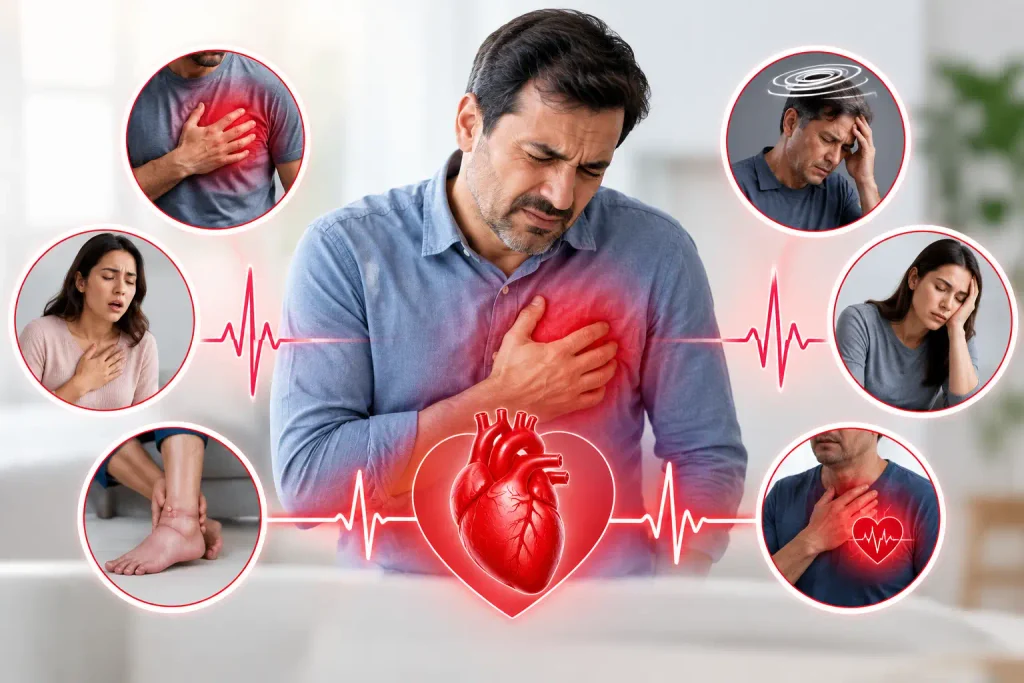
Common Symptoms of Heart Disease
Heart disease symptoms vary by condition. Some people notice symptoms early, while others have few or no clear signs.
Possible symptoms include:
- Chest pain, pressure, or discomfort
- Shortness of breath
- Unusual tiredness
- A racing or irregular heartbeat
- Dizziness or fainting
- Swelling in the legs, ankles, or feet
These symptoms can also occur with other health problems. A healthcare professional can help identify the cause.
Heart Attack Warning Signs
Heart attack symptoms may include chest discomfort, shortness of breath, pain or discomfort in the arms, back, neck, or jaw, nausea, and cold sweats.
Do not wait for symptoms to become severe. Seek emergency medical help if you think you may be having a heart attack.
Causes and Risk Factors of Heart Disease
The causes of heart disease depend on the condition. Some types involve plaque buildup in the arteries, while others affect the heart muscle, valves, or electrical system.
Important risk factors for certain heart conditions include:
- High blood pressure: It makes the heart work harder and can damage blood vessels over time.
- High cholesterol: High levels of LDL cholesterol can contribute to plaque buildup in the arteries.
- Diabetes: Diabetes increases the risk of cardiovascular problems.
- Smoking: Tobacco damages blood vessels and increases the risk of heart disease.
- Physical inactivity: Not getting enough physical activity can contribute to cardiovascular risk.
- Family history and age: These can affect a person’s risk of certain heart conditions.
Having a risk factor does not mean a person will definitely develop heart disease. A healthcare professional can assess individual risk.
How Is Heart Disease Diagnosed?
Diagnosis depends on a person’s symptoms and medical history. A healthcare professional may check blood pressure, ask about family history, and perform a physical examination.
Tests may include:
- Blood tests: These may check cholesterol, blood glucose, or markers of heart muscle injury when a heart attack is suspected.
- Electrocardiogram (ECG): This records the heart’s electrical activity.
- Echocardiogram: This uses sound waves to create images of the heart.
Other tests may be needed depending on the suspected condition. Not everyone needs every test.
Heart Disease Treatment
Treatment depends on the type and severity of heart disease. It may include medication, lifestyle changes, medical procedures, or a combination of these approaches.
Treatment may help manage blood pressure and cholesterol, control an abnormal heart rhythm, improve heart failure symptoms, or restore blood flow when an artery is blocked.
Follow your healthcare professional’s advice. Do not stop prescribed medication without discussing it with them.
How to Help Prevent Heart Disease
Not all types of heart disease can be prevented. However, healthy habits can help lower the risk of many cardiovascular problems.
Eat a Balanced Diet
Eat a variety of vegetables, fruits, whole grains, and other nutritious foods. Limit excess salt, added sugars, and foods high in saturated fat.
Stay Physically Active
Regular physical activity supports cardiovascular health. Many adults are advised to aim for at least 150 minutes of moderate-intensity aerobic activity each week, if appropriate for their health and ability.
Avoid Smoking
Avoiding tobacco helps protect the heart and blood vessels. People who smoke can ask a healthcare professional for support with quitting.
Check Blood Pressure and Cholesterol
High blood pressure and high cholesterol may not cause obvious symptoms. Regular health checks can help identify these problems and guide treatment.
Manage Existing Health Conditions
People with diabetes, high blood pressure, or high cholesterol should follow their healthcare professional’s care plan. Managing these conditions can help reduce cardiovascular risk.
When Should You Seek Medical Help?
Seek emergency medical help for possible heart attack symptoms, including chest pressure, shortness of breath, or discomfort in the arm, back, neck, or jaw.
Arrange a medical appointment for ongoing symptoms such as repeated palpitations, unusual tiredness, or swelling in the legs. Do not ignore symptoms that persist or concern you.
Conclusion
Heart disease includes several conditions that affect the heart’s blood supply, muscle, valves, rhythm, or structure. Symptoms and treatment vary by condition.
Understanding risk factors such as high blood pressure, high cholesterol, diabetes, and smoking can help people take steps to protect their heart health. A balanced diet, regular physical activity, avoiding tobacco, and appropriate medical care can help reduce the risk of some heart problems.
Medical Disclaimer:
This article is for general educational purposes only. It is not a substitute for professional medical advice, diagnosis, or treatment. Consult a qualified healthcare professional for personal medical guidance. How much does Custom Patches Cost?