Magnesium is an essential mineral that supports normal muscle and nerve function, energy production, and bone health. Eating a balanced diet that includes magnesium-rich foods can help you meet your daily nutritional needs.
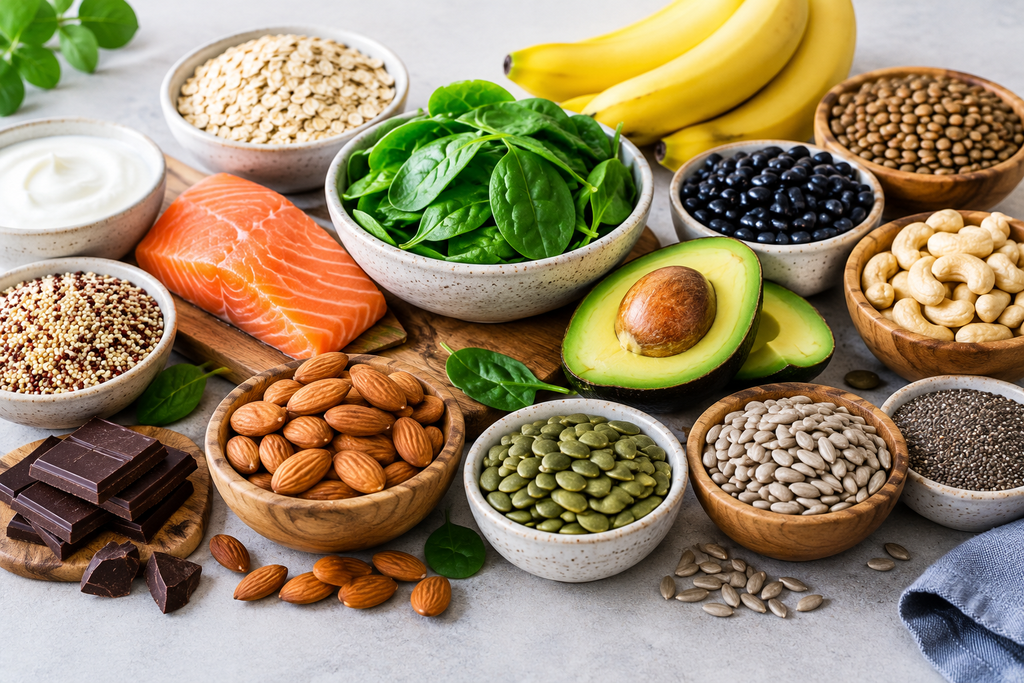
Many everyday foods contain magnesium, including seeds, nuts, leafy green vegetables, beans, whole grains, and some fruits. Here are 15 foods high in magnesium and practical ways to include them in your meals.
1. Pumpkin Seeds
Pumpkin seeds are a useful source of magnesium and can be added to many meals. Sprinkle them over oatmeal, salads, or yogurt, or eat them as a snack. Choose unsalted seeds when you want to limit sodium intake.
2. Chia Seeds
Chia seeds provide magnesium along with fiber and other nutrients. Mix them into smoothies, oatmeal, or yogurt. You can also combine them with milk to make chia pudding. Start with a small amount and drink enough fluids as you increase your fiber intake.
3. Almonds
Almonds are a convenient source of magnesium and provide protein, fiber, and unsaturated fats. Eat a small handful as a snack or add chopped almonds to cereal, yogurt, and salads. Unsalted almonds are a good option for people monitoring sodium intake.
4. Cashews
Cashews contain magnesium and other nutrients that support a balanced diet. Enjoy them on their own or add them to stir-fries, vegetable dishes, and homemade trail mix. Choose plain or unsalted varieties when possible.
5. Spinach
Spinach is a leafy green vegetable that provides magnesium. Add fresh spinach to salads, blend it into smoothies, or cook it with eggs and other vegetables. Cooked spinach is also easy to include in soups, curries, and pasta dishes.
6. Swiss Chard
Swiss chard is another leafy green vegetable that contains magnesium. Use its leaves in soups, stir-fries, or vegetable side dishes. Cooking it with garlic and a little olive oil can make it a simple addition to lunch or dinner.
7. Black Beans
Black beans provide magnesium, plant-based protein, and fiber. Add them to soups, salads, wraps, or rice dishes. Canned black beans can also be convenient; check the label and rinse them if you want to reduce some of the added sodium.
8. Edamame
Edamame, or young soybeans, supplies magnesium and plant-based protein. Serve cooked edamame as a snack or add the beans to salads, grain bowls, and stir-fries. Frozen edamame can be a convenient option for quick meals.
9. Lentils
Lentils are a source of magnesium, protein, and fiber. They work well in soups, curries, salads, and stews. Because lentils are versatile and easy to combine with vegetables and whole grains, they can be a regular part of a balanced diet.
10. Oats
Oats contain magnesium and provide fiber. Prepare oatmeal for breakfast and top it with nuts, seeds, or fruit. You can also use oats in homemade snacks and baking. Choose plain oats and add your preferred toppings to control added sugar.
11. Brown Rice
Brown rice is a whole grain that provides magnesium. Serve it with beans, lentils, vegetables, or lean protein for a balanced meal. It can replace white rice in many recipes and works well in grain bowls and stir-fries.
12. Quinoa
Quinoa provides magnesium, protein, and other nutrients. Use it as a base for salads or grain bowls, or serve it as a side dish. Combine cooked quinoa with vegetables, beans, and a dressing for a simple meal.
13. Dark Chocolate
Dark chocolate contains magnesium, although the amount varies by product and serving size. Enjoy it in moderation as part of a balanced diet. Check the nutrition label and choose a product with a cocoa percentage and sweetness level that suit your preferences.
14. Avocado
Avocado provides magnesium, fiber, and unsaturated fats. Add it to toast, salads, sandwiches, or grain bowls. It can also be mashed into a spread or served alongside eggs and vegetables.
15. Plain Yogurt
Plain yogurt contains magnesium as well as protein and calcium. Eat it with fruit, oats, or seeds for breakfast or a snack. Plain varieties without added sugar make it easier to control the sweetness of your meal.
How Much Magnesium Do You Need Daily?
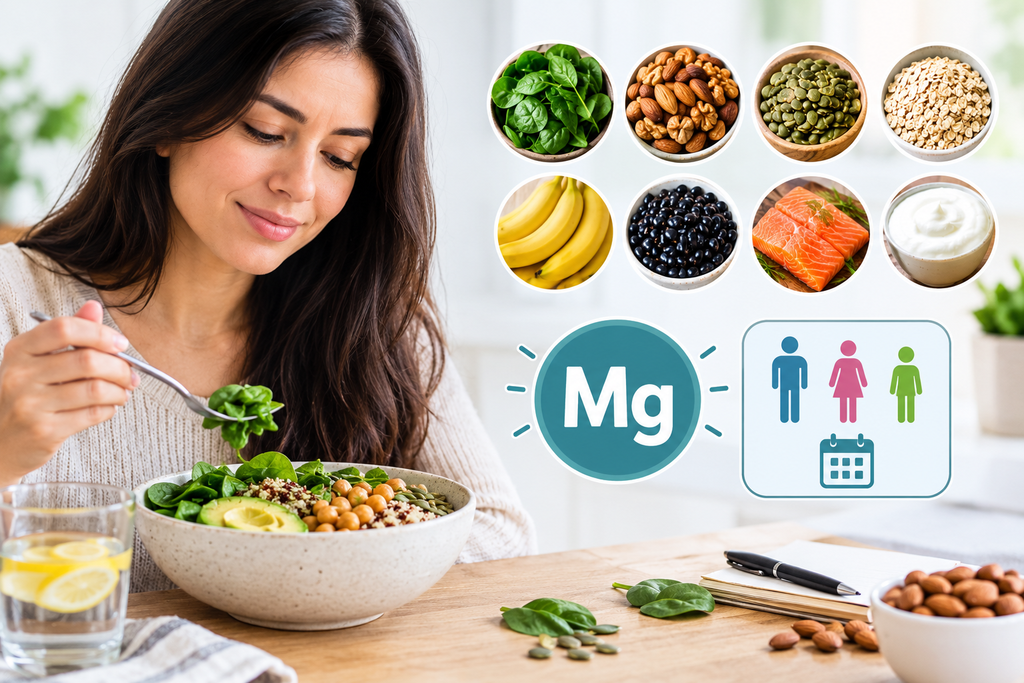
Magnesium needs vary by age and sex. According to the US National Institutes of Health Office of Dietary Supplements, the recommended daily amount for adults is generally:
- Adult men: 400–420 mg per day.
- Adult women: 310–320 mg per day.
Needs can differ during pregnancy and other life stages. Check reliable nutrition guidance for the recommended amount that applies to your age and circumstances.
Can You Get Enough Magnesium From Food?
Many people can meet their magnesium needs by eating a varied diet that includes nuts, seeds, legumes, whole grains, and green vegetables. Eating different foods is more useful than relying on a single ingredient.
Magnesium supplements may be appropriate for some people, but they are not necessary for everyone. Ask a healthcare professional before starting a supplement, especially if you have a medical condition or take medication. Supplements can cause side effects and may interact with certain medicines.
Frequently Asked Questions
What foods are high in magnesium?
Pumpkin seeds, chia seeds, almonds, cashews, spinach, black beans, lentils, oats, and quinoa are examples of foods that provide magnesium.
Which nuts and seeds contain magnesium?
Almonds, cashews, pumpkin seeds, and chia seeds are useful choices. Include a variety of nuts and seeds in suitable portions as part of a balanced diet.
Are vegetables a good source of magnesium?
Yes. Spinach and Swiss chard are examples of magnesium-containing vegetables. Beans and other plant foods can also help increase magnesium intake.
Should I take magnesium supplements?
Not everyone needs a magnesium supplement. Food is a good starting point, while supplements may be considered when dietary intake is inadequate, or a healthcare professional recommends them.
Final Thoughts
Adding foods high in magnesium to your regular meals can help you build a balanced diet. Pumpkin seeds, nuts, leafy greens, beans, lentils, oats, and quinoa offer practical options for breakfast, lunch, dinner, and snacks.
Rather than focusing on one food, aim for variety and choose portions that fit your nutritional needs. If you are concerned about magnesium deficiency or considering supplements, speak with a qualified healthcare professional.