Vitamin E for Skin: Benefits, Uses & Safety
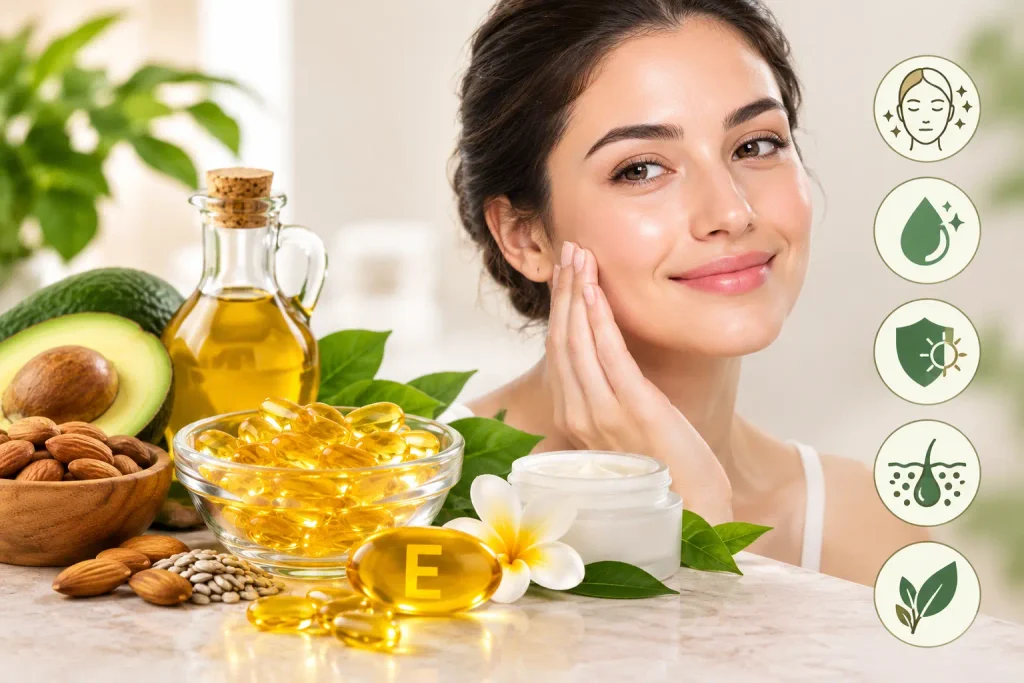
Vitamin E for skin is a popular skincare topic because vitamin E acts as an antioxidant and is used in many creams, lotions, and moisturizers. It helps protect cells from oxidative damage, but the benefits of applying it to the skin depend on the product and its formulation. Vitamin E may be useful in a skincare routine, especially when included in a suitable moisturizer. However, evidence does not show that topical vitamin E reliably removes scars, fades dark spots, or eliminates wrinkles. Understanding its benefits, uses, and possible side effects can help you choose the right products for your skin. How Vitamin E Helps the Skin Vitamin E is a fat-soluble nutrient that acts as an antioxidant. Antioxidants help protect cells from damage caused by free radicals, which form naturally in the body and can also result from environmental factors, including ultraviolet radiation. Vitamin E helps protect cell membranes from oxidative damage. It is also used in skincare products in forms such as tocopherol and tocopheryl acetate. Although vitamin E has an established antioxidant role, this does not mean that every product containing it will produce visible skin improvements. The results depend on the complete formulation and how the product suits your skin. Vitamin E products should not replace sunscreen or treatments recommended for specific skin concerns. Benefits of Vitamin E for Skin Vitamin E has antioxidant properties, but evidence for individual cosmetic benefits varies. Here are the main points to understand. 1. May Help Moisturize Dry Skin Vitamin E is an oil-soluble ingredient used in some moisturizers and skincare products. A suitable product containing vitamin E may help soften dry skin, depending on its other ingredients. Ingredients such as glycerin help attract water, while ceramides support the skin barrier. These ingredients may work together in a moisturizer to improve skin hydration. If your skin is dry, choose a moisturizer formulated for your skin type rather than relying on vitamin E oil alone. 2. Provides Antioxidant Activity Vitamin E helps protect cells from oxidative damage. This property explains why it is included in many skincare formulations. However, antioxidant activity does not prove that applying vitamin E prevents wrinkles or reverses sun damage. These specific benefits require separate clinical evidence. 3. May Be Included in Skin-Barrier Products The skin barrier helps retain moisture and protect the skin from external irritants. Maintaining it is an important part of basic skincare. Some moisturizers contain vitamin E alongside other ingredients that condition the skin. Their effectiveness depends on the overall formulation rather than vitamin E alone. 4. Limited Evidence for Scars and Dark Spots Vitamin E is often marketed for scars, wrinkles, and uneven skin tone. However, evidence does not establish that topical vitamin E alone reliably treats these concerns. Avoid expecting vitamin E to remove scars or dark spots. A dermatologist can recommend suitable treatments based on the cause of the problem. Vitamin E Oil for the Face Vitamin E oil for the face is sometimes used to moisturize dry areas. However, concentrated oils can feel greasy and may not suit every skin type. People with oily or acne-prone skin may prefer a lightweight moisturizer. The suitability of an oil-based product depends on its ingredients and individual skin response. Topical vitamin E can cause contact dermatitis in some people. Possible symptoms include redness, itching, swelling, or irritation. If you want to try vitamin E, choose a product designed for facial use and follow its instructions. Test it on a small area first, and stop using it if a reaction develops. A small-area test cannot guarantee that irritation will never occur. How to Use Vitamin E in Skin Care You can include vitamin E in your routine by choosing a suitable skincare product. A separate oil or capsule is not necessary. Follow these simple steps: Keep your routine simple and avoid introducing several new products at once. Vitamin E does not replace sunscreen or guarantee protection from ultraviolet damage. Vitamin E Capsules for Skin Vitamin E capsules are primarily dietary supplements, not necessarily skincare products. Some people open them and apply the contents to their faces, but this does not guarantee better results than using a product designed for topical use. Capsules may contain concentrated oil or other ingredients that are not formulated specifically for facial application. Their contents may cause irritation or feel too greasy for some skin types. There is insufficient evidence to recommend vitamin E capsules as a reliable treatment for scars, wrinkles, or dark spots. Oral supplements also have separate safety concerns. High doses of vitamin E can increase bleeding risk, particularly for people taking certain medicines. Consult a healthcare professional before taking supplements for skin concerns. Possible Side Effects and Precautions Vitamin E products may not suit everyone. Possible side effects include: Choose products intended for facial use, follow the label instructions, and test a small area before applying them more widely. Discontinue use if irritation develops. If you experience a significant reaction or have a persistent skin concern, seek medical advice. Consult a healthcare professional before taking vitamin E supplements, especially if you take medicines that affect blood clotting. Frequently Asked Questions Is vitamin E good for the skin? Vitamin E has antioxidant properties and is used in skincare products. A moisturizer containing vitamin E may suit some people, but results depend on the formulation. It is not a proven cure for scars or wrinkles. Can I apply vitamin E oil to my face every day? This depends on the product and your skin’s response. Concentrated oil may not suit everyone. Follow the product instructions and stop using it if irritation develops. Does vitamin E remove dark spots? Evidence does not establish that topical vitamin E alone reliably removes dark spots. Treatment depends on the cause of pigmentation, so seek professional advice if discoloration persists. Can vitamin E help with scars? Evidence supporting topical vitamin E as a scar treatment is limited. A dermatologist can recommend suitable options based on the type of scar. Is vitamin E
Vitamin E: Benefits, Food Sources & Daily Needs

Vitamin E is an essential nutrient that helps protect cells from damage. It also supports immune function and other important processes in the body. You can get vitamin E from foods such as nuts, seeds, vegetable oils, and green vegetables. Most people can get enough vitamin E through a balanced diet. However, some health conditions can affect how the body absorbs this nutrient. Understanding vitamin E benefits, food sources, daily needs, and supplement safety can help you make informed choices. What Is Vitamin E? Vitamin E is a fat-soluble vitamin. This means it dissolves in fat and can be stored in the body. The term vitamin E refers to a group of eight related compounds: four tocopherols and four tocotrienols. Alpha-tocopherol is the form of vitamin E that the human body uses to meet its requirements. It acts as an antioxidant, helping protect cells from damage caused by free radicals. Vitamin E is also important for normal immune function. Getting enough through food helps the body maintain its usual functions. Health Benefits of Vitamin E 1. Helps Protect Cells One of the main roles of vitamin E is its antioxidant activity. It helps protect cell membranes from oxidative damage caused by free radicals. These unstable molecules form naturally in the body and can also result from environmental exposure. Vitamin E supports the body’s natural defenses against this damage. However, this does not mean that taking extra vitamin E supplements will prevent disease. 2. Supports Immune Function Vitamin E helps the immune system work properly. Getting enough of this nutrient is important for maintaining normal immune function. A balanced diet that includes vitamin E-rich foods can help you meet your nutritional needs. 3. Supports Normal Body Functions Vitamin E plays a role in protecting cell membranes and supporting normal functions in different parts of the body. Severe deficiency can affect nerves, muscles, and vision. These benefits are linked to getting enough vitamin E. Taking more than the recommended amount does not automatically provide extra health benefits. Foods Rich in Vitamin E Food is usually the best place to start when trying to meet your vitamin E needs. Many common foods contain this nutrient, including nuts, seeds, oils, and green vegetables. Here are some good sources of vitamin E: FoodApproximate vitamin E per servingWheat germ oil, 1 tablespoon20.3 mgDry-roasted sunflower seeds, 1 ounce7.4 mgDry-roasted almonds, 1 ounce6.8 mgSunflower oil, 1 tablespoon5.6 mgDry-roasted hazelnuts, 1 ounce4.3 mgPeanut butter, 2 tablespoons2.9 mgDry-roasted peanuts, 1 ounce2.2 mgCooked spinach, ½ cup1.9 mgCooked broccoli, ½ cup1.2 mg Values are approximate and may vary by product and preparation method. Other sources include avocado, kiwi, and certain fortified foods. Eating a variety of these foods can help you get vitamin E as part of a balanced diet. For a simple approach, add nuts or seeds to meals, use suitable vegetable oils in cooking, and include green vegetables regularly. How Much Vitamin E Do You Need Daily? The amount of vitamin E you need depends on your age and life stage. The following table shows the recommended daily intake used in US nutrition guidance. Age or life stageRecommended daily amountChildren aged 1–3 years6 mgChildren aged 4–8 years7 mgChildren aged 9–13 years11 mgTeenagers aged 14–18 years15 mgAdults aged 19 years and older15 mgPregnancy15 mgBreastfeeding19 mg These values are reference amounts, not targets that everyone must meet through supplements. Individual needs may differ depending on health and other factors. Vitamin E Deficiency: Causes and Symptoms Vitamin E deficiency is uncommon in healthy people who eat a varied diet. It is more likely to occur when the body cannot absorb fat properly or when certain medical conditions interfere with nutrient absorption. Possible causes include conditions that affect fat digestion or absorption. In these cases, the body may struggle to absorb enough vitamin E from food. Symptoms of Vitamin E Deficiency A serious deficiency can affect the nervous system and muscles. Possible symptoms include: These symptoms can have many causes and do not confirm vitamin E deficiency on their own. A healthcare professional can assess symptoms, medical history, and appropriate tests to determine whether a deficiency is present. How Is Deficiency Managed? Treatment depends on the cause and severity of the deficiency. A healthcare professional may recommend vitamin E supplements when needed, particularly if a condition affects nutrient absorption. Do not take high doses on your own to treat unexplained symptoms. The correct approach depends on your individual situation. Vitamin E Supplements: Benefits and Safety Vitamin E supplements are available in different forms and doses. However, most people who eat a varied diet do not need high-dose supplements unless a healthcare professional identifies a specific need. Taking more vitamin E than your body needs does not guarantee better health. High doses from supplements can increase the risk of bleeding, especially when combined with certain medicines. Vitamin E may interact with anticoagulant medicines, such as warfarin, which affect blood clotting. If you take medicines or have a health condition, ask a qualified healthcare professional before using vitamin E supplements. The adult upper limit in US guidance is 1,000 mg per day of supplemental alpha-tocopherol. This is a safety limit, not a recommended daily intake. It is not a reason to take large doses. Vitamin E from ordinary foods is generally the preferred way to meet daily needs. Simple Ways to Get Enough Vitamin E You can support your vitamin E intake with a few practical food choices: These habits can help you obtain vitamin E alongside other nutrients your body needs. Frequently Asked Questions What is vitamin E good for? Vitamin E acts as an antioxidant and supports normal immune function. It also helps protect cell membranes from oxidative damage. Which foods contain the most vitamin E? Wheat germ oil, sunflower seeds, almonds, and sunflower oil are good sources. The amount you get depends on the serving size and the product. How much vitamin E do adults need daily? The US recommended daily amount for adults is 15 mg. Pregnant adults also need 15