Vitamin A Deficiency and Toxicity: Symptoms & Safety
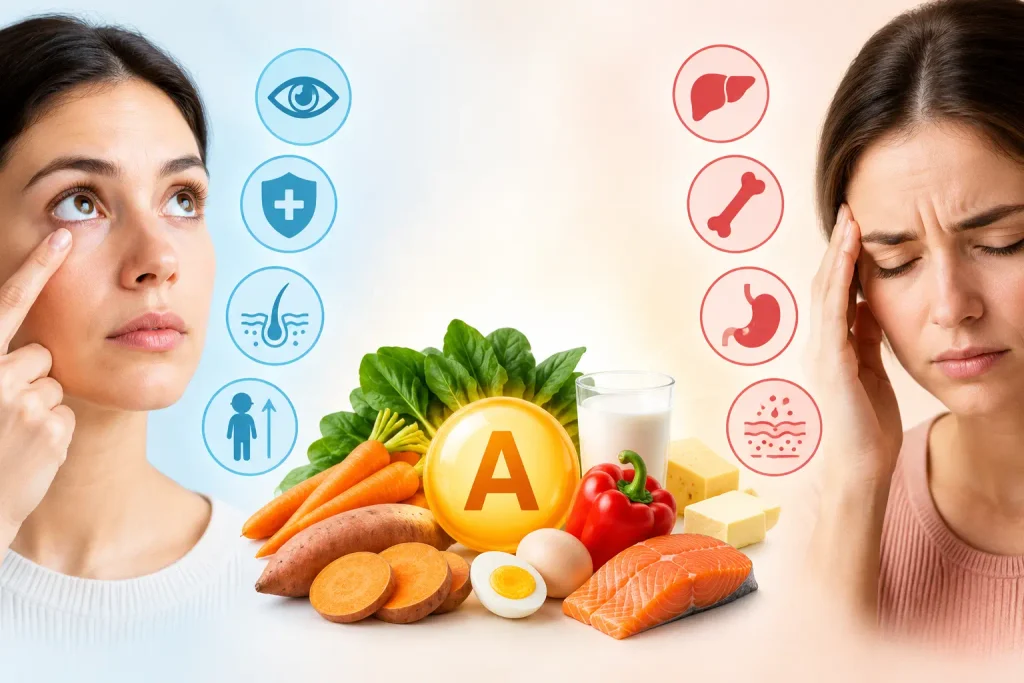
Vitamin A Deficiency and Toxicity can affect vision and immune function, while excessive intake can cause toxicity and liver damage. Understanding the symptoms, causes, and safe intake limits can help you make informed decisions about vitamin A foods and supplements. Why Vitamin A Balance Matters Vitamin A is a fat-soluble vitamin that supports vision, immune function, growth, and development. The body stores it mainly in the liver. There are two main forms of vitamin A: Too little vitamin A can cause deficiency, while excessive preformed vitamin A can cause toxicity. Vitamin A Deficiency Vitamin A deficiency occurs when the body does not get enough vitamin A. It remains a public health concern in some parts of the world, particularly where nutritious food is limited. Young children are among the groups at risk. (1, 2) Common Causes of Vitamin A Deficiency Several factors can contribute to deficiency: Symptoms of Vitamin A Deficiency Symptoms depend on the severity of the deficiency. Common signs include: Dry skin may also occur, but it has many possible causes. Night blindness or persistent eye problems require medical assessment because untreated severe deficiency can damage vision. How Is Vitamin A Deficiency Diagnosed? A healthcare professional may review your diet, medical history, and symptoms. An eye examination and blood test may also help assess vitamin A status. Blood retinol levels can support diagnosis, but they do not always reflect the body’s total vitamin A stores. Results should be considered alongside other clinical findings. Prevention and Treatment of Vitamin A Deficiency A varied diet can help provide enough vitamin A. Useful food sources include: Plant foods provide carotenoids, while animal foods provide preformed vitamin A. If deficiency is diagnosed, a healthcare professional may recommend supplements and assess whether an underlying health condition is affecting absorption. Treatment depends on the person’s needs and should be medically guided. Vitamin A Toxicity Vitamin A toxicity, also called hypervitaminosis A, occurs when excessive amounts of vitamin A build up in the body. The risk is mainly associated with excessive preformed vitamin A from supplements and certain foods. (1) What Causes Excess Vitamin A? Excessive intake may result from: Beta-carotene from ordinary foods does not carry the same established toxicity risk as excessive preformed vitamin A. However, high-dose beta-carotene supplements have been linked to increased lung cancer risk in smokers and certain other high-risk groups. Symptoms of Vitamin A Toxicity Possible symptoms include: Symptoms vary according to the amount taken and the duration of excessive intake. These signs can have other causes, so they do not confirm toxicity on their own. Seek medical advice if you suspect excessive vitamin A intake. Acute vs. Chronic Vitamin A Toxicity Both forms can be serious. Do not take additional vitamin A to treat suspected deficiency without professional guidance. Vitamin A Supplement Safety Recommended Intake and Upper Limits The following are US dietary reference intakes for adults aged 19 and older. Requirements may differ according to age and life stage. Group Daily recommended intakeAdult men900 mcg RAEAdult women700 mcg RAEPregnant women770 mcg RAEBreastfeeding women1,300 mcg RAE. RAE means retinol activity equivalents. This unit accounts for differences in how the body uses vitamin A from different sources. The tolerable upper intake level for preformed vitamin A is 3,000 mcg RAE per day for adults aged 19 and older. This includes preformed vitamin A from food and supplements combined. It is a safety limit, not a recommended daily target. Children and teenagers have lower upper limits. Who Should Be Careful With Vitamin A Supplements? Vitamin A Medication Interactions Orlistat can reduce the absorption of fat-soluble vitamins, including vitamin A. Retinoid medicines may also increase the risk of adverse effects when combined with vitamin A supplements. Tell your doctor or pharmacist about all medicines, multivitamins, and supplements you use before starting additional vitamin A. Frequently Asked Questions What are the first signs of vitamin A deficiency? Night blindness, or difficulty seeing in dim light, is a recognized early sign. Dry eyes may also occur. Other conditions can cause similar symptoms, so medical assessment is important. Can too much vitamin A be harmful? Yes. Excessive preformed vitamin A can cause nausea, headaches, blurred vision, skin changes, and liver damage. Can vitamin A supplements damage the liver? Yes. Taking excessive amounts of preformed vitamin A over time can damage the liver. Is beta-carotene safer than retinol? Beta-carotene from foods does not carry the same established toxicity risk as excessive preformed vitamin A. However, high-dose beta-carotene supplements can increase lung cancer risk in certain high-risk groups, including smokers. Should you take vitamin A supplements every day? Not everyone needs supplements. A varied diet may provide enough vitamin A. Supplements may be appropriate for people with a diagnosed deficiency or specific medical needs, but the dose should be professionally guided. Conclusion Vitamin A supports vision, immune function, growth, and development. Deficiency can cause night blindness and serious eye problems, while excessive preformed vitamin A can lead to toxicity and liver damage. Eat a varied diet, avoid unnecessary high-dose supplements, and seek professional advice if you have possible deficiency symptoms or take medicines that may interact with vitamin A. Medical disclaimer: This article is for general educational purposes only. It does not replace professional medical advice, diagnosis, or treatment. Consult a qualified healthcare professional before starting or changing a supplement
Vitamin A: Benefits, Sources & Daily Requirements
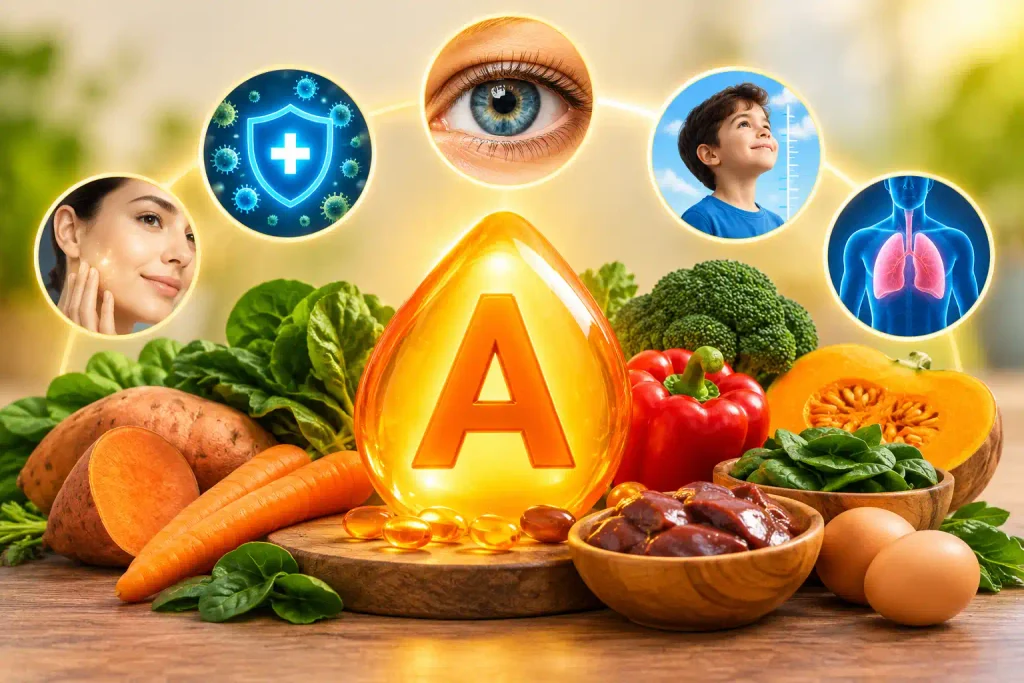
Vitamin A is an essential nutrient that supports healthy vision, immune function, skin, and normal growth. Vitamin A is found in animal foods such as eggs, milk, and fish, as well as plant foods like carrots, spinach, and sweet potatoes. A balanced diet can help you get enough vitamin A. This guide covers the main vitamin A benefits, food sources, daily requirements, and supplement safety. What Is Vitamin A? Vitamin A is a fat-soluble vitamin. This means the body can store it, mainly in the liver, and use it when needed. It helps maintain normal vision, supports cell growth, and contributes to healthy body tissues. There are two main forms of vitamin A: Both forms contribute to your vitamin A intake, but the body processes them differently. Health Benefits of Vitamin A Vitamin A supports several important body functions. Getting enough helps maintain normal health and development. 1. Supports Healthy Vision Vitamin A is essential for normal vision, especially in low light. It helps the body produce rhodopsin, a protein in the retina that allows the eyes to respond to light. It also helps maintain the cornea, the clear outer surface of the eye. A lack of vitamin A can cause difficulty seeing in dim light and may lead to serious eye problems if the deficiency becomes severe. 2. Supports the Immune System Vitamin A helps the immune system work properly. It supports immune cell function and maintains protective tissues, including the skin and the linings of the nose and respiratory tract. Getting enough vitamin A is important for normal immune function. However, taking extra supplements does not necessarily provide additional benefits when your nutritional needs are already met. 3. Helps With Growth and Development Vitamin A supports cell growth and differentiation. These processes help cells develop specific functions and allow body tissues and organs to develop and function normally. Children and teenagers need enough vitamin A as part of a balanced diet. Adequate intake is also important for normal reproduction and development throughout life. 4. Helps Maintain Healthy Skin Vitamin A supports normal skin cell growth and helps maintain skin tissue. It also contributes to the body’s protective barriers. Although vitamin A is important for skin health, eating vitamin A-rich foods is not a guaranteed treatment for acne, wrinkles, or other skin conditions. High-dose supplements should not be used for cosmetic purposes without professional advice. 5. Supports Normal Cell Function Vitamin A helps cells grow and develop normally. These functions support the maintenance of tissues and the normal operation of different organs. Your daily needs depend on factors such as age, sex, and life stage. Best Food Sources of Vitamin A Vitamin A comes from both animal and plant foods. Eating a variety of these foods can help you meet your daily needs. Animal Sources of Vitamin A Animal foods provide preformed vitamin A, or retinol. Common sources include: Liver requires special care because it contains high levels of vitamin A. The UK NHS advises pregnant women and those who may be pregnant to avoid liver and liver products because too much vitamin A can harm an unborn baby. Plant Sources of Vitamin A Many colourful fruits and vegetables contain provitamin A carotenoids, including beta-carotene. The body converts these compounds into vitamin A. Good plant sources include: You do not need to eat every food on this list daily. Choosing different fruits and vegetables throughout the week can help provide a range of nutrients. Vitamin A is fat-soluble, so including some dietary fat in a meal with carotenoid-rich vegetables can help the body absorb these compounds. How Much Vitamin A Do You Need Daily? Your vitamin A requirements depend on your age, sex, and stage of life. Recommended amounts may also differ between countries. According to US dietary recommendations, the recommended daily allowance for adults aged 19 and older is: For teenagers aged 14–18, the recommended amounts are 900 mcg RAE daily for males and 700 mcg RAE daily for females. These are US recommendations, not universal values. Pregnancy and breastfeeding can also change vitamin A requirements. What Does RAE Mean? RAE stands for retinol activity equivalents. It is a measurement used to account for differences in how the body uses preformed vitamin A and converts carotenoids from plant foods. Both animal and plant foods can contribute to your total vitamin A intake. How to Get Enough Vitamin A From Food A varied diet is a practical way to obtain vitamin A. You can: The amount of vitamin A in food varies according to the food type and serving size. Do You Need Vitamin A Supplements? Not everyone needs a vitamin A supplement. Many people can meet their nutritional needs through a balanced diet. A healthcare professional can help determine whether supplementation is necessary. Vitamin A is stored in the body, so excessive intake of preformed vitamin A from supplements or frequent liver consumption can be harmful. If you are pregnant, planning a pregnancy, or taking medicines that may interact with vitamin A, seek professional advice before using supplements. Check multivitamin labels to avoid taking several products that contain vitamin A. Avoid high-dose supplements unless a qualified healthcare professional recommends them. Frequently Asked Questions About Vitamin A Which foods are rich in vitamin A? Beef liver is a particularly rich source. Eggs, dairy products, and some fish also provide vitamin A. Sweet potatoes, carrots, and spinach supply provitamin A carotenoids. Which fruits contain vitamin A? Mangoes, papaya, apricots, and cantaloupe contain carotenoids that contribute to vitamin A intake. The amount varies by fruit and serving size. How much vitamin A do adults need daily? Under US recommendations, adult men need 900 mcg RAE per day, while adult women need 700 mcg RAE per day. Requirements vary by age, sex, and life stage. Can you get enough vitamin A from food alone? Many people can meet their needs through a varied diet containing suitable animal foods and colourful fruits and vegetables. Some people may need professional advice about supplements.