Mental health conditions affect how people think, feel, and behave. They can affect relationships, sleep, work, school, and daily life. Common examples include anxiety disorders, depression, and bipolar disorder.
Mental and physical health are closely linked. Both are important for overall well-being. Learning about mental health problems can help people recognize symptoms and find the right support.

What Are Mental Health Conditions?
Mental health conditions, also called mental health disorders, affect a person’s thoughts, feelings, or behavior. They can range from mild problems to serious conditions that need long-term care.
There are many types of mental health conditions. Some symptoms improve with time and support, while others need ongoing treatment. A mental health professional can assess symptoms and suggest suitable treatment options.
7 Common Types of Mental Health Conditions
1. Anxiety Disorders
Anxiety disorders cause strong fear or worry that can interfere with daily activities. Common symptoms include:
- Constant worry or fear
- Restlessness and irritability
- Trouble sleeping
- Difficulty focusing
- Sweating or a racing heartbeat
Treatment may include talk therapy, medication, and relaxation techniques.
2. Depression
Depression causes ongoing sadness or loss of interest in usual activities. It can affect energy, sleep, appetite, and concentration.
Common symptoms include low mood, tiredness, changes in sleep, and difficulty completing daily tasks. Treatment may include therapy, medication, or both.
3. Bipolar Disorder
Bipolar disorder causes major changes in mood, energy, and activity. A person may experience periods of unusually high energy and periods of depression.
These changes can affect sleep, decisions, relationships, and daily routines. Treatment often includes medication and therapy.
4. Post-Traumatic Stress Disorder (PTSD)
PTSD may develop after a traumatic experience. Symptoms can include unwanted memories, nightmares, fear, and avoiding reminders of the event.
A mental health professional may recommend trauma-focused therapy and, when needed, medication.
5. Schizophrenia
Schizophrenia is a psychotic disorder that can affect thinking, feelings, and the way a person understands reality.
Symptoms may include hearing or seeing things others do not, unusual beliefs, confused speech, and difficulty managing daily tasks. Treatment may include medicine, therapy, and community support.
6. Attention-Deficit/Hyperactivity Disorder (ADHD)
ADHD affects attention, activity levels, and impulse control. It often begins in childhood but may continue into adulthood.
Signs can include forgetfulness, restlessness, difficulty focusing, and problems organizing tasks. Treatment may include behavioral support, therapy, school or work adjustments, and medication.
7. Obsessive-Compulsive Disorder (OCD)
OCD involves unwanted, repeated thoughts and urges, along with repeated actions or mental routines. These symptoms can take up time and make daily life harder.
Treatment may include cognitive behavioral therapy and medication, depending on the person’s needs.
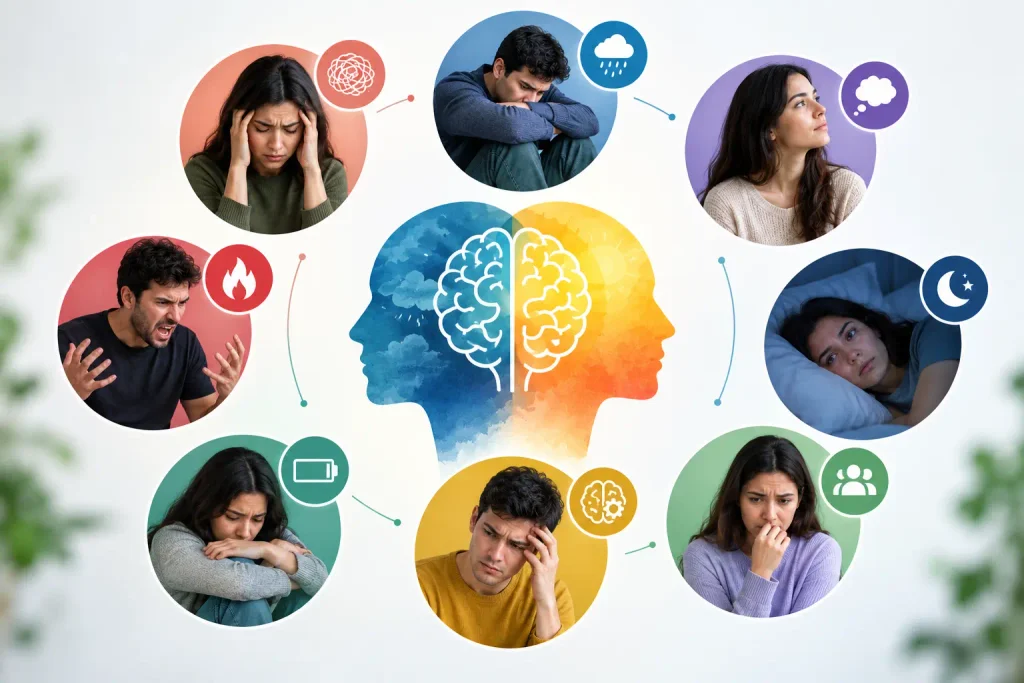
Common Signs of Mental Health Problems
Mental health issues affect people in different ways. Possible signs include:
- Ongoing sadness, fear, or worry
- Changes in sleep or appetite
- Loss of interest in usual activities
- Trouble focusing or making decisions
- Pulling away from friends or family
- Difficulty managing everyday tasks
These signs do not always mean a person has a mental health condition. If symptoms continue or affect daily life, professional advice can help.
What Causes Mental Health Conditions?
There is no single cause of all mental health disorders. Several factors may play a role, including:
- Family history: Some conditions may run in families.
- Biological factors: Brain function and other body processes can affect mental health.
- Trauma: Abuse, loss, or frightening experiences may increase risk.
- Long-term stress: Problems at home, school, or work can affect well-being.
- Social factors: Isolation and a lack of support may add to emotional stress.
Having these risk factors does not mean someone will develop a condition.
How Are Mental Health Conditions Diagnosed?
Medical doctors and mental health professionals can assess symptoms and discuss a person’s health history. They may ask how long symptoms have lasted and how they affect everyday activities.
Depending on the situation, an assessment may involve a physical checkup, questions about family history, or psychological tests. A social worker may also help connect people with community services and support.
A proper assessment helps identify possible health disorders and guide treatment.
Treatment Options and Support
Treatment depends on the condition and the person’s needs. Common options include:
- Therapy: Talking with a trained professional can help people understand feelings and manage symptoms.
- Medicine: A qualified prescriber may recommend medicine for certain conditions.
- Healthy habits: Regular sleep, balanced meals, and physical activity can support well-being.
- Social support: Friends, a family member, or a support group can provide practical help and encouragement.
These steps can work together. Healthy habits and support do not replace medical care when treatment is needed.
When Should You Get Help?
Speak with a mental health professional if symptoms continue, become hard to manage, or affect school, work, relationships, or sleep. Early support can help people understand their needs and find suitable care.
If someone is in immediate danger, contact local emergency services. In the United States, people experiencing a mental health crisis can call or text 988, the 988 Suicide & Crisis Lifeline. This number is for the US; people in other countries should contact their local crisis service or emergency support.
Frequently Asked Questions
What are the most common mental health conditions?
Anxiety disorders and depression are common examples. Other conditions include bipolar disorder, PTSD, ADHD, OCD, and schizophrenia.
Can mental health conditions be treated?
Yes. Many conditions can be managed with therapy, medicine, practical support, or a combination of treatments.
Can mental health problems affect physical health?
Yes. Mental and physical health are connected. Stress and mental health symptoms may affect sleep, energy, and daily habits.
Who can help with mental health issues?
A mental health professional, doctor, psychologist, psychiatrist, or social worker may help, depending on the person’s needs and available services.
Conclusion
Mental health conditions can affect thoughts, feelings, relationships, and daily life. Learning about their types, symptoms, and causes can help people seek support sooner. With suitable health care and treatment, many people can manage symptoms and improve their quality of life.
Medical Disclaimer: This article provides general educational information. It does not replace professional medical advice, diagnosis, or treatment. Speak with a qualified healthcare professional about personal concerns.