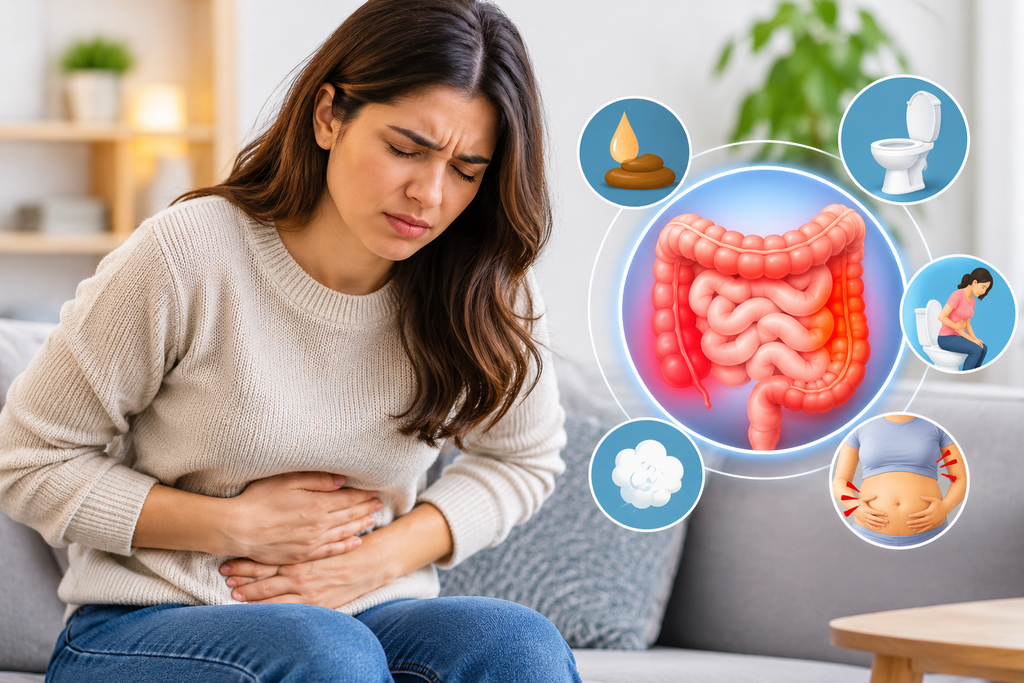
Irritable bowel syndrome (IBS) is a common digestive condition. It can cause stomach pain, bloating, gas, constipation, and diarrhea. Symptoms may come and go and can affect daily life.
IBS can be managed with diet changes, healthy habits, and proper treatment. Learning which foods trigger your symptoms may also help.
What Is Irritable Bowel Syndrome (IBS)?
IBS is a long-term condition that affects how the digestive system works. It can change bowel movements and cause stomach discomfort.
Unlike inflammatory bowel disease (IBD), IBS does not cause the same type of damage to the intestines. However, its symptoms can still affect daily activities.
Types of IBS
IBS has three main types:
1. IBS-C (Constipation): Causes hard stools, difficulty passing stool, and bloating.
2. IBS-D (Diarrhea): Causes loose stools, frequent bowel movements, and a sudden urge to use the toilet.
3. IBS-M (Mixed): Causes both constipation and diarrhea. Symptoms may change from day to day.
Common Symptoms of IBS
IBS symptoms vary from person to person. Common signs include:
- Stomach pain and cramps
- Bloating and gas
- Constipation
- Diarrhea
- Changes in bowel movements
- Mucus in the stool
- Feeling that the bowel has not emptied fully
Some people feel better after passing stool.
IBS Symptoms in Females
IBS affects both men and women. However, some women notice changes in their symptoms during their menstrual cycle.
Hormonal changes may increase bloating, cramps, constipation, or diarrhea. A symptom diary can help identify these patterns.
When Should You See a Doctor?
Some symptoms need medical attention. Contact a healthcare professional if you notice:
- Blood in your stool
- Unexplained weight loss
- Persistent fever
- Severe or continuous stomach pain
These signs should not be assumed to be caused by IBS.
What Causes IBS?
There is no single known cause of IBS. Several factors may affect the digestive system, including:
- Changes in how food moves through the intestines
- Increased sensitivity in the gut
- Problems with gut-brain communication
- Changes in gut bacteria
- Previous digestive infections
Stress may also make symptoms worse in some people.
Foods That May Trigger IBS
Certain foods can cause symptoms in some people with IBS. Common triggers include:
- Milk and other dairy products
- Wheat-based foods
- Coffee and caffeinated drinks
- Fatty or fried foods
- Beans and some vegetables
- Foods high in FODMAPs
Food triggers are different for everyone. Keeping a food diary can help you find which foods cause problems.
What Is the Low-FODMAP Diet?
The low-FODMAP diet may help reduce IBS symptoms. It limits certain carbohydrates that can cause gas, bloating, and stomach discomfort.
The diet has three main stages:
- Reduce high-FODMAP foods for a short time.
- Add foods back one at a time.
- Keep foods you can tolerate and limit those that trigger symptoms.
A dietitian can help you follow this plan safely.
Foods That May Help Manage IBS
Some foods may support better digestion:
- Oats: Provide soluble fiber.
- Linseeds: May help some people with bowel movements.
- Water: Supports normal digestion and helps when increasing fiber.
Increase fiber slowly because too much at once may cause gas and bloating.
How Is IBS Diagnosed?
A doctor usually reviews your symptoms, medical history, and bowel habits. They may also perform a physical examination.
Depending on your symptoms, blood tests, stool tests, or other checks may be needed to rule out other conditions.
IBS Treatment Options
There is no single treatment for everyone. Options depend on your symptoms.
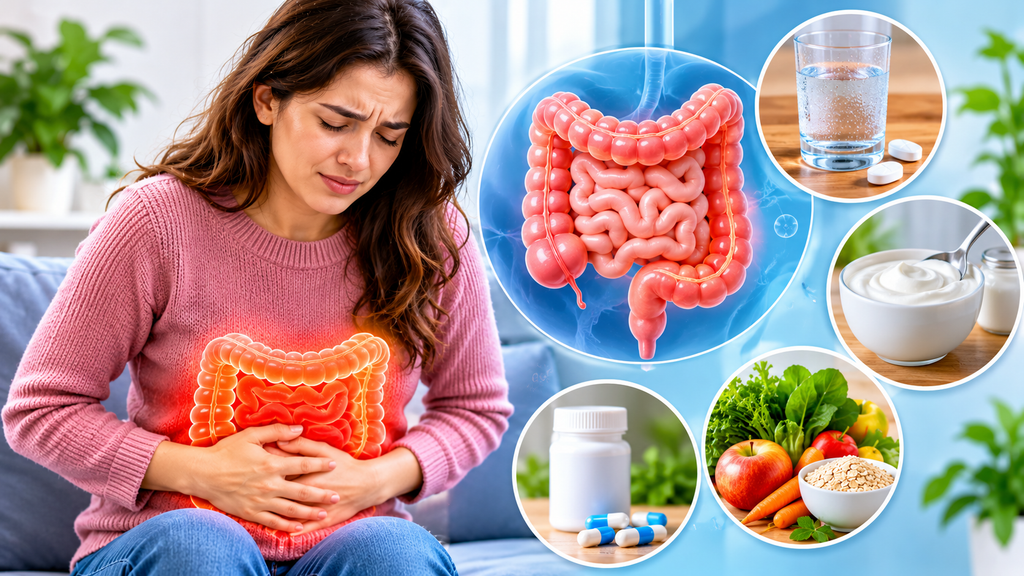
Common ways to manage IBS include:
- Diet changes: Avoid foods that clearly trigger your symptoms.
- Physical activity: Regular movement may support bowel health.
- Stress management: Relaxation methods may help reduce symptoms.
- Medicines: Doctors may recommend medicines for constipation, diarrhea, or cramps.
- Peppermint oil: Some people use it to manage stomach discomfort.
- Probiotics: Their effects vary from person to person.
- Talking therapies: CBT and gut-directed hypnotherapy may help some people.
Speak to a healthcare professional before starting new medicines or supplements.
Can IBS Be Cured Permanently?
There is no established permanent cure for IBS. However, many people manage their symptoms with diet changes, lifestyle habits, and treatment.
Symptoms may improve and return later. A suitable treatment plan can help reduce discomfort.
How to Reduce IBS Flare-Ups
These simple steps may help:
- Keep a food and symptom diary.
- Eat regular meals.
- Drink enough water.
- Limit foods that trigger symptoms.
- Increase fiber slowly.
- Stay physically active.
- Manage stress.
- Follow your doctor’s advice.
Frequently Asked Questions
1. What are the main symptoms of IBS?
Common symptoms include stomach pain, bloating, gas, constipation, and diarrhea.
2. Which foods should I avoid with IBS?
Dairy, wheat, coffee, fatty foods, and some high-FODMAP foods may trigger symptoms. The effect varies from person to person.
3. Can stress make IBS worse?
Yes. Stress may increase symptoms in some people. Stress management can be part of treatment.
4. What is the difference between IBS-C and IBS-D?
IBS-C mainly causes constipation, while IBS-D mainly causes diarrhea. IBS-M causes both.
5. Can IBS go away permanently?
There is no established permanent cure, but treatment and lifestyle changes can help control symptoms.
6. What is the best diet for IBS?
There is no single diet for everyone. Some people benefit from a low-FODMAP diet, while others only need to avoid certain trigger foods.
Conclusion
IBS can cause stomach pain, bloating, constipation, and diarrhea. Symptoms differ from person to person. A food diary, suitable diet changes, regular activity, and medical advice can help manage the condition. Seek medical help if you notice blood in your stool, unexplained weight loss, fever, or severe continuous pain.