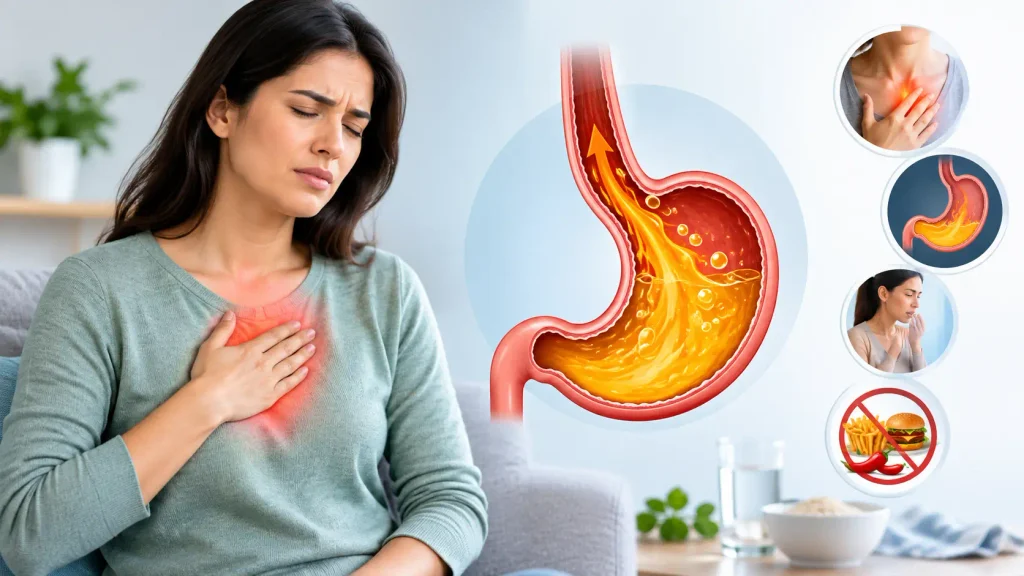
Gastroesophageal reflux disease (GERD) is a digestive condition that occurs when stomach contents repeatedly flow back into the esophagus, the tube that carries food from the mouth to the stomach. This backflow can irritate the esophagus and cause discomfort. Occasional acid reflux is common, but frequent or persistent symptoms may indicate GERD. (sources)
What Is GERD?
GERD is a long-term condition linked to repeated acid reflux. A ring of muscle called the lower esophageal sphincter helps keep stomach contents from moving back into the esophagus. If this muscle becomes weak or relaxes at the wrong time, stomach contents can flow upward.
Frequent stomach acid reflux may irritate the esophageal lining. Without proper management, GERD can affect eating, sleeping, and overall quality of life. (sources)
Common gastroesophageal reflux disease
GERD symptoms can vary from person to person. Some people experience symptoms after meals, while others notice them when lying down or sleeping.
Common heartburn symptoms include:
- A burning feeling in the chest, often after eating.
- Sour or bitter fluid coming back into the mouth.
- Discomfort in the upper abdomen or chest.
- Difficulty or pain when swallowing.
- A feeling of a lump in the throat.
- Ongoing cough or hoarseness, especially with nighttime reflux.
Acid regurgitation occurs when stomach contents move back into the throat or mouth. Some people notice a sour taste, while others feel food or liquid rising after a meal. Not everyone with GERD experiences heartburn. (sources)
gastroesophageal reflux disease Causes and Risk Factors
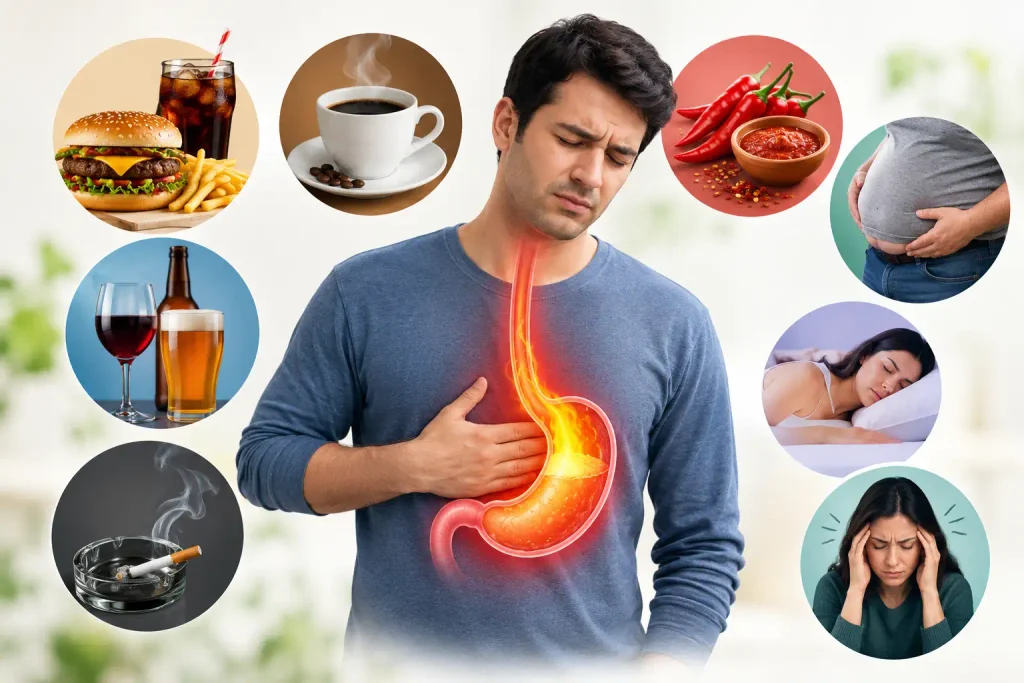
Understanding GERD causes can help people manage symptoms. GERD often develops when the lower esophageal sphincter does not prevent stomach contents from flowing backward.
Factors that may contribute to GERD include:
- Being overweight: Extra pressure around the abdomen can make reflux more likely.
- Pregnancy: Changes in the body can increase reflux symptoms.
- Hiatal hernia: Part of the stomach moves upward through the diaphragm.
- Smoking: Smoking can affect the function of the lower esophageal sphincter.
- Large or late meals: Eating heavily or lying down soon after eating may worsen symptoms.
- Certain foods and drinks: Fatty foods, coffee, chocolate, spicy foods, and acidic foods may trigger symptoms in some people.
- Certain medicines: Some medicines can worsen reflux. Ask a healthcare professional before changing any prescribed medicine.
Chronic acid reflux means reflux happens repeatedly over time. If symptoms occur often or continue despite lifestyle changes, a healthcare professional can assess whether GERD is the cause. (sources)
How Is GERD Diagnosed?
A GERD diagnosis usually starts with a review of your symptoms, medical history, and medicines. Your healthcare professional may ask how often symptoms occur and whether meals or lying down make them worse.
If symptoms are persistent, severe, or unclear, additional tests may be needed. These can include:
- Upper endoscopy: A flexible tube with a camera helps the doctor examine the esophagus and look for damage.
- Esophageal pH monitoring: This measures acid exposure in the esophagus.
- Esophageal manometry: This checks muscle movement and pressure in the esophagus.
- Imaging tests: In selected cases, an X-ray may help assess the upper digestive tract.
Not everyone needs every test. The choice depends on symptoms and the healthcare professional’s assessment. (sources)
GERD Treatment Options
Treatment aims to reduce reflux, relieve symptoms, and protect the esophagus. The best approach depends on how severe and frequent the symptoms are.
Medicines for gastroesophageal reflux disease
Healthcare professionals may recommend different medicines:
- Antacids: These neutralize stomach acid and may provide short-term relief from mild heartburn.
- H2 blockers: These reduce the amount of acid the stomach produces.
- Proton pump inhibitors (PPIs): These reduce acid production and can help heal the esophageal lining.
Some medicines are available without a prescription, but frequent symptoms should be discussed with a healthcare professional. Do not use medicines regularly or change prescribed treatment without appropriate advice. (sources)
Lifestyle Changes to Manage gastroesophageal reflux disease
Daily habits may help reduce reflux symptoms:
- Eat smaller meals if large meals trigger symptoms.
- Avoid lying down for two to three hours after eating.
- Identify foods and drinks that worsen your symptoms.
- Consider losing weight if you are overweight, with guidance from a healthcare professional.
- Avoid smoking.
- Wear clothing that does not place pressure on your abdomen.
- Try elevating the head of your bed if reflux occurs during sleep. A bed wedge or a suitable way to raise the upper body may help; extra pillows alone may not work as well.
These changes may reduce symptoms, but results differ from person to person. (sources)
Possible Complications of GERD
Untreated or poorly controlled GERD can sometimes cause complications. These include esophagitis, which is inflammation of the esophagus, and an esophageal stricture, which is narrowing caused by scar tissue. Some people develop Barrett’s esophagus, a change in the cells lining the lower esophagus that is associated with a higher risk of esophageal cancer.
These complications do not happen to everyone with GERD. Medical assessment and appropriate treatment can help manage persistent reflux. (sources)
When Should You See a Doctor?
Speak with a healthcare professional if heartburn occurs frequently, symptoms continue despite lifestyle changes, or you regularly need nonprescription medicines.
Seek urgent medical attention for severe or unexplained chest pain, especially if it occurs with shortness of breath or pain in the arm or jaw. Difficulty swallowing, persistent vomiting, bleeding, or unexplained weight loss also require prompt medical assessment. Do not assume chest pain is caused by acid reflux. (sources)
Frequently Asked Questions
Is GERD the same as acid reflux?
No. Occasional acid reflux can happen to many people. GERD is a more persistent condition in which reflux causes repeated symptoms or complications.
What foods can trigger GERD?
Possible triggers include fatty foods, coffee, chocolate, spicy foods, and acidic foods. Triggers vary, so pay attention to which foods worsen your symptoms.
Can lifestyle changes help GERD?
Yes. Eating smaller meals, avoiding lying down after eating, and elevating the head of the bed for nighttime symptoms may help. Losing weight may also help some people who are overweight.
Does GERD need medical treatment?
Some people manage symptoms with lifestyle changes, while others need medicine or further evaluation. A healthcare professional can recommend suitable treatment based on symptoms and their severity.
Conclusion
Gastroesophageal reflux disease is a common digestive condition that can cause heartburn, acid regurgitation, and other symptoms. Understanding GERD causes, recognizing symptoms, and seeking an appropriate GERD diagnosis can help people find suitable treatment. Lifestyle changes and medicines may improve symptoms and support quality of life. Consult a healthcare professional if symptoms are frequent, persistent, or severe.
Medical disclaimer: This article is for general educational purposes only and is not a substitute for professional medical advice, diagnosis, or treatment.