Eczema, also called atopic dermatitis, is a common skin condition that causes dry, itchy, and inflamed skin. It usually begins during childhood, although it can develop at any age. Eczema is a long-lasting condition that can flare up and then improve for periods of time. It is not contagious and cannot spread from one person to another.
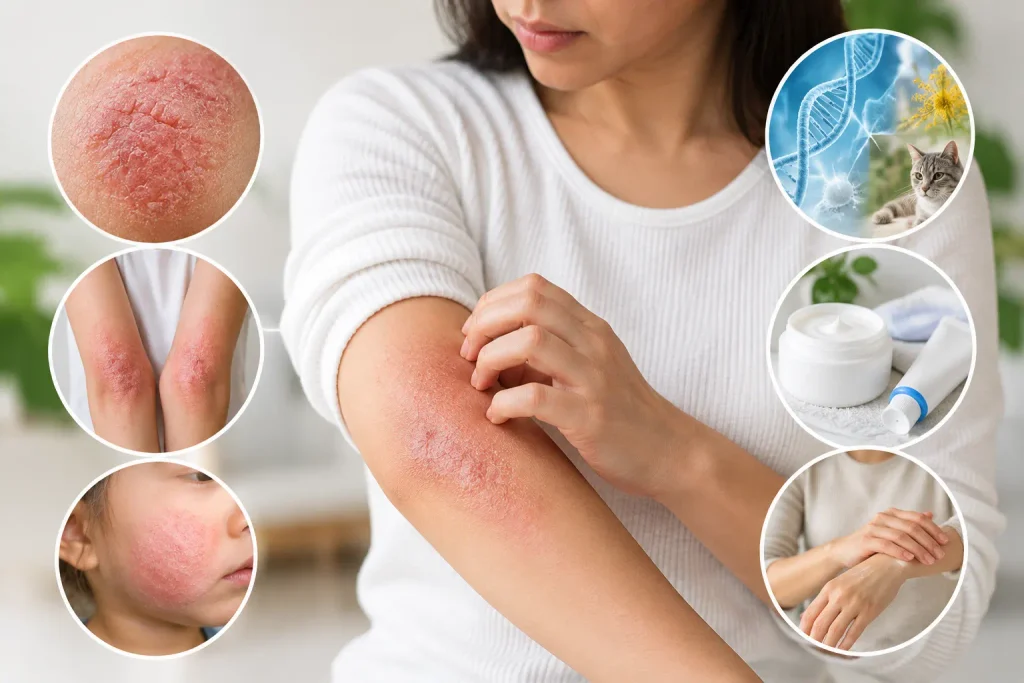
It can look different from one person to another. Depending on skin tone, Its rash may appear red, brown, purple, gray, or darker than the surrounding skin. The skin may also become dry, scaly, swollen, cracked, thickened, or develop areas that ooze and crust.
This guide explains what eczema is, what causes atopic dermatitis, common symptoms and triggers, how it is diagnosed, available treatment options, and when medical advice may be needed.
What Is Eczema (Atopic Dermatitis)?
Eczema is a general term used for a group of conditions that can cause itchy, dry, and irritated skin. Atopic dermatitis is one type of eczema and is the most common type. When people use the word “eczema,” they are often referring to atopic dermatitis.
Atopic dermatitis involves the skin barrier, immune system, genes, and environmental factors. The skin barrier normally helps retain moisture and protects the skin from substances in the environment. In people with atopic dermatitis, the skin barrier may not work as effectively, which can contribute to dryness, irritation, and inflammation.
Atopic dermatitis is not contagious. You cannot catch it from another person through normal physical contact.
Is Atopic Dermatitis the Same as Eczema?
The terms are closely related, but they do not mean exactly the same thing.
Its refers to a group of skin conditions. Atopic dermatitis is one specific type of eczema.
Other types of eczema include conditions such as contact dermatitis and stasis dermatitis. These conditions can have different causes and may require different approaches to treatment.
Understanding this distinction is useful when researching symptoms or treatment because information about one type of eczema may not apply to every form of dermatitis.
What Are the Symptoms of Eczema?
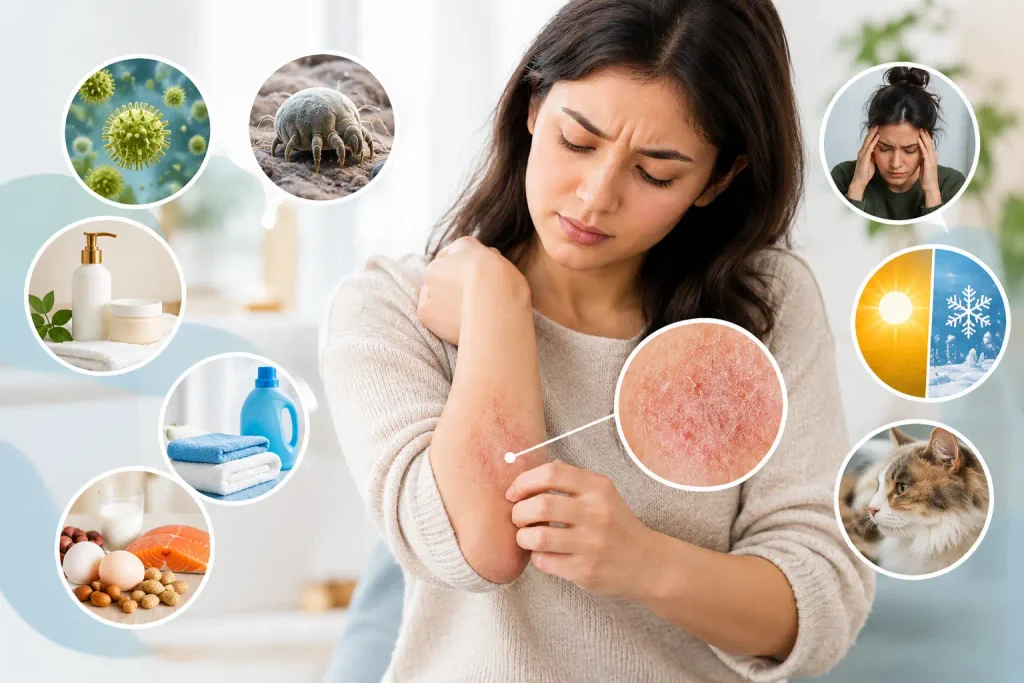
The most recognizable symptom of atopic dermatitis is itchy skin. The American Academy of Dermatology describes atopic dermatitis as an “itch that rashes” because itching can be an early and prominent feature of the condition.
Common symptoms include:
- Intense itching
- Dry or scaly skin
- Cracked skin
- Inflamed or swollen skin
- Small rough or raised bumps
- Scratch marks
- Raw or sensitive skin
- Thickened skin after repeated symptoms or scratching
- Oozing or crusting
- Changes in skin color after the condition heals
Symptoms can vary significantly from person to person. Some people may have only a few affected areas, while others may have inflammation over larger areas of the body.
What Does an Eczema Rash Look Like?
An eczema rash does not look identical on every skin tone.
On lighter skin, it may appear red or pink. On darker skin, eczema may appear as brown, purple, gray, or darker areas of skin. Small rough bumps may also be more noticeable, and inflammation does not always appear bright red.
Because It can resemble other skin conditions, the appearance of a rash alone should not always be used to make a diagnosis.
Where Does Eczema Appear on the Body?
Atopic dermatitis can occur on different parts of the body, and the areas affected can vary with age.
In babies and young children, eczema commonly appears on areas such as the:
- Cheeks
- Forehead
- Scalp
- Arms
- Legs
- Trunk
In older children and adults, it commonly affects areas where the skin bends, including:
- Inside the elbows
- Behind the knees
- Front of the neck
It can also occur on other parts of the body. Eczema does not always appear in exactly the same location for every person.
What Causes Eczema to Start?
There is no single explanation for why every person develops atopic dermatitis. The American Academy of Dermatology explains that genes, the immune system, and substances that come into contact with the skin can all play a role.
Skin Barrier
The outer layer of the skin acts as a protective barrier. It helps keep moisture in the skin and helps protect against substances from the environment.
When this barrier is weakened, more moisture can escape, contributing to dry skin. Irritating substances can also enter the skin more easily and contribute to inflammation.
Genetics
Genetic factors can increase the likelihood of developing atopic dermatitis. A family history of atopic dermatitis or allergic conditions such as asthma or hay fever is associated with a higher risk.
Having a family history does not mean that someone will definitely develop eczema. It is one factor among several involved in the condition.
Immune-System Activity
The immune system is also involved in atopic dermatitis. A weakened skin barrier can be associated with an immune response that contributes to inflamed skin and other eczema symptoms.
What Triggers Eczema Flare-Ups?
A trigger is something that can cause eczema symptoms to become worse. Triggers are not exactly the same for everyone.
Common triggers identified by dermatology and medical sources include:
- Fragrances and perfumes
- Harsh detergents and cleaning products
- Wool or rough fabrics
- Heat and sweating
- Cold or dry weather
- Stress
- Dust mites
- Pet dander
- Pollen
- Certain irritating chemicals
- Skin infections
The American Academy of Dermatology notes that different people can have different triggers, and some people may not be able to identify a specific trigger at all.
This distinction between cause and trigger is important. A trigger may worsen eczema symptoms, but avoiding one particular trigger does not necessarily remove the underlying condition.
Can Stress Make Eczema Worse?
Stress is listed among the potential triggers of atopic dermatitis. This means that periods of stress may be associated with flare-ups for some people.
However, stress should not be treated as the sole explanation for eczema. Atopic dermatitis involves multiple factors, including the skin barrier, genetics, immune activity, and environmental influences.
Do Certain Foods Trigger Eczema?
Food and eczema can be a complicated subject, particularly in children.
The Mayo Clinic notes that infants and children may have flares associated with certain foods, including eggs and cow’s milk, and recommends discussing possible food allergies with a child’s healthcare provider.
At the same time, atopic dermatitis is not simply caused by one particular food. Food allergies and eczema can occur together, but that does not mean that every person with eczema needs to avoid specific foods.
If you suspect that a food is related to symptoms, discuss the concern with a healthcare professional rather than making major dietary changes without guidance.
Is Eczema an Autoimmune Disease?
Atopic dermatitis involves immune-system activity and inflammation, but the condition is not simply described as a classic autoimmune disease.
The condition involves several interacting factors, including the skin barrier, immune system, genes, and environmental influences.
Is Eczema Contagious?
No. Eczema is not contagious.
Atopic dermatitis cannot be passed from one person to another through touching, being near someone, or normal physical contact.
How Is Eczema Diagnosed?
Atopic dermatitis is usually diagnosed by examining the skin and discussing symptoms and medical history.
A healthcare provider may ask:
- When did the symptoms begin?
- What symptoms are present?
- Where does the rash appear?
- What makes the symptoms better or worse?
- Does anyone in the family have atopic dermatitis, asthma, or hay fever?
- Have you noticed possible triggers?
A skin examination and medical history may be enough to make a diagnosis. In some cases, additional testing may be used to investigate allergies, rule out other skin diseases, or clarify the diagnosis. A skin biopsy may sometimes be required.
How Is Eczema Treated?
There is currently no cure that permanently eliminates atopic dermatitis for everyone. However, appropriate treatment can control symptoms, reduce flare-ups, and improve the condition of the skin.
Treatment depends on the severity of eczema, the areas affected, symptoms, age, and how the condition responds to treatment.
Moisturizers and Skin Care
Regular moisturizing is an important part of eczema care.
The American Academy of Dermatology recommends keeping atopic dermatitis-prone skin moisturized with a mild, fragrance-free cream or ointment. Moisturizing can help reduce dryness and support the skin barrier.
Mayo Clinic also recommends regular moisturizing as part of self-care.
What Is the 3-Minute Rule for Eczema?
The commonly used “3-minute rule” refers to applying moisturizer while the skin is still damp, ideally within about three minutes after bathing.
The purpose is to help keep moisture in the skin after bathing. Mayo Clinic recommends applying moisturizer while the skin is still damp and within three minutes.
The important point is regular moisturizing rather than treating the three-minute mark as a complicated or rigid medical test.
Prescription and Medicated Treatments
When skin care and trigger management are not enough, a healthcare provider may recommend medicated treatments.
Depending on the situation, treatment may include:
- Topical corticosteroids
- Topical calcineurin inhibitors
- Other prescription topical medicines
- Light therapy
- Medicines that work throughout the body for some people with moderate-to-severe eczema
Treatment should be selected according to the person’s condition and used according to healthcare-professional instructions.
Some topical corticosteroids can cause side effects when overused, including skin thinning, which is why they should be used as directed.
Light Therapy
Phototherapy may be considered for some people whose eczema does not improve adequately with topical treatment or who experience repeated flares.
Medical phototherapy uses controlled light under professional guidance. The American Academy of Dermatology specifically advises against trying tanning beds, sunlamps, or deliberate sun exposure as a substitute for medical phototherapy.
How Can You Reduce Eczema Flare-Ups?
Managing eczema involves caring for the skin regularly and identifying factors that make symptoms worse.
Helpful measures supported by dermatology guidance include:
- Moisturizing regularly
- Choosing fragrance-free skin-care products
- Using gentle skin care
- Avoiding known personal triggers
- Avoiding rough fabrics that irritate the skin
- Managing exposure to heat and sweat
- Keeping fingernails trimmed to reduce skin damage from scratching
- Following prescribed treatments as directed
The AAD notes that identifying and avoiding personal triggers can help reduce flare-ups, although not everyone can identify a specific trigger.
Can Eczema Become Infected?
People with atopic dermatitis can develop skin infections, particularly when scratching damages the skin.
Signs that may suggest infection include:
- Pus
- Yellow scabs
- New streaks around the affected area
- Increasing signs of infection
- A fever together with a rash that appears infected
Mayo Clinic recommends contacting a healthcare provider when there are signs of a skin infection and seeking immediate medical attention when fever occurs with an infected-looking rash.
How Long Does Eczema Last?
Atopic dermatitis is a chronic condition, so symptoms may return after periods of improvement.
The course varies between individuals. It commonly begins in childhood, and some children improve as they get older. For others, eczema continues into the teenage or adult years. Some people experience periods when symptoms clear and later return.
Because symptoms can come and go, long-term management may be necessary for some people.
Is There a Cure for Eczema?
At present, atopic dermatitis cannot be cured permanently. However, treatment can control the condition and help reduce symptoms and flare-ups.
This is why claims that a single cream, food, supplement, or home remedy can permanently cure eczema should be treated cautiously unless they are supported by reliable medical evidence.
Eczema in Babies and Children
Atopic dermatitis commonly begins during childhood. Babies may develop eczema on the face, while older children may have symptoms on areas such as the arms, legs, or skin folds.
Children can also experience itching that interferes with sleep and daily activities. If symptoms are persistent, severe, or difficult to control, a healthcare provider can help determine whether the symptoms are eczema and recommend an appropriate treatment plan.
If food is suspected as a trigger, parents should discuss possible food allergies with a healthcare professional before making significant dietary changes.
When Should You See a Doctor?
A healthcare professional can help if you or your child:
- Has symptoms that may be eczema
- Has itching that interferes with sleep or daily activities
- Continues to have symptoms despite self-care
- Develops signs of a skin infection
- Has a rash that is difficult to identify
- Needs help finding an appropriate treatment
Medical advice is especially important if the rash has pus, yellow crusts, new streaks, or other signs of infection. A fever together with an infected-looking rash requires prompt medical attention.
Living With Eczema
Living with atopic dermatitis can involve periods of improvement and flare-ups. Because the condition can change over time, treatment may need to be adjusted according to symptoms and response.
A consistent skin-care routine, regular moisturizing, awareness of personal triggers, and appropriate medical treatment can all be part of eczema management.
If symptoms are persistent or interfering with everyday life, professional evaluation can help determine whether the condition is atopic dermatitis and whether additional treatment is appropriate.
Frequently Asked Questions About Eczema
What is eczema caused by?
Atopic dermatitis is associated with several factors, including genes, the immune system, and the skin’s interaction with substances in the environment. A weakened skin barrier can contribute to dryness and inflammation.
What is the best treatment for eczema?
There is no single treatment that is best for every person. Treatment may include regular moisturizing, trigger management, medicated topical treatments, light therapy, or medicines that work throughout the body, depending on the severity and individual circumstances.
What is the 3-minute rule for eczema?
It refers to applying moisturizer to damp skin within about three minutes after bathing. The goal is to help retain moisture in the skin.
Is eczema 100% curable?
Atopic dermatitis currently cannot be permanently cured, but treatment can control symptoms and reduce flare-ups.
What does an eczema rash look like?
An eczema rash can include dry, itchy, scaly, swollen, cracked, thickened, or discolored skin. It can also ooze or develop crusts. Its appearance can vary depending on skin tone.
Is eczema contagious?
No. Atopic dermatitis is not contagious and cannot spread from person to person.
Can eczema go away?
Symptoms can improve or clear for periods and later return. Some children improve as they get older, while others continue to experience atopic dermatitis into adolescence or adulthood.
Final Thoughts
Eczema (atopic dermatitis) is a chronic skin condition characterized by itching, dryness, and inflammation. It commonly begins during childhood but can occur at any age. Its development involves several factors, including genes, immune-system activity, and the skin barrier.
Although there is currently no permanent cure, eczema can be managed. Regular moisturizing, gentle skin care, identifying personal triggers, and appropriate medical treatment can help control symptoms and reduce flare-ups.
Because other skin conditions can resemble eczema, persistent or uncertain rashes should be evaluated by a healthcare professional. Prompt medical attention is especially important when signs of infection or fever are present.