Eczema: Symptoms, Causes & Treatment
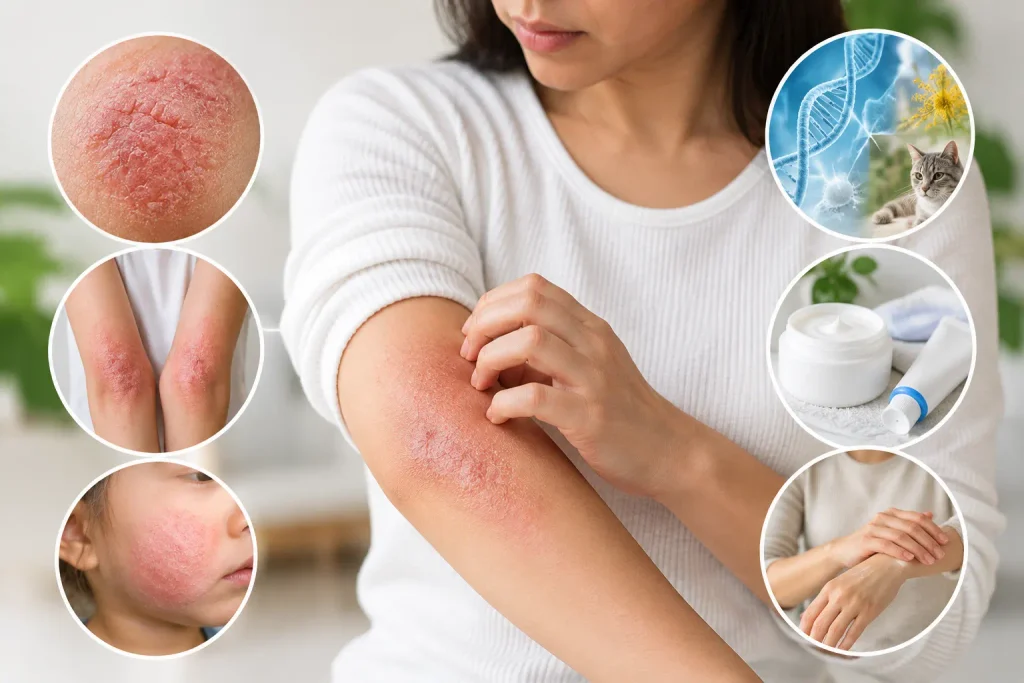
Eczema, also called atopic dermatitis, is a common skin condition that causes dry, itchy, and inflamed skin. It usually begins during childhood, although it can develop at any age. Eczema is a long-lasting condition that can flare up and then improve for periods of time. It is not contagious and cannot spread from one person to another. It can look different from one person to another. Depending on skin tone, Its rash may appear red, brown, purple, gray, or darker than the surrounding skin. The skin may also become dry, scaly, swollen, cracked, thickened, or develop areas that ooze and crust. This guide explains what eczema is, what causes atopic dermatitis, common symptoms and triggers, how it is diagnosed, available treatment options, and when medical advice may be needed. What Is Eczema (Atopic Dermatitis)? Eczema is a general term used for a group of conditions that can cause itchy, dry, and irritated skin. Atopic dermatitis is one type of eczema and is the most common type. When people use the word “eczema,” they are often referring to atopic dermatitis. Atopic dermatitis involves the skin barrier, immune system, genes, and environmental factors. The skin barrier normally helps retain moisture and protects the skin from substances in the environment. In people with atopic dermatitis, the skin barrier may not work as effectively, which can contribute to dryness, irritation, and inflammation. Atopic dermatitis is not contagious. You cannot catch it from another person through normal physical contact. Is Atopic Dermatitis the Same as Eczema? The terms are closely related, but they do not mean exactly the same thing. Its refers to a group of skin conditions. Atopic dermatitis is one specific type of eczema. Other types of eczema include conditions such as contact dermatitis and stasis dermatitis. These conditions can have different causes and may require different approaches to treatment. Understanding this distinction is useful when researching symptoms or treatment because information about one type of eczema may not apply to every form of dermatitis. What Are the Symptoms of Eczema? The most recognizable symptom of atopic dermatitis is itchy skin. The American Academy of Dermatology describes atopic dermatitis as an “itch that rashes” because itching can be an early and prominent feature of the condition. Common symptoms include: Symptoms can vary significantly from person to person. Some people may have only a few affected areas, while others may have inflammation over larger areas of the body. What Does an Eczema Rash Look Like? An eczema rash does not look identical on every skin tone. On lighter skin, it may appear red or pink. On darker skin, eczema may appear as brown, purple, gray, or darker areas of skin. Small rough bumps may also be more noticeable, and inflammation does not always appear bright red. Because It can resemble other skin conditions, the appearance of a rash alone should not always be used to make a diagnosis. Where Does Eczema Appear on the Body? Atopic dermatitis can occur on different parts of the body, and the areas affected can vary with age. In babies and young children, eczema commonly appears on areas such as the: In older children and adults, it commonly affects areas where the skin bends, including: It can also occur on other parts of the body. Eczema does not always appear in exactly the same location for every person. What Causes Eczema to Start? There is no single explanation for why every person develops atopic dermatitis. The American Academy of Dermatology explains that genes, the immune system, and substances that come into contact with the skin can all play a role. Skin Barrier The outer layer of the skin acts as a protective barrier. It helps keep moisture in the skin and helps protect against substances from the environment. When this barrier is weakened, more moisture can escape, contributing to dry skin. Irritating substances can also enter the skin more easily and contribute to inflammation. Genetics Genetic factors can increase the likelihood of developing atopic dermatitis. A family history of atopic dermatitis or allergic conditions such as asthma or hay fever is associated with a higher risk. Having a family history does not mean that someone will definitely develop eczema. It is one factor among several involved in the condition. Immune-System Activity The immune system is also involved in atopic dermatitis. A weakened skin barrier can be associated with an immune response that contributes to inflamed skin and other eczema symptoms. What Triggers Eczema Flare-Ups? A trigger is something that can cause eczema symptoms to become worse. Triggers are not exactly the same for everyone. Common triggers identified by dermatology and medical sources include: The American Academy of Dermatology notes that different people can have different triggers, and some people may not be able to identify a specific trigger at all. This distinction between cause and trigger is important. A trigger may worsen eczema symptoms, but avoiding one particular trigger does not necessarily remove the underlying condition. Can Stress Make Eczema Worse? Stress is listed among the potential triggers of atopic dermatitis. This means that periods of stress may be associated with flare-ups for some people. However, stress should not be treated as the sole explanation for eczema. Atopic dermatitis involves multiple factors, including the skin barrier, genetics, immune activity, and environmental influences. Do Certain Foods Trigger Eczema? Food and eczema can be a complicated subject, particularly in children. The Mayo Clinic notes that infants and children may have flares associated with certain foods, including eggs and cow’s milk, and recommends discussing possible food allergies with a child’s healthcare provider. At the same time, atopic dermatitis is not simply caused by one particular food. Food allergies and eczema can occur together, but that does not mean that every person with eczema needs to avoid specific foods. If you suspect that a food is related to symptoms, discuss the concern with a healthcare professional rather than making major dietary changes without guidance. Is Eczema an Autoimmune Disease? Atopic dermatitis involves