Toe problems can cause pain, swelling, redness, itching, and difficulty walking. They may affect the bones, joints, skin, nails, or nerves. Common conditions include bunions, hammertoes, ingrown toenails, corns, fungal infections, and gout.
Some toe problems develop because of repeated pressure or unsuitable footwear. Others result from injuries, infections, or joint conditions. Learning about their symptoms and treatment can help you understand when medical care is needed.

What Are Common Toe Problems?
Common toe problems are conditions that affect the shape, movement, skin, nails, or joints of the toes.
Each foot has 26 bones, including 14 toe bones. These bones help support body weight and allow the feet to move during walking.
Some conditions change toe alignment, while others cause pain, skin irritation, nail changes, or numbness.
15 Common Toe Problems
1. Bunions
A bunion is a bony bump near the base of the big toe. It develops when the big toe moves toward the smaller toes, changing the joint’s position.
Symptoms include a visible bump, pain, redness, swelling, and discomfort in tight shoes.
Wearing comfortable shoes with a wide toe box and using protective padding may reduce pressure. Severe cases may need medical treatment or surgery.
2. Bunionette (Tailor’s Bunion)
A bunionette is a bump near the base of the little toe. It develops on the outer side of the foot.
It may cause pain, redness, swelling, and irritation from tight shoes. Wider footwear and protective padding may help reduce discomfort.
3. Hammertoe, Mallet Toe, and Claw Toe
These conditions change the normal position of the toes.
- Hammertoe: The toe bends downward at its middle joint.
- Mallet toe: The end joint bends downward.
- Claw toe: The toe bends upward at its base and downward at the middle and end joints.
Symptoms may include pain, stiffness, corns, calluses, and difficulty wearing shoes. Muscle imbalance, nerve problems, arthritis, and unsuitable footwear may contribute.
Treatment may include wider shoes, protective pads, and recommended exercises. Severe or rigid deformities may need further medical care.
4. Ingrown Toenails
An ingrown toenail develops when the nail edge grows into the surrounding skin. It commonly affects the big toe.
Symptoms include pain, redness, swelling, and tenderness. Pus may appear if an infection develops.
Cutting nails too short, rounding their corners, and wearing tight shoes can contribute. Trim toenails straight across. Severe pain or signs of infection need medical attention.
5. Corns and Calluses
Corns and calluses are areas of thickened skin caused by repeated pressure or friction.
Corns are usually small and may have a hard center. Calluses are generally larger areas of thickened skin.
They can cause rough skin, tenderness, and pain. Comfortable shoes may help reduce friction. People with diabetes or poor circulation should not cut them at home.
6. Toenail Fungus
Toenail fungus is an infection that changes the appearance of the nail.
Signs include yellow, white, or brown discoloration, thickening, brittleness, and changes in nail shape.
Not every discolored nail has a fungal infection. A healthcare professional may examine the nail and recommend testing before treatment. Antifungal medicines may be used when appropriate.
7. Athlete’s Foot
Athlete’s foot is a fungal infection that often affects the skin between the toes.
It can cause itching, redness, peeling, cracked skin, and burning. Fungi grow well in warm, moist places.
Keep your feet clean and dry, change socks regularly, and use suitable antifungal treatment as recommended.
8. Plantar Warts
Plantar warts are skin growths caused by human papillomavirus (HPV). They usually appear on the sole and may develop under the toes.
They can cause rough skin and pain when walking or applying pressure. Some disappear without treatment, while others need medicines or procedures recommended by a healthcare professional.
9. Toe Fractures, Sprains, and Dislocations
Stubbing a toe, twisting the foot, or dropping a heavy object on it can cause an injury.
A fracture is a broken bone. A sprain affects a ligament, while a dislocation occurs when bones move out of their normal joint position.
Symptoms include pain, swelling, bruising, and difficulty walking. A visibly deformed toe, severe pain, or an open wound needs prompt medical assessment.
10. Turf Toe
Turf toe is a sprain of the big toe joint. It often happens when the toe bends too far backward during sports.
Symptoms include pain, swelling, bruising, and difficulty pushing off the foot. Treatment depends on severity and may include rest, ice, supportive footwear, and medical care.
11. Gout in the Big Toe
Gout is a form of inflammatory arthritis caused by uric acid crystal buildup in a joint. It commonly affects the big toe.
A gout attack can cause sudden severe pain, redness, warmth, swelling, and tenderness.
Treatment may include medicines to reduce pain and inflammation. A high uric acid level alone does not confirm gout, so medical assessment is important.
12. Morton’s Neuroma
Morton’s neuroma involves thickened tissue around a nerve, usually between the third and fourth toes.
It may cause burning pain, tingling, numbness, or a feeling of standing on a small stone. Wider shoes and reduced pressure may help. Persistent symptoms should be checked by a healthcare professional.
13. Toe Neuropathy and Poor Circulation
Nerve damage and poor circulation can affect the toes, especially in people with diabetes.
Peripheral neuropathy may cause numbness, tingling, and burning. Poor circulation may cause cold toes, skin color changes, and slow-healing wounds.
Check your feet regularly if you have diabetes or reduced sensation. Seek prompt care for new wounds or skin breakdown.
What Causes Toe Problems?
Common causes include:
- Tight footwear: Narrow shoes increase pressure and friction.
- Repeated pressure: Long periods of standing, walking, or sports can stress the toes.
- Injuries: Stubbing or twisting a toe can cause fractures and sprains.
- Muscle imbalance: Changes in muscle and tendon function can cause toe deformities.
- Infections: Fungi affect the skin and nails, while viruses can cause plantar warts.
- Joint conditions: Gout can cause pain and inflammation.
- Nerve and circulation problems: These can cause numbness, burning, and wounds that heal slowly.
Common Symptoms of Toe Problems
Symptoms depend on the condition. Common signs include:
- Toe pain or tenderness.
- Redness and swelling.
- Stiffness or difficulty bending the toes.
- Changes in toe shape.
- Thickened or discolored nails.
- Itching or peeling skin.
- Corns and calluses.
- Burning, tingling, or numbness.
- Difficulty walking or wearing shoes.
Similar symptoms can have different causes. A medical examination can help identify the problem.
How Are Toe Problems Diagnosed?
A healthcare professional may ask about your symptoms, medical history, footwear, and recent injuries.
The examination may include checking toe alignment, swelling, tenderness, skin, nails, movement, sensation, and circulation.
X-rays may help identify fractures. Other tests may be recommended if a fungal infection, gout, nerve problem, or circulation condition is suspected.
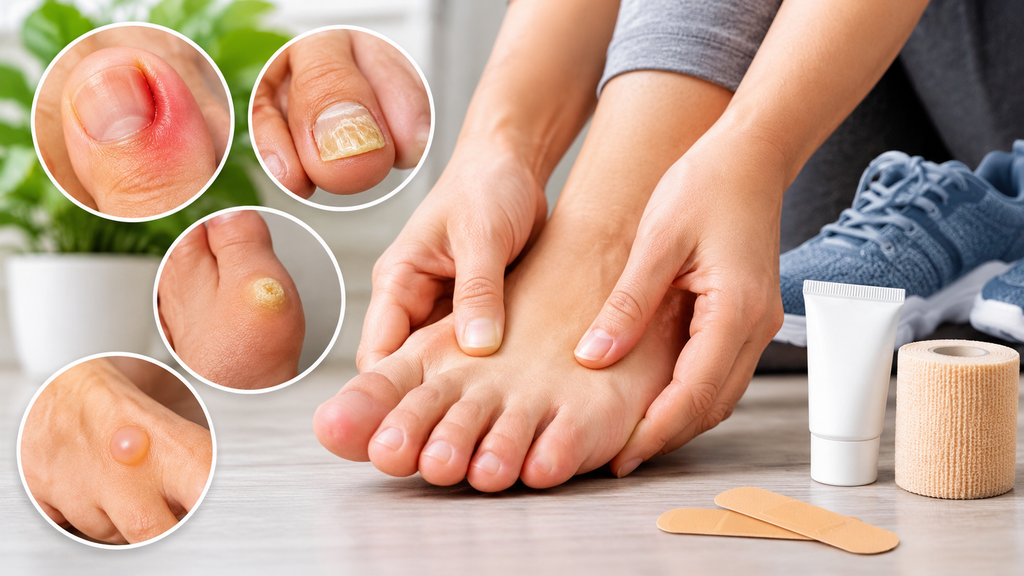
How Are Common Toe Problems Treated?
Treatment depends on the cause and severity of the condition.
1. Wear comfortable shoes: Choose shoes with enough room for your toes. Avoid footwear that causes pressure or rubbing.
2. Rest your foot: Reduce activities that cause pain, especially after an injury.
3. Apply a wrapped ice pack: Ice wrapped in a towel may help reduce pain and swelling after some injuries. Never apply ice directly to your skin.
4. Use protective padding: Toe pads may reduce friction around bunions, corns, and other painful areas.
5. Keep feet clean and dry: Wash your feet, dry between the toes, and change socks regularly.
6. Trim toenails carefully: Cut nails straight across. Avoid cutting them too short or rounding the corners.
7. Follow medical advice: Medicines may be needed for pain, inflammation, or infections. Severe ingrown toenails and rigid deformities may require medical procedures or surgery.
How Can You Prevent Toe Problems?
Good foot care can reduce the risk of some toe conditions.
- Wear comfortable shoes with a wide toe box.
- Avoid shoes that squeeze your toes.
- Keep your feet clean and dry.
- Change socks regularly.
- Trim toenails straight across.
- Wear suitable footwear during sports.
- Avoid walking barefoot in shared wet areas.
- Check your feet for cuts, swelling, and skin changes.
- Get regular foot checks if you have diabetes or circulation problems.
When Should You See a Doctor?
Seek medical care if you experience:
- Severe or persistent toe pain.
- Difficulty walking or putting weight on your foot.
- A visibly deformed toe after an injury.
- Significant swelling or bruising.
- Pus or spreading redness.
- Fever with signs of infection.
- Cold, pale, or bluish toes.
- New numbness or loss of sensation.
- A wound that does not heal.
People with diabetes or poor circulation should seek prompt care for any new foot wound, even if it does not hurt.
Frequently Asked Questions
1. What Are the Most Common Toe Problems?
Common conditions include bunions, hammertoes, ingrown toenails, corns, calluses, fungal infections, toe injuries, and gout.
2. What Causes Toe Pain?
Toe pain may result from injuries, tight footwear, joint inflammation, infections, deformities, nerve problems, or repeated pressure.
3. How Can I Relieve Toe Pain at Home?
For mild problems, rest, comfortable footwear, and avoiding pressure may help. A wrapped ice pack may help with some injuries. Severe or persistent pain needs medical attention.
4. What Causes Big Toe Pain?
Big toe pain may be caused by a bunion, gout, an ingrown toenail, a fracture, or turf toe.
5. What Causes Pinky Toe Pain?
Pinky toe pain may result from a bunionette, corns, calluses, tight footwear, or an injury.
6. Can Diabetes Cause Toe Problems?
Diabetes can contribute to nerve damage and circulation problems. These may cause numbness, reduced sensation, and wounds that heal slowly.
Conclusion
Common toe problems include deformities, nail and skin conditions, injuries, gout, and nerve-related conditions. They can cause pain, swelling, itching, numbness, and difficulty walking.
Wear comfortable shoes, keep your feet clean and dry, and check your toes regularly. Seek medical advice for persistent pain, severe swelling, signs of infection, or changes in circulation. Early assessment can help identify the cause and guide suitable treatment.