Common Foot Diseases: 14 Types, Symptoms & Treatment

Common foot diseases affect the skin, toenails, bones, joints, muscles, and nerves. They can cause itching, pain, swelling, numbness, or difficulty walking. Common examples include athlete’s foot, fungal nail infections, bunions, plantar fasciitis, and diabetic foot ulcers. Understanding the causes and symptoms of foot problems can help you recognize changes early and seek appropriate treatment. What Are the Most Common Foot Diseases? Foot conditions affect different parts of the feet. Some develop because of infections, while others are linked to pressure, foot structure, injuries, diabetes, or joint inflammation. Here are 14 common foot diseases and conditions: Common Foot Skin and Nail Conditions 1. Athlete’s Foot (Tinea Pedis) Athlete’s foot is a fungal skin infection that commonly develops between the toes. It can also affect the soles and sides of the feet. Common symptoms include itching, redness, peeling skin, cracks, and sometimes blisters. The infection develops in warm, moist environments. Walking barefoot in communal showers or sharing contaminated footwear can increase the risk. Treatment: Antifungal creams, sprays, or powders are commonly used. Some infections may require oral medication. Keeping feet clean and dry can help prevent recurrence. 2. Fungal Nail Infection (Onychomycosis) A fungal nail infection occurs when fungi infect a toenail or the tissue underneath it. It can affect one or several nails. Symptoms include yellow, white, or brown discoloration, thickened nails, brittleness, and changes in nail shape. Treatment: Options include topical or prescription oral antifungal medicines. A healthcare professional may test a nail sample to confirm the infection before treatment. Medical nail removal is considered only in selected cases. 3. Ingrown Toenails An ingrown toenail develops when the edge of a nail grows into the surrounding skin. It commonly affects the big toe. Symptoms include pain, redness, swelling, and tenderness. Pus may develop if an infection occurs. Cutting nails too short, rounding their corners, and wearing tight shoes can contribute to the problem. Treatment: Mild cases may improve with warm water soaks and properly fitted footwear. Avoid cutting deeply into the affected nail. Persistent or infected cases may need medical treatment. 4. Plantar Warts Plantar warts are skin growths caused by certain types of human papillomavirus (HPV). They usually appear on the soles or toes. They may look like small, rough growths with tiny dark spots. Pressure from walking can make them painful. Treatment: Some plantar warts disappear without treatment. Others may require salicylic acid products, freezing, or procedures performed by a healthcare professional. 5. Corns, Calluses, and Blisters These common foot problems often develop because of repeated friction or pressure. Treatment: Comfortable shoes, protective pads, and reducing pressure can help. Avoid cutting corns or calluses with sharp objects, particularly if you have diabetes or poor circulation. Structural and Painful Foot Conditions 6. Bunions (Hallux Valgus) A bunion is a bony prominence at the base of the big toe. It develops when the big toe gradually moves toward the smaller toes, changing the alignment of the joint. Symptoms include a visible bump, pain, redness, swelling, and difficulty wearing narrow shoes. Foot structure, inherited factors, and footwear may contribute to bunion development. Treatment: Wide, comfortable shoes, protective padding, and orthotic supports may reduce discomfort. Surgery may be considered when other treatments do not relieve severe pain. 7. Hammertoe and Claw Toe Hammertoe and claw toe are deformities that cause abnormal bending of the toe joints. They can lead to pain, stiffness, swelling, and corns or calluses. Muscle and tendon imbalances, joint problems, and unsuitable footwear may contribute to these conditions. Treatment: Roomy footwear, protective pads, toe supports, and stretching exercises may help. Severe or painful deformities sometimes require surgery. 8. Flat Feet (Pes Planus) Flat feet occur when the arches along the inside of the feet are low or absent. As a result, most or nearly all of the sole may touch the ground when standing. Some people have no symptoms. Others experience arch or heel pain, tired feet, ankle swelling, or discomfort during physical activity. Treatment: Painless flat feet generally do not need treatment. When symptoms occur, supportive shoes, arch supports, orthotics, or physical therapy may help. 9. Plantar Fasciitis Plantar fasciitis is a common cause of heel pain. It involves irritation and strain of the plantar fascia, a thick band of tissue running along the bottom of the foot. Pain is often noticeable during the first steps in the morning or after sitting for a long time. It may also worsen after prolonged standing or physical activity. Treatment: Rest, gentle stretching, supportive footwear, ice application, and physical therapy may help manage symptoms. 10. Metatarsalgia and Morton’s Neuroma Metatarsalgia refers to pain around the ball of the foot, near the metatarsal bones. Morton’s neuroma involves thickening of tissue around a nerve, usually between the third and fourth toes. Symptoms may include burning pain, tingling, numbness, and a feeling that something is inside the shoe. Treatment: Wider shoes, cushioned insoles, metatarsal pads, and reducing activities that increase pressure may help. Persistent symptoms need medical assessment. Nerve and Joint Conditions 11. Diabetic Neuropathy and Foot Ulcers Diabetic neuropathy is nerve damage that can develop in people with diabetes. It commonly affects the feet and legs. Symptoms include numbness, tingling, burning sensations, and reduced ability to feel injuries. Diabetic foot ulcers are open wounds that may develop because of repeated pressure, injuries, or reduced sensation. Poor circulation can make healing more difficult. Care: Managing blood glucose, checking the feet daily, wearing suitable footwear, and receiving proper wound care are important. Any new foot wound in someone with diabetes needs prompt medical attention. 12. Gout Gout is an inflammatory form of arthritis caused by uric acid crystal deposits in the joints. It commonly affects the joint at the base of the big toe. A gout attack can cause sudden severe pain, redness, warmth, swelling, and difficulty walking. Treatment: Doctors may prescribe medicines to manage inflammation and pain. Long-term management may include uric acid-lowering medication and appropriate lifestyle changes. A suddenly painful, hot, swollen joint should be assessed because other conditions, including infection,
Foot Skin and Nail Problems: Causes, Symptoms, and Treatment
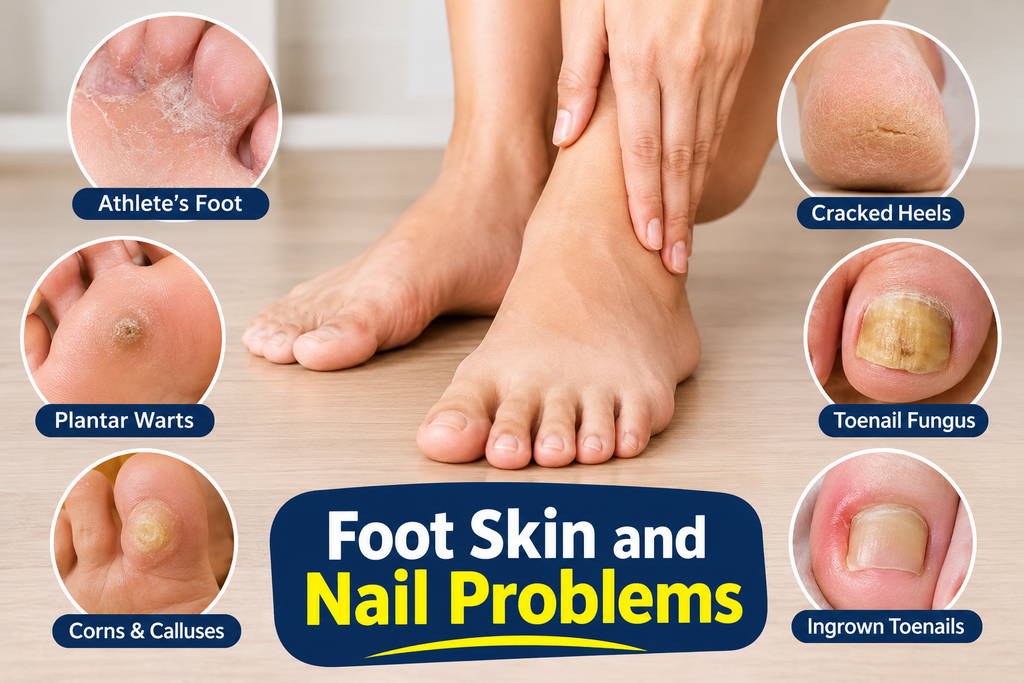
Foot skin and nail problems are common and can affect people of all ages. They may cause itching, dryness, peeling, pain, swelling, or changes in toenail colour and shape. Common conditions include athlete’s foot, plantar warts, cracked heels, corns, calluses, and toenail fungus. Some problems improve with basic foot care, while others need medical treatment. Knowing the symptoms can help you choose the right care and prevent further problems. What Are Foot Skin and Nail Problems? Foot skin and nail problems are conditions that affect the skin, toenails, or the area around the nails. They may develop because of fungal infections, viruses, repeated pressure, injuries, or skin conditions. Some problems are mild, but others can make walking painful. The correct treatment depends on the cause. Common Foot Skin Problems 1. Athlete’s Foot Athlete’s foot is a contagious fungal infection. It often affects the skin between the toes but can also appear on the soles and sides of the feet. Common symptoms include: Treatment: Antifungal creams can help treat athlete’s foot. Keep your feet clean and dry, especially between the toes. Change damp socks and avoid sharing towels or footwear. Persistent infections may need prescription treatment. 2. Plantar Warts Plantar warts are small, rough growths that develop on the soles of the feet. They are caused by certain types of human papillomavirus (HPV). Walking or standing may cause pain when pressure is placed on them. Treatment: Options include salicylic acid, freezing treatment (cryotherapy), and professional removal. A healthcare professional can help identify the right option. 3. Corns and Calluses Corns and calluses develop when the skin experiences repeated friction or pressure. Corns are usually smaller and may have a hard centre, while calluses are broader areas of thickened skin. They commonly appear on the toes, soles, and other pressure points. Treatment: Wear comfortable shoes that reduce pressure. Moisturizers and suitable skin-softening products may help. A healthcare professional can assess thick or painful areas and remove hardened skin safely. 4. Cracked Heels Cracked heels often develop when the skin becomes dry and thick. Pressure on the heel can make the cracks deeper and more painful. Symptoms may include: Treatment: Apply a suitable moisturizer regularly. Urea-based creams may help soften thick, dry skin. Deep, painful, or bleeding cracks should be checked by a healthcare professional. 5. Foot Eczema and Dermatitis Eczema and dermatitis can cause dry, itchy, red, or irritated skin. Contact dermatitis may develop after the skin touches an irritating substance or an allergen. Dyshidrotic eczema may cause small, itchy blisters. Treatment: Avoid products or materials that trigger irritation. A healthcare professional can recommend suitable creams or other treatment based on the type of skin condition. 6. Foot Psoriasis Psoriasis is a skin condition that can affect the feet. It may cause thick, dry, scaly patches. Sometimes it can look similar to a fungal infection. A proper examination can help identify the condition and guide treatment. Common Toenail Problems 1. Toenail Fungus Toenail fungus, also called onychomycosis, is a fungal infection that affects the nails. It can make toenails thick, brittle, crumbly, or discoloured. Common signs include: Treatment: Antifungal medicines may be used to treat nail fungus. Treatment can involve topical or oral medication. Because nail injuries and other conditions can look similar, a nail sample or laboratory test may be needed to confirm the infection before treatment. 2. Ingrown Toenails An ingrown toenail occurs when the edge of a nail grows into the surrounding skin. It commonly affects the big toe. Possible causes include tight footwear and cutting the nails incorrectly. Symptoms may include: Treatment: Mild cases may improve with proper nail care and warm-water soaking. Severe or repeated cases may need a healthcare professional to remove part of the nail or treat the nail root. Avoid digging into the skin or cutting out the embedded nail yourself. 3. Toenail Injuries Toenails can become damaged after stubbing a toe, dropping something on the foot, or wearing shoes that repeatedly press against the nails. An injury may cause blood to collect under the nail, leading to a dark appearance. The nail may also become loose, thick, or uneven. If the nail is severely painful, badly damaged, or has unusual dark marks that do not grow out, seek medical advice. What Causes Foot Skin and Nail Problems? Several factors can contribute to foot and toenail conditions: How Are Foot and Nail Problems Diagnosed? A healthcare professional may examine the affected skin or nail and ask about your symptoms, footwear, and medical history. Some conditions are easy to recognise, while others look similar. For suspected toenail fungus, a nail clipping or other laboratory test may help confirm the diagnosis. Correct diagnosis is important because different conditions need different treatments. How to Treat Foot Skin and Nail Problems Treatment depends on the condition. Common options include: Avoid using the same treatment for every foot problem. If you are unsure about the cause, get the condition checked before starting treatment. When Should You See a Doctor? Seek medical advice if you notice: People with diabetes, poor circulation, or reduced sensation in their feet should get foot problems checked promptly. How to Prevent Foot Skin and Nail Problems Good foot care can reduce the risk of many common problems. These habits can help keep your feet clean and reduce irritation and infection risks. Frequently Asked Questions What are the most common foot skin problems? Common foot skin problems include athlete’s foot, plantar warts, corns, calluses, cracked heels, eczema, and psoriasis. What causes toenails to become thick and yellow? Toenail fungus can cause thickening and yellow discolouration. However, injuries and other nail conditions can cause similar changes. Testing may be needed to confirm the cause. Can athlete’s foot spread to other people? Yes. Athlete’s foot is contagious and can spread through contact with infected skin or contaminated items such as towels and footwear. How can I treat cracked heels at home? Regularly apply a suitable moisturizer. Urea-based creams may help soften thick, dry skin. Get medical advice
Common Toe Problems: Causes, Symptoms, and Treatment

Toe problems can cause pain, swelling, redness, itching, and difficulty walking. They may affect the bones, joints, skin, nails, or nerves. Common conditions include bunions, hammertoes, ingrown toenails, corns, fungal infections, and gout. Some toe problems develop because of repeated pressure or unsuitable footwear. Others result from injuries, infections, or joint conditions. Learning about their symptoms and treatment can help you understand when medical care is needed. What Are Common Toe Problems? Common toe problems are conditions that affect the shape, movement, skin, nails, or joints of the toes. Each foot has 26 bones, including 14 toe bones. These bones help support body weight and allow the feet to move during walking. Some conditions change toe alignment, while others cause pain, skin irritation, nail changes, or numbness. 15 Common Toe Problems 1. Bunions A bunion is a bony bump near the base of the big toe. It develops when the big toe moves toward the smaller toes, changing the joint’s position. Symptoms include a visible bump, pain, redness, swelling, and discomfort in tight shoes. Wearing comfortable shoes with a wide toe box and using protective padding may reduce pressure. Severe cases may need medical treatment or surgery. 2. Bunionette (Tailor’s Bunion) A bunionette is a bump near the base of the little toe. It develops on the outer side of the foot. It may cause pain, redness, swelling, and irritation from tight shoes. Wider footwear and protective padding may help reduce discomfort. 3. Hammertoe, Mallet Toe, and Claw Toe These conditions change the normal position of the toes. Symptoms may include pain, stiffness, corns, calluses, and difficulty wearing shoes. Muscle imbalance, nerve problems, arthritis, and unsuitable footwear may contribute. Treatment may include wider shoes, protective pads, and recommended exercises. Severe or rigid deformities may need further medical care. 4. Ingrown Toenails An ingrown toenail develops when the nail edge grows into the surrounding skin. It commonly affects the big toe. Symptoms include pain, redness, swelling, and tenderness. Pus may appear if an infection develops. Cutting nails too short, rounding their corners, and wearing tight shoes can contribute. Trim toenails straight across. Severe pain or signs of infection need medical attention. 5. Corns and Calluses Corns and calluses are areas of thickened skin caused by repeated pressure or friction. Corns are usually small and may have a hard center. Calluses are generally larger areas of thickened skin. They can cause rough skin, tenderness, and pain. Comfortable shoes may help reduce friction. People with diabetes or poor circulation should not cut them at home. 6. Toenail Fungus Toenail fungus is an infection that changes the appearance of the nail. Signs include yellow, white, or brown discoloration, thickening, brittleness, and changes in nail shape. Not every discolored nail has a fungal infection. A healthcare professional may examine the nail and recommend testing before treatment. Antifungal medicines may be used when appropriate. 7. Athlete’s Foot Athlete’s foot is a fungal infection that often affects the skin between the toes. It can cause itching, redness, peeling, cracked skin, and burning. Fungi grow well in warm, moist places. Keep your feet clean and dry, change socks regularly, and use suitable antifungal treatment as recommended. 8. Plantar Warts Plantar warts are skin growths caused by human papillomavirus (HPV). They usually appear on the sole and may develop under the toes. They can cause rough skin and pain when walking or applying pressure. Some disappear without treatment, while others need medicines or procedures recommended by a healthcare professional. 9. Toe Fractures, Sprains, and Dislocations Stubbing a toe, twisting the foot, or dropping a heavy object on it can cause an injury. A fracture is a broken bone. A sprain affects a ligament, while a dislocation occurs when bones move out of their normal joint position. Symptoms include pain, swelling, bruising, and difficulty walking. A visibly deformed toe, severe pain, or an open wound needs prompt medical assessment. 10. Turf Toe Turf toe is a sprain of the big toe joint. It often happens when the toe bends too far backward during sports. Symptoms include pain, swelling, bruising, and difficulty pushing off the foot. Treatment depends on severity and may include rest, ice, supportive footwear, and medical care. 11. Gout in the Big Toe Gout is a form of inflammatory arthritis caused by uric acid crystal buildup in a joint. It commonly affects the big toe. A gout attack can cause sudden severe pain, redness, warmth, swelling, and tenderness. Treatment may include medicines to reduce pain and inflammation. A high uric acid level alone does not confirm gout, so medical assessment is important. 12. Morton’s Neuroma Morton’s neuroma involves thickened tissue around a nerve, usually between the third and fourth toes. It may cause burning pain, tingling, numbness, or a feeling of standing on a small stone. Wider shoes and reduced pressure may help. Persistent symptoms should be checked by a healthcare professional. 13. Toe Neuropathy and Poor Circulation Nerve damage and poor circulation can affect the toes, especially in people with diabetes. Peripheral neuropathy may cause numbness, tingling, and burning. Poor circulation may cause cold toes, skin color changes, and slow-healing wounds. Check your feet regularly if you have diabetes or reduced sensation. Seek prompt care for new wounds or skin breakdown. What Causes Toe Problems? Common causes include: Common Symptoms of Toe Problems Symptoms depend on the condition. Common signs include: Similar symptoms can have different causes. A medical examination can help identify the problem. How Are Toe Problems Diagnosed? A healthcare professional may ask about your symptoms, medical history, footwear, and recent injuries. The examination may include checking toe alignment, swelling, tenderness, skin, nails, movement, sensation, and circulation. X-rays may help identify fractures. Other tests may be recommended if a fungal infection, gout, nerve problem, or circulation condition is suspected. How Are Common Toe Problems Treated? Treatment depends on the cause and severity of the condition. 1. Wear comfortable shoes: Choose shoes with enough room for your toes. Avoid footwear that causes pressure or rubbing.