Bed bug bites can cause small, itchy bumps on the skin. They often appear on exposed areas such as the face, neck, arms and legs. Some bites form clusters or straight lines, while others appear randomly. Most reactions are mild, but scratching can damage the skin and increase the risk of infection.
Bed bugs are not known to spread diseases to people. Some people also have no visible reaction to their bites. Learning to recognise the symptoms and signs of an infestation can help you take the right steps.
What Are Bed Bugs?
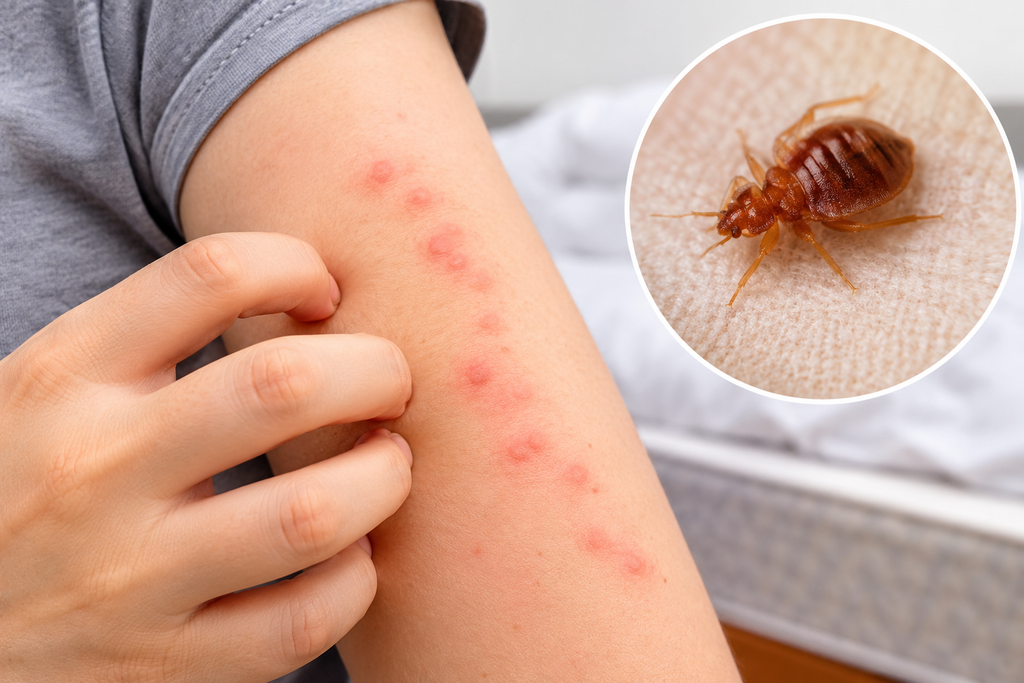
Bed bugs are small, flat insects that feed on human blood. Adult bed bugs are reddish-brown, oval-shaped and about 5 millimetres long. They usually hide near places where people sleep.
Common hiding places include:
- Mattress seams and folds
- Bed frames and headboards
- Cracks in walls and furniture
- Sofas and other upholstered furniture
Bed bugs can enter homes through luggage, clothing and used furniture. Their presence does not mean a home is dirty. They can live in different types of environments.
What Do Bed Bug Bites Look Like?
Bed bug bites often look like small, raised and itchy bumps. Their colour may vary depending on skin tone. Some appear red or pink, while others may look darker or purplish.
Common signs include:
- Small, raised bumps
- Itching and redness
- Mild swelling
- Several marks close together
- Bites arranged in lines or clusters
However, bed bug bites can look similar to mosquito bites, flea bites and other skin conditions. Their appearance alone cannot confirm an infestation.
Common Symptoms of Bed Bug Bites
Itching is the most common symptom. Some people also experience redness, swelling and skin irritation.
Bites usually appear on exposed areas, including the face, neck, arms, hands and legs. Not everyone develops visible marks. Some people have little or no skin reaction.
When Do Bed Bug Bites Appear?
Bite marks may not appear immediately. Some people notice them after waking up, while others develop symptoms several days later. In some cases, a skin reaction can take up to 14 days to become visible.
How to Identify Bed Bugs
Bite marks alone cannot prove that bed bugs are present. Inspect your mattress and nearby furniture for these signs:
- Small reddish-brown insects
- Dark spots on bedding or mattresses
- Rust-coloured blood stains
- Shed insect skins
- Tiny white eggs
Check mattress seams, bed frames, headboards and furniture near the bed. If you find signs of an infestation, consider contacting a professional pest control service.
Are Bed Bug Bites Dangerous?
Most bed bug bites cause mild skin reactions. However, scratching can break the skin and allow bacteria to enter.
Possible problems include:
- Persistent itching
- Skin irritation and swelling
- Open sores from scratching
- Secondary skin infection
- Sleep disturbance
Severe allergic reactions are uncommon but possible.
Bed Bug Bites Treatment and Home Remedies
Most bites can be treated at home. The main goals are to reduce itching, soothe the skin and prevent infection.
1. Wash the Affected Area
Gently wash the bites with soap and water. Keep the skin clean and avoid rubbing the affected area.
2. Apply a Cool Compress
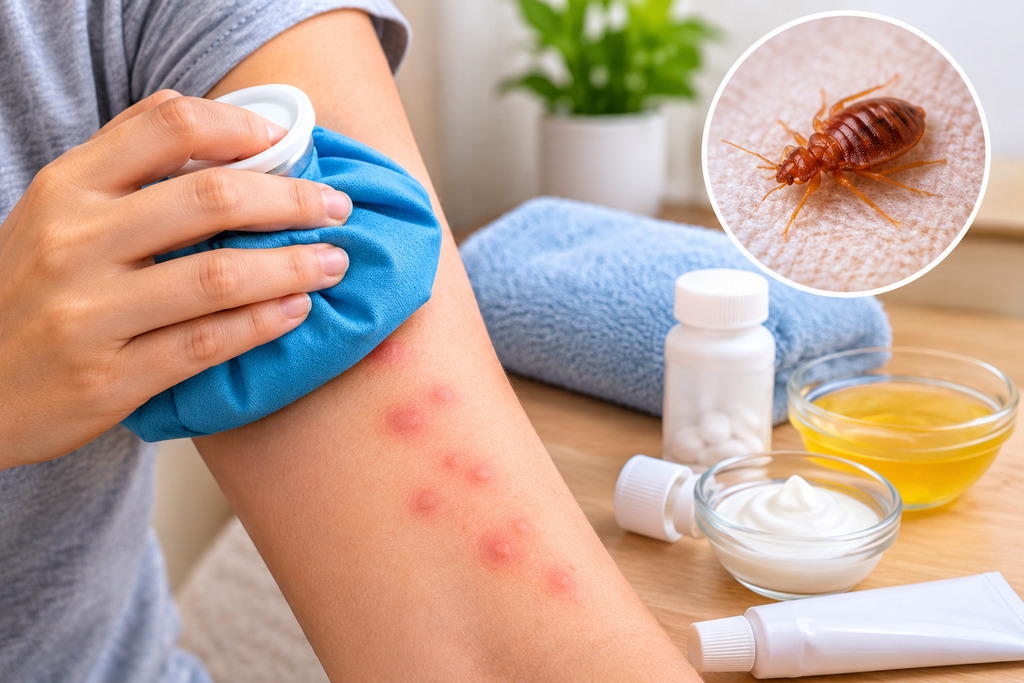
Place a cool, damp cloth over the bites to help soothe itching and swelling. Do not apply ice directly to the skin.
3. Avoid Scratching
Scratching can damage the skin and increase the risk of infection. Keep your nails short and try not to touch the bites.
4. Use Anti-Itch Products
A pharmacist may recommend suitable products to relieve itching. These may include hydrocortisone cream or antihistamines. Calamine lotion may also provide temporary relief.
Always follow product instructions and ask a pharmacist if you are unsure which treatment is suitable.
When Should You See a Doctor?
Seek medical advice if the bites become increasingly painful, swollen or itchy. Also watch for signs of infection, such as spreading redness, warmth, pus or fever.
Get emergency medical help if you experience breathing difficulty, dizziness, or swelling of the tongue or throat. These symptoms may indicate a serious allergic reaction.
How to Get Rid of Bed Bugs
Treating the bites does not remove bed bugs from your home. You must also address the infestation to prevent further bites.
Follow these steps:
- Inspect your bedroom: Check mattress seams, bed frames, headboards and nearby furniture.
- Wash bedding: Wash suitable bedding and clothing at 60°C.
- Use hot drying: Tumble dry suitable items on a hot setting for at least 30 minutes.
- Vacuum carefully: Clean mattress edges, furniture and nearby cracks. Dispose of vacuum contents safely.
- Contact pest control: Bed bugs can be difficult to eliminate so that professional help may be necessary.
Mattress encasements may support an overall control plan, but they do not remove an infestation on their own. Never apply insecticides to your skin.
How to Prevent Bed Bug Bites
You can reduce the risk of bringing bed bugs home by checking your belongings and sleeping areas.
- Inspect secondhand furniture before bringing it inside.
- Check luggage after travelling.
- Look for insects and dark spots around mattress seams.
- Keep sleeping areas organised for easier inspection.
- Wash and dry suitable bedding regularly.
Bed bugs can occur in clean homes as well as other environments. Cleanliness alone does not prevent an infestation.
How Long Do Bed Bug Bites Last?
Most bed bug bites improve within one to two weeks. Recovery time varies depending on the person’s skin reaction and whether the bites are scratched.
Keep the affected area clean and avoid scratching. If symptoms worsen or do not improve, consult a healthcare professional.
Frequently Asked Questions
1. How can I identify bed bug bites?
They may appear as small, itchy bumps in clusters or lines. However, other insects can cause similar marks. Check your sleeping area for signs of bed bugs.
2. Do bed bugs live on your body?
No. Bed bugs usually hide in mattresses, furniture and cracks near sleeping areas. They come out to feed and then return to their hiding places.
3. Are bed bug bites contagious?
No. The bites themselves do not spread from person to person. However, bed bugs can travel through luggage, clothing and furniture.
4. What is the best treatment for bed bug bites?
Wash the affected area with soap and water, apply a cool compress and avoid scratching. A pharmacist may recommend an anti-itch product.
5. When should I worry about bed bug bites?
Seek medical advice if you notice spreading redness, pus, fever or increasing pain. Get emergency help for breathing difficulty or swelling of the tongue or throat.
Conclusion
Bed bug bites usually cause itchy bumps on exposed areas of the body. Most reactions are mild and improve within one to two weeks. Washing the skin, using a cool compress and avoiding scratching can help relieve discomfort.
If you suspect an infestation, inspect your mattress and nearby furniture. Treating the bites can ease symptoms, but removing bed bugs is necessary to prevent further bites.