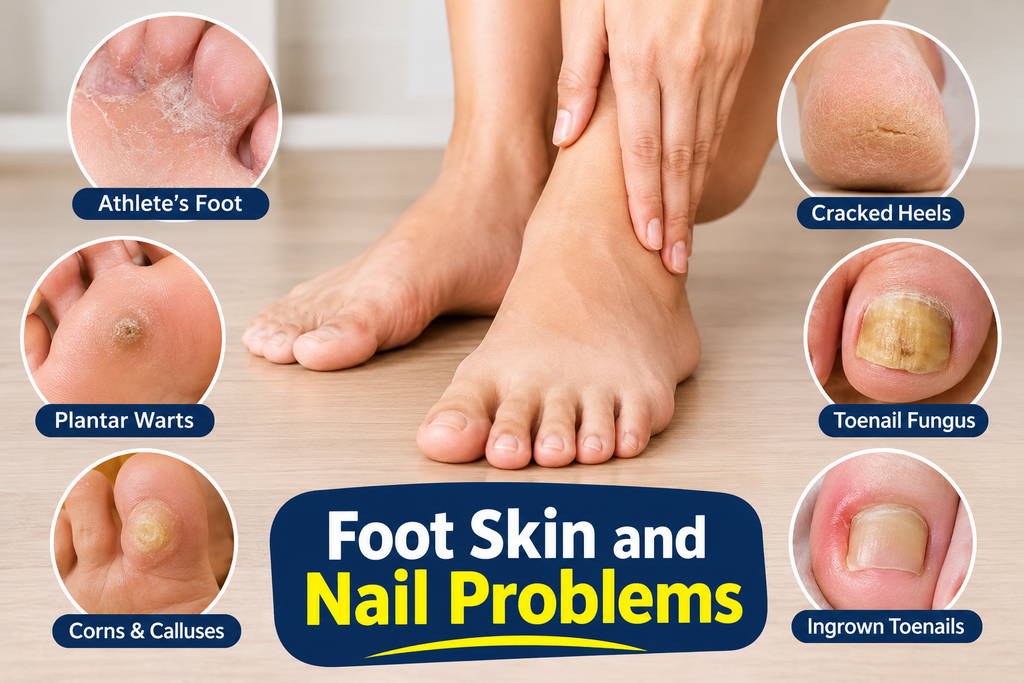
Foot skin and nail problems are common and can affect people of all ages. They may cause itching, dryness, peeling, pain, swelling, or changes in toenail colour and shape. Common conditions include athlete’s foot, plantar warts, cracked heels, corns, calluses, and toenail fungus.
Some problems improve with basic foot care, while others need medical treatment. Knowing the symptoms can help you choose the right care and prevent further problems.
What Are Foot Skin and Nail Problems?
Foot skin and nail problems are conditions that affect the skin, toenails, or the area around the nails. They may develop because of fungal infections, viruses, repeated pressure, injuries, or skin conditions.
Some problems are mild, but others can make walking painful. The correct treatment depends on the cause.
Common Foot Skin Problems
1. Athlete’s Foot
Athlete’s foot is a contagious fungal infection. It often affects the skin between the toes but can also appear on the soles and sides of the feet.
Common symptoms include:
- Itching and burning
- Redness and scaling
- Peeling or cracked skin
- Dry or irritated areas
Treatment: Antifungal creams can help treat athlete’s foot. Keep your feet clean and dry, especially between the toes. Change damp socks and avoid sharing towels or footwear. Persistent infections may need prescription treatment.
2. Plantar Warts
Plantar warts are small, rough growths that develop on the soles of the feet. They are caused by certain types of human papillomavirus (HPV). Walking or standing may cause pain when pressure is placed on them.
Treatment: Options include salicylic acid, freezing treatment (cryotherapy), and professional removal. A healthcare professional can help identify the right option.
3. Corns and Calluses
Corns and calluses develop when the skin experiences repeated friction or pressure. Corns are usually smaller and may have a hard centre, while calluses are broader areas of thickened skin.
They commonly appear on the toes, soles, and other pressure points.
Treatment: Wear comfortable shoes that reduce pressure. Moisturizers and suitable skin-softening products may help. A healthcare professional can assess thick or painful areas and remove hardened skin safely.
4. Cracked Heels
Cracked heels often develop when the skin becomes dry and thick. Pressure on the heel can make the cracks deeper and more painful.
Symptoms may include:
- Dry, rough skin
- Thickened skin around the heel
- Painful cracks
- Bleeding in severe cases
Treatment: Apply a suitable moisturizer regularly. Urea-based creams may help soften thick, dry skin. Deep, painful, or bleeding cracks should be checked by a healthcare professional.
5. Foot Eczema and Dermatitis
Eczema and dermatitis can cause dry, itchy, red, or irritated skin. Contact dermatitis may develop after the skin touches an irritating substance or an allergen. Dyshidrotic eczema may cause small, itchy blisters.
Treatment: Avoid products or materials that trigger irritation. A healthcare professional can recommend suitable creams or other treatment based on the type of skin condition.
6. Foot Psoriasis
Psoriasis is a skin condition that can affect the feet. It may cause thick, dry, scaly patches. Sometimes it can look similar to a fungal infection.
A proper examination can help identify the condition and guide treatment.
Common Toenail Problems
1. Toenail Fungus
Toenail fungus, also called onychomycosis, is a fungal infection that affects the nails. It can make toenails thick, brittle, crumbly, or discoloured.
Common signs include:
- Yellow, white, or brown nail colour
- Thickened nails
- Brittle or broken nail edges
- Nail lifting from the nail bed
Treatment: Antifungal medicines may be used to treat nail fungus. Treatment can involve topical or oral medication. Because nail injuries and other conditions can look similar, a nail sample or laboratory test may be needed to confirm the infection before treatment.
2. Ingrown Toenails
An ingrown toenail occurs when the edge of a nail grows into the surrounding skin. It commonly affects the big toe.
Possible causes include tight footwear and cutting the nails incorrectly.
Symptoms may include:
- Pain around the nail
- Redness and swelling
- Tenderness
- Pus if an infection develops
Treatment: Mild cases may improve with proper nail care and warm-water soaking. Severe or repeated cases may need a healthcare professional to remove part of the nail or treat the nail root. Avoid digging into the skin or cutting out the embedded nail yourself.
3. Toenail Injuries
Toenails can become damaged after stubbing a toe, dropping something on the foot, or wearing shoes that repeatedly press against the nails.
An injury may cause blood to collect under the nail, leading to a dark appearance. The nail may also become loose, thick, or uneven.
If the nail is severely painful, badly damaged, or has unusual dark marks that do not grow out, seek medical advice.
What Causes Foot Skin and Nail Problems?
Several factors can contribute to foot and toenail conditions:
- Fungal infections: Can affect the skin and toenails.
- Viruses: Certain HPV types cause plantar warts.
- Pressure and friction: Can lead to corns, calluses, and thickened skin.
- Unsuitable footwear: Tight shoes can contribute to blisters and ingrown toenails.
- Dry skin: Can cause rough skin and cracked heels.
- Injuries: Stubbing or repeated pressure can damage toenails.
- Skin conditions: Eczema and psoriasis can affect the feet.
How Are Foot and Nail Problems Diagnosed?
A healthcare professional may examine the affected skin or nail and ask about your symptoms, footwear, and medical history.
Some conditions are easy to recognise, while others look similar. For suspected toenail fungus, a nail clipping or other laboratory test may help confirm the diagnosis.
Correct diagnosis is important because different conditions need different treatments.
How to Treat Foot Skin and Nail Problems
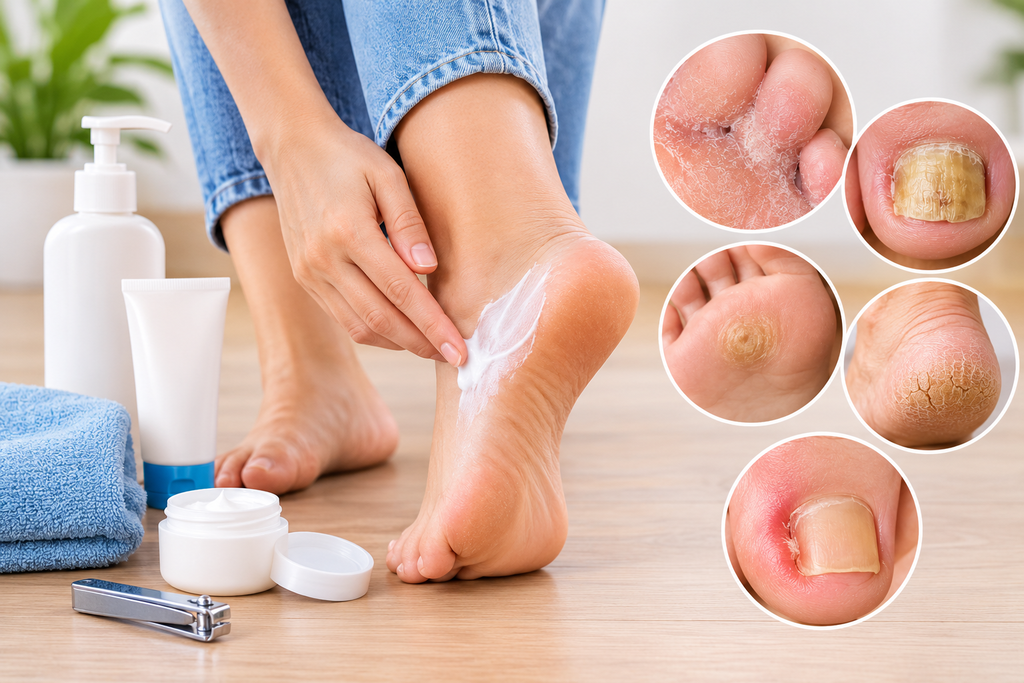
Treatment depends on the condition. Common options include:
- Antifungal creams: Used for athlete’s foot.
- Antifungal nail medicines: Used for confirmed toenail fungus.
- Salicylic acid: May help treat plantar warts.
- Cryotherapy: Freezing treatment used for some plantar warts.
- Moisturizers: Help manage dry skin and cracked heels.
- Pressure reduction: Comfortable footwear can help prevent corns and calluses.
- Professional nail treatment: May be needed for severe or recurring ingrown toenails.
Avoid using the same treatment for every foot problem. If you are unsure about the cause, get the condition checked before starting treatment.
When Should You See a Doctor?
Seek medical advice if you notice:
- Severe or persistent foot pain
- Spreading redness or warmth
- Swelling or pus around a toenail
- Deep or bleeding heel cracks
- Open wounds or ulcers
- Toenail changes that do not improve
- Dark nail streaks or spots that do not grow out
People with diabetes, poor circulation, or reduced sensation in their feet should get foot problems checked promptly.
How to Prevent Foot Skin and Nail Problems
Good foot care can reduce the risk of many common problems.
- Wash your feet regularly and dry them well.
- Dry carefully between your toes.
- Change damp socks.
- Wear comfortable shoes that fit properly.
- Avoid sharing towels, socks, shoes, or nail clippers.
- Trim toenails straight across.
- Moisturize dry skin and heels.
- Check your feet and toenails regularly.
- Avoid walking barefoot in shared wet areas.
These habits can help keep your feet clean and reduce irritation and infection risks.
Frequently Asked Questions
What are the most common foot skin problems?
Common foot skin problems include athlete’s foot, plantar warts, corns, calluses, cracked heels, eczema, and psoriasis.
What causes toenails to become thick and yellow?
Toenail fungus can cause thickening and yellow discolouration. However, injuries and other nail conditions can cause similar changes. Testing may be needed to confirm the cause.
Can athlete’s foot spread to other people?
Yes. Athlete’s foot is contagious and can spread through contact with infected skin or contaminated items such as towels and footwear.
How can I treat cracked heels at home?
Regularly apply a suitable moisturizer. Urea-based creams may help soften thick, dry skin. Get medical advice if cracks are deep, painful, or bleeding.
When should I worry about an ingrown toenail?
Seek medical advice if you have severe pain, swelling, pus, or spreading redness. Repeated or severe ingrown toenails may need professional treatment.
Can diabetes make foot problems more serious?
Yes. Diabetes can make foot problems more serious, particularly when sensation or circulation is reduced. Check your feet regularly and seek medical advice about wounds, infections, or skin changes.
Conclusion
Foot skin and nail problems can cause discomfort, pain, and changes in the appearance of your feet. Common conditions include athlete’s foot, plantar warts, cracked heels, corns, calluses, ingrown toenails, and toenail fungus.
Good foot hygiene, comfortable footwear, and regular nail care can help prevent some problems. If symptoms are severe, persistent, or unusual, consult a healthcare professional for the correct diagnosis and treatment.