Foot Skin and Nail Problems: Causes, Symptoms, and Treatment
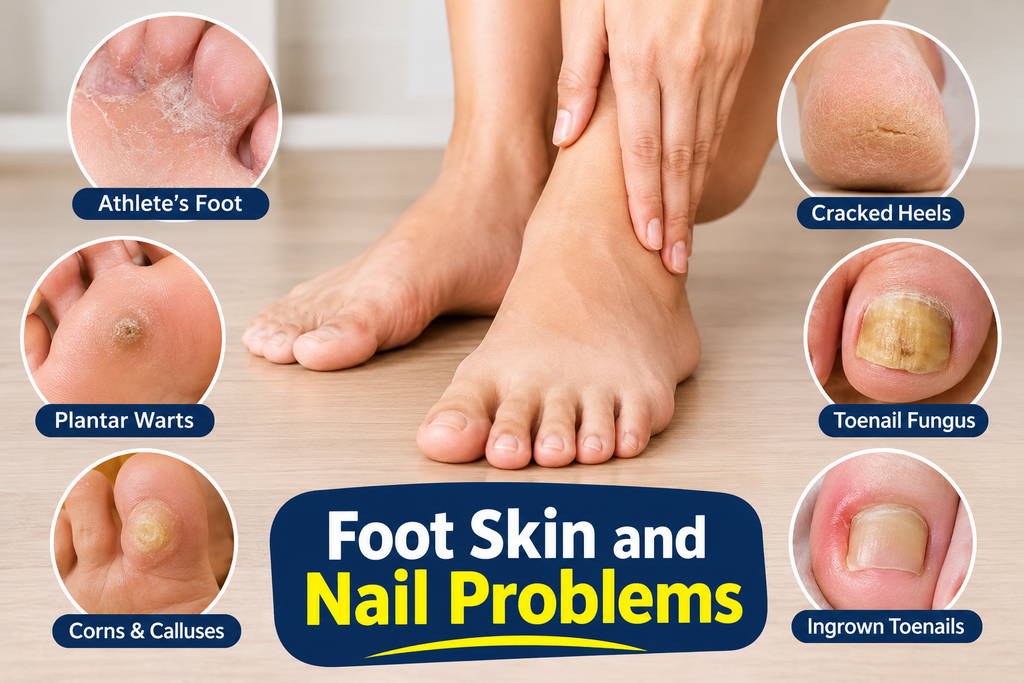
Foot skin and nail problems are common and can affect people of all ages. They may cause itching, dryness, peeling, pain, swelling, or changes in toenail colour and shape. Common conditions include athlete’s foot, plantar warts, cracked heels, corns, calluses, and toenail fungus. Some problems improve with basic foot care, while others need medical treatment. Knowing the symptoms can help you choose the right care and prevent further problems. What Are Foot Skin and Nail Problems? Foot skin and nail problems are conditions that affect the skin, toenails, or the area around the nails. They may develop because of fungal infections, viruses, repeated pressure, injuries, or skin conditions. Some problems are mild, but others can make walking painful. The correct treatment depends on the cause. Common Foot Skin Problems 1. Athlete’s Foot Athlete’s foot is a contagious fungal infection. It often affects the skin between the toes but can also appear on the soles and sides of the feet. Common symptoms include: Treatment: Antifungal creams can help treat athlete’s foot. Keep your feet clean and dry, especially between the toes. Change damp socks and avoid sharing towels or footwear. Persistent infections may need prescription treatment. 2. Plantar Warts Plantar warts are small, rough growths that develop on the soles of the feet. They are caused by certain types of human papillomavirus (HPV). Walking or standing may cause pain when pressure is placed on them. Treatment: Options include salicylic acid, freezing treatment (cryotherapy), and professional removal. A healthcare professional can help identify the right option. 3. Corns and Calluses Corns and calluses develop when the skin experiences repeated friction or pressure. Corns are usually smaller and may have a hard centre, while calluses are broader areas of thickened skin. They commonly appear on the toes, soles, and other pressure points. Treatment: Wear comfortable shoes that reduce pressure. Moisturizers and suitable skin-softening products may help. A healthcare professional can assess thick or painful areas and remove hardened skin safely. 4. Cracked Heels Cracked heels often develop when the skin becomes dry and thick. Pressure on the heel can make the cracks deeper and more painful. Symptoms may include: Treatment: Apply a suitable moisturizer regularly. Urea-based creams may help soften thick, dry skin. Deep, painful, or bleeding cracks should be checked by a healthcare professional. 5. Foot Eczema and Dermatitis Eczema and dermatitis can cause dry, itchy, red, or irritated skin. Contact dermatitis may develop after the skin touches an irritating substance or an allergen. Dyshidrotic eczema may cause small, itchy blisters. Treatment: Avoid products or materials that trigger irritation. A healthcare professional can recommend suitable creams or other treatment based on the type of skin condition. 6. Foot Psoriasis Psoriasis is a skin condition that can affect the feet. It may cause thick, dry, scaly patches. Sometimes it can look similar to a fungal infection. A proper examination can help identify the condition and guide treatment. Common Toenail Problems 1. Toenail Fungus Toenail fungus, also called onychomycosis, is a fungal infection that affects the nails. It can make toenails thick, brittle, crumbly, or discoloured. Common signs include: Treatment: Antifungal medicines may be used to treat nail fungus. Treatment can involve topical or oral medication. Because nail injuries and other conditions can look similar, a nail sample or laboratory test may be needed to confirm the infection before treatment. 2. Ingrown Toenails An ingrown toenail occurs when the edge of a nail grows into the surrounding skin. It commonly affects the big toe. Possible causes include tight footwear and cutting the nails incorrectly. Symptoms may include: Treatment: Mild cases may improve with proper nail care and warm-water soaking. Severe or repeated cases may need a healthcare professional to remove part of the nail or treat the nail root. Avoid digging into the skin or cutting out the embedded nail yourself. 3. Toenail Injuries Toenails can become damaged after stubbing a toe, dropping something on the foot, or wearing shoes that repeatedly press against the nails. An injury may cause blood to collect under the nail, leading to a dark appearance. The nail may also become loose, thick, or uneven. If the nail is severely painful, badly damaged, or has unusual dark marks that do not grow out, seek medical advice. What Causes Foot Skin and Nail Problems? Several factors can contribute to foot and toenail conditions: How Are Foot and Nail Problems Diagnosed? A healthcare professional may examine the affected skin or nail and ask about your symptoms, footwear, and medical history. Some conditions are easy to recognise, while others look similar. For suspected toenail fungus, a nail clipping or other laboratory test may help confirm the diagnosis. Correct diagnosis is important because different conditions need different treatments. How to Treat Foot Skin and Nail Problems Treatment depends on the condition. Common options include: Avoid using the same treatment for every foot problem. If you are unsure about the cause, get the condition checked before starting treatment. When Should You See a Doctor? Seek medical advice if you notice: People with diabetes, poor circulation, or reduced sensation in their feet should get foot problems checked promptly. How to Prevent Foot Skin and Nail Problems Good foot care can reduce the risk of many common problems. These habits can help keep your feet clean and reduce irritation and infection risks. Frequently Asked Questions What are the most common foot skin problems? Common foot skin problems include athlete’s foot, plantar warts, corns, calluses, cracked heels, eczema, and psoriasis. What causes toenails to become thick and yellow? Toenail fungus can cause thickening and yellow discolouration. However, injuries and other nail conditions can cause similar changes. Testing may be needed to confirm the cause. Can athlete’s foot spread to other people? Yes. Athlete’s foot is contagious and can spread through contact with infected skin or contaminated items such as towels and footwear. How can I treat cracked heels at home? Regularly apply a suitable moisturizer. Urea-based creams may help soften thick, dry skin. Get medical advice