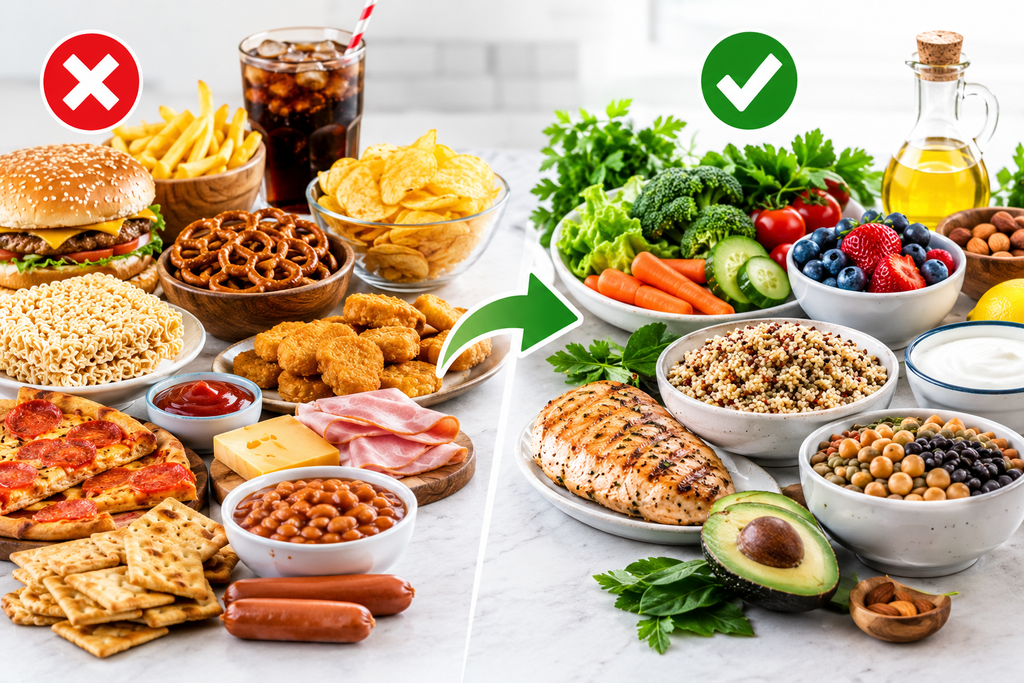
Many foods high in sodium are packaged, processed, or served in restaurants. Bread, processed meats, soups, sauces, and frozen meals can add sodium to your daily diet. Checking nutrition labels and choosing fresh ingredients can help you reduce your intake.
What Is Sodium?
Sodium is a mineral found naturally in some foods and added to others during processing or cooking. Table salt contains sodium and chloride.
The US Food and Drug Administration (FDA) recommends that adults consume less than 2,300 milligrams of sodium per day. Too much sodium can contribute to high blood pressure, making it important to understand common dietary sources.
30 Foods High in Sodium
Sodium levels vary by brand, recipe, serving size, and preparation. Check product labels before choosing an alternative.
- Shrimp: Some products contain added sodium. Choose fresh, unseasoned shrimp.
- Canned soup: Compare labels and select lower-sodium varieties.
- Ham: Cured ham often contains added salt. Try fresh meat.
- Instant pudding: Check packaged mixes for sodium and compare brands.
- Cottage cheese: Choose a lower-sodium option when available.
- Vegetable juice: Look for no-salt-added varieties.
- Salad dressing: Make a simple dressing with oil, lemon, and herbs.
- Pizza: Use less cheese and choose vegetable toppings.
- Sandwiches: Replace deli meats with fresh fillings and add vegetables.
- Broths and stocks: Choose lower-sodium products or homemade stock.
- Boxed potato casseroles: Prepare potatoes with herbs and spices instead.
- Pork rinds: Choose unsalted snacks when available.
- Canned vegetables: Buy no-salt-added versions or rinse when appropriate.
- Processed cheese: Compare labels and use smaller portions.
- Jerky and dried meats: Choose fresh, unseasoned meat more often.
- Tortillas: Compare brands for lower-sodium options.
- Cold cuts and salami: Replace them with freshly cooked meat.
- Pretzels: Choose unsalted snacks or fresh fruit.
- Pickles: Select lower-sodium varieties or eat smaller portions.
- Sauces: Use less soy sauce or choose a reduced-sodium version.
- Hot dogs and bratwurst: Choose fresh, unseasoned protein more often.
- Tomato sauce: Look for no-salt-added products.
- Bagels and bread: Compare nutrition labels and choose lower-sodium options.
- Canned meat and seafood: Check for no-salt-added varieties.
- Boxed meal helpers: Make similar dishes with fresh ingredients and your own seasonings.
- Biscuits: Compare products and check sodium per serving.
- Macaroni and cheese: Prepare it at home and compare ingredients.
- Frozen meals: Check labels before choosing a meal.
- Baked beans: Select a lower-sodium variety when available.
- Sausage, bacon, and salt pork: Limit portions and choose fresh meat more often.
These foods do not all contain the same amount of sodium. The ingredients, preparation method, and serving size make a difference.

Which Foods Contribute Most Sodium?
Harvard Health identifies breads and rolls, cold cuts and cured meats, pizza, poultry products, soups, and sandwiches or hamburgers among major sodium contributors in the US diet.
Sodium can add up across a meal. For example, bread, deli meat, cheese, and sauces may each contribute sodium to a sandwich.
Foods That Naturally Contain Sodium
Sodium occurs naturally in foods such as celery, spinach, Swiss chard, beets, meat, poultry, fish, seafood, milk, and eggs. However, the amount varies, and meat or seafood may contain added sodium if brined, smoked, or processed.
Fruit is generally not a major source of sodium. Eating a variety of fruits, vegetables, and minimally processed foods can help support balanced food choices.
How to Reduce Sodium Intake
You do not need to avoid every food on this list. Try these practical steps:
- Read labels: Compare sodium per serving across similar products.
- Choose lower-sodium options: Check packaged foods for alternatives.
- Cook at home: Use fresh ingredients and control added salt.
- Season differently: Use herbs, garlic, pepper, and lemon for flavor.
- Limit processed meats: Choose fresh meat, poultry, or fish more often.
- Check condiments: Use smaller amounts of sauces and dressings.
A product described as a healthier alternative is not automatically low in sodium. Always check the nutrition label.
Frequently Asked Questions
What food is highest in sodium?
There is no single food that is always highest. Salt, some sauces, processed meats, and packaged foods can contain high amounts, depending on the product and serving size.
Which drinks are high in sodium?
Some packaged vegetable juices contain added sodium. Compare nutrition labels to find lower-sodium options.
How can I get sodium naturally?
Sodium occurs naturally in vegetables, milk, eggs, meat, poultry, and seafood. Most people do not need to seek extra sodium without a specific dietary reason.
Is salt the same as sodium?
No. Salt contains sodium and chloride. Nutrition labels list sodium separately.
What should I eat instead of high-sodium foods?
Choose fresh ingredients, compare packaged products, and use herbs and spices to add flavor.
Conclusion
Foods high in sodium include bread, processed meats, sauces, soups, and frozen meals. Their sodium content varies, so check nutrition labels and compare products. Cooking at home and choosing fresh ingredients more often can help you reduce sodium intake.