Vitamins and minerals are essential nutrients that your body needs every day. They support normal growth, energy, immunity, bones, blood, and many other body functions. A healthy diet can provide most of the vitamins and minerals you need.
This guide explains the importance of vitamins and minerals, their main types, food sources, health roles, and when supplements may be useful.
What Are Vitamins and Minerals?
Vitamins are organic nutrients that help the body grow and work properly. Minerals are natural elements that the body also needs for important functions.
Together, these vitamins and minerals nutrients support many processes, including energy use, bone health, blood clotting, and the immune system.
Types of Vitamins
Vitamins are divided into two main groups:
- Fat soluble vitamins: A, D, E, and K. The body can store these vitamins.
- Water soluble vitamins: Vitamin C and the B vitamins. The body does not store most of these in large amounts, so regular food sources are important.
Important B vitamins include vitamin B12 and folic acid (vitamin B9).
Types of Minerals
Minerals are commonly grouped into major minerals and trace minerals.
Major minerals :
- Calcium
- magnesium
- potassium
- sodium
Trace minerals:
- Iron
- zinc
- Copper
- iodine
- selenium
Benefits
The benefits come from the many jobs these nutrients perform in the body.
- Vitamin A supports normal vision and immune function.
- Vitamin C supports the immune system and helps the body make collagen.
- Vitamin D helps the body absorb calcium and supports healthy bones.
- Vitamin B12 helps keep blood and nerve cells healthy.
- Calcium helps build and maintain strong bones and teeth.
- Iron helps red blood cells carry oxygen.
- Magnesium supports muscles, nerves, and many chemical reactions in the body.
- Vitamin K plays an important role in blood clotting and bone health.
These are some key examples of vitamins and minerals for health. Each nutrient has a different role, so getting a variety of nutrients is important.
Foods Rich
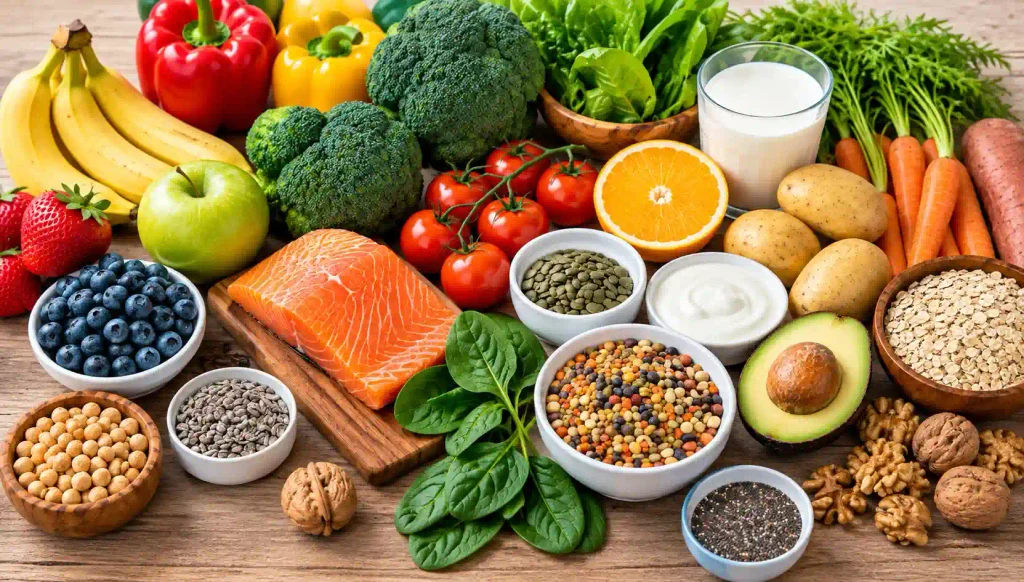
Many foods rich in vitamins and minerals can be part of a healthy diet. Good choices include:
- Fruits and vegetables
- Leafy greens such as spinach
- Brussels sprouts and other vegetables
- Dairy products such as milk and yoghurt
- Meat, poultry and fish
- Eggs
- Beans, lentils, nuts, and seeds
- Whole grains
- Vegetable oils
For example, dairy products provide calcium, while red meat can provide iron and vitamin B12. Fruits and vegetables provide many vitamins, minerals, and other useful nutrients.
Eating a wide range of foods is one of the best ways to get vitamin and mineral sources in your daily diet. Limiting highly processed food can also help you build a healthier eating pattern.
Vitamins and Minerals List
Here is a simple vitamins and minerals list:
NutrientMain roleFood sourcesVitamin AVision and immunityEggs, dairy, vegetablesVitamin CCollagen and immunityCitrus fruits, peppersVitamin DCalcium absorptionFortified foods, fatty fishVitamin B12Blood and nerve cellsMeat, fish, dairyCalciumBones and teethDairy, leafy greensIronOxygen transportRed meat, beansMagnesiumMuscles and nervesNuts, seeds, leafy greensZincImmune function and healingMeat, seafood, beans
This list gives a quick look at some essential vitamins and minerals, but it does not include every nutrient the body needs.
How Much Do You Need?
Daily needs vary by age, sex, pregnancy, health status, and other factors. A balanced healthy diet usually provides many of the nutrients your body needs.
Dietary supplements may help some people meet their needs, but more is not always better. Taking high doses of certain vitamins or minerals can cause problems. Speak with a healthcare professional before taking high-dose supplements.
Why Vitamins and Minerals Matter
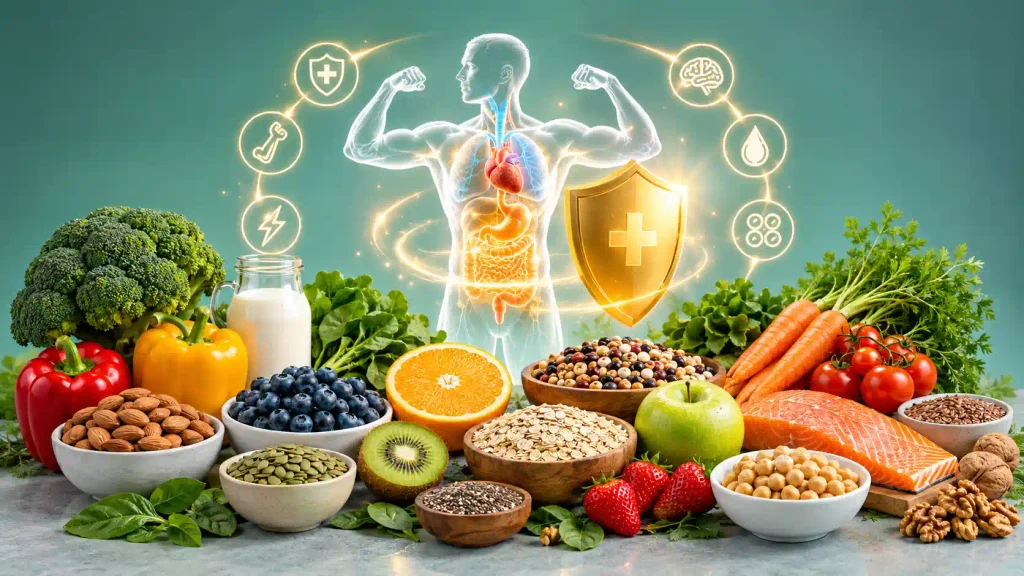
The importance of vitamins and minerals is linked to the many functions they support. These vitamins and minerals for the body help maintain normal body processes, from making blood cells to supporting bones, nerves, muscles, and immunity.
Eating different types of vegetables, fruits, whole grains, protein foods, and dairy or suitable alternatives can help you get a wide range of nutrients.
Frequently Asked Questions
What foods are high in vitamins and minerals?
Fruits, vegetables, leafy greens, dairy products, beans, nuts, seeds, whole grains, meat, poultry, and fish can all provide important vitamins and minerals.
Are vitamins and minerals the same?
No. Vitamins are organic substances, while minerals are natural elements. Both are essential nutrients, but they perform different roles in the body.
Do I need vitamin and mineral supplements?
Not everyone needs supplements. Many people can get the nutrients they need from a varied diet. Some people may need supplements because of their diet, life stage, or a nutrient deficiency.
Key Takeaway
Vitamins and minerals are important for normal health and body function. Eating a varied diet with fruits, vegetables, whole grains, protein foods, and dairy or suitable alternatives can help you get the nutrients you need. If you are concerned about a deficiency or need for supplements, speak with a healthcare professional.