Vitamin K is an essential fat-soluble vitamin that helps the body form blood clots and supports bone metabolism. It is found mainly in green leafy vegetables, plant oils, fermented foods, and some animal products.
There are two main forms of vitamin K: vitamin K1 (phylloquinone) and vitamin K2 (menaquinones). Both support important functions in the body. This guide covers vitamin K benefits, food sources, daily requirements, deficiency symptoms, and supplement safety.
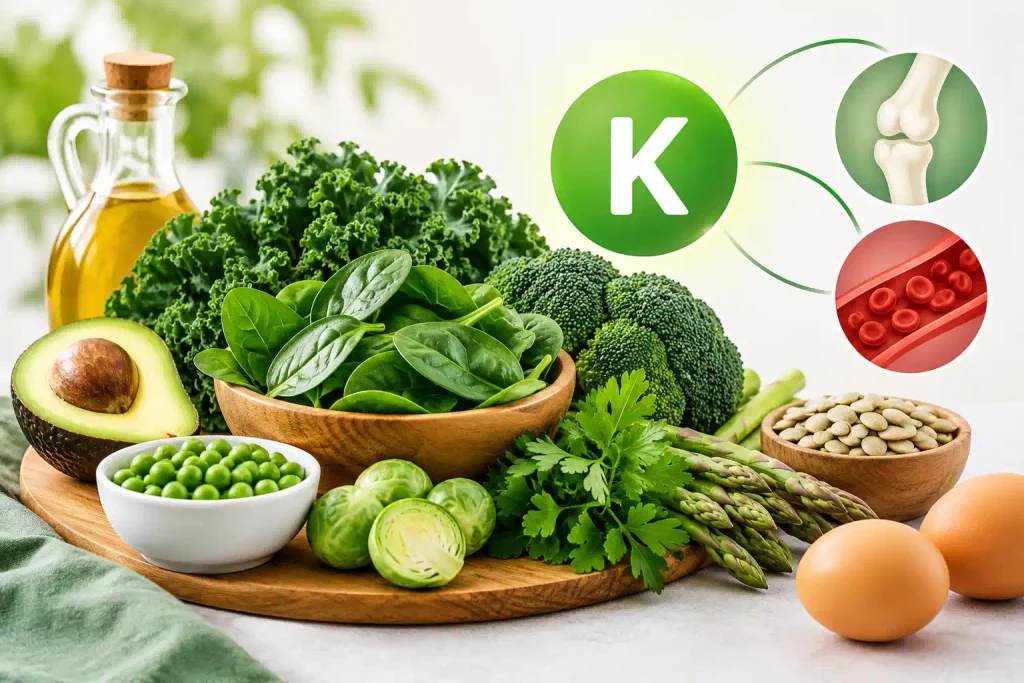
What Is Vitamin K?
Vitamin K is a group of compounds that help the body produce proteins involved in blood clotting and bone metabolism. One important protein is prothrombin, which helps blood clot normally. Another is osteocalcin, which plays a role in bone metabolism.
The body needs enough vitamin K to support these functions. Most people can obtain it through a varied diet that includes vitamin K-rich foods.
Types of Vitamin K
Vitamin K1 (Phylloquinone)
Vitamin K1 is the main form of vitamin K in the diet. It is found primarily in green leafy vegetables and certain plant oils.
Common sources include:
- Spinach
- Kale
- Broccoli
- Cabbage
- Lettuce
- Brussels sprouts
- Soybean oil
- Canola oil
Vitamin K2 (Menaquinones)
Vitamin K2 includes several related compounds found in certain animal and fermented foods.
Sources include:
- Natto, made from fermented soybeans
- Some types of cheese
- Eggs
- Meat
Vitamin K2 content varies between foods. Gut bacteria can also produce certain forms of vitamin K, although the amount the body obtains and uses from this source is not fully established.
Health Benefits of Vitamin K
1. Supports Normal Blood Clotting
One of the main benefits of vitamin K is its role in normal blood clotting. The body needs vitamin K to produce functional clotting proteins, including prothrombin.
These proteins help control bleeding after an injury. Without enough vitamin K, blood clotting may be impaired, increasing the risk of unusual bleeding.
2. Contributes to Bone Health
Vitamin K helps activate osteocalcin, a protein involved in bone metabolism. This makes vitamin K an important nutrient for normal bone function.
Research has examined whether vitamin K intake is linked to bone density and fracture risk. However, findings on vitamin K supplements and fracture prevention have been inconsistent. More evidence is needed to establish whether supplementation prevents fractures.
Adequate calcium and vitamin D intake, along with regular physical activity, also supports bone health.
3. May Play a Role in Heart Health
Vitamin K helps activate matrix Gla protein, which researchers study because of its role in regulating calcium deposits in blood vessels.
Although vitamin K has been investigated for its possible relationship with cardiovascular health, evidence does not establish that taking extra vitamin K prevents heart disease. A balanced diet and appropriate medical care remain important for overall health.
4. Helps Prevent Vitamin K Deficiency Bleeding in Newborns
Newborn babies naturally have low vitamin K levels. Only limited amounts cross the placenta, and breast milk contains relatively little vitamin K.
This increases the risk of vitamin K deficiency bleeding, which can be serious. Vitamin K is routinely recommended for newborns after birth to help prevent this condition. Parents should discuss newborn vitamin K protection with their healthcare professional.
Best Food Sources of Vitamin K
Many everyday foods provide vitamin K, especially green vegetables.
FoodMain formSpinach and kaleVitamin K1Broccoli and cabbageVitamin K1Brussels sprouts and lettuceVitamin K1Soybean and canola oilsVitamin K1NattoVitamin K2Some cheesesVitamin K2Eggs and meat May contain vitamin K2
The amount of vitamin K varies according to the food, portion size, and preparation method. Including a variety of vegetables and other vitamin K-containing foods can help support adequate intake.
How Much Vitamin K Do You Need Daily?
The US National Institutes of Health Office of Dietary Supplements provides the following adequate intake (AI) values for adults:
GroupDaily intakeAdult men, 19 years and older120 mcgAdult women, 19 years and older90 mcgPregnant adults90 mcgBreastfeeding adults90 mcg
Note: mcg means micrograms. These are US dietary reference values. Requirements differ for children and teenagers.
Adequate intake is used when there is insufficient evidence to establish a Recommended Dietary Allowance (RDA). Many people can meet their vitamin K needs through food, so supplements are not automatically necessary.

Vitamin K Deficiency: Signs and Risk Factors
Vitamin K deficiency is uncommon in healthy adults. However, the risk may increase in people who have conditions that affect fat absorption or take certain medicines.
Possible risk factors include:
- Digestive disorders that interfere with nutrient absorption
- Conditions affecting the absorption of fat-soluble vitamins
- Long-term use of certain antibiotics
- Medicines that interfere with vitamin K metabolism
- Being a newborn
Possible deficiency symptoms include easy bruising, unusual bleeding, and prolonged blood clotting time. These signs can have other causes, so a healthcare professional should assess them and recommend appropriate testing or treatment.
Vitamin K Supplements and Medication Safety
Vitamin K supplements may be appropriate for some people, but not everyone needs them. Whether supplementation is suitable depends on individual nutritional needs and medical circumstances.
Vitamin K can interact with warfarin, an anticoagulant medicine that affects vitamin K-dependent clotting factors. Changes in vitamin K intake can affect how warfarin works.
People taking warfarin should generally keep their vitamin K intake consistent from day to day. Avoid suddenly increasing or eliminating vitamin K-rich foods without consulting the healthcare professional managing your treatment.
Do not stop prescribed medication or start supplements without appropriate medical advice.
Frequently Asked Questions
Is vitamin K1 different from vitamin K2?
Yes. Vitamin K1 is found mainly in green leafy vegetables and certain plant oils. Vitamin K2 occurs in some animal products and fermented foods.
What are the main benefits of vitamin K?
Vitamin K supports normal blood clotting and bone metabolism. Its possible role in cardiovascular health is still being studied.
Can vitamin K deficiency cause bleeding?
Yes. A deficiency can interfere with normal blood clotting and may cause unusual bleeding. However, bleeding can have many causes and requires appropriate medical assessment.
Should everyone take vitamin K supplements?
No. Many people obtain enough vitamin K from food. Supplement use should depend on individual needs, particularly if you take medicines such as warfarin.
Conclusion
Vitamin K is an essential fat-soluble vitamin that supports blood clotting and bone metabolism. Vitamin K1 is found mainly in green leafy vegetables and plant oils, while vitamin K2 occurs in certain fermented foods and animal products.
The US adequate intake for adults is 120 mcg daily for men and 90 mcg for women, including during pregnancy and breastfeeding. A varied diet can help provide this nutrient, while supplements are not necessary for everyone.
Research into vitamin K and heart or bone health continues, but extra supplements have not been established as a way to prevent heart disease or fractures. People taking warfarin should maintain a consistent vitamin K intake and follow their healthcare professional’s advice.
Medical Disclaimer: This article is for general educational purposes only and is not a substitute for medical advice, diagnosis, or treatment. Consult a qualified healthcare professional about vitamin K deficiency, supplements, or medication interactions.