Sore Throat Causes: 10 Reasons & Effective Relief Tips
A sore throat is one of the most familiar discomforts there is — that raw, scratchy, painful feeling that makes swallowing an ordeal and talking a chore. Most of the time it is the opening act of an ordinary cold, arriving with a runny nose and a cough and clearing within a few days. But a sore throat can have a range of causes beyond the common cold, and knowing which one you are dealing with helps you soothe it effectively and recognise the less common situations that need a doctor.
The reassuring reality is that the vast majority of sore throats are caused by viral infections and get better on their own with simple home care. Antibiotics, which many people expect, usually do nothing for them, because they work only against bacteria. Understanding what is actually behind your sore throat, then, not only helps you ease it but also spares you unnecessary treatment — and helps you spot the minority of cases that need more attention.
This guide covers the common causes of a sore throat, how to ease the discomfort at home, and when a sore throat warrants seeing a doctor.
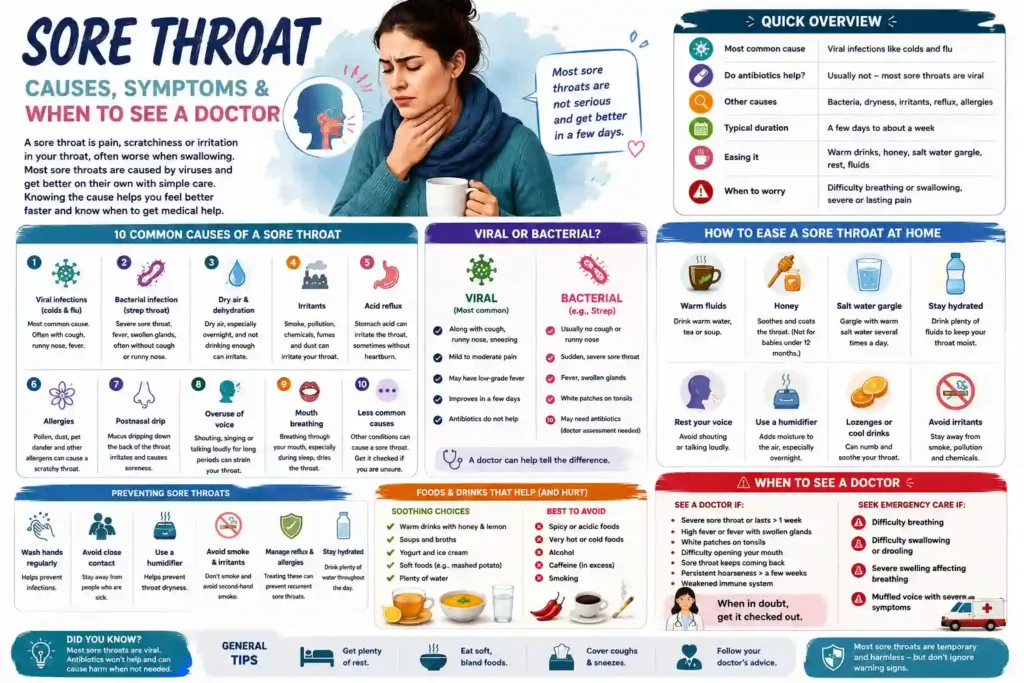
Quick Overview
| Question | Short answer |
|---|---|
| Most common cause | Viral infections like colds and flu |
| Do antibiotics help? | Usually not — most sore throats are viral |
| Other causes | Bacterial infection, dryness, irritants, reflux, allergies |
| Typical duration | A few days to about a week |
| Easing it | Warm drinks, honey, salt water gargle, rest, fluids |
| When to worry | Difficulty breathing or swallowing, severe or lasting pain |
Why Your Throat Hurts
A sore throat is pain, scratchiness, or irritation of the throat, often worse when swallowing. It happens when the tissues of the throat become inflamed or irritated — most commonly by an infection, but also by dryness, irritants, or other causes. The inflammation stimulates the nerve endings in the throat, producing that familiar raw, painful sensation.
Understanding that a sore throat is a symptom rather than a single condition helps make sense of its many causes. The same painful throat can result from a virus, a bacterial infection, dry air, acid reflux, or overuse of the voice — each irritating or inflaming the throat in its own way. Most causes are harmless and temporary, which is why home care resolves the majority of sore throats, but knowing the possibilities helps you respond appropriately.
10 Common Causes of a Sore Throat
1. Viral infections (colds and flu). By far the most common cause. A sore throat is often the first sign of a cold or flu, usually alongside other symptoms like a runny nose, cough, or fever. These viral sore throats clear on their own within a few days. Our guide on home remedies for cold covers soothing this kind.
2. Bacterial infection (strep throat). A smaller proportion of sore throats are caused by bacteria, the best-known being strep throat. This can cause a more severe sore throat, often without the cough and runny nose of a cold, sometimes with fever and swollen glands, and may need medical assessment and antibiotics.
3. Dry air and dehydration. Breathing dry air, especially overnight or in heated rooms, can dry out and irritate the throat, causing soreness that is often worse in the morning. Not drinking enough can add to this.
4. Irritants. Smoke, including second-hand smoke, air pollution, chemical fumes, and dust can all irritate the throat and cause soreness, particularly with ongoing exposure.
5. Acid reflux. Acid flowing back up from the stomach can reach the throat and cause irritation and soreness, sometimes without obvious heartburn. A persistent sore throat, particularly with hoarseness or a morning sore throat, can relate to reflux — see our guide on GERD symptoms.
6. Allergies. Allergic reactions to pollen, dust, pet dander, and other allergens can cause a sore or scratchy throat, often through postnasal drip, where mucus drips down the back of the throat and irritates it.
7. Postnasal drip. Mucus dripping down the back of the throat from the nose and sinuses — whether from a cold, allergies, or sinus problems — irritates the throat and is a common cause of soreness and throat-clearing.
8. Overuse of the voice. Shouting, singing, or talking loudly for long periods can strain the throat and voice box, causing soreness and hoarseness.
9. Mouth breathing. Breathing through the mouth, particularly during sleep, dries the throat and can cause soreness on waking.
10. Less common causes. Occasionally a sore throat relates to other conditions, and a sore throat that is severe, persistent, or comes with certain warning signs needs assessment to identify the cause.
Sore Throat: Viral or Bacterial?
One of the most useful distinctions is whether a sore throat is likely viral or bacterial, because it affects whether antibiotics might help.
A viral sore throat — the most common — typically comes with other cold or flu symptoms like a runny nose, cough, sneezing, and sometimes a mild fever. It clears on its own within a few days, and antibiotics do not help.
A bacterial sore throat, such as strep, more often appears without a cough or runny nose, and may involve a more severe sore throat, fever, swollen tender glands in the neck, and white patches on the tonsils. This kind may benefit from assessment and, if confirmed bacterial, antibiotics.
However, the two can be hard to tell apart with certainty, which is why a doctor may assess a severe or persistent sore throat rather than relying on guesswork. The key practical point is that most sore throats are viral and do not need antibiotics — a message that helps reduce unnecessary antibiotic use.
How to Ease a Sore Throat at Home
For a typical sore throat, these measures genuinely help:
- Drink warm fluids. Warm drinks soothe the throat and are comforting. Warm water with honey and lemon is a classic.
- Try honey. Honey coats and soothes the throat and has evidence for easing throat discomfort. Never give honey to babies under 12 months.
- Gargle salt water. Gargling warm salt water can reduce throat discomfort. Suitable for adults and older children who can gargle safely.
- Stay hydrated. Keeping the throat moist with plenty of fluids eases dryness and irritation.
- Rest your voice. If overuse is involved, resting the voice helps it recover.
- Use a humidifier. Adding moisture to dry air can ease a throat irritated by dryness, especially overnight.
- Suck soothing lozenges or sip cool drinks. Both can numb and soothe the throat for some people.
- Avoid irritants. Steer clear of smoke and other irritants while your throat recovers.
Over-the-counter pain relief can also ease the discomfort of a sore throat for adults, used as directed. Most sore throats settle within a few days with this kind of supportive care.
Preventing Sore Throats
While you cannot avoid every sore throat, some sensible habits reduce how often you get them and how easily they spread.
Because most sore throats come from viral infections that spread the same way as colds, good hygiene is one of the most effective defences: washing your hands regularly and thoroughly, avoiding touching your face with unwashed hands, and keeping some distance from people who are visibly unwell. If you catch a sore throat, covering coughs and sneezes and washing your hands helps protect those around you.
Beyond infection, addressing the other causes helps prevent recurrent soreness. Keeping well hydrated and using a humidifier in dry or heated rooms reduces throat irritation from dryness, which is a common cause of a morning sore throat. Avoiding smoke — including giving up smoking and steering clear of second-hand smoke — protects the throat from a significant irritant.
If reflux is behind recurrent throat soreness, managing it helps, and if allergies are the cause, reducing exposure to your triggers and treating the allergies can prevent the postnasal drip that irritates the throat. Resting your voice rather than straining it, and being mindful of mouth breathing, round out the practical steps. For someone who gets frequent sore throats, identifying which of these causes applies to them is the key to preventing them.
Sore Throats in Children
Sore throats are very common in children, and the same general principles apply, though with a few extra considerations. Most are viral and settle with comfort measures and time. Honey can soothe a sore throat in children over one year but must never be given to babies under 12 months. Many over-the-counter throat remedies are not suitable for young children, so it is best to check with a pharmacist or doctor before giving anything, and to rely on gentle measures like fluids, rest, and a comfortable environment.
Certain signs warrant prompt medical attention in a child, including difficulty breathing or swallowing, drooling because they cannot swallow, a very high fever, a stiff neck, an inability to drink fluids, or a child who seems seriously unwell. As with all children’s illnesses, parents should trust their instincts and seek advice if they are worried. A sore throat in a baby or a young child who is struggling to drink is always worth checking with a professional rather than managing at home alone.
When to See a Doctor
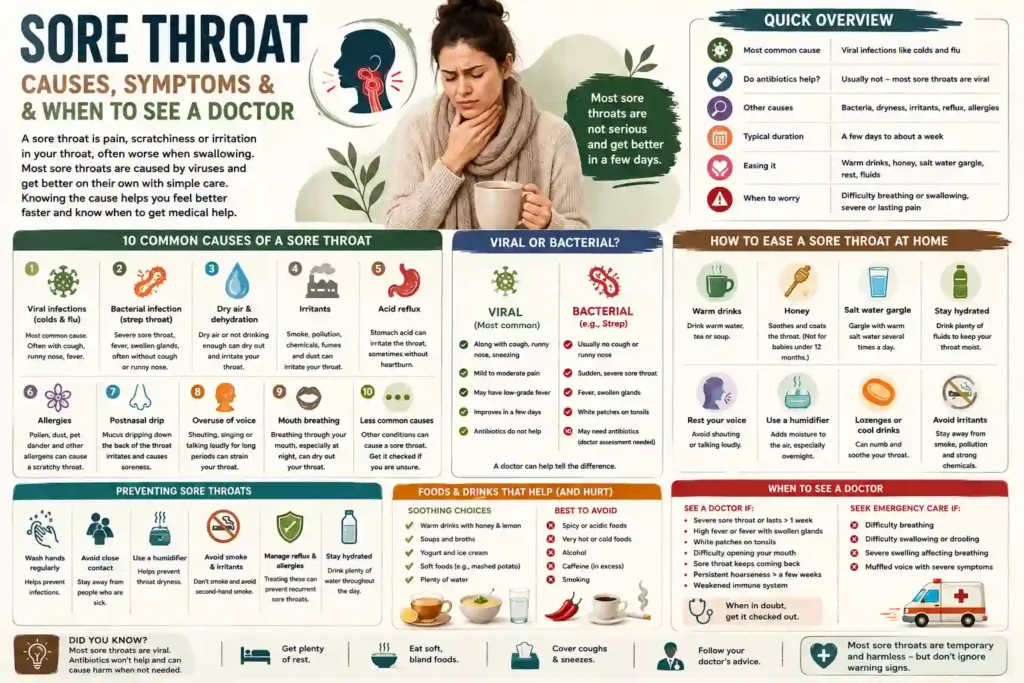
See a doctor if:
- Your sore throat is severe or does not improve within about a week
- You have a high fever, or fever with swollen tender neck glands
- You have white patches on your tonsils or difficulty opening your mouth
- Your sore throat keeps coming back
- You have a persistent sore throat with hoarseness lasting more than a few weeks
- You have a weakened immune system and develop a sore throat
Seek emergency care immediately if a sore throat comes with:
- Difficulty breathing
- Difficulty swallowing, or drooling because you cannot swallow
- Severe swelling that affects breathing
- A muffled voice with severe symptoms
These are rare but need urgent attention. The NHS guidance on sore throats explains when to seek help.
Final Thoughts
A sore throat is such a common companion to everyday illness that it is easy to take for granted — and most of the time, that instinct is right, because the vast majority are viral, harmless, and self-limiting, easing within a few days with simple home care. Warm drinks, honey, salt water gargles, rest, and hydration soothe the discomfort while your body clears the infection, and antibiotics are usually neither needed nor helpful.
The balanced approach is to treat an ordinary sore throat gently and let it run its course, while staying alert to the less common situations that need attention — a severe or persistent sore throat, one with a high fever and swollen glands that might be bacterial, or the rare warning signs like difficulty breathing or swallowing that need urgent care. For the everyday scratchy, painful throat most people know well, though, comfort measures and a little patience are usually all it takes to feel better.
Medical disclaimer: This article is for general educational information and is not a substitute for professional medical advice, diagnosis, or treatment. Seek emergency care for difficulty breathing or swallowing, and see a doctor for a severe or persistent sore throat.
Frequently Asked Questions
What causes a sore throat? The most common cause is a viral infection like a cold or flu. Other causes include bacterial infections such as strep, dry air, irritants like smoke, acid reflux, allergies, postnasal drip, overuse of the voice, and mouth breathing. Most sore throats are viral and clear on their own.
How can I get rid of a sore throat fast? Warm drinks, honey, salt water gargles, staying hydrated, resting your voice, and using a humidifier all soothe a sore throat. Over-the-counter pain relief can ease discomfort for adults. Most sore throats settle within a few days with this kind of supportive care.
Do I need antibiotics for a sore throat? Usually not. Most sore throats are caused by viruses, against which antibiotics do nothing. Antibiotics are only helpful for confirmed bacterial infections like strep throat, which a doctor can assess. Taking antibiotics for a viral sore throat is unnecessary and contributes to antibiotic resistance.
How do I know if my sore throat is strep or a cold? A cold-related sore throat usually comes with a cough, runny nose, and sneezing. Strep throat more often appears without a cough or runny nose, with a more severe sore throat, fever, swollen tender neck glands, and sometimes white patches on the tonsils. A doctor can confirm which it is.
Can acid reflux cause a sore throat? Yes. Acid flowing back up from the stomach can reach and irritate the throat, causing soreness, sometimes without obvious heartburn. A persistent sore throat, particularly with hoarseness or one that is worse in the morning, can be related to reflux and is worth mentioning to a doctor.
When should I worry about a sore throat? Seek emergency care if a sore throat comes with difficulty breathing or swallowing, or drooling because you cannot swallow. See a doctor if it is severe, lasts more than about a week, comes with a high fever and swollen glands, keeps returning, or involves persistent hoarseness.
Why is my sore throat worse in the morning? A sore throat that is worst in the morning is often caused by dryness — from breathing through the mouth or sleeping in dry, heated air overnight — or by acid reflux, which can travel up while lying flat and irritate the throat. Using a humidifier and addressing reflux can help.
How long should a sore throat last? Most sore throats, being viral, settle within a few days to about a week with supportive care. A sore throat that is severe, lasts longer than a week, or keeps returning should be assessed by a doctor, as should persistent hoarseness lasting more than a few weeks.
Does honey help a sore throat? Yes. Honey coats and soothes an irritated throat and has evidence for easing throat discomfort and cough, especially taken in warm water. It is a gentle, effective home remedy for adults and children over one year, but must never be given to babies under 12 months.