Skin Disease Psoriasis that causes dry, scaly, or raised areas on the skin. This psoriasis skin condition can affect different parts of the body and may come and go over time.
Understanding psoriasis symptoms, psoriasis causes, and treatment options can help you manage this common skin problem.
What Is Skin Disease Psoriasis?
Psoriasis is a chronic skin disease linked to an overactive immune system. It can cause skin cells to build up and form thick, scaly areas.
Psoriasis can affect people in different ways. Some people have small areas of affected skin, while others have symptoms over larger areas.
The American Academy of Dermatology and National Psoriasis Foundation provide information about psoriasis, its symptoms, triggers, and treatment.
Skin Disease Psoriasis Symptoms and Skin Problems
The psoriasis skin symptoms can vary from person to person. Common psoriasis symptoms include:
- Dry or scaly skin
- Raised skin
- Itching
- A psoriasis rash
- Psoriasis patches
- Nail changes
One of the main signs of psoriasis is a raised patch covered with scales. These are often called psoriasis plaques.
Psoriasis can look different on different skin tones. Some people may develop red patches on skin psoriasis, while others may notice darker or lighter areas.
Itchy skin psoriasis can cause discomfort. Dry skin psoriasis may also become irritated or cracked.
If you have a lasting rash or unusual skin changes, see a healthcare professional for an accurate diagnosis.
What Causes Skin Disease Psoriasis?
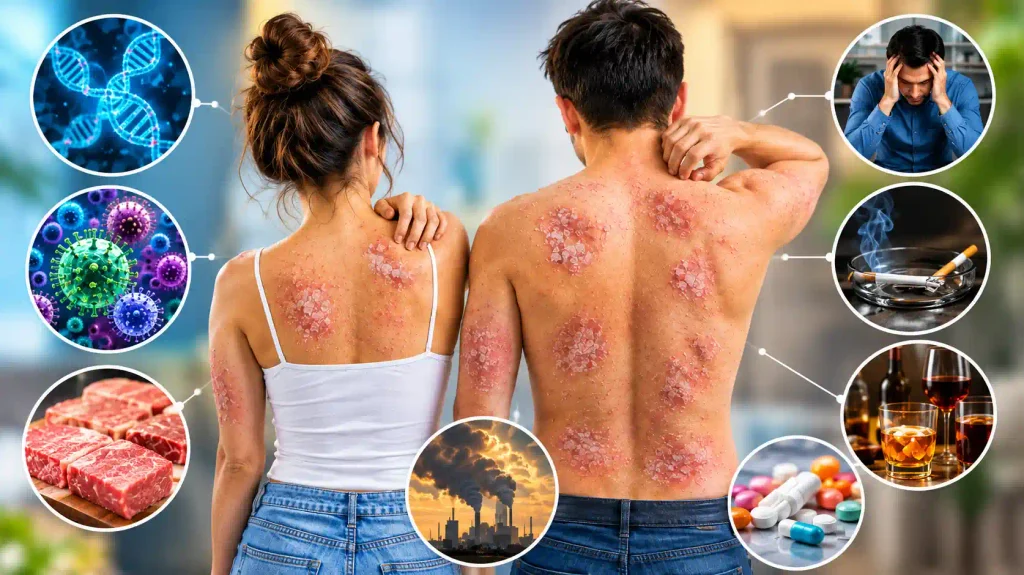
There is no single answer to what causes psoriasis. The condition involves the immune system and may also be linked to genetics and other factors.
An overactive immune system can affect normal skin-cell growth. This can lead to a buildup of skin cells on the skin.
Having a family history of psoriasis may also mean a higher risk of developing it.
Some factors can trigger a psoriasis flare. Triggers vary between people and may include stress, skin injuries, infections, and some medicines.
An infection such as strep throat may be linked with guttate psoriasis in some people.
Types of Psoriasis
There are several types of psoriasis, and they can affect the skin in different ways.
Plaque Psoriasis
Plaque psoriasis is the most common type. It causes raised areas covered with scales called psoriasis plaques.
Guttate Psoriasis
Guttate psoriasis can cause many small spots or patches. It may develop after certain infections, including strep throat.
Inverse Psoriasis
Inverse psoriasis affects skin folds, such as the armpits and groin.
Pustular Psoriasis
Pustular psoriasis causes pus-filled bumps on affected areas of skin.
Erythrodermic Psoriasis
Erythrodermic psoriasis is a rare and serious type that can affect large areas of skin. Widespread or rapidly changing symptoms need prompt medical attention.
Nail Psoriasis
Psoriasis can affect the nails. Changes in the nails may be a sign of nail psoriasis.
Where Can Skin Disease Psoriasis Affect the Body?
Psoriasis can affect the scalp, elbows, knees, hands, feet, nails, and skin folds.
The location and severity can vary. Some people have symptoms in one area, while others have psoriasis in several areas.
Psoriasis may also be linked with joint symptoms. If you have ongoing joint pains, stiffness, or swelling, speak with a healthcare professional.
How Is Psoriasis Diagnosed?
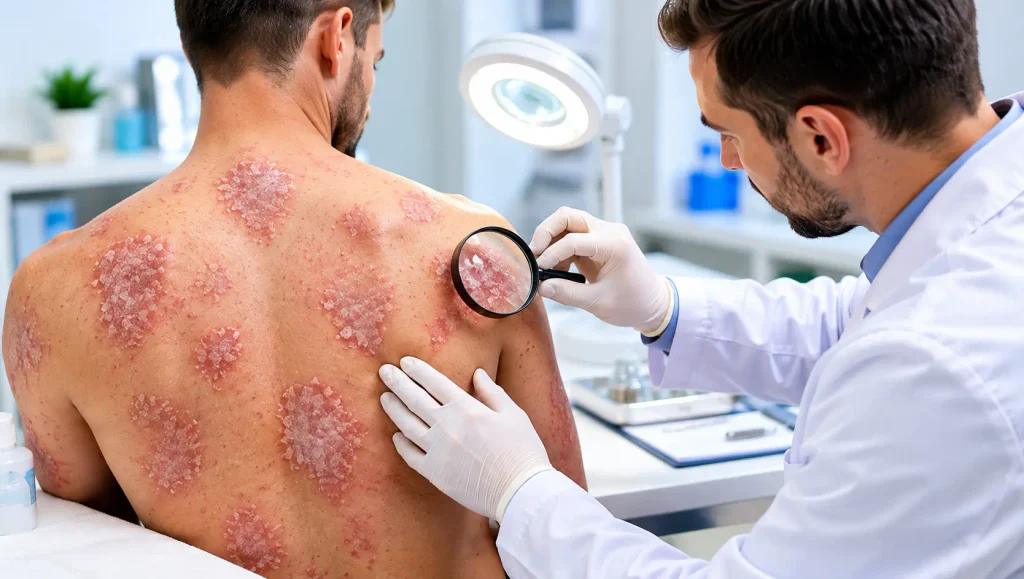
A healthcare professional can usually diagnose psoriasis by examining the skin and nails and asking about your symptoms and medical history.
Other skin conditions can look like psoriasis. A professional diagnosis can help identify the correct cause of a skin rash.
Psoriasis Treatment Options
There is no single treatment that works for everyone. Treatment options depend on the type and severity of psoriasis.
They may include:
- Topical treatments: Medicines applied to the skin.
- Phototherapy: Controlled light treatment.
- Systemic medicines: Medicines that work throughout the body.
- Biologic medicines: Medicines used for some people with moderate to severe psoriasis.
A dermatologist can recommend a treatment plan based on your condition.
Living With Psoriasis
Psoriasis is a chronic condition that can continue over the long term. Symptoms may improve and then return.
Gentle skin care can help protect affected areas. Following your treatment plan and learning your personal triggers may also help you manage symptoms.
Seek medical advice if symptoms become severe, widespread, painful, or suddenly worse.
Final Thoughts
Psoriasis is a psoriasis skin disease that can cause patches, scaling, itching, dryness, and other psoriasis skin problems. Understanding psoriasis causes and symptoms can help you recognise changes and seek appropriate care.
If you have ongoing psoriasis skin symptoms, speak with a healthcare professional for diagnosis and treatment advice. The American Academy of Dermatology and National Psoriasis Foundation are useful sources of psoriasis information.
Frequently Asked Questions
What are the common signs of psoriasis?
Common signs include raised or thickened skin, scaling, dryness, itching, and psoriasis patches. Nail changes can also occur.
What causes psoriasis?
Psoriasis causes can involve the immune system, genetic factors, and different triggers. There is no single cause for everyone.
Is psoriasis contagious?
No. Psoriasis does not spread from one person to another through normal physical contact.
Can psoriasis affect the nails?
Yes. Psoriasis can affect the nails and cause nail changes. A healthcare professional can assess these changes.