A scorpion sting happens when a scorpion uses the stinger at the end of its tail to inject venom into the skin. Most scorpion stings cause pain, burning, tingling, or mild swelling. However, some stings can cause serious health problems, especially in young children and after contact with highly venomous species.
Knowing the symptoms and correct first aid can help you respond safely. Severe symptoms, such as breathing difficulty or muscle spasms, need urgent medical attention.
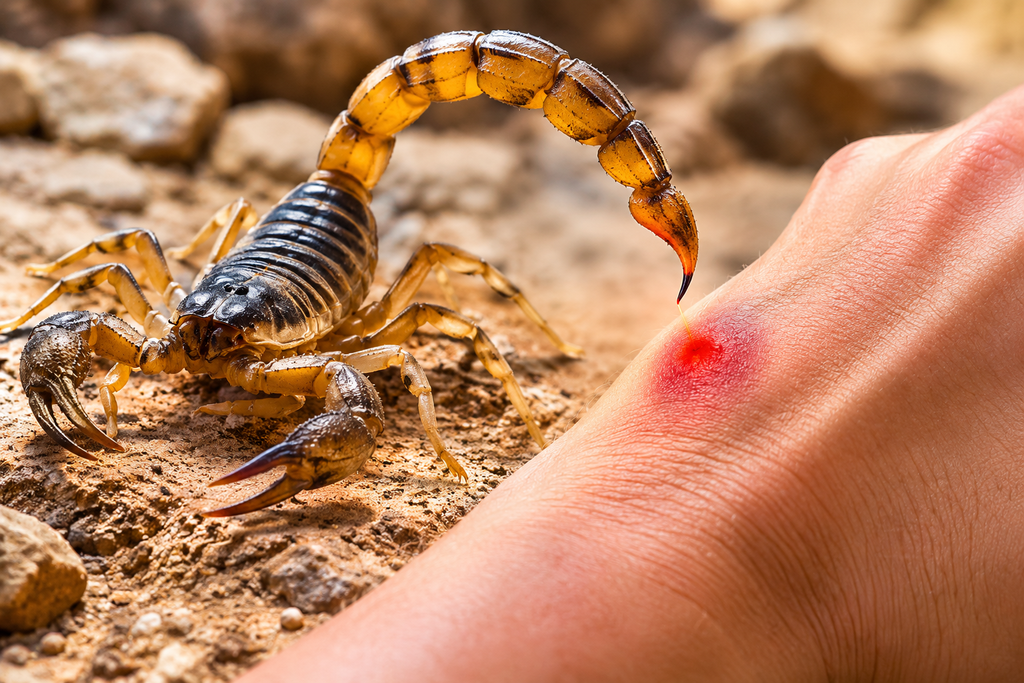
What Is a Scorpion Sting?
A scorpion sting occurs when a scorpion pushes its stinger into the skin and releases venom. The venom can affect the area around the sting. In more serious cases, it can affect the nervous system and other body functions.
The severity depends on the scorpion species, the amount of venom injected, and the person’s age and health. Most stings cause local symptoms, but some require emergency treatment.
How Common Are Scorpion Stings?
Scorpions live in many warm and dry regions. They may hide under rocks, inside cracks, in woodpiles, and in other sheltered places.
People are usually stung after accidentally touching or disturbing a scorpion. Avoiding direct contact and checking areas where scorpions may hide can reduce the risk.
Scorpion Sting Symptoms
Symptoms depend on the type of scorpion and the amount of venom injected. They may be mild or severe.
Mild Symptoms
Common local symptoms include:
- Sudden pain or burning at the sting site
- Redness and mild swelling
- Warmth around the affected area
- Tingling or numbness
- Tenderness or discomfort
Pain may begin immediately after the sting. Some symptoms can last for several hours, while tingling may continue longer.
Severe Symptoms
Some scorpion stings can cause symptoms beyond the affected area. These may include:
- Muscle twitching or spasms
- Difficulty controlling body movements
- Excessive sweating or drooling
- Nausea and vomiting
- Blurred or double vision
- Restlessness
- Rapid heartbeat
- Changes in blood pressure
- Difficulty breathing
Severe symptoms can develop within a few hours. Seek emergency medical help if any of these signs appear.
Young children need particular attention because they can develop serious reactions. Do not wait for symptoms to become severe before seeking medical advice after a child is stung.
What Causes a Scorpion Sting?
A scorpion generally stings when it feels threatened or is accidentally touched. Its stinger is located at the end of its tail and delivers venom into the skin.
The venom may cause pain and inflammation around the sting. In more serious cases, it can affect the nervous system and lead to muscle spasms, unusual movements, or breathing problems.
How Is a Scorpion Sting Diagnosed?
A healthcare professional usually diagnoses a scorpion sting by asking about the incident and checking the symptoms.
The medical assessment may include:
- Examining the sting area
- Checking breathing and heart rate
- Measuring blood pressure
- Looking for muscle spasms or movement problems
- Checking for signs of a serious reaction
Doctors may also monitor the patient or order additional tests when symptoms are severe. Information about the scorpion species can help guide treatment, but getting medical care should not be delayed while trying to identify it.
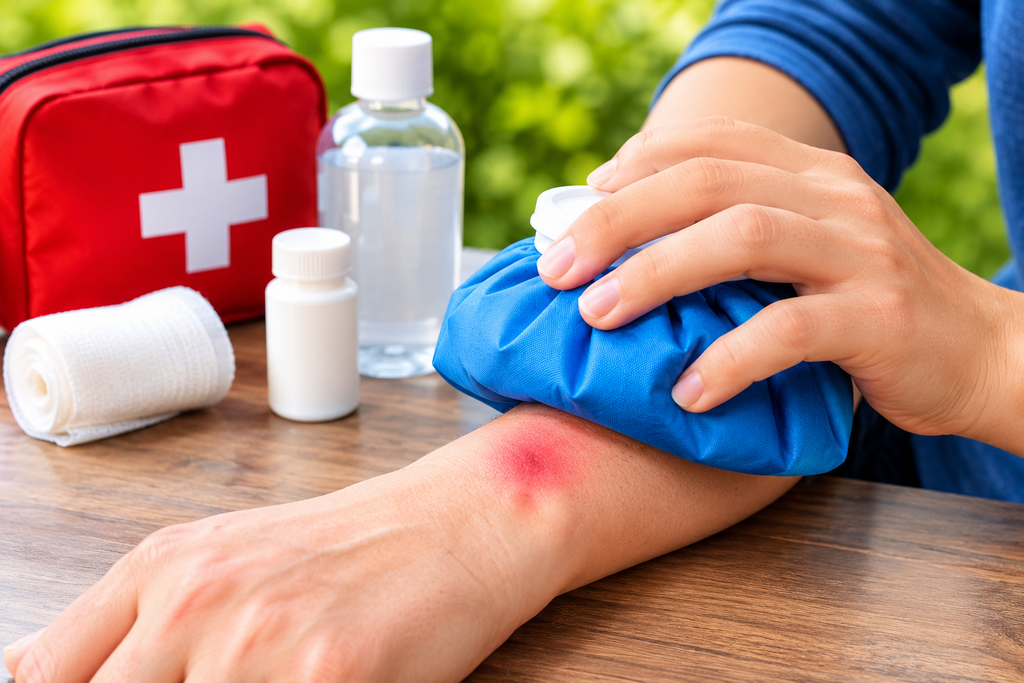
Scorpion Sting Treatment
Treatment depends on the symptoms and the person’s condition. Mild stings can often be managed with basic first aid, while severe reactions may require hospital care.
First Aid for a Scorpion Sting
For a mild sting, follow these steps:
- Wash the area: Clean the sting site with soap and water.
- Apply a cool compress: Use a cold pack wrapped in a cloth to help reduce pain and swelling. Apply it for 10–20 minutes at a time.
- Keep calm: Rest and avoid unnecessary movement.
- Manage pain: An over-the-counter pain reliever, such as acetaminophen or ibuprofen, may help. Follow the product instructions and age-related guidance.
- Watch for symptoms: Look for worsening pain, swelling, muscle spasms, vomiting, or breathing problems.
Children, older adults, and people with severe or worsening symptoms should receive medical assessment.
Medical Treatment
Severe scorpion stings may require hospital treatment. Healthcare professionals can monitor breathing, heart function, blood pressure, and nervous system symptoms.
Supportive treatment may be needed to manage complications. Antivenom may also be used in certain serious cases, depending on the scorpion species, symptoms, and local medical guidance.
What Should You Avoid?
Do not cut the sting area, try to suck out the venom, or apply a tight tourniquet. These actions do not provide reliable treatment and may cause further harm. Avoid delaying medical care when serious symptoms appear.
Can a Scorpion Sting Cause Complications?
Yes. Some scorpion venoms can affect the nervous system and other body functions. Serious complications may include breathing problems, heart-related effects, and severe muscle activity.
An allergic reaction is also possible. Difficulty breathing or other signs of a severe reaction require emergency care.
Can You Die From a Scorpion Sting?
Most scorpion stings cause local symptoms and do not lead to life-threatening illness. However, some stings can be fatal, particularly when the venom causes severe complications.
The risk is higher for young children and after stings from highly venomous species. Prompt medical care is important when symptoms are serious.
How Long Does a Scorpion Sting Last?
The duration depends on the species and the person’s reaction. Local pain, burning, and swelling may improve over several hours. Tingling or other discomfort can sometimes last longer.
Severe symptoms may develop within a few hours. Seek medical advice if symptoms worsen, spread, or do not improve.
How to Prevent Scorpion Stings
You can reduce the chance of a scorpion sting by taking simple precautions:
- Wear protective shoes when walking in areas where scorpions may be present.
- Check shoes and clothing before wearing them.
- Shake out towels and bedding before use.
- Avoid touching or handling scorpions.
- Keep indoor areas free from clutter.
- Seal cracks and openings where scorpions may enter.
- Be careful when moving rocks, wood, and other objects where scorpions may hide.
If you see a scorpion, keep a safe distance instead of trying to pick it up.
Frequently Asked Questions
What happens if a scorpion stings you?
A scorpion sting usually causes immediate pain, burning, tingling, redness, or mild swelling. Some stings can cause serious symptoms, including muscle spasms and breathing problems.
Which sting is worse, a bee or a scorpion?
The severity depends on the species and the person’s reaction. Some scorpion stings cause only local pain, while certain species can cause serious complications. A bee sting can also cause a severe allergic reaction.
What is the best treatment for a scorpion sting?
Wash the area with soap and water and apply a cool compress for short periods. Seek medical care if symptoms are severe or the person stung is a young child.
Can you survive a scorpion sting?
Yes. Most people recover from scorpion stings, especially when symptoms remain local. Severe reactions need prompt medical treatment.
Can a scorpion sting cause death?
Yes, some highly venomous scorpion stings can cause life-threatening complications. The risk is especially serious for young children.
How long does scorpion sting pain last?
Pain may improve within several hours, but tingling or discomfort can last longer. The duration varies with the scorpion species and the person’s reaction.
Conclusion
Scorpion stings can cause anything from mild local pain to serious health problems. Clean the affected area, use a cool compress, and monitor symptoms after a mild sting. Seek urgent medical help for breathing difficulty, muscle spasms, vomiting, or other severe symptoms. Taking precautions around places where scorpions hide can also help prevent stings.