Parkinson’s disease is often described as a movement disorder, but its impact goes far beyond tremors and stiffness. It is a progressive neurological condition that gradually affects the way a person moves, thinks, sleeps, and performs everyday activities. Because the disease develops slowly, many people do not recognize the warning signs until symptoms start interfering with daily life.
Understanding the different Parkinson’s disease stages is important for patients, caregivers, and families. Each stage brings unique challenges, from mild symptoms that may go unnoticed to advanced stages that require significant support and medical care. Early awareness can help individuals seek timely treatment, adopt healthier lifestyle habits, and better manage the progression of the condition.
In recent years, growing research has highlighted the importance of combining traditional medical treatments with supportive lifestyle strategies such as regular exercise, balanced nutrition, stress management, and natural wellness practices. While there is currently no cure for Parkinson’s disease, proper care and early intervention can significantly improve quality of life and help many people maintain their independence for years.
This comprehensive guide explores the stages of Parkinson’s disease, common symptoms, causes, diagnosis, treatment options, self-care tips, and natural approaches that can support overall brain health. Whether you have recently been diagnosed, are caring for a loved one, or simply want to learn more about this condition, this article provides practical, evidence-based information to help you navigate every stage of the Parkinson’s journey.
Many people first notice subtle symptoms such as hand tremors, stiffness, slower movements, or changes in handwriting. As the condition progresses, symptoms may become more significant and require more support.
What Is Parkinson’s Disease?
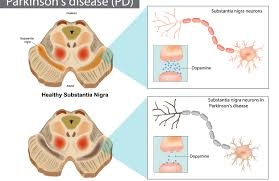
Parkinson’s disease is a chronic neurological disorder that occurs when nerve cells in an area of the brain called the substantia nigra gradually stop producing enough dopamine.
Dopamine is a chemical messenger responsible for coordinating smooth and controlled body movements. When dopamine levels decrease, symptoms begin to develop.
Many people ask:
- What is Parkinson’s disease?
- What does Parkinson’s disease do?
- How do you get Parkinson’s disease?
The exact cause remains unclear, but researchers believe a combination of genetic and environmental factors contributes to the condition.
Parkinson’s Disease Signs and Symptoms
Before discussing Parkinson’s disease stages, it is important to understand the common signs and symptoms.
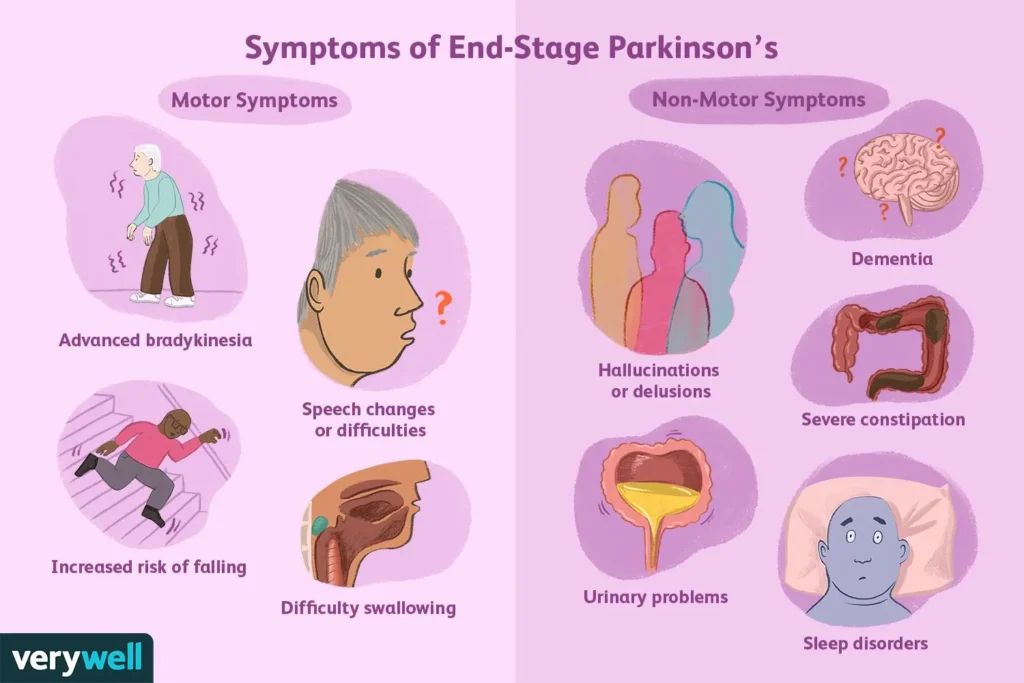
Motor symptoms
Tremors
One of the most recognizable symptoms of Parkinson’s disease is shaking or tremors, especially when the body is at rest.
Muscle stiffness
Stiff muscles can limit movement and cause pain.
Slow movement (bradykinesia)
People may struggle to perform daily activities due to slowed movement.
Balance problems
Postural instability increases the risk of falls.
Non-motor symptoms
Many patients experience symptoms beyond movement problems. Common non-motor symptoms include:
- Sleep problems
- Depression
- Anxiety
- Fatigue
- Memory problems
- Hallucinations
- Loss of smell
- Constipation
Some of these symptoms, such as loss of smell, constipation, and sleep problems, can appear years before the motor symptoms become apparent.
Early Signs and Symptoms of Parkinson’s Disease
Recognizing the early signs and symptoms of Parkinson’s disease can lead to earlier diagnosis and treatment. Early signs include:
- Mild hand tremor
- Decreased facial expressions
- Smaller handwriting
- Changes in walking pattern
- Loss of arm swing
- Soft speech
- Sleep disturbances
Many people overlook these early signs because they develop gradually.
What Causes Parkinson’s Disease?
This is one of the most common questions people ask. Researchers have identified several contributing factors.
Aging
Risk increases significantly with age.
Genetics
Some cases are linked to inherited gene mutations. This is why people often ask whether Parkinson’s disease is genetic or hereditary. Although genetics can play a role, most cases are not directly inherited.
Environmental factors
Possible contributors include:
- Pesticide exposure
- Industrial chemicals
- Air pollution
- Other environmental pollutants
Research into environmental influences on neurological diseases is ongoing.
The 5 Parkinson’s Disease Stages
Doctors often use the Hoehn and Yahr scale to classify disease progression.
Stage 1 Parkinson’s disease
Symptoms:
- Slight tremors
- Minor movement problems
- Symptoms affect one side of the body
At this stage, daily activities are usually unaffected.
Stage 2 Parkinson’s disease
Symptoms become more noticeable:
- Tremors on both sides
- Muscle stiffness
- Slower walking
- Facial expression changes
Most people stay independent.
Stage 3 Parkinson’s disease
This is considered the middle stage. Signs and symptoms include:
- Balance issues
- Increased risk of falls
- Slower movement
- Difficulty with daily tasks
Many people still live independently but may require some assistance.
Stage 4 Parkinson’s disease
Symptoms become severely disabling. Common problems include:
- Walking issues
- Severe stiffness
- Increased dependence on caregivers
Independent living becomes difficult.
Stage 5 Parkinson’s disease
Stage 5 is the most advanced stage. Symptoms include:
- Severe mobility limitations
- Wheelchair dependence
- Difficulty standing
- Cognitive decline
- Need for full-time care
Parkinson’s disease stages timeline
The rate of progression varies widely. Some individuals remain in the early stages for many years, while others progress more rapidly.
Factors affecting progression include:
- Age at diagnosis
- Overall health
- Response to treatment
- Lifestyle habits
There is no set timeline for moving through the Parkinson’s disease stages.
Parkinson’s Disease Diagnosis
There is currently no single definitive test. To make a diagnosis, doctors review:
- Medical history
- Symptoms
- Physical exam
- Neurological assessment
Is there a test for Parkinson’s disease?
Currently, diagnosis is based mainly on clinical evaluation rather than a single laboratory test.
Parkinson’s Disease Treatment
Although there is currently no cure, several treatments help manage symptoms.
Medications
Common Parkinson’s disease treatment options include:
- Levodopa
- Carbidopa
- Dopamine agonists
- MAO-B inhibitors
These medications help improve movement and reduce symptoms. Doctors may prescribe specific Parkinson’s disease drugs depending on symptoms. Common medications include:
- Levodopa/carbidopa
- Pramipexole
- Ropinirole
- Selegiline
- Rasagiline
Treatment plans should always be supervised by qualified healthcare professionals.
What is deep brain stimulation?
Deep brain stimulation (DBS) is a treatment for Parkinson’s disease that involves implanting electrodes in specific areas of the brain.
This treatment may help:
- Reduce tremors
- Improve movement
- Lower medication dependence
Is There a Cure for Parkinson’s Disease?
This is one of the most searched questions. Currently, there is no scientifically proven cure that completely eliminates Parkinson’s disease.
Claims such as “I cured my Parkinson’s disease” should be approached cautiously because individual stories do not replace scientific evidence.
Researchers continue investigating:
- Stem cell therapies
- Gene therapies
- Neuroprotective treatments
Natural Support for Parkinson’s Disease
Natural approaches may support general well-being, but they should not replace medical treatment.
Natural and lifestyle support
Some people use:
- Turmeric (curcumin)
- Green tea
- Omega-3-rich foods
- Ginger
- Antioxidant-rich fruits
While research is ongoing, these approaches may support general brain health.
Exercises for Parkinson’s disease
Regular physical activity is one of the most effective self-care strategies. Recommended physical activities include:
Walking
Improves mobility and cardiovascular health.
Stretching
Reduces stiffness.
Yoga
Enhances flexibility and balance.
Tai chi
May reduce fall risk.
Strength training
Supports muscle function and posture.
Parkinson’s disease self-care tips
Proper self-care can improve quality of life. Daily strategies include:
- Stay physically active
- Maintain a healthy diet
- Follow medicine schedules
- Prioritize sleep
- Manage stress
- Attend regular medical appointments
Foods to avoid with Parkinson’s disease
Diet can influence symptom management. Try to limit:
- Highly processed foods
- Excess sugar
- Trans fats
- Excess alcohol
- High-sodium foods
Focus instead on:
- Fruits
- Vegetables
- Whole grains
- Lean proteins
- Healthy fats
Parkinson’s Disease Dementia
Some people develop cognitive complications. Signs and symptoms include:
- Memory problems
- Confusion
- Difficulty concentrating
- Changes in judgment
Not everyone with Parkinson’s develops dementia.
Parkinson’s disease and Alzheimer’s
Although both affect the brain, they are different conditions.
Parkinson’s disease usually affects movement first.
Alzheimer’s disease mainly affects memory and cognition.
However, advanced Parkinson’s disease may also involve cognitive decline.
Parkinsonism vs Parkinson’s disease
Many people confuse these terms.
Parkinson’s disease is a specific neurological condition.
Parkinsonism is a group of disorders causing symptoms similar to Parkinson’s disease.
Parkinson’s Disease Life Expectancy
A common concern is whether Parkinson’s disease can kill you. Parkinson’s disease itself is usually not considered a direct cause of death. However, complications can increase health risks.
Parkinson’s disease prognosis
Many people live for decades after diagnosis with proper treatment and care.
Life expectancy depends on:
- Age
- Overall health
- Disease progression
- Access to treatment
How to reduce the risk of complications
Although there is no guaranteed way to prevent Parkinson’s disease, you can reduce complications by:
- Staying active: regular exercise supports mobility.
- Eating a balanced diet: nutritious foods support general health.
- Managing stress: chronic stress may worsen symptoms.
- Avoiding falls: use supportive footwear and remove home hazards.
- Following medical advice: consistent treatment improves outcomes.
Frequently Asked Questions
What are the stages of Parkinson’s disease?
The disease is generally divided into five stages, ranging from mild symptoms to advanced disability.
What are the symptoms of Parkinson’s disease?
Symptoms include tremors, stiffness, slow movement, balance problems, sleep disturbances, and cognitive changes.
Is Parkinson’s disease hereditary?
Most cases are not directly inherited, although genetics can contribute to risk.
Is Parkinson’s disease curable?
Currently, no cure exists, but treatments can effectively manage symptoms.
Can Parkinson’s disease kill you?
The disease itself is not usually fatal, but complications related to advanced stages can affect life expectancy.
Final Thoughts
Understanding Parkinson’s disease stages helps patients and caregivers recognize symptoms, plan treatment, and improve quality of life. Early diagnosis, proper medical treatment, regular exercise, balanced nutrition, and healthy lifestyle habits can make a significant difference in managing the condition.
While there is currently no cure for Parkinson’s disease, ongoing research continues to explore promising therapies. Combining evidence-based medical treatment with supportive lifestyle practices may help individuals maintain independence and well-being for as long as possible.
Disclaimer: This article is for educational purposes only and should not be considered medical advice. Always seek advice from a qualified healthcare professional before starting any treatment, supplement, or natural remedy.