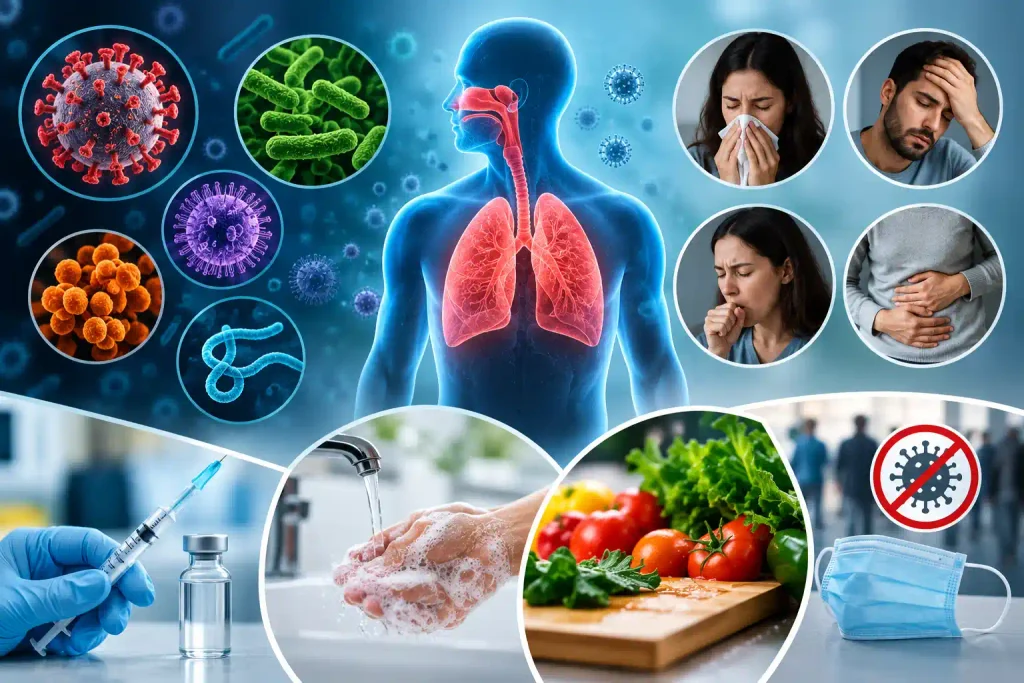
Infectious diseases are illnesses caused by germs such as bacteria, viruses, fungi, and parasites. These germs can enter the body and sometimes cause illness. Some infections spread between people, while others spread through contaminated food or water, infected animals, or insect bites.
Some infections are mild and improve with rest. Others may need medical treatment. Learning about infectious diseases, their symptoms, and how they spread can help people protect their health.
What Are Infectious Diseases?
Infectious diseases develop when harmful germs enter the body and cause illness. Many germs live around us and on our bodies. Most are harmless, and some are helpful. However, certain germs can cause infections under the right conditions.
Not every infection spreads from person to person. The way an infection spreads depends on the germ that causes it.
Types of Infectious Diseases
Infectious diseases are grouped by the type of germ that causes them. The four main groups are viral, bacterial, fungal, and parasitic infections.
1. Viral Infections
Viruses are tiny infectious agents that need living cells to make more copies of themselves. They cause illnesses such as the common cold, influenza, and COVID-19.
Some viral infections improve with rest and fluids. Others may need antiviral medicines. Antibiotics do not treat viral infections.
2. Bacterial Infections
Bacteria are tiny living organisms. Many are harmless, but some can cause disease.
Examples of bacterial infections include strep throat, tuberculosis, and some urinary tract infections. Doctors may prescribe antibiotics for certain bacterial infections. The correct treatment depends on the infection.
3. Fungal Infections
Fungi include yeasts and molds. Some fungi can cause infections of the skin, nails, or other parts of the body.
Examples include ringworm, athlete’s foot, and certain yeast infections. Treatment may include antifungal creams or medicines taken by mouth, depending on the infection.
4. Parasitic Infections
Parasites live in or on another living organism. Some parasites cause illness in humans.
Examples include malaria and giardiasis. Malaria usually spreads through bites from infected mosquitoes. Giardiasis can spread through contaminated water or food. Treatment depends on the parasite involved.
What Causes Infectious Diseases?
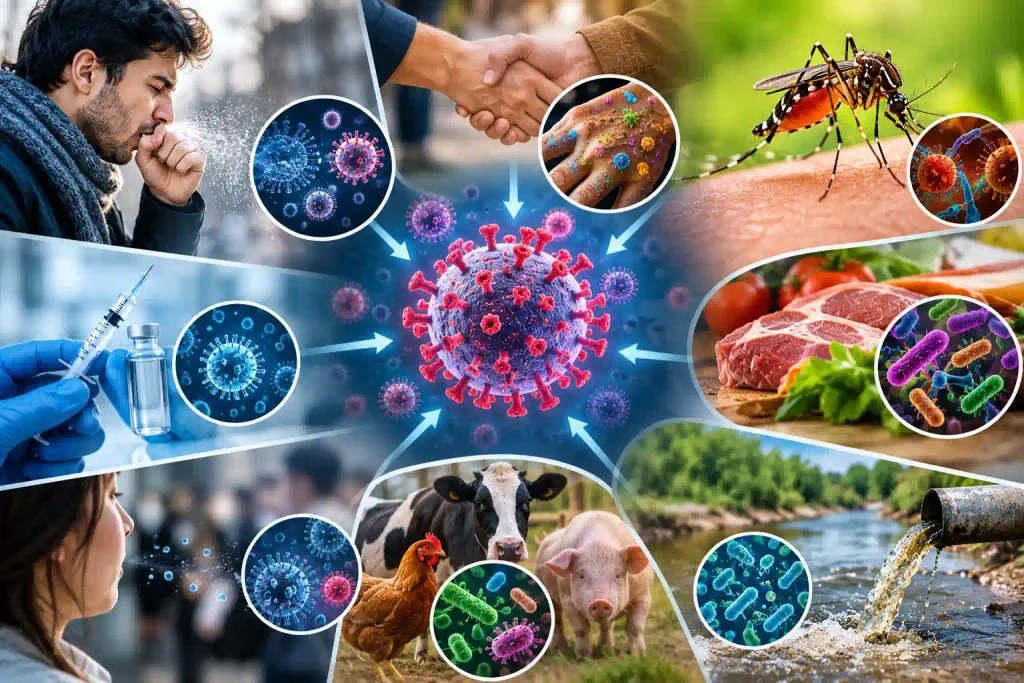
Infectious diseases happen when disease-causing germs enter the body and multiply. Common sources include:
- Infected people or animals
- Contaminated food or water
- Insect bites
- Germs in the environment
- Contact with infected body fluids
Coming into contact with a germ does not always mean a person will become ill. The result depends on the germ and other factors, including the person’s immune system.
How Do Infectious Diseases Spread?
Different infections spread in different ways. Common routes include:
- Direct contact: Touching an infected person or animal may spread certain germs.
- Respiratory particles: Some infections spread when an infected person coughs or sneezes.
- Contaminated food or water: Germs can enter the body through unsafe food or drinking water.
- Insect bites: Infected mosquitoes and other insects can spread certain diseases.
- Body fluids: Some infections spread through contact with infected blood or other body fluids.
Not all infectious diseases are contagious. Their spread depends on the germ that causes them.
Common Symptoms of Infectious Diseases
Symptoms vary depending on the type of infection and the part of the body affected. Common signs include:
- Fever
- Tiredness
- Muscle aches
- Coughing
- Diarrhea
- Other symptoms related to the affected body area
These symptoms can also occur with other health conditions. A healthcare professional can help identify the cause.
Seek urgent medical help if you have trouble breathing, confusion, or other severe symptoms. Medical advice is also important for a persistent fever, a severe headache with fever, or an animal bite.
How Are Infectious Diseases Diagnosed?
A healthcare professional may ask about your symptoms, medical history, and possible contact with infected people or animals. They may also perform a physical examination.
Depending on the symptoms, tests may include blood tests, urine tests, throat swabs, or stool samples. Some conditions may require imaging scans or other tests.
Not every infection needs testing. The healthcare professional will decide which tests, if any, are appropriate.
Treatment for Infectious Diseases
Treatment depends on the germ causing the illness.
- Antibiotics treat certain bacterial infections.
- Antiviral medicines treat some viral infections.
- Antifungal medicines treat fungal infections.
- Antiparasitic medicines treat certain parasitic infections.
Some mild infections improve with rest and fluids. Others require prescription medicines or hospital care.
Do not take leftover antibiotics or someone else’s medicine. Antibiotics do not work against viruses, and unnecessary use can contribute to antibiotic resistance. Follow the advice of a qualified healthcare professional.
How to Prevent Infectious Diseases
You can lower the risk of many infections by following simple hygiene and safety habits.
- Wash your hands: Use soap and water for at least 20 seconds, especially before eating and after using the toilet.
- Stay up to date with recommended vaccines: Vaccines help prevent certain infectious diseases.
- Handle food safely: Keep food preparation areas clean and prepare food properly.
- Drink safe water: Avoid water that may be contaminated.
- Cover coughs and sneezes: This helps reduce the spread of some respiratory infections.
- Avoid close contact when sick: Follow appropriate advice to protect others.
- Prevent insect bites: Use suitable insect protection where needed.
- Care for wounds: Clean and protect cuts, and seek medical advice when necessary.
These steps can reduce the risk of infection, although they cannot prevent every disease.
Frequently Asked Questions
What are infectious diseases?
Infectious diseases are illnesses caused by germs such as bacteria, viruses, fungi, and parasites.
What are the four main types of infectious diseases?
The four main types are viral, bacterial, fungal, and parasitic infections.
Are all infectious diseases contagious?
No. Some infections spread between people, while others spread through food, water, insects, animals, or the environment.
Can antibiotics treat every infection?
No. Antibiotics treat certain bacterial infections. They do not work against viruses.
How can infectious diseases be prevented?
Handwashing, recommended vaccines, safe food and water, and good hygiene can help prevent many infections.
Conclusion
Infectious diseases can range from mild illnesses to serious conditions. Their causes, symptoms, and treatments depend on the germs involved. Understanding how infections spread, following good hygiene practices, and keeping up with recommended vaccines can help reduce the risk. Seek medical advice when symptoms are severe, persistent, or concerning.
Medical Disclaimer: This article is for general educational purposes only. It is not a substitute for professional medical advice, diagnosis, or treatment.