Nausea Causes: 12 Reasons & Proven Ways to Ease It
Nausea is that deeply unpleasant, hard-to-describe feeling that you might be sick — the queasiness, the uneasy stomach, the sense that something is not right. It is one of the most common symptoms there is, and one of the least specific, because so many different things can bring it on. A single bout after a rich meal is easily explained; but when nausea keeps returning or lingers without an obvious reason, working out what is behind it becomes worthwhile.
The reassuring reality is that most nausea is caused by something temporary and harmless — a passing bug, something you ate, motion, or a short-lived upset — and it settles on its own with a little care. But because nausea can also accompany a wide range of conditions, understanding the common causes helps you make sense of what you are feeling, ease it effectively, and recognise the less common situations that warrant a doctor’s attention.
This guide covers the common causes of nausea, simple ways to ease it at home, and the warning signs that mean it is time to seek help.
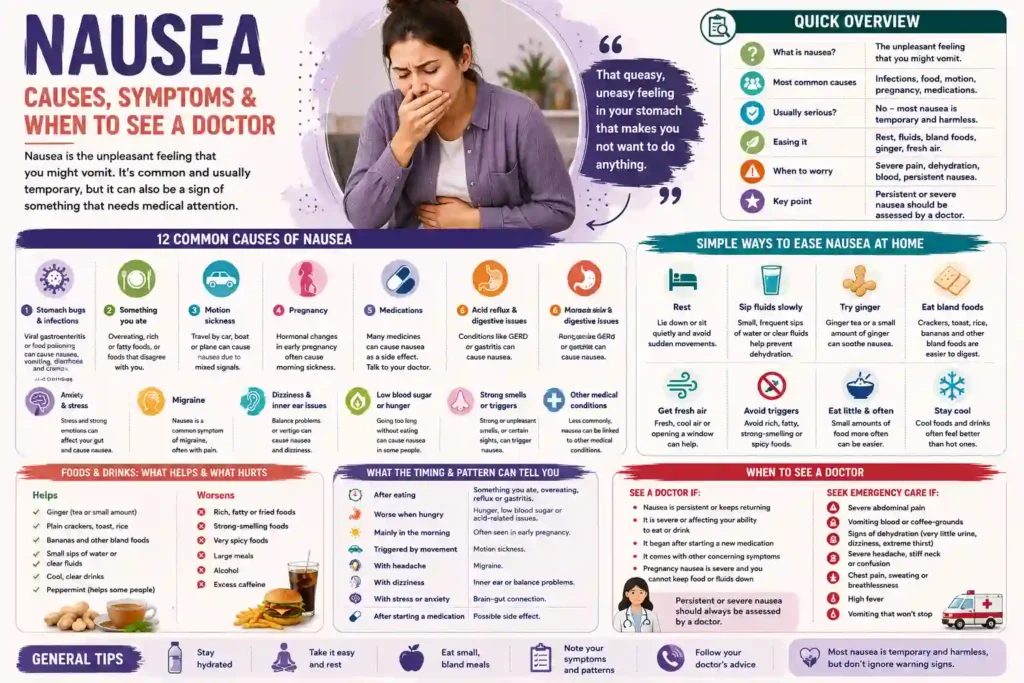
Quick Overview
| Question | Short answer |
|---|---|
| What is nausea? | The unpleasant feeling that you might vomit |
| Most common causes | Infections, food, motion, pregnancy, medications |
| Usually serious? | No — most nausea is temporary and harmless |
| Easing it | Rest, fluids, bland foods, ginger, fresh air |
| When to worry | Severe pain, dehydration, blood, persistent nausea |
| Key point | Persistent or severe nausea should be assessed |
Why We Feel Nauseous
Nausea is the body’s warning sensation that vomiting might follow, though it often occurs without any vomiting at all. It is controlled by parts of the brain that receive signals from many sources — the digestive system, the balance system in the inner ear, the bloodstream, and even emotional and psychological states. This is precisely why so many different things can trigger it: anything that stimulates these pathways can produce the feeling of nausea.
This broad wiring explains why nausea accompanies such a wide range of situations, from a stomach bug to motion sickness to anxiety. It also means nausea is a symptom rather than a diagnosis — it points to something going on rather than being a condition in itself. Most of the time that “something” is minor and temporary, but identifying the likely cause helps you respond appropriately and know when it needs more attention.
12 Common Causes of Nausea
1. Stomach bugs and infections. Viral gastroenteritis — a stomach bug — is one of the most common causes, often with vomiting, diarrhoea, and cramps. Food poisoning from contaminated food acts similarly. These usually settle within a day or two.
2. Something you ate. Overeating, very rich or fatty foods, or foods that disagree with you can all cause nausea. This kind is usually short-lived and settles as digestion catches up.
3. Motion sickness. Travel by car, boat, or plane can cause nausea when the balance system in the inner ear and the eyes send conflicting signals to the brain.
4. Pregnancy. Nausea, often called morning sickness though it can occur any time of day, is very common in early pregnancy due to hormonal changes. It usually eases as pregnancy progresses.
5. Medications. Many medications list nausea as a side effect, and some treatments are particularly associated with it. If nausea began after starting a new medication, mention it to your doctor rather than stopping on your own.
6. Acid reflux and digestive conditions. Conditions like acid reflux and gastritis can cause nausea alongside their other symptoms. Our guides on GERD symptoms and gastritis symptoms cover these.
7. Anxiety and stress. The strong link between the brain and gut means anxiety, stress, and strong emotions can genuinely cause nausea, sometimes with a churning or knotted stomach.
8. Migraine. Nausea is a common feature of migraine, often accompanying the headache, and sometimes appearing before it.
9. Dizziness and inner ear problems. Conditions affecting the balance system of the inner ear can cause nausea alongside dizziness or a spinning sensation.
10. Low blood sugar or hunger. Going too long without eating, or a drop in blood sugar, can cause nausea in some people, often eased by eating something.
11. Strong smells or sensory triggers. Strong or unpleasant smells, and sometimes certain sights, can trigger nausea, particularly in people who are already sensitive or unwell.
12. Other medical conditions. Less commonly, nausea can accompany a range of other conditions affecting the digestive system, liver, or other organs, which is why persistent or unexplained nausea is worth having assessed.
How to Ease Nausea at Home
For nausea from a common, temporary cause, these measures often help:
- Rest and take it easy. Lying still or sitting quietly, and avoiding sudden movements, can reduce nausea.
- Sip fluids slowly. Small, frequent sips of water or clear fluids help prevent dehydration, which is especially important if there is vomiting. Large amounts at once can worsen nausea.
- Try ginger. Ginger is a well-known natural remedy for nausea, with some supporting evidence. Ginger tea or a small amount of ginger can be soothing for many people.
- Eat bland foods. When ready to eat, plain, bland foods like crackers, toast, rice, or bananas are gentler than rich or fatty ones.
- Get fresh air. Fresh, cool air can help settle nausea, as can avoiding strong smells and stuffy rooms.
- Avoid triggers. Steer clear of rich, fatty, or strong-smelling foods until you feel better.
- Eat little and often. Small amounts of food rather than large meals can be easier to manage.
For motion sickness specifically, looking at the horizon, sitting where movement is felt least, and fresh air all help. For pregnancy nausea, eating small amounts regularly and keeping plain snacks to hand can ease it, though persistent severe pregnancy nausea should be discussed with a doctor or midwife.
What the Timing and Pattern of Nausea Can Tell You
When and how your nausea occurs can offer clues to its cause, which helps both you and your doctor make sense of it.
Nausea that comes on shortly after eating may point to something you ate, overeating, or a digestive condition like reflux or gastritis. Nausea that is worse when your stomach is empty, or that eases after eating, might relate to hunger, low blood sugar, or in some cases acid-related conditions. Nausea that appears mainly in the morning is classically associated with early pregnancy, though it has other causes too. Nausea triggered by movement — in a car, boat, or plane — points clearly to motion sickness, while nausea that arrives with a headache suggests migraine.
Nausea accompanied by dizziness or a spinning sensation often relates to the inner ear and balance system. Nausea that flares with stress, anxiety, or strong emotions reflects the powerful brain–gut connection. And nausea that began after starting a new medication points towards a drug side effect worth discussing with your doctor. Noticing these patterns — when the nausea comes, what makes it better or worse, and what accompanies it — turns a vague, unpleasant feeling into useful information, and can help identify the cause more quickly.
Foods and Drinks That Help or Worsen Nausea
What you consume can make a real difference to how nauseous you feel, both easing it and, in some cases, making it worse.
| Often soothing | Best avoided when nauseous |
|---|---|
| Ginger — tea or a small amount | Rich, fatty, or fried foods |
| Plain crackers, toast, rice | Strong-smelling foods |
| Bananas and other bland foods | Very spicy foods |
| Small sips of water or clear fluids | Large meals |
| Cool, clear drinks | Alcohol |
| Peppermint (helps some people) | Excess caffeine |
The general principle is to keep things plain, cool, and small. Bland, easy-to-digest foods eaten in small amounts are gentler on an unsettled stomach than rich or heavy meals, and sipping fluids slowly rather than drinking large amounts at once helps prevent both dehydration and further nausea. Strong smells are worth avoiding, since smell is a powerful nausea trigger — cool foods, which give off less aroma than hot ones, are sometimes easier to manage for this reason. As nausea eases, gradually returning to normal eating rather than rushing into a large meal helps avoid setting it off again.
Preventing Dehydration: The Main Practical Concern
For most everyday nausea, the biggest practical concern — especially if vomiting is involved — is staying hydrated. Losing fluids through vomiting, or simply drinking less because you feel too queasy, can lead to dehydration, which itself can make you feel worse and, if significant, becomes a reason to seek medical help.
The key is to sip small amounts of fluid frequently rather than trying to drink a lot at once, which can trigger more nausea. Water, clear fluids, and rehydration solutions all help replace what is lost. In children, older adults, and anyone who is unwell, dehydration develops more easily and needs closer attention. Signs to watch for include passing much less urine than usual, dark urine, a very dry mouth, dizziness, and extreme thirst — these suggest dehydration is setting in and, if marked, warrant medical advice.
This is why, even for ordinary nausea and vomiting from a stomach bug, the advice to sip fluids steadily matters so much. Most cases settle within a day or two without any specific treatment, and keeping up with fluids is the single most important thing you can do to get through it comfortably and safely. If you cannot keep any fluids down at all, or show signs of significant dehydration, that is when home care needs to give way to seeking help.
When to See a Doctor
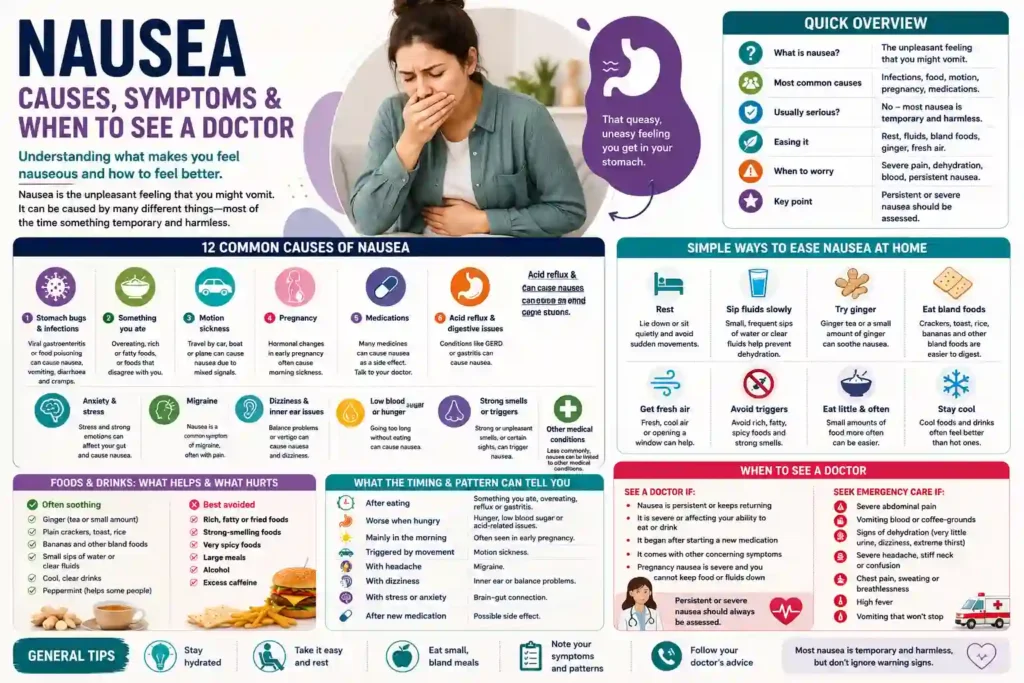
See a doctor if:
- Nausea is persistent, lasting more than a couple of days, or keeps returning without explanation
- It is severe or significantly affecting your ability to eat and drink
- It began after starting a new medication
- It comes with other symptoms that concern you
- Pregnancy nausea is severe, preventing you from keeping food or fluids down
Seek prompt or emergency medical attention for nausea with any of these warning signs:
- Severe abdominal pain
- Vomiting blood, or vomit that looks like coffee grounds
- Signs of significant dehydration — very little urine, dizziness, extreme thirst
- A severe headache, stiff neck, or confusion
- Chest pain, or nausea with sweating and breathlessness (which can signal a heart problem)
- A high fever
- Vomiting that will not stop
These need urgent assessment. The NHS guidance on feeling sick (nausea) explains when to seek help.
Final Thoughts
Nausea is among the most universal of symptoms and, most of the time, among the most harmless — a passing consequence of a stomach bug, something you ate, motion, hormones, or stress that settles with rest, fluids, and a little patience. Understanding its many possible causes helps take the worry out of it, and simple measures like sipping fluids, trying ginger, eating bland foods, and getting fresh air genuinely ease most everyday nausea.
The balanced message is to treat ordinary nausea gently and give it time, while staying alert to the situations that need more than home care. Persistent, severe, or unexplained nausea, and nausea alongside warning signs like severe pain, blood, dehydration, or a severe headache, deserves a doctor’s attention rather than waiting it out. For the common, temporary nausea most people experience, though, comfort measures and a little time are usually all it takes for that unpleasant queasiness to pass.
Medical disclaimer: This article is for general educational information and is not a substitute for professional medical advice, diagnosis, or treatment. Seek prompt care for nausea with severe pain, blood, signs of dehydration, or a severe headache, and see a doctor for persistent or unexplained nausea.
Frequently Asked Questions
What are the most common causes of nausea? The most common causes are stomach bugs and food poisoning, something you ate, motion sickness, pregnancy, medications, acid reflux and other digestive conditions, anxiety and stress, and migraine. Most causes are temporary and harmless, settling with rest and simple measures.
Why do I feel nauseous but not vomit? Nausea is the feeling that you might be sick, and it often occurs without any vomiting. It can be triggered by many things — digestion, the inner ear, stress, hunger, or medications — that stimulate the nausea pathways without leading to actual vomiting.
How can I get rid of nausea quickly? Rest quietly, sip fluids slowly, try ginger, eat bland foods like crackers or toast when ready, get fresh air, and avoid strong smells and rich foods. These measures ease most everyday nausea. For motion sickness, fresh air and looking at the horizon help.
Can anxiety and stress cause nausea? Yes. The strong connection between the brain and gut means anxiety, stress, and strong emotions can genuinely cause nausea, sometimes with a churning stomach. Managing stress and using calming techniques can help, and the nausea often eases as the stressful situation passes.
Does ginger really help with nausea? Ginger is a well-known natural remedy for nausea and has some supporting evidence, including for pregnancy and motion-related nausea. Ginger tea or a small amount of ginger is soothing for many people, though it is a supportive measure rather than a cure for an underlying cause.
When should I worry about nausea? Seek medical attention if nausea is persistent, severe, or comes with warning signs such as severe abdominal pain, vomiting blood, signs of dehydration, a severe headache or stiff neck, chest pain, or a high fever. Persistent or unexplained nausea should also be assessed.
Can nausea be a sign of something serious? Most nausea is caused by something temporary and harmless. However, because nausea can accompany many conditions, persistent, severe, or unexplained nausea, or nausea with warning signs, should be assessed by a doctor to identify the cause and rule out anything more serious.
How long does nausea usually last? Nausea from a common cause like a stomach bug or something you ate usually settles within a day or two. Motion sickness and stress-related nausea ease once the trigger passes. Nausea lasting longer than a couple of days, or that keeps returning without explanation, should be assessed by a doctor.