Magnesium Benefits: 10 Proven Ways It Supports Your Health
Magnesium is one of those minerals that works so quietly and so widely that most people never think about it — yet it is involved in hundreds of processes throughout the body, more than almost any other mineral. It helps your muscles relax, your nerves fire, your heart keep rhythm, your bones stay strong, and your body turn food into energy. When it runs low, the effects are broad and easy to misattribute: poor sleep, muscle cramps, fatigue, and more.
Part of what makes magnesium worth understanding is that low intake is more common than people realise. Modern diets, heavy on processed foods and lighter on the whole grains, nuts, seeds, and leafy greens that provide magnesium, can leave many people at the lower end of their needs. And because its symptoms are so general, a shortfall rarely announces itself clearly.
This guide covers what magnesium does, its proven benefits, the best food sources, and how to meet your needs safely — because, as with most minerals, balance rather than excess is the aim.
Quick Overview
| Question | Short answer |
|---|---|
| What is magnesium? | An essential mineral involved in hundreds of body processes |
| Key roles | Muscles, nerves, heart, bones, energy, sleep |
| Best food sources | Nuts, seeds, whole grains, leafy greens, beans, dark chocolate |
| Common signs of low levels | Muscle cramps, fatigue, poor sleep |
| Who’s at risk? | Those on processed diets, some gut conditions, older adults |
| Can you take too much? | Excess from supplements can cause side effects |
Why Magnesium Matters So Much
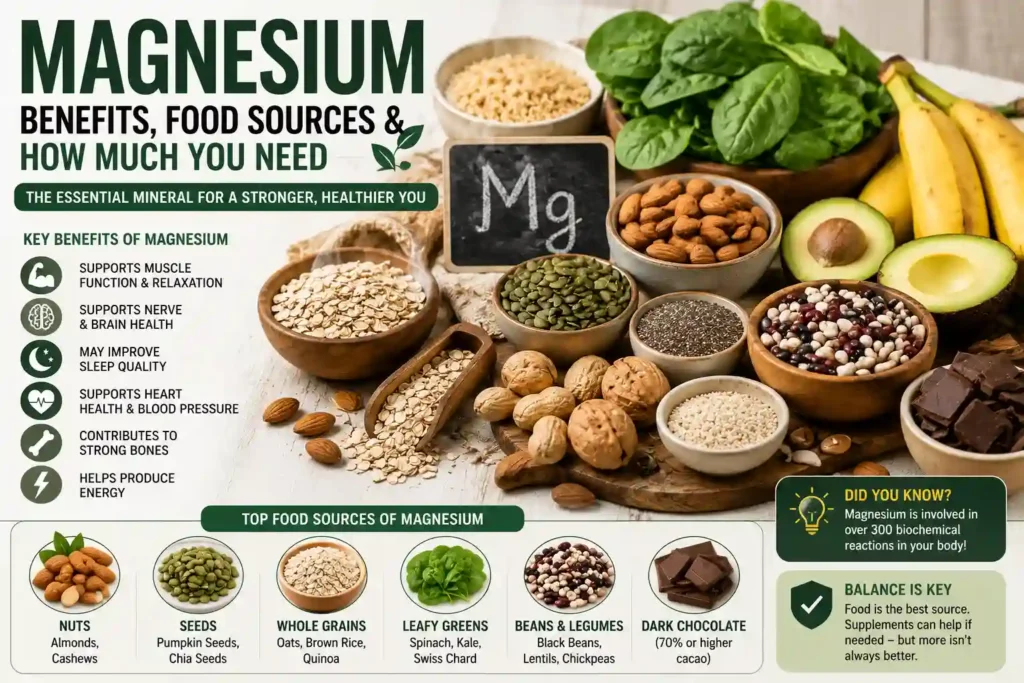
Magnesium is a true multitasker. It acts as a helper for hundreds of enzyme reactions in the body — the chemical processes that produce energy, build proteins, maintain DNA, and much more. It works alongside calcium in an important partnership: where calcium helps muscles contract, magnesium helps them relax, and this balance is essential for everything from your skeletal muscles to your heart.
Because it is involved in so many systems, magnesium touches muscle and nerve function, heart rhythm, blood sugar regulation, blood pressure, bone health, and even sleep and mood. This wide reach is also why a shortfall produces such varied, non-specific symptoms, and why magnesium has been studied for such a range of uses. Its close relationship with other nutrients — including calcium and vitamin D — means these minerals are best thought of as a team. Our guides on calcium benefits and vitamin D deficiency symptoms cover the partners that work alongside magnesium.
10 Proven Benefits of Magnesium
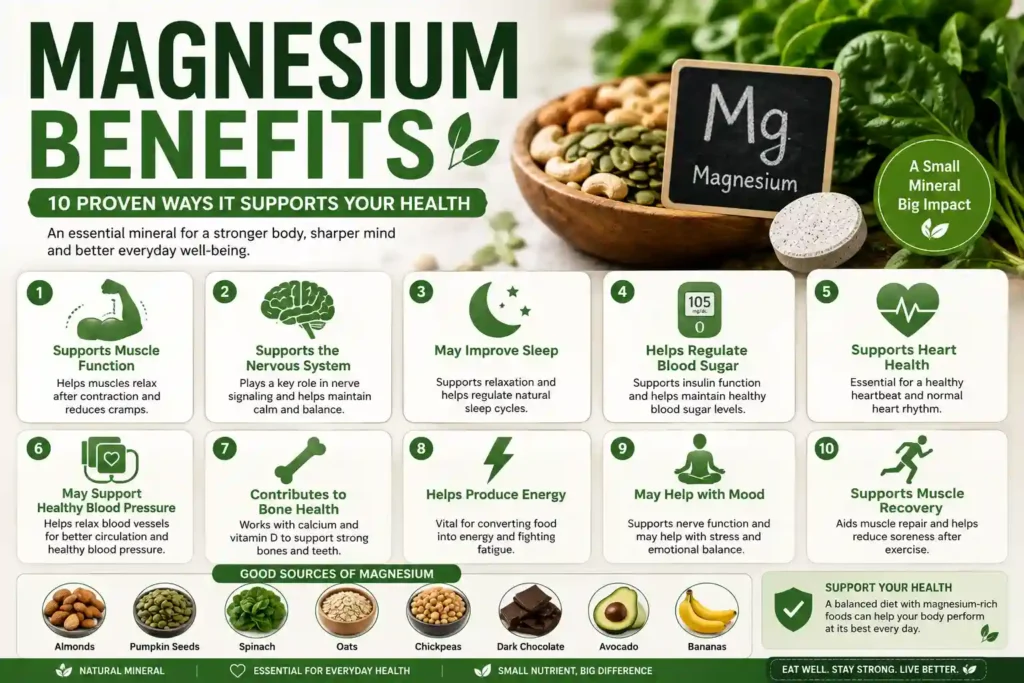
1. Supports muscle function and relaxation. Magnesium helps muscles relax after contracting, and adequate levels support normal muscle function. This is why low magnesium is associated with muscle cramps and twitches, and why it is often discussed in the context of cramp relief.
2. Supports the nervous system. Magnesium plays a role in nerve signalling and helps regulate the nervous system, contributing to its calming, balancing effects on the body.
3. May improve sleep. Magnesium is involved in the systems that promote relaxation and regulate sleep, and some people find that adequate magnesium supports better sleep quality, particularly if they were previously low.
4. Helps regulate blood sugar. Magnesium plays a role in how the body handles insulin and glucose, and low levels are associated with poorer blood sugar control, which is relevant to the prevention and management of type 2 diabetes. Our guide on diabetes symptoms covers the wider picture.
5. Supports heart health. As a mineral essential for the heart muscle and rhythm, magnesium contributes to normal heart function, and adequate intake is associated with better cardiovascular health.
6. May support healthy blood pressure. Magnesium contributes to the relaxation of blood vessels, and adequate intake, as part of an overall balanced diet, is associated with healthy blood pressure. Our guide on lowering blood pressure naturally explores this further.
7. Contributes to bone health. A significant amount of the body’s magnesium is stored in the bones, and it works alongside calcium and vitamin D to support bone strength and density.
8. Helps produce energy. Magnesium is essential for the process that converts food into usable energy in the body’s cells, which is one reason fatigue can accompany low levels.
9. May help with mood. Magnesium’s role in the nervous system and its calming effects have led to interest in its relationship with mood and stress, with some evidence linking adequate levels to better mood.
10. Supports muscle and exercise recovery. Because of its roles in muscle function and energy, magnesium is often discussed in the context of physical performance and recovery, and adequate levels support normal muscle function during and after activity.
Signs You Might Be Low in Magnesium
Magnesium deficiency can be easy to miss because its signs are so general. Recognised signs of low magnesium include:
- Muscle cramps, spasms, or twitches
- Fatigue and low energy
- Poor sleep
- Irritability or low mood
- In more significant deficiency, abnormal heart rhythms
These overlap heavily with other conditions, so they are prompts to consider magnesium rather than proof of deficiency. Because the body keeps blood magnesium fairly stable, a standard blood test does not always reflect total body stores well, which is one reason a doctor considers symptoms and diet alongside any testing.
Best Food Sources of Magnesium
Food is the ideal way to meet your magnesium needs, and many everyday foods are good sources:
- Nuts and seeds — almonds, cashews, pumpkin seeds, and chia seeds
- Whole grains — brown rice, oats, and wholewheat
- Leafy green vegetables — spinach and other greens
- Beans and legumes — black beans, chickpeas, and lentils
- Dark chocolate — a genuinely good source, in moderation
- Avocado
- Bananas
- Fish — such as salmon and mackerel
A helpful theme runs through this list: magnesium is concentrated in whole, minimally processed plant foods. Processing tends to strip magnesium away, which is why diets heavy in refined and processed foods can fall short. Simply shifting towards more whole grains, nuts, seeds, beans, and greens naturally raises magnesium intake.
How Much Magnesium Do You Need?
Magnesium needs vary by age and sex, being somewhat higher for men than women, and increasing during pregnancy. Most people can meet their needs through a balanced diet rich in the whole foods listed above, and food is the preferred and safest source.
The aim is to meet your needs without excess. While low intake is common and worth addressing through diet, very high intakes from supplements are not more beneficial and can cause side effects. As with other minerals, adequacy matched to your needs is the goal, not the highest possible intake.
How to Take Magnesium Safely
For most people, a balanced diet provides enough magnesium without supplements. When supplements are considered — for a suspected shortfall or on medical advice — a few points matter:
- Food first. Dietary magnesium is the safest source and comes with other nutrients.
- Excess causes side effects. Too much magnesium from supplements commonly causes digestive upset and diarrhoea, and very high amounts can cause more serious problems, so more is not better.
- Some forms differ. Different magnesium supplement forms vary in how they are absorbed and tolerated, which is worth discussing with a pharmacist or doctor.
- Check interactions and conditions. Magnesium supplements can interact with certain medications, and people with kidney problems in particular should only take them under medical supervision, as impaired kidneys cannot clear excess magnesium.
The safest approach is to prioritise magnesium-rich whole foods and to use supplements thoughtfully and ideally with professional advice. The NHS guidance on magnesium and other minerals sets out recommended amounts.
Why Low Magnesium Is So Common
It might seem surprising that a shortfall in such an important mineral is widespread, but several features of modern life quietly reduce magnesium intake, and understanding them helps you avoid the trap.
The biggest factor is the shift towards processed and refined foods. Magnesium is concentrated in whole foods — the bran and germ of grains, the flesh of nuts and seeds, the leaves of greens — and processing strips much of it away. When refined white bread, white rice, and packaged snacks replace whole grains, nuts, and vegetables, magnesium intake falls without anyone noticing. A diet that looks perfectly ordinary can be quietly low in magnesium simply because it leans on processed foods.
Beyond diet, certain factors increase the body’s need for magnesium or its losses. Digestive conditions that affect absorption, some medications, heavy alcohol use, and other health conditions can all lower magnesium status. Even the way modern agriculture and food processing work has been suggested to reduce the magnesium content of some foods compared with the past. The practical message is not to worry excessively, but to recognise that magnesium is one nutrient where a whole-food diet genuinely matters — and where a heavily processed diet can leave you short without any obvious sign.
Who Is Most at Risk of Low Magnesium
While a balanced whole-food diet provides plenty of magnesium, some groups are more likely to fall short and benefit from paying attention.
People eating diets high in processed and refined foods and low in whole grains, nuts, seeds, and vegetables are among the most at risk, simply through low intake. Those with digestive conditions such as Crohn’s disease or coeliac disease may absorb magnesium poorly, and people who have had certain gut surgeries can be affected too. Heavy alcohol use increases magnesium loss and is a recognised risk factor, as are some long-term medications.
Older adults are more prone to low magnesium through a combination of reduced intake and less efficient absorption, and people with poorly controlled diabetes can lose more magnesium through the urine. Importantly, people with kidney problems are a special case in the opposite direction — their kidneys may not clear magnesium well, so they should only take supplements under medical supervision. If you fall into an at-risk group and have possible symptoms, it is worth discussing with your doctor rather than either ignoring it or self-prescribing high doses.
When to See a Doctor
Consider speaking to a doctor if:
- You have persistent muscle cramps, fatigue, or poor sleep that concern you
- You have a gut condition or take medications that may affect magnesium
- You have kidney problems and are considering supplements — this needs medical supervision
- You are considering long-term or high-dose magnesium supplements
- Your symptoms are significant or not explained by diet
A doctor can advise whether supplementation is appropriate and check for any underlying cause behind possible deficiency.
Final Thoughts
Magnesium earns its place as one of the body’s essential minerals through sheer versatility — quietly supporting muscles, nerves, heart, bones, energy, and sleep across hundreds of processes. Because low intake is genuinely common on modern processed diets, and because its symptoms are so easy to attribute to other things, it is a mineral worth ensuring you get enough of, even if it rarely gets the attention it deserves.
The balanced takeaway is reassuringly practical: prioritise magnesium-rich whole foods like nuts, seeds, whole grains, leafy greens, beans, and even a little dark chocolate, and you will likely meet your needs without a second thought. Supplements have their place for genuine shortfalls, but they are best used thoughtfully and with advice, since excess causes its own problems. Get the food foundation right, and magnesium will do its wide-ranging work in the background — exactly where a well-functioning mineral belongs.
Medical disclaimer: This article is for general educational information and is not a substitute for professional medical advice, diagnosis, or treatment. Consult a qualified healthcare provider before taking magnesium supplements, especially if you have kidney problems or take regular medication.
Frequently Asked Questions
What are the main benefits of magnesium? Magnesium supports muscle function and relaxation, the nervous system, sleep, blood sugar regulation, heart health, blood pressure, bone strength, and energy production. It is involved in hundreds of processes throughout the body, which is why its benefits are so wide-ranging.
Does magnesium help with sleep? Magnesium is involved in the systems that promote relaxation and regulate sleep, and some people find adequate magnesium supports better sleep quality, particularly if they were previously low. It is not a guaranteed sleep aid, but meeting your needs may help.
What are the signs of magnesium deficiency? Common signs include muscle cramps, spasms or twitches, fatigue, poor sleep, and irritability, with abnormal heart rhythms in more significant deficiency. These overlap with other conditions, so they are prompts to consider magnesium rather than proof of a shortfall.
What foods are high in magnesium? Nuts and seeds, whole grains, leafy greens, beans, dark chocolate, avocado, bananas, and fish like salmon are all good sources. Magnesium is concentrated in whole, minimally processed plant foods, so a diet rich in these naturally provides plenty.
Can magnesium help with muscle cramps? Magnesium helps muscles relax and low levels are associated with cramps, so ensuring adequate intake may help, particularly if you were deficient. However, cramps have many causes, and magnesium is not a guaranteed fix, so persistent cramps are worth discussing with a doctor.
Can you take too much magnesium? Yes. Excess magnesium from supplements commonly causes digestive upset and diarrhoea, and very high amounts can cause more serious problems, especially in people with kidney issues. Food sources rarely cause excess, which is why a food-first approach is safest.
How much magnesium do I need per day? Needs vary by age and sex, being somewhat higher for men than women and increasing in pregnancy. Most people can meet their needs through a balanced diet rich in nuts, seeds, whole grains, greens, and beans, so supplements are usually unnecessary.
Does magnesium help with stress and mood? Magnesium plays a role in the nervous system and has calming effects, and some evidence links adequate levels with better mood and stress resilience. It is not a treatment for anxiety or depression on its own, but ensuring you are not deficient may help as part of overall wellbeing.
Which magnesium supplement is best? Different forms of magnesium vary in how well they are absorbed and tolerated, and some are gentler on the stomach than others. Because the best choice depends on your needs and how you tolerate it, it is worth asking a pharmacist or doctor rather than assuming any single form is universally best.