Hair Loss Causes: 12 Reasons You’re Losing Hair & What Helps
Finding more hair than usual in the shower drain, on your pillow, or in your brush can be worrying. Some hair loss is completely normal, as everyone sheds hair every day. But when you notice more shedding than usual, thinning, or bald patches, it is natural to want to know why.
Hair loss has many possible causes. Some are temporary and reversible, such as stress or a nutritional shortfall. Others are longer-lasting, such as inherited hair loss. Understanding the likely cause is the first step, because it guides what, if anything, can help, and whether you should see a doctor.
This guide explains the common causes of hair loss, what can help, and when hair loss should be checked by a doctor. It focuses on the health-related reasons behind hair loss, rather than styling, so you can understand what might be going on.
Quick Overview
| Question | Short answer |
|---|---|
| Is some hair loss normal? | Yes, everyone sheds hair daily |
| Common causes | Genetics, stress, illness, diet, hormones |
| Is it reversible? | Often, depending on the cause |
| Affects only men? | No, hair loss affects women too |
| Can diet affect it? | Yes, some deficiencies can cause hair loss |
| When to see a doctor | Sudden, patchy, or distressing hair loss |
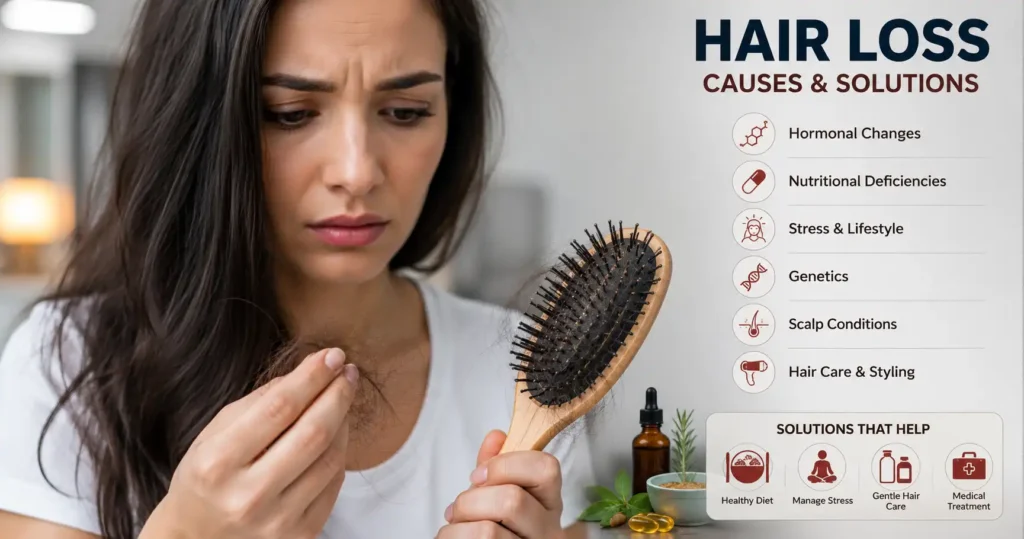
Understanding Hair Loss
It helps to know that shedding some hair every day is completely normal. Hair grows in a cycle, with each hair growing, resting, and then falling out to be replaced. Losing a certain amount of hair each day is simply part of this natural process.
Hair loss becomes worth looking into when it is more than usual. This might mean noticeably more shedding, gradual thinning, a receding hairline, or patches of hair loss. The pattern and speed of hair loss can offer clues to the cause.
Hair loss is common and affects both men and women. It can happen at any age, though some causes are more common at certain ages. Some hair loss is temporary and grows back once the cause is addressed. Other types are longer-lasting. Because the causes and outlook vary so much, understanding the likely reason for your hair loss is important. Some causes of hair loss, such as low iron, are also linked to other symptoms, and our guide on fatigue causes covers a common one.
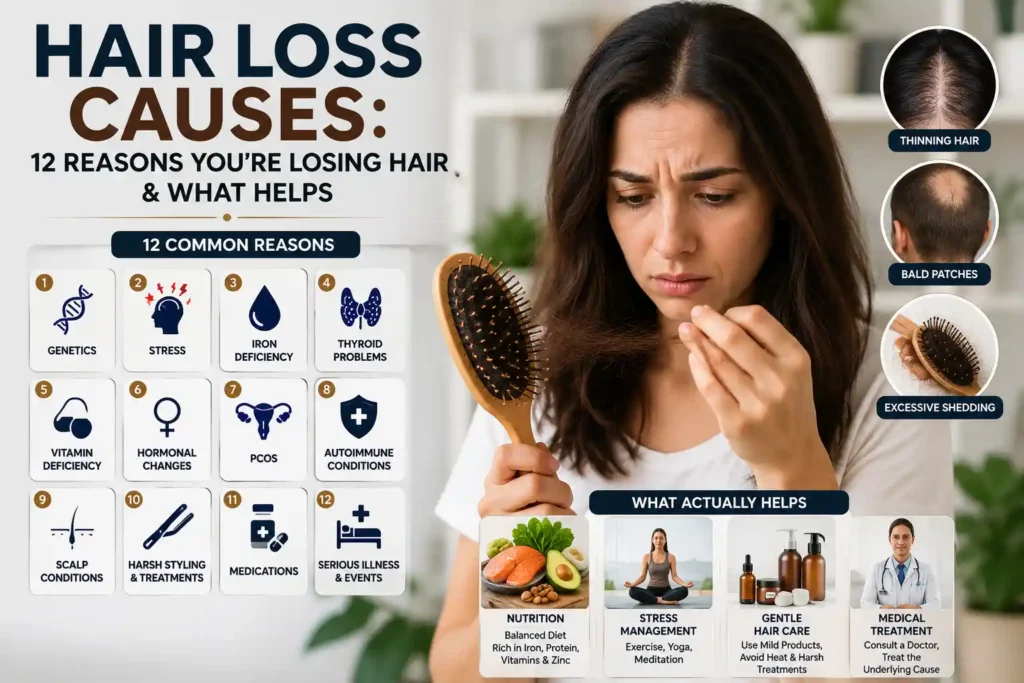
12 Common Causes of Hair Loss
1. Genetics (inherited hair loss). The most common cause of hair loss is inherited, often called male or female pattern hair loss. It tends to run in families and causes gradual thinning over time, often in a recognisable pattern.
2. Stress. A significant physical or emotional stress can trigger temporary hair loss a few months later. This type of shedding is usually temporary, and hair often regrows once the stress passes.
3. Illness or fever. A serious illness, high fever, or major health event can cause temporary hair shedding some weeks or months afterwards. As with stress, this often recovers with time.
4. Nutritional deficiencies. A lack of certain nutrients, such as iron, can contribute to hair loss. This is one reason hair loss can sometimes signal an underlying issue. Our guide on iron deficiency explains this common shortfall.
5. Thyroid problems. Both an underactive and an overactive thyroid can affect hair and cause hair loss. Thyroid conditions often come with other symptoms too, and a doctor can check for them.
6. Hormonal changes. Hormonal shifts, such as those after pregnancy or around menopause, can cause hair loss or shedding. Hormone-related hair loss is often temporary.
7. Childbirth. Many women notice increased hair shedding a few months after giving birth. This is due to hormonal changes and is usually temporary, with hair returning to normal over time.
8. Certain medical conditions. Some conditions, including those affecting the immune system, can cause hair loss, sometimes in patches. A doctor can diagnose these.
9. Medications. Some medicines list hair loss as a possible side effect. If your hair loss started after a new medication, mention it to your doctor, but do not stop a prescribed medicine on your own.
10. Medical treatments. Certain medical treatments are known to cause hair loss. In these cases, the hair loss is usually expected and often temporary, with regrowth after treatment.
11. Hairstyles that pull on the hair. Wearing hair in tight styles that pull on the roots over a long time can cause a type of hair loss. Being gentler with the hair can help prevent this.
12. Scalp conditions. Some scalp conditions and infections can lead to hair loss in the affected area. Treating the underlying scalp problem often helps the hair recover.
Hair Loss in Women
Hair loss is often thought of as a male issue, but it is common in women too. Understanding this can be reassuring, as many women feel alone with it.
Women can experience inherited hair loss, often as a general thinning across the top of the scalp, rather than a receding hairline. Hormonal changes are a particularly common cause in women. Many notice increased shedding after childbirth or around menopause, and this is often temporary.
Other causes in women include nutritional shortfalls such as low iron, thyroid problems, stress, and certain medical conditions. Because low iron is relatively common in women, it is a cause worth being aware of. If you are a woman experiencing hair loss that is sudden, patchy, or distressing, it is worth seeing a doctor. They can check for causes such as low iron or thyroid problems, often with a simple blood test, and advise on what may help.
Hair Loss in Men
In men, the most common cause of hair loss is inherited male pattern hair loss. This typically causes a receding hairline and thinning at the crown, and it often develops gradually with age. It is very common and, while harmless, can be distressing for some men.
Men can also experience hair loss from other causes, such as stress, illness, nutritional issues, thyroid problems, and certain medical conditions. So while pattern hair loss is the usual reason, it is not the only one. If hair loss is sudden, patchy, or comes with other symptoms, it is worth seeing a doctor rather than assuming it is simply pattern hair loss, as another cause may be treatable.
What Can Help With Hair Loss
What helps with hair loss depends entirely on the cause, which is why understanding the reason matters so much. Some general points are worth knowing.
For temporary hair loss caused by stress, illness, or childbirth, the hair often regrows on its own once the trigger has passed, so patience is often the main thing needed. For hair loss linked to a nutritional shortfall, such as low iron, addressing the underlying deficiency, guided by a doctor, may help. For hair loss caused by a thyroid problem or another medical condition, treating that condition is the key step.
For inherited pattern hair loss, there are some treatment options that a doctor or pharmacist can discuss, though results vary and it is a longer-term matter. Being gentle with your hair, avoiding tight styles that pull on the roots, and looking after your general health all support your hair. Most importantly, if you are worried about hair loss, a doctor can help identify the cause and advise on what may genuinely help in your situation, rather than relying on guesswork.
Temporary vs Long-Lasting Hair Loss
One of the most useful ways to understand hair loss is whether it is temporary or long-lasting, as this affects what to expect.
Temporary hair loss is often triggered by a specific event, such as a significant stress, an illness or high fever, childbirth, or a nutritional shortfall. It usually appears as increased shedding some weeks or months after the trigger. The reassuring feature of temporary hair loss is that the hair typically regrows once the underlying cause has passed or been addressed. Patience is often the main thing required, though treating any underlying cause, such as low iron, helps.
Long-lasting hair loss is different. The most common example is inherited pattern hair loss, which develops gradually over years and tends to continue over time. Some medical conditions can also cause longer-lasting hair loss. This type is less likely to fully resolve on its own, though some causes have treatment options a doctor can discuss.
Knowing which type you may have is helpful. If your hair loss followed a clear trigger like illness or childbirth, it may well be temporary. If it has developed gradually over years, especially in a family pattern, it may be inherited. Either way, a doctor can help confirm the cause and advise, which is especially worthwhile for sudden, patchy, or distressing hair loss.
Nutrition and Hair Health
Because nutritional shortfalls can contribute to hair loss, it is worth understanding the link between diet and hair health. Your hair, like the rest of your body, relies on good nutrition to grow and stay healthy.
Certain nutrients are particularly relevant to hair. Iron is a well-known example, as low iron can contribute to hair loss, especially in women. Our guide on iron deficiency explains this common shortfall. A generally balanced diet, with enough protein, vitamins, and minerals, supports healthy hair as part of overall good health.
It is important to be balanced about this, though. Nutritional causes are only one possible reason for hair loss, and taking high-dose supplements is not a solution on its own, and can even be harmful. If you suspect a nutritional cause, the best approach is to see a doctor, who can check for shortfalls such as low iron with a blood test and advise appropriately. Eating well supports your hair, but hair loss with a clear medical or inherited cause needs the right diagnosis rather than supplements alone. A doctor can help you find the genuine cause and the most useful approach for your situation.
When to See a Doctor
Some hair loss is normal, and some is temporary. But sometimes you should see a doctor. See a doctor if:
- Your hair loss is sudden, rather than gradual
- You lose hair in patches
- Your scalp is itchy, sore, or shows signs of a problem
- Your hair loss is distressing you
- You have other symptoms alongside the hair loss, such as tiredness
- You are unsure of the cause, or worried
A doctor can examine your hair and scalp, ask about your health and any triggers, and arrange tests if needed, such as a blood test for iron or thyroid problems. This helps find the cause and guides what may help. Sudden or patchy hair loss in particular should be checked, as it can point to a treatable cause. The NHS guidance on hair loss explains when to seek help.
Final Thoughts
Hair loss is common and has many possible causes, from inherited pattern hair loss to stress, illness, hormonal changes, nutritional shortfalls, and medical conditions. Some hair loss is temporary and grows back once the cause passes, while other types are longer-lasting. Because the causes and outlook vary so much, understanding the likely reason for your hair loss is the important first step.
The reassuring news is that many causes of hair loss can be addressed, especially temporary ones and those linked to a treatable cause such as low iron or a thyroid problem. What helps depends on the cause, which is why it is worth getting to the bottom of it rather than guessing.
If your hair loss is sudden, patchy, distressing, or comes with other symptoms, see a doctor. They can find the cause and advise on what may genuinely help. Hair loss can be worrying, but understanding it, and getting the right advice, is the best way forward. For many people, the cause turns out to be something that can be treated or that resolves with time.
Medical disclaimer: This article is for general educational information only. It is not a substitute for professional medical advice, diagnosis, or treatment. See a doctor for hair loss that is sudden, patchy, distressing, or comes with other symptoms.
Frequently Asked Questions
What are the most common causes of hair loss? The most common cause is inherited pattern hair loss, which runs in families. Other common causes include stress, illness or fever, nutritional shortfalls such as low iron, thyroid problems, hormonal changes, childbirth, certain medical conditions, some medications, and scalp conditions.
Why am I suddenly losing hair? Sudden hair loss can be triggered by a significant stress, illness, or fever a few months earlier, or by hormonal changes such as after childbirth. It can also relate to nutritional or medical causes. Sudden or patchy hair loss should be seen by a doctor to find the cause.
Can stress cause hair loss? Yes. A significant physical or emotional stress can trigger temporary hair shedding, usually a few months later. This type of hair loss is often temporary, and hair frequently regrows once the stress has passed. Persistent or distressing hair loss should be checked by a doctor.
Does hair loss affect women too? Yes. Hair loss is common in women, not just men. Women often experience general thinning rather than a receding hairline. Common causes in women include hormonal changes, such as after childbirth or around menopause, inherited thinning, low iron, thyroid problems, and stress.
Can low iron cause hair loss? Yes. A lack of certain nutrients, including iron, can contribute to hair loss. This is one reason hair loss can sometimes signal an underlying issue. Low iron is relatively common, especially in women. A doctor can check your iron levels with a simple blood test.
Will my hair grow back? It depends on the cause. Temporary hair loss from stress, illness, or childbirth often grows back once the trigger passes. Hair loss from a treatable cause, such as low iron or a thyroid problem, may improve when that is addressed. Inherited pattern hair loss is longer-lasting.
When should I see a doctor about hair loss? See a doctor if your hair loss is sudden, comes out in patches, is distressing you, or comes with other symptoms such as tiredness. Also see a doctor if your scalp is itchy or sore, or if you are unsure of the cause. Sudden or patchy hair loss especially should be checked.