GERD Symptoms: 10 Warning Signs of Acid Reflux to Watch
Almost everyone gets heartburn from time to time — that burning feeling behind the breastbone after a big, rich meal. It is uncomfortable but usually harmless and short-lived. But when that burning becomes a regular visitor, showing up several times a week and interfering with your meals, your sleep, and your comfort, it has crossed a line. That persistent, recurring acid reflux has a name: GERD, or gastro-oesophageal reflux disease.
The distinction matters, because occasional heartburn and GERD are treated quite differently. Occasional reflux you can manage with simple changes and the odd antacid. GERD, being a chronic condition, needs a more considered approach — and, if left unmanaged over years, persistent acid reflux can irritate and damage the food pipe. Recognising when heartburn has become GERD, and knowing its full range of symptoms, is the first step to getting it under control.
This guide covers the warning signs of GERD, what triggers it, how it is managed, and when reflux warrants seeing a doctor.
Quick Overview
| Question | Short answer |
|---|---|
| What is GERD? | Frequent, persistent acid reflux — a chronic condition |
| Main symptom | Heartburn (burning behind the breastbone) |
| How often? | Typically two or more times a week |
| Common triggers | Certain foods, large meals, lying down, weight, smoking |
| Beyond heartburn | Regurgitation, cough, sore throat, difficulty swallowing |
| How is it managed? | Lifestyle changes, diet, and medication |
| When to worry | Difficulty swallowing, weight loss, persistent symptoms |
What Is GERD?
GERD stands for gastro-oesophageal reflux disease. It happens when stomach acid frequently flows back up into the oesophagus — the tube connecting your mouth to your stomach. A ring of muscle at the bottom of the oesophagus normally acts as a valve, opening to let food into the stomach and closing to keep acid down. In GERD, this valve does not close properly or relaxes too often, allowing acid to escape upwards.
The occasional reflux almost everyone experiences becomes GERD when it happens frequently — generally twice a week or more — and persists over time. That distinction between an occasional nuisance and a chronic condition is important, because GERD is managed rather than cured, an idea explored in our guide on cure vs treat. The good news is that with the right combination of lifestyle changes and, where needed, medication, GERD can usually be well controlled.
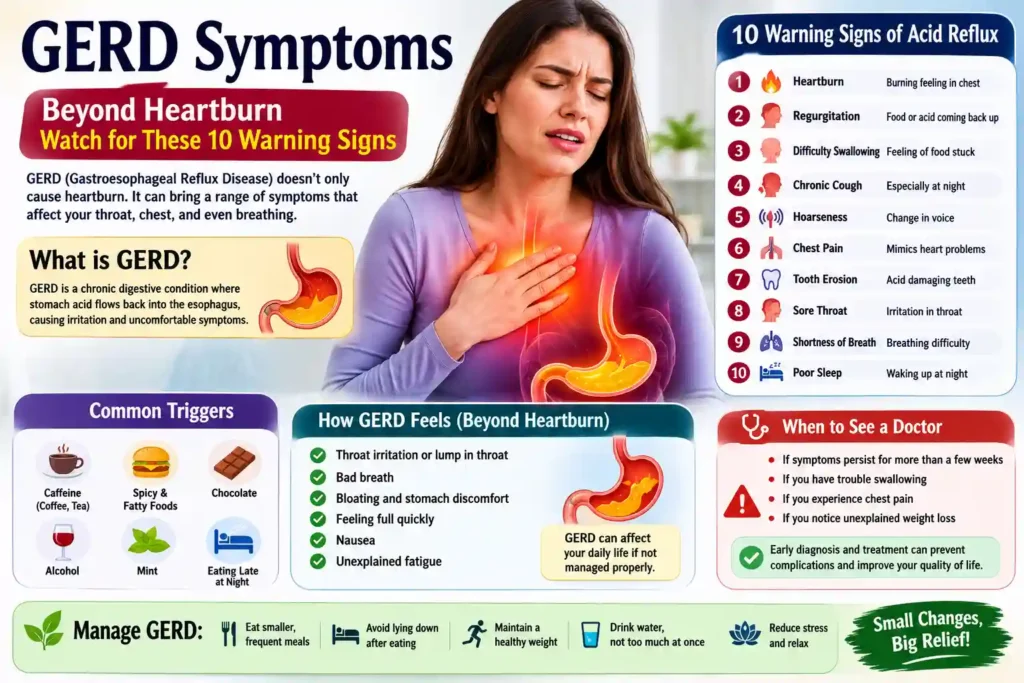
10 Warning Signs of GERD
1. Heartburn. The hallmark symptom — a burning sensation in the chest, behind the breastbone, that often occurs after eating and may worsen when lying down or bending over. In GERD, this happens frequently rather than occasionally.
2. Regurgitation. A sour or bitter-tasting fluid backing up into the throat or mouth, sometimes bringing small amounts of food with it. This is a classic sign of acid escaping upwards.
3. A sensation of a lump in the throat. Many people with GERD describe a feeling of something stuck in the throat, or a persistent need to clear it.
4. Chronic cough. Acid irritating the airways can cause a persistent, dry cough, which is often worse at night and easily mistaken for another cause.
5. Sore throat or hoarseness. Acid reaching the throat and voice box can cause soreness, hoarseness, or a raspy voice, particularly in the morning.
6. Difficulty or pain when swallowing. A sensation of food sticking, or discomfort when swallowing, can develop and is a symptom that should always be assessed by a doctor.
7. Chest pain. Reflux can cause chest discomfort. Importantly, chest pain should never be assumed to be reflux without medical assessment, as it can also signal heart problems — seek urgent care if in any doubt.
8. Worsening symptoms at night. Lying down makes it easier for acid to flow back up, so many people find reflux worse at night, disrupting sleep.
9. Nausea. Some people experience nausea as part of their reflux, particularly after eating.
10. Dental and breath problems. Over time, stomach acid reaching the mouth can affect tooth enamel and contribute to bad breath.
Some people have “silent reflux,” where the throat, voice, and airway symptoms dominate without much classic heartburn — which is why a persistent cough, hoarseness, or throat-clearing without obvious heartburn can still be reflux.
What Triggers and Causes GERD
| Factor | How it contributes |
|---|---|
| Certain foods | Fatty, fried, spicy foods, chocolate, citrus, tomato |
| Drinks | Coffee, alcohol, fizzy drinks |
| Large meals | Fill the stomach and increase reflux |
| Lying down after eating | Makes it easier for acid to flow back up |
| Excess weight | Increases pressure on the stomach |
| Smoking | Weakens the valve and increases acid |
| Pregnancy | Increased pressure and hormonal changes |
| Hiatus hernia | Part of the stomach moves up, affecting the valve |
Understanding your personal triggers is a large part of managing GERD, since they vary between people. Keeping a simple diary of what you eat and when symptoms strike often reveals clear patterns.
How GERD Is Managed
GERD management usually combines lifestyle changes with medication where needed, and lifestyle changes alone control many milder cases.
Lifestyle and dietary changes:
- Eat smaller, more frequent meals rather than large ones
- Avoid your personal trigger foods and drinks
- Do not lie down for two to three hours after eating
- Raise the head of your bed if night-time reflux is a problem
- Lose excess weight, which reduces pressure on the stomach
- Stop smoking and limit alcohol
- Avoid tight clothing around the waist
Medications (available over the counter and on prescription) can reduce or neutralise stomach acid, easing symptoms and allowing the oesophagus to heal. These range from antacids for occasional relief to acid-reducing medicines for more persistent symptoms. Because some are intended only for short-term use and others for longer management, and because persistent reflux should be properly assessed, medication for ongoing GERD is best guided by a doctor or pharmacist rather than taken indefinitely on your own.
Our guide on gastritis symptoms covers a related digestive condition that can share some symptoms, and our guide on home remedies for constipation addresses another common digestive complaint.
Foods That Help and Foods That Trigger GERD
While triggers vary between people, some patterns are common enough to be worth knowing when planning meals around reflux.
| Often better tolerated | Common triggers to limit |
|---|---|
| Lean proteins — chicken, fish, turkey | Fatty and fried foods |
| Vegetables (non-acidic) | Spicy foods |
| Whole grains — oats, brown rice | Citrus fruits and juices |
| Bananas and melons | Tomatoes and tomato sauces |
| Ginger (in moderation) | Chocolate |
| Non-citrus, non-mint herbal teas | Coffee and caffeinated drinks |
| Plain yoghurt | Alcohol and fizzy drinks |
The way you eat matters as much as what you eat. Large meals fill the stomach and increase the likelihood of reflux, so smaller, more frequent meals are gentler. Eating slowly, not lying down for a few hours afterwards, and avoiding eating close to bedtime all reduce symptoms. Because everyone’s triggers differ, the most reliable guide is your own experience — a food diary noting what you ate and when symptoms followed reveals your personal pattern far better than any general list. Some people react strongly to a food others tolerate perfectly well.
Why Untreated GERD Matters
GERD is usually manageable, but the reason doctors encourage people not to simply live with persistent reflux is what ongoing acid exposure can do to the oesophagus over time.
Repeated acid irritation can inflame the lining of the food pipe, causing a condition called oesophagitis, which can be painful and, in some cases, lead to bleeding or difficulty swallowing. Over the longer term, in some people, persistent reflux can cause changes to the cells lining the lower oesophagus — a condition that requires monitoring because it slightly raises the risk of more serious problems. Scarring from long-term inflammation can also narrow the oesophagus, making swallowing difficult.
None of this is meant to alarm, because these complications develop over years of unmanaged reflux, and good control greatly reduces the risk. But it is exactly why persistent reflux deserves proper management rather than being masked indefinitely with antacids, and why the warning signs — particularly difficulty swallowing, unexplained weight loss, or vomiting blood — should always be assessed promptly. Managing GERD well is not just about comfort today; it protects the oesophagus over the long term.
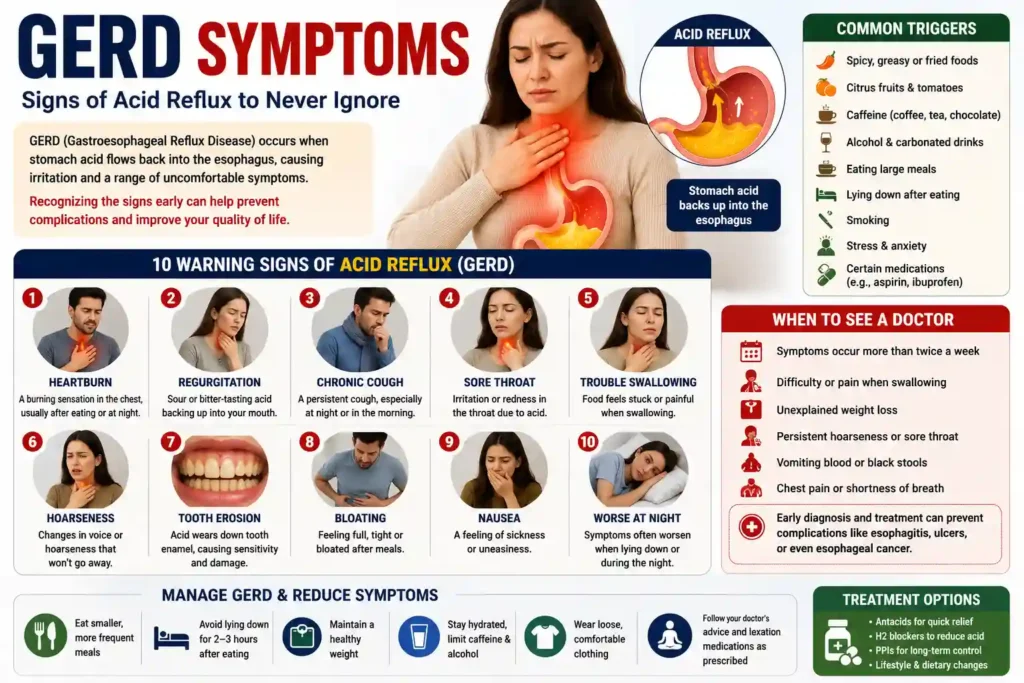
Simple Everyday Steps to Reduce Reflux
Alongside any medical treatment, a set of practical daily habits genuinely reduces reflux for most people, and they cost nothing to try.
Eating smaller meals more often, rather than large ones, keeps the stomach from becoming overfull and reduces the pressure that pushes acid upwards. Leaving two to three hours between your last meal and lying down gives the stomach time to empty, which is one of the most effective changes for night-time reflux. Raising the head of your bed slightly — using bed risers rather than just extra pillows, which can bend the body awkwardly — uses gravity to help keep acid down while you sleep.
Beyond meals, losing excess weight reduces pressure on the stomach and is one of the most impactful changes for those carrying extra weight around the middle. Stopping smoking helps, since smoking weakens the valve that keeps acid down. Avoiding tight belts and waistbands, eating slowly, and identifying and steering clear of your personal trigger foods round out the approach. None of these is dramatic on its own, but together they make a real difference, and for milder GERD they may control symptoms without the need for ongoing medication. For a related digestive complaint, our guide on home remedies for constipation covers gentle, practical measures in the same spirit.
When to See a Doctor
See a doctor if:
- You have heartburn or reflux symptoms two or more times a week
- Over-the-counter treatments are not controlling your symptoms
- You are relying on antacids frequently over weeks
- Symptoms are disrupting your sleep or daily life
- You have persistent cough, hoarseness, or throat symptoms
Seek prompt medical attention for any of these warning signs, which need proper assessment:
- Difficulty or pain when swallowing
- Food feeling like it sticks going down
- Unexplained weight loss
- Vomiting, especially if blood is present or it looks like coffee grounds
- Black, tarry stools
- Persistent symptoms despite treatment
And crucially: chest pain should never be assumed to be reflux. If you have chest pain, especially with breathlessness, sweating, or pain spreading to the arm or jaw, seek emergency care, as this can signal a heart problem. The NHS guidance on heartburn and acid reflux explains when to seek help.
Final Thoughts
The line between ordinary heartburn and GERD comes down to frequency and persistence — an occasional burn after a heavy meal is normal, but reflux happening twice a week or more, week after week, is a chronic condition worth taking seriously. Recognising GERD’s full range of symptoms, which stretch well beyond heartburn to cough, hoarseness, a lump in the throat, and disturbed sleep, helps you understand what is happening and seek the right help.
The encouraging reality is that GERD is very manageable. Identifying and avoiding your personal triggers, adjusting how and when you eat, addressing weight and smoking, and using medication appropriately under guidance can bring most cases under good control. What matters is not ignoring persistent reflux or masking it indefinitely with antacids — because certain warning signs, particularly difficulty swallowing or unexplained weight loss, need proper assessment, and untreated reflux can affect the oesophagus over time. Treated properly, GERD need not dominate your comfort or your meals.
Medical disclaimer: This article is for general educational information and is not a substitute for professional medical advice, diagnosis, or treatment. Seek emergency care for chest pain, and see a doctor for difficulty swallowing, unexplained weight loss, or persistent symptoms.
Frequently Asked Questions
What are the main symptoms of GERD? The main symptom is frequent heartburn — a burning sensation behind the breastbone — often with regurgitation of sour fluid. Other symptoms include a lump-in-the-throat feeling, chronic cough, hoarseness, difficulty swallowing, chest discomfort, and worsening symptoms at night.
What is the difference between heartburn and GERD? Heartburn is a symptom — the burning feeling from acid reflux — which almost everyone experiences occasionally. GERD is a chronic condition where reflux happens frequently, generally twice a week or more, and persists over time, needing more considered management.
What triggers acid reflux? Common triggers include fatty, fried, and spicy foods, chocolate, citrus, tomato, coffee, alcohol, and fizzy drinks, as well as large meals, lying down after eating, excess weight, and smoking. Triggers vary between people, so keeping a diary helps identify yours.
Can GERD be cured? GERD is generally managed rather than cured. With lifestyle changes, dietary adjustments, and medication where needed, most cases can be well controlled. Some underlying causes can be treated, but for most people the aim is effective long-term control of symptoms.
Why is my acid reflux worse at night? Lying down makes it easier for stomach acid to flow back up into the oesophagus, so reflux is often worse at night. Not eating for two to three hours before bed and raising the head of the bed can help reduce night-time symptoms.
When should I see a doctor about acid reflux? See a doctor if you have reflux twice a week or more, if over-the-counter treatments are not helping, or if you have warning signs like difficulty swallowing, unexplained weight loss, or vomiting blood. Seek emergency care for chest pain, which should never be assumed to be reflux.
What is silent reflux? Silent reflux is when acid reflux causes throat, voice, and airway symptoms — such as a persistent cough, hoarseness, or throat-clearing — without much classic heartburn. Because the usual burning is absent, it can be harder to recognise as reflux.
Can GERD cause a cough? Yes. Acid irritating the airways can cause a persistent, often dry cough that is frequently worse at night. Because a cough has many causes, reflux is sometimes overlooked, but it is a recognised cause of a chronic cough, especially alongside other reflux symptoms.
Is it safe to take antacids every day? Occasional antacid use for mild heartburn is generally fine, but relying on them frequently over weeks suggests your reflux needs proper assessment rather than ongoing self-treatment. Persistent symptoms should be reviewed by a doctor, who can recommend appropriate management and rule out anything more serious.