Gastritis Symptoms: 9 Warning Signs & What Causes Them
That gnawing, burning ache in the upper stomach — the one that flares after certain meals, or wakes you with discomfort, or leaves you feeling bloated and vaguely nauseated — is a signal many people learn to ignore. They put it down to something they ate, take an antacid, and carry on. But when that upper-abdominal discomfort keeps returning, it may be gastritis: inflammation of the stomach lining, and one of the more common reasons for ongoing stomach trouble.
Gastritis is worth understanding because it sits on a spectrum. In its mild, short-lived form, it is an irritation that settles with simple changes. In its more persistent form, or when driven by certain causes, it can linger and, if left unaddressed, occasionally lead to complications. The good news is that gastritis is usually very manageable once the cause is identified — and the causes, from a common bacterial infection to everyday painkillers, are often surprisingly addressable.
This guide covers the warning signs of gastritis, what causes it, how it is managed, and when stomach symptoms warrant seeing a doctor.
Quick Overview
| Question | Short answer |
|---|---|
| What is gastritis? | Inflammation of the stomach lining |
| Main symptom | Upper abdominal pain or burning |
| Types | Acute (sudden) and chronic (long-lasting) |
| Common causes | H. pylori infection, NSAID painkillers, alcohol, stress |
| Other symptoms | Nausea, bloating, feeling full quickly, loss of appetite |
| How is it managed? | Treating the cause, diet, and acid-reducing medication |
| When to worry | Vomiting blood, black stools, severe or persistent pain |
What Is Gastritis?
Gastritis is inflammation, irritation, or erosion of the lining of the stomach. The stomach lining normally protects itself from the powerful acid it produces to digest food, using a layer of protective mucus. When that protection is disrupted or the lining is irritated, inflammation results — and that is gastritis.
It comes in two broad forms. Acute gastritis comes on suddenly, often triggered by something specific like a bout of heavy drinking, a course of painkillers, or a stressful illness, and typically settles once the cause is removed. Chronic gastritis develops gradually and persists over time, often driven by an ongoing cause such as a bacterial infection, and can quietly continue for years. Both involve the same underlying inflammation, but they differ in how they arrive and how long they last.
Gastritis shares some symptoms with other digestive conditions, which is why it is sometimes confused with acid reflux or an ulcer. Our guide on GERD symptoms covers a related condition, and the two can even occur together, though they involve different problems in the digestive tract.
9 Warning Signs of Gastritis
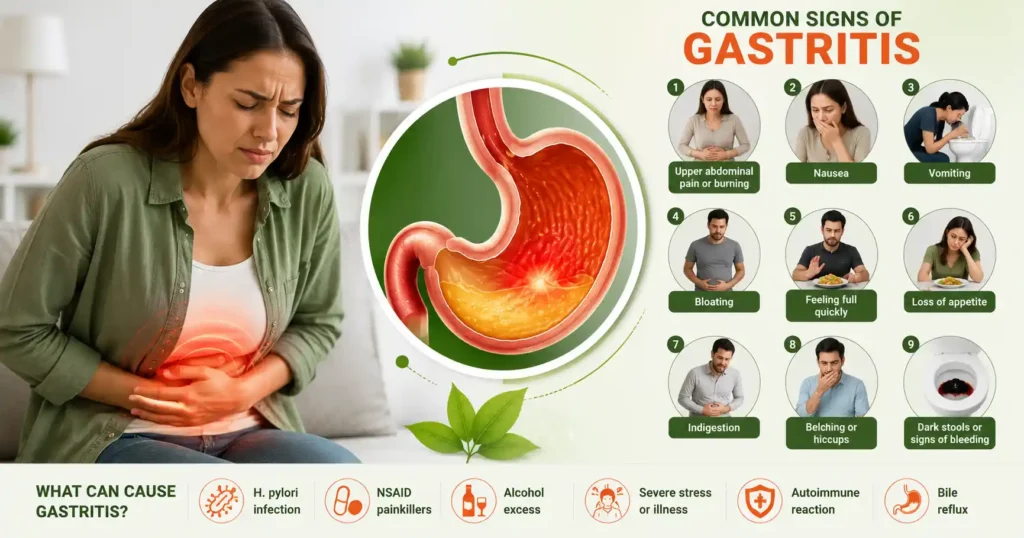
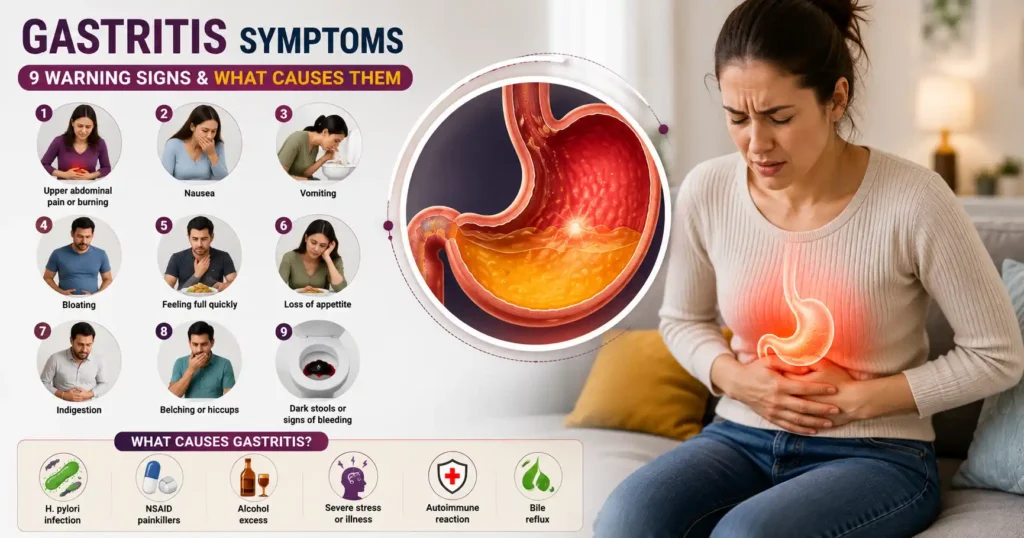
1. Upper abdominal pain or burning. The most common symptom — a gnawing, burning, or aching pain in the upper part of the stomach, which may improve or worsen with eating depending on the person.
2. Nausea. A feeling of queasiness is common with gastritis, sometimes with a general sense of stomach upset.
3. Vomiting. Some people experience vomiting. If vomit contains blood or looks like coffee grounds, this is a warning sign needing urgent care.
4. Bloating. A sensation of fullness, tightness, or swelling in the upper abdomen frequently accompanies gastritis.
5. Feeling full quickly. Many people find they feel full soon after starting to eat, or uncomfortably full after a normal-sized meal.
6. Loss of appetite. The discomfort and nausea can reduce the desire to eat.
7. Indigestion. A general feeling of indigestion or discomfort after eating is common, sometimes described as a burning or heavy sensation.
8. Belching or hiccups. Excess burping or persistent hiccups can accompany the digestive upset of gastritis.
9. Dark stools or signs of bleeding. In more significant gastritis where the lining is eroded, there can be bleeding, showing as black, tarry stools or blood in vomit — a serious sign needing prompt medical attention.
Importantly, some people with gastritis, particularly the chronic form, have few or no symptoms at all, and it is only discovered when investigating something else. The presence or absence of symptoms does not always reflect the degree of inflammation.
What Causes Gastritis
| Cause | How it leads to gastritis |
|---|---|
| H. pylori infection | A common bacterial infection of the stomach; a leading cause of chronic gastritis |
| NSAID painkillers | Regular use of aspirin, ibuprofen, and similar can irritate the lining |
| Alcohol | Excessive drinking irritates and erodes the stomach lining |
| Severe stress or illness | Major physical stress, surgery, or serious illness can trigger acute gastritis |
| Autoimmune reaction | The immune system attacks the stomach lining in some people |
| Bile reflux | Backflow of bile into the stomach |
Two causes stand out for being common and addressable. H. pylori, a bacterial infection of the stomach, is a leading cause of chronic gastritis worldwide and can be tested for and treated. And NSAID painkillers — aspirin, ibuprofen, and similar — are a very common cause, particularly with regular use, which is why anyone taking them frequently and developing stomach symptoms should discuss this with their doctor rather than continuing regardless. Never stop a prescribed medication on your own, but do report stomach symptoms to your prescriber.
How Gastritis Is Managed
Managing gastritis centres on treating the underlying cause while easing symptoms:
Treating the cause is key. If H. pylori is present, it is treated with a specific course of medication prescribed by a doctor. If NSAIDs are the culprit, your doctor may adjust or change them. Reducing alcohol and addressing other triggers all help.
Acid-reducing medication can ease symptoms and allow the stomach lining to heal by reducing acid, ranging from antacids for mild relief to stronger acid-reducing medicines for more persistent cases. Because these serve different purposes and persistent gastritis needs proper assessment, medication is best guided by a doctor or pharmacist.
Dietary and lifestyle changes support recovery:
- Eat smaller, more frequent meals rather than large ones
- Limit or avoid alcohol
- Reduce spicy, fatty, and fried foods if they worsen your symptoms
- Avoid NSAID painkillers where possible, using alternatives on medical advice
- Manage stress, which can worsen symptoms
- Stop smoking, which impairs the stomach lining’s protection
Our guide on home remedies for constipation covers another common digestive complaint with gentle, practical approaches.
How Gastritis Is Diagnosed
Because gastritis shares symptoms with other digestive conditions like acid reflux and ulcers, a doctor uses your history alongside some tests to reach a diagnosis and, importantly, to identify the cause — which shapes treatment.
A doctor will ask about your symptoms, your use of painkillers and alcohol, and your medical history. Testing for H. pylori is often a key step, since this common infection is a leading cause of chronic gastritis; it can be checked through a breath test, a stool test, or a blood test. Where symptoms are persistent, severe, or accompanied by warning signs, a doctor may recommend an endoscopy — a thin, flexible camera passed down to look directly at the stomach lining, which can also take a small sample for examination. Blood tests may be used to check for anaemia, which can result from slow bleeding, or to look for other causes.
This focus on finding the cause is what makes proper assessment worthwhile rather than simply treating symptoms blindly. Treating H. pylori, for instance, requires a specific medication course and can resolve the gastritis it caused, whereas continuing to take an antacid without addressing the infection leaves the root problem in place. Getting the diagnosis right directs you towards the treatment that actually resolves the condition.
Eating Well With Gastritis
While there is no single “gastritis diet” that suits everyone, some general principles help soothe an irritated stomach lining and reduce flare-ups.
Eating smaller, more frequent meals rather than large ones puts less strain on the stomach and can ease discomfort. Many people find it helps to limit foods and drinks that irritate the stomach — commonly alcohol, spicy foods, very fatty or fried foods, and for some, large amounts of coffee. At the same time, gentle, nourishing foods such as vegetables, lean proteins, whole grains, and non-citrus fruits are usually well tolerated and support overall recovery. Some people find fermented foods and probiotics helpful for gut health, though evidence varies and they are a supportive measure rather than a treatment.
The most reliable guide is your own experience, since triggers differ from person to person. Keeping a simple note of what you eat and when symptoms follow helps you identify your personal irritants and build a way of eating that keeps your stomach calmer. Alongside diet, avoiding NSAID painkillers where possible, limiting alcohol, not smoking, and managing stress all support a healing stomach lining. These measures work best combined with treating the underlying cause rather than in place of it.
Acute vs Chronic Gastritis: Why the Difference Matters
Understanding whether gastritis is acute or chronic helps make sense of what to expect and how it is approached.
Acute gastritis comes on suddenly and is usually short-lived. It is often triggered by an identifiable cause — a bout of heavy drinking, a course of painkillers, a severe illness, or major physical stress. The symptoms can be noticeable, with upper stomach pain, nausea, and sometimes vomiting, but the condition typically settles once the trigger is removed and the stomach lining recovers. For many people, acute gastritis is a one-off episode that resolves with simple measures and time.
Chronic gastritis, by contrast, develops gradually and persists over a long period, sometimes years. It is frequently driven by an ongoing cause, most commonly H. pylori infection, and its symptoms can be milder or even absent despite continuing inflammation. This quieter nature is part of why chronic gastritis matters: because it can persist unnoticed, and because long-standing inflammation from certain causes can, over time, raise the risk of other stomach problems, it is worth identifying and treating the underlying cause rather than leaving it.
This is exactly why testing for and treating H. pylori is such an important step — resolving the infection addresses the root of the chronic inflammation. Knowing which type you are dealing with helps you and your doctor decide how urgently and thoroughly to investigate and treat it.
When to See a Doctor
See a doctor if:
- You have persistent or recurring upper abdominal pain or discomfort
- Symptoms last more than a week or keep coming back
- You take NSAID painkillers regularly and have stomach symptoms
- Over-the-counter remedies are not helping
- You have ongoing nausea, bloating, or loss of appetite
Seek prompt or emergency medical attention for these warning signs:
- Vomiting blood, or vomit that looks like coffee grounds
- Black, tarry, or bloody stools
- Severe or worsening stomach pain
- Unexplained weight loss
- Difficulty swallowing
- Feeling faint, breathless, or having a rapid heartbeat, which can indicate bleeding
These can signal bleeding or a more serious problem and should not be delayed. The NHS guidance on gastritis explains the tests and treatment.
Final Thoughts
Gastritis is one of those conditions that is easy to dismiss as “just a bad stomach,” yet the persistent upper-abdominal discomfort, nausea, bloating, and early fullness it causes are worth paying attention to — because behind them is inflammation of the stomach lining with a cause that can usually be identified and addressed. Whether it is a treatable bacterial infection, everyday painkillers, alcohol, or stress, finding and tackling the cause is what genuinely resolves gastritis rather than simply masking it.
The reassuring message is that gastritis is usually very manageable. Treating the underlying cause, adjusting your diet, easing off known irritants, and using acid-reducing medication under guidance bring most cases under control and allow the stomach lining to heal. What matters is not ignoring persistent stomach symptoms or endlessly self-treating with antacids — because certain warning signs, especially vomiting blood or black stools, need urgent attention, and a common cause like H. pylori is best confirmed and treated properly. Addressed the right way, gastritis need not be a lasting source of discomfort.
Medical disclaimer: This article is for general educational information and is not a substitute for professional medical advice, diagnosis, or treatment. Seek urgent care for vomiting blood, black stools, or severe stomach pain, and see a doctor for persistent digestive symptoms.
Frequently Asked Questions
What are the main symptoms of gastritis? The main symptom is upper abdominal pain or a burning sensation, often with nausea, bloating, feeling full quickly, loss of appetite, and indigestion. Some people also experience vomiting or belching, while others, particularly with chronic gastritis, have few or no symptoms.
What causes gastritis? Common causes include H. pylori infection (a leading cause of chronic gastritis), regular use of NSAID painkillers like ibuprofen and aspirin, excessive alcohol, and severe stress or illness. Autoimmune reactions and bile reflux can also cause it. Identifying the cause guides treatment.
How is gastritis treated? Treatment focuses on the underlying cause — for example, a specific medication course for H. pylori or adjusting NSAID use — alongside acid-reducing medication to ease symptoms and help the lining heal. Dietary changes, limiting alcohol, and managing stress all support recovery.
What foods should I avoid with gastritis? Many people find it helps to limit alcohol, spicy foods, fatty and fried foods, and anything that worsens their symptoms. Eating smaller, more frequent meals rather than large ones is gentler on the stomach. Triggers vary, so noting what worsens your symptoms helps.
Is gastritis serious? Most gastritis is mild and manageable once the cause is addressed. However, if left untreated, some forms can lead to complications including bleeding or, over time, an increased risk of other problems. Warning signs like vomiting blood or black stools need urgent care.
How is gastritis different from an ulcer? Gastritis is inflammation of the stomach lining, while an ulcer is an open sore in the lining. They share causes such as H. pylori and NSAIDs and can have overlapping symptoms, but they are distinct conditions, and a doctor can determine which is present.
Can stress cause gastritis? Severe physical stress from major illness, injury, or surgery can trigger acute gastritis. Everyday emotional stress can worsen symptoms and stomach discomfort, though it is usually a contributing factor rather than the sole cause. Managing stress can help ease symptoms.