Dry Mouth Causes: 10 Proven Reasons & How to Get Relief
A dry mouth is easy to dismiss as a minor annoyance — you feel parched, reach for water, and think little more of it. But when that dryness becomes persistent, it stops being trivial. A constantly dry mouth can make speaking, eating, and swallowing uncomfortable, disturb your sleep, affect your sense of taste, and — importantly — harm your dental health, because saliva does far more for your mouth than simply keeping it moist. Understanding why your mouth is dry is the first step to relieving it and protecting your teeth in the process.
Saliva is quietly essential. It helps you chew and swallow, begins the process of digestion, keeps the mouth clean, and protects the teeth against decay. When saliva production drops, all of these functions suffer, which is why a persistently dry mouth is worth taking seriously rather than just tolerating. The reassuring news is that most dry mouth has identifiable, addressable causes — medications being the most common — and there are effective ways to find relief.
This guide covers the common causes of dry mouth, how to get relief, why it matters for your teeth, and when dry mouth warrants seeing a doctor or dentist.
Quick Overview
| Question | Short answer |
|---|---|
| What is it? | Reduced saliva, leaving the mouth dry |
| Medical name | Xerostomia |
| Most common cause | Medications — a very frequent culprit |
| Other causes | Dehydration, mouth breathing, anxiety, certain conditions |
| Why it matters | Saliva protects teeth; dryness raises decay risk |
| Relief | Hydration, saliva stimulation, addressing the cause |
| When to see someone | Persistent dry mouth, or with other symptoms |
Why a Dry Mouth Matters
Dry mouth, known medically as xerostomia, is the feeling of insufficient saliva in the mouth. While an occasional dry mouth — when nervous, dehydrated, or on waking — is normal, a persistently dry mouth is worth attention, because saliva plays several important roles that suffer when it runs short.
Saliva moistens food so you can chew and swallow it, and it begins breaking down food as digestion starts. It washes away food particles and bacteria, helping keep the mouth clean and fresh. Crucially, it neutralises acids and helps protect the teeth against decay, which is why a dry mouth increases the risk of dental problems. It also supports your sense of taste and keeps the soft tissues of the mouth comfortable.
When saliva is reduced, you may experience discomfort, difficulty eating and speaking, a changed sense of taste, and a higher risk of tooth decay and gum problems. This is why understanding and addressing the cause of dry mouth is about more than comfort — it protects your oral health too.
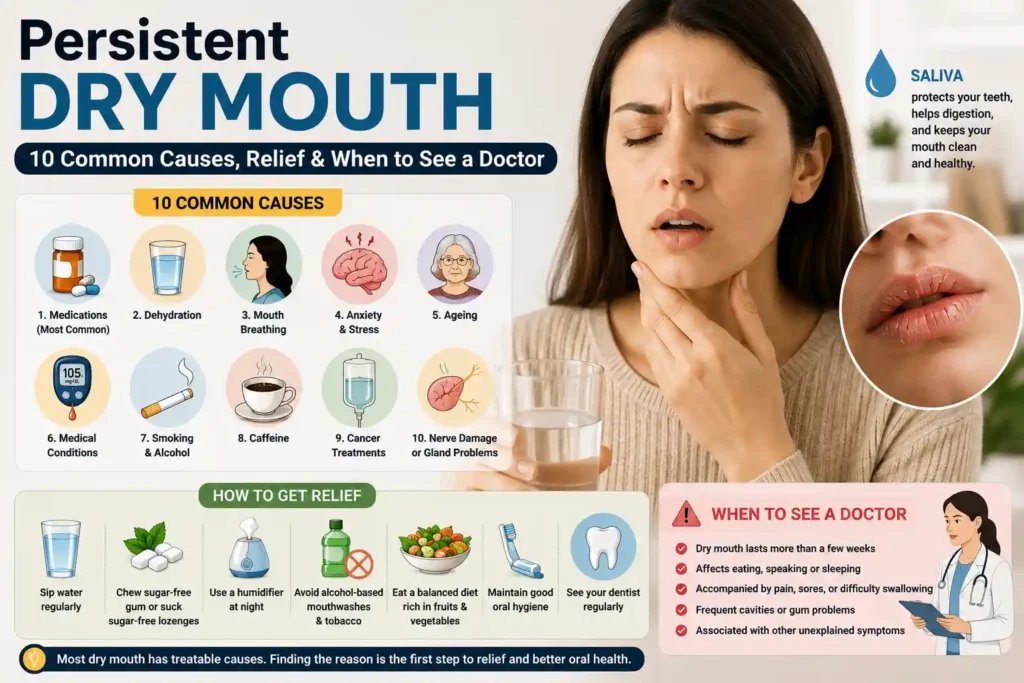
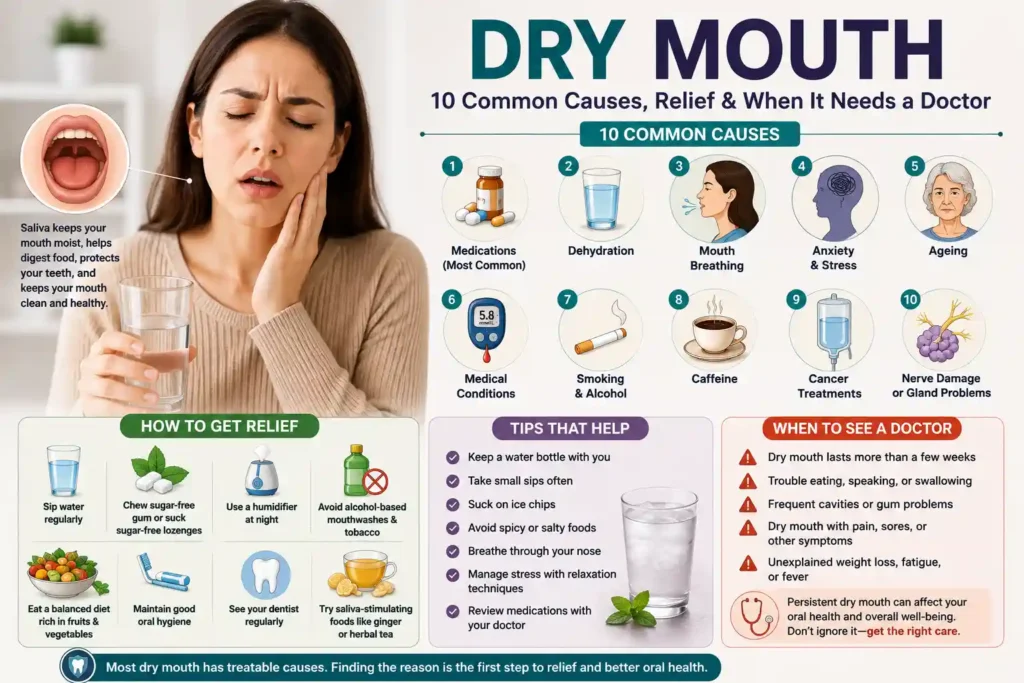
10 Common Causes of Dry Mouth
1. Medications. By far the most common cause. A very large number of medications list dry mouth as a side effect, spanning many different types. If your dry mouth began after starting a medication, this is the most likely explanation — but never stop a prescribed medication on your own; discuss it with your doctor.
2. Dehydration. Not drinking enough fluid, or losing fluids through illness, heat, or exercise, reduces saliva and dries the mouth. This is a common and easily corrected cause.
3. Mouth breathing. Breathing through the mouth, particularly during sleep, dries it out, which is why many people wake with a dry mouth. A blocked nose, snoring, or sleep apnoea can contribute.
4. Anxiety and stress. Feeling nervous or stressed commonly causes a dry mouth, reflecting the body’s response to stress. This is usually temporary, easing as the stress passes.
5. Ageing. While ageing itself does not necessarily cause dry mouth, it is more common in older adults, often related to the medications and conditions that become more frequent with age.
6. Certain medical conditions. Some conditions affect the salivary glands or the body’s fluid balance and can cause dry mouth. Diabetes, for instance, can be associated with dry mouth, as can certain autoimmune conditions that affect the glands.
7. Smoking and alcohol. Smoking and drinking alcohol can both contribute to a dry mouth, and alcohol-based mouthwashes can add to the dryness rather than helping.
8. Caffeine. Caffeine can contribute to a dry mouth, particularly in larger amounts, partly through its mild diuretic effect.
9. Cancer treatments. Certain cancer treatments, particularly those affecting the head and neck area, can reduce saliva production and cause dry mouth, which is managed with the guidance of the care team.
10. Nerve damage or gland problems. Less commonly, damage to the nerves supplying the salivary glands, or problems with the glands themselves, can reduce saliva and cause persistent dry mouth.
Why Medications Are the Usual Suspect
Because medications are such a common cause of dry mouth, it is worth understanding this connection. A very wide range of medications can reduce saliva as a side effect, and dry mouth becomes even more likely in people taking several medications at once, which is more common in older adults.
If you notice dry mouth after starting a new medication, or you take multiple medications and have persistent dryness, this is well worth mentioning to your doctor or pharmacist. In some cases, they may be able to adjust the timing, the dose, or the medication itself, or suggest ways to manage the dryness. What you should never do is stop a prescribed medication on your own because of dry mouth — the medication is there for a reason, and any change should be made with professional guidance.
But raising the issue is genuinely worthwhile, because dry mouth is a manageable side effect, not something you simply have to endure. This is one of the clearest examples of why identifying the cause of dry mouth matters: if a medication is behind it, the solution lies in working with your prescriber rather than in remedies alone.
How to Get Relief From Dry Mouth
For dry mouth, these measures often help:
- Sip water regularly. Frequent sips of water keep the mouth moist and are a simple, effective first step.
- Stay well hydrated. Drinking enough fluid through the day supports saliva production.
- Stimulate saliva. Sugar-free gum or sugar-free sweets can encourage saliva flow. Choosing sugar-free is important to protect the teeth.
- Use saliva substitutes. Products designed to moisten the mouth, available from pharmacies, can help, particularly for persistent dry mouth.
- Avoid drying culprits. Reduce caffeine and alcohol, avoid alcohol-based mouthwashes, and if you smoke, stopping helps.
- Address mouth breathing. If a blocked nose is causing you to breathe through your mouth, treating the congestion helps, and a humidifier at night can ease night-time dryness.
- Care for your teeth. Because dry mouth raises the risk of decay, good oral hygiene and regular dental care are especially important.
If dry mouth is persistent, or you suspect a medication or condition is behind it, these measures work best alongside addressing the underlying cause with your doctor, dentist, or pharmacist.
Protecting Your Teeth With a Dry Mouth
This point deserves its own emphasis, because it is where dry mouth does lasting harm if ignored. Since saliva protects the teeth against decay, a persistently dry mouth increases the risk of cavities and gum problems. Anyone with ongoing dry mouth should be especially attentive to their oral health.
Good measures include brushing thoroughly with fluoride toothpaste, keeping up regular dental check-ups so any problems are caught early, choosing sugar-free options for gum and sweets to avoid feeding decay, and limiting sugary foods and drinks that are particularly harmful when protective saliva is reduced.
Your dentist may have specific recommendations for people with dry mouth, and mentioning the dryness at your dental visits helps them look out for and prevent problems. Protecting your teeth is a key reason not to simply tolerate persistent dry mouth but to address both the dryness itself and its effects on your oral health.
Dry Mouth at Night: A Common Problem
Many people notice their dry mouth is worst at night or when they wake in the morning, and this is common enough to deserve a closer look, because the causes and solutions are often specific.
The leading reason for night-time dry mouth is breathing through the mouth during sleep. When you breathe through your mouth rather than your nose overnight, the constant airflow dries the mouth out, leaving you parched by morning. This mouth breathing is often driven by nasal congestion — from a cold, allergies, or a persistently blocked nose — or by snoring and, in some cases, sleep apnoea, a condition where breathing is repeatedly interrupted during sleep. Saliva production also naturally decreases during sleep, which adds to the effect.
Several measures can help with night-time dryness specifically. Addressing nasal congestion so you can breathe through your nose is key, whether that means treating allergies or clearing a blocked nose before bed. Using a humidifier in the bedroom adds moisture to the air and reduces drying. Keeping water by the bed for sips, avoiding alcohol and caffeine in the evening, and not sleeping in an overly heated, dry room all help too.
If you snore heavily and wake unrefreshed as well as dry, it is worth mentioning to a doctor, as this can point to sleep apnoea, which is treatable and important to address for reasons beyond the dry mouth. For persistent morning dryness, working out whether mouth breathing is the cause is often the key to relief.
When Dry Mouth Signals Another Condition
While most dry mouth comes from medications, dehydration, or lifestyle factors, it can occasionally be a clue to an underlying condition, which is why persistent unexplained dry mouth — especially with other symptoms — is worth having assessed.
Some autoimmune conditions specifically affect the glands that produce saliva and tears, causing a persistently dry mouth alongside dry eyes, and sometimes joint symptoms. Diabetes can be associated with dry mouth, and in some cases dry mouth and increased thirst are among the symptoms that lead to a diabetes diagnosis — our guide on diabetes symptoms covers the wider warning signs. Other conditions affecting fluid balance, the nerves, or the salivary glands themselves can also cause dryness.
The practical message is not to assume the worst — most dry mouth is benign and related to medications or hydration — but to recognise that a persistent, unexplained dry mouth, particularly alongside other symptoms such as dry eyes, excessive thirst, or joint problems, is a reason to see a doctor. Identifying whether an underlying condition is involved allows it to be addressed, which in turn helps the dry mouth. This is another example of why the cause of dry mouth matters, and why persistent dryness deserves proper attention rather than simply being tolerated.
When to See a Doctor or Dentist
See a doctor or dentist if:
- Dry mouth is persistent and not explained by an obvious cause like dehydration
- You suspect a medication is causing it, so alternatives or adjustments can be discussed
- Dry mouth comes with other symptoms, such as dry eyes or joint problems
- You have difficulty eating, swallowing, or speaking because of dryness
- You are noticing dental problems, which dry mouth can cause
- Dry mouth is affecting your sleep or quality of life
See a doctor promptly if dry mouth comes with symptoms that concern you, or with signs of another condition, so the cause can be identified. The NHS guidance on dry mouth explains when to seek help.
Final Thoughts
A dry mouth is easy to underestimate, but a persistent one is worth taking seriously — not only because it is uncomfortable and can affect eating, speaking, taste, and sleep, but because saliva quietly protects your teeth, and its absence raises the risk of decay. The good news is that most dry mouth has an identifiable, addressable cause, with medications being by far the most common, followed by dehydration, mouth breathing, stress, and certain conditions.
The balanced approach is to relieve the dryness with simple measures — sipping water, stimulating saliva with sugar-free gum, using saliva substitutes, and cutting back on caffeine, alcohol, and smoking — while addressing the underlying cause, especially if a medication or condition is involved.
Throughout, protecting your teeth deserves special attention, since this is where dry mouth does lasting harm if neglected. For most people, understanding why their mouth is dry, taking these practical steps, and working with a doctor, dentist, or pharmacist where needed brings real relief and protects their oral health at the same time.
Medical disclaimer: This article is for general educational information and is not a substitute for professional medical or dental advice, diagnosis, or treatment. Never stop a prescribed medication on your own; discuss persistent dry mouth with your doctor, dentist, or pharmacist.
Frequently Asked Questions
What causes a dry mouth? The most common cause is medication side effects, as a very wide range of medicines can reduce saliva. Other causes include dehydration, mouth breathing (especially during sleep), anxiety and stress, smoking and alcohol, caffeine, certain medical conditions, and some cancer treatments.
Why do I wake up with a dry mouth? Waking with a dry mouth is often due to breathing through the mouth during sleep, which can result from a blocked nose, snoring, or sleep apnoea. Medications, dehydration, and sleeping in dry air can also contribute. A humidifier and addressing nasal congestion may help.
How can I get rid of a dry mouth? Sip water regularly, stay well hydrated, stimulate saliva with sugar-free gum or sweets, use saliva substitutes from a pharmacy, reduce caffeine and alcohol, avoid alcohol-based mouthwashes, and address mouth breathing. If a medication or condition is the cause, work with your doctor to manage it.
Can medications cause dry mouth? Yes — this is the most common cause. A very large number of medications list dry mouth as a side effect, and it is more likely in people taking several at once. If a medication is behind your dry mouth, discuss it with your doctor, but never stop a prescribed medication on your own.
Is dry mouth bad for my teeth? Yes. Saliva protects the teeth against decay, so a persistently dry mouth increases the risk of cavities and gum problems. Anyone with ongoing dry mouth should be extra attentive to oral hygiene, keep up regular dental visits, and choose sugar-free options for gum and sweets.
When should I see a doctor about dry mouth? See a doctor or dentist if dry mouth is persistent and unexplained, if you suspect a medication is causing it, if it comes with other symptoms like dry eyes, if it affects eating, swallowing, or speaking, or if you are noticing dental problems. Persistent dry mouth deserves proper assessment.
Can dehydration cause dry mouth? Yes. Not drinking enough, or losing fluids through illness, heat, or exercise, reduces saliva and dries the mouth. This is a common and easily corrected cause, and staying well hydrated through the day helps prevent it.