Bloating Causes: 11 Reasons & Proven Ways to Ease It
That tight, swollen, uncomfortably full feeling in the belly — as though you have swallowed a balloon — is one of the most common digestive complaints there is. Bloating can turn a normal day uncomfortable, make clothes feel too tight, and leave you wondering what you did to deserve it. Most of the time, the answer is reassuringly ordinary: something about what or how you ate. But because bloating can have many causes, understanding what is behind yours is the key to easing it and knowing when it needs more attention.
The encouraging news is that the vast majority of bloating is caused by everyday factors — the food you eat, how you eat it, and the normal workings of your digestive system — and responds well to simple changes. Occasional bloating after a big or gassy meal is completely normal. It is persistent, severe, or unexplained bloating that occasionally signals something needing a doctor’s attention, and knowing the difference lets you handle the common kind confidently while staying alert to the rest.
This guide covers the common causes of bloating, how to ease it, the foods most likely to trigger it, and when bloating warrants seeing a doctor.
Quick Overview
| Question | Short answer |
|---|---|
| What is bloating? | A feeling of fullness, tightness, or swelling in the belly |
| Most common causes | Gas, certain foods, eating habits, constipation |
| Usually serious? | No — most bloating is from everyday causes |
| Easing it | Adjusting diet and eating habits, movement |
| Common triggers | Fizzy drinks, certain vegetables, beans, fatty foods |
| When to worry | Persistent bloating, pain, weight loss, changes in bowel habits |
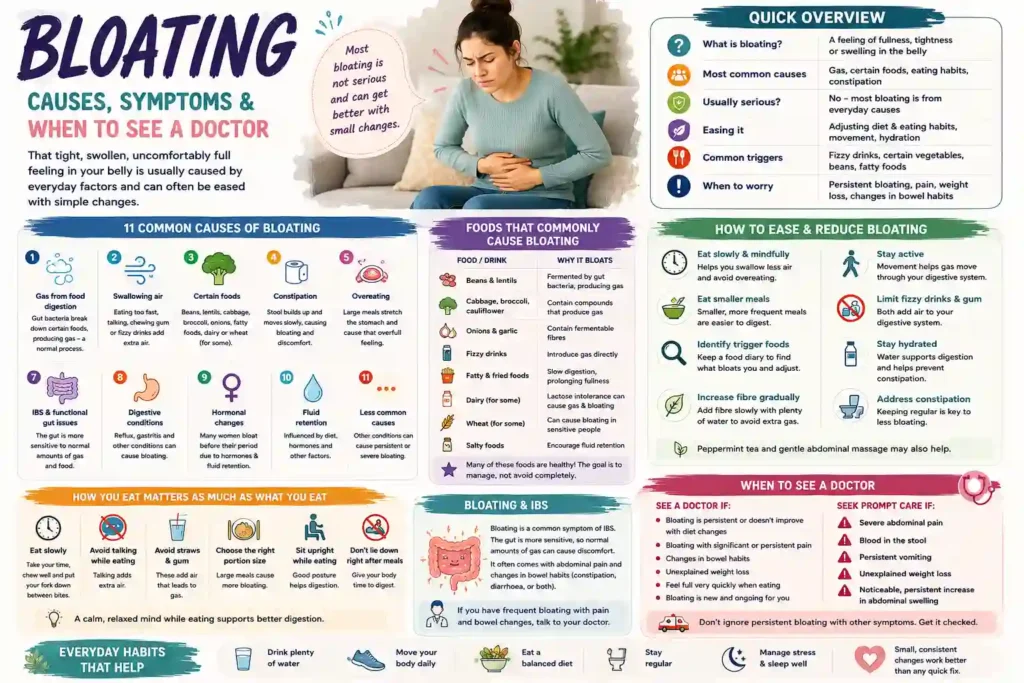
Why We Feel Bloated
Bloating is the sensation of increased pressure, fullness, or swelling in the abdomen, sometimes with a visibly larger belly. It most often results from a build-up of gas in the digestive system, or from the digestive process itself, though it can have other causes. Gas is produced normally as part of digestion, particularly when gut bacteria break down certain foods, and swallowed air adds to it. When gas builds up or moves slowly, or when the gut is sensitive to normal amounts, bloating results.
Understanding that bloating is usually a normal part of digestion gone slightly awry helps take the worry out of it. Most bloating comes down to what you eat, how you eat, and how your particular digestive system handles things. Because these are everyday and largely addressable factors, simple changes ease most bloating. Knowing the causes, though, also helps you recognise the less common situations that need more attention.
11 Common Causes of Bloating
1. Gas from food digestion. The most common cause. When gut bacteria break down certain foods, particularly high-fibre foods, beans, and some vegetables, they produce gas, which can cause bloating. This is a normal process, though some people are more sensitive to it.
2. Swallowing air. Eating too quickly, talking while eating, chewing gum, and drinking fizzy drinks all introduce extra air into the digestive system, contributing to bloating.
3. Certain foods. Beans, lentils, cabbage, broccoli, onions, and other gas-producing foods commonly cause bloating. So do fatty foods, which slow digestion, and for some people, dairy or wheat.
4. Constipation. When stool builds up and moves slowly through the bowel, it commonly causes bloating alongside the discomfort of constipation itself. Our guide on home remedies for constipation covers easing this.
5. Overeating. Simply eating a large meal fills the stomach and can cause a bloated, uncomfortably full feeling, particularly with rich or heavy foods.
6. Food intolerances. Intolerance to certain foods, such as lactose (in dairy) or others, can cause bloating when those foods are eaten, as the body struggles to digest them properly.
7. IBS and functional gut issues. Irritable bowel syndrome and other functional digestive conditions commonly cause bloating, often alongside abdominal pain and changes in bowel habits. The gut in these conditions can be more sensitive to normal amounts of gas.
8. Digestive conditions. Conditions like acid reflux and gastritis can cause bloating among their symptoms. Our guides on GERD symptoms and gastritis symptoms cover these.
9. Hormonal changes. Many women experience bloating related to their menstrual cycle, particularly in the days before a period, due to hormonal changes and fluid retention.
10. Fluid retention. Bloating can sometimes relate to the body holding onto fluid, which can be influenced by diet, hormones, and other factors.
11. Less common causes. Occasionally, persistent or severe bloating relates to other conditions, which is why bloating that is ongoing, unexplained, or comes with warning signs should be assessed.
Foods That Commonly Cause Bloating
| Common bloating triggers | Why they cause it |
|---|---|
| Beans and lentils | Fermented by gut bacteria, producing gas |
| Cabbage, broccoli, cauliflower | Contain compounds that produce gas |
| Onions and garlic | Contain fermentable fibres |
| Fizzy drinks | Introduce gas directly |
| Fatty and fried foods | Slow digestion, prolonging fullness |
| Dairy (for some) | Lactose intolerance causes bloating |
| Wheat (for some) | Can cause bloating in sensitive people |
| Salty foods | Encourage fluid retention |
An important point: many of the foods that cause bloating, like beans and vegetables, are genuinely healthy, so the goal is usually not to avoid them entirely but to manage how they affect you. Increasing fibre gradually, cooking gas-producing vegetables, and identifying your personal triggers through a food diary all help you keep these nutritious foods in your diet while reducing bloating. Triggers vary a lot between people, so your own experience is the best guide.
How to Ease and Reduce Bloating
For everyday bloating, these measures often help:
- Eat slowly and mindfully. Eating quickly means swallowing more air and can lead to overeating, both of which cause bloating.
- Eat smaller, more frequent meals. Large meals are more likely to cause a bloated, overfull feeling.
- Identify and manage trigger foods. A food diary helps pinpoint which foods bloat you, so you can moderate them.
- Increase fibre gradually. Adding fibre too fast can cause bloating; a steady increase with plenty of water is gentler.
- Stay active. Movement, including a walk after meals, helps gas move through the digestive system.
- Limit fizzy drinks and gum. Both add air to the digestive system.
- Stay hydrated. Adequate water supports digestion and helps prevent the constipation that causes bloating.
- Address constipation. Since constipation is a common cause, keeping regular helps reduce bloating.
Some people find peppermint tea or gentle abdominal movement soothing. If bloating consistently follows specific foods, moderating those foods is often the most effective single step.
How You Eat Matters as Much as What You Eat
People tend to focus entirely on which foods cause bloating, but the way you eat can matter just as much, and adjusting your habits is often the easiest win of all.
Eating quickly is one of the biggest culprits. When you rush a meal, you swallow more air, which ends up in the digestive system as gas, and you are also more likely to overeat before your body registers fullness. Slowing down, chewing thoroughly, and putting your fork down between mouthfuls all reduce both swallowed air and overeating. Talking a lot while eating, drinking through a straw, and chewing gum similarly introduce extra air, so being mindful of these can help.
Meal size and timing play a part too. Large meals stretch the stomach and are more likely to leave you bloated and uncomfortable, so smaller, more frequent meals are often gentler. Eating late at night, or lying down soon after eating, can also worsen bloating for some people. Even your stress levels while eating matter, because the gut is sensitive to stress, and eating in a rushed, tense state can affect digestion. Taking meals in a calm, unhurried way, sitting upright, and giving your body time to digest afterwards all support a more comfortable, less bloated feeling. These habit changes cost nothing and often make a noticeable difference on their own.
Bloating and IBS
For some people, bloating is not just an occasional nuisance but a frequent, prominent problem, and in these cases irritable bowel syndrome (IBS) is a common explanation. IBS is a functional gut condition, meaning the digestive system does not work quite as it should even though it looks structurally normal, and bloating is one of its most characteristic symptoms.
In IBS, the gut tends to be more sensitive than usual, so normal amounts of gas and normal digestive processes can produce noticeable bloating and discomfort. It often comes with abdominal pain that may ease after a bowel movement, and with changes in bowel habits — constipation, diarrhoea, or alternating between the two. Symptoms frequently fluctuate and can be worsened by stress and by certain foods.
While IBS cannot be diagnosed from bloating alone, and a doctor should assess persistent digestive symptoms, understanding this connection helps explain why some people bloat so much more readily than others. Management often involves identifying and moderating trigger foods, managing stress, regular activity, and sometimes specific dietary approaches under guidance.
If your bloating is frequent and comes with abdominal pain and changes in bowel habits, it is worth discussing IBS with your doctor, who can assess your symptoms and rule out other causes. This is exactly the kind of persistent, patterned bloating that benefits from proper assessment rather than self-management alone.
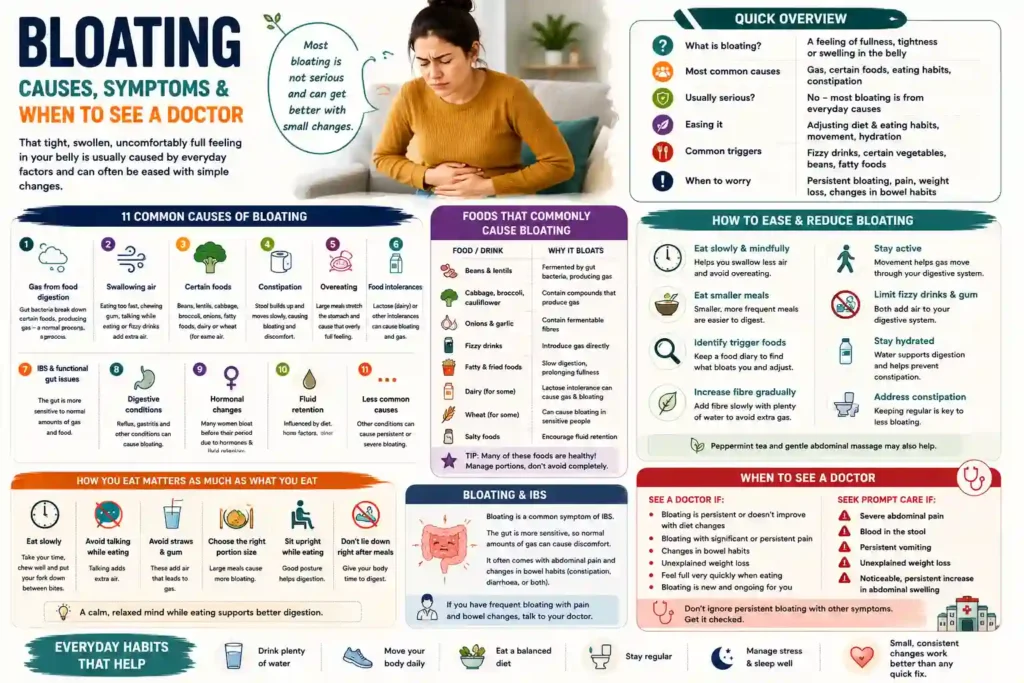
When to See a Doctor
See a doctor if:
- Bloating is persistent, frequent, or does not improve with dietary changes
- Bloating comes with significant or persistent abdominal pain
- You have bloating alongside changes in your bowel habits
- Bloating comes with unexplained weight loss
- You feel full very quickly when eating, or have a persistently reduced appetite
- Bloating is a new and ongoing change for you
Seek prompt medical attention for bloating with any of these warning signs:
- Severe abdominal pain
- Blood in the stool
- Persistent vomiting
- Unexplained weight loss
- A noticeable, persistent increase in abdominal swelling
These can signal a condition needing assessment. Persistent bloating in particular, especially in combination with other symptoms, should always be checked rather than assumed to be ordinary. The NHS guidance on bloating explains when to seek help.
Final Thoughts
Bloating is one of the most common and, usually, most benign digestive complaints — a tight, swollen discomfort that most often comes down to gas, certain foods, eating habits, or constipation, and that eases with simple, sensible changes. Eating more slowly, identifying your trigger foods, staying active, keeping regular, and being mindful of fizzy drinks and large meals resolve the everyday bloating that most people experience.
The balanced message is to manage ordinary bloating confidently with these adjustments, while keeping an eye out for the less common situations that need attention. Persistent, severe, or unexplained bloating, especially alongside pain, weight loss, changes in bowel habits, or feeling full very quickly, deserves a doctor’s assessment rather than being dismissed.
For the familiar, food-related bloating that comes and goes, though, understanding your own triggers and adjusting how you eat is usually all it takes to feel comfortable again. Small, consistent changes — eating a little slower, moving after meals, keeping regular, and knowing which foods affect you — tend to work far better than any quick fix, and they let you keep enjoying the healthy foods that sometimes cause bloating rather than cutting them out.
Medical disclaimer: This article is for general educational information and is not a substitute for professional medical advice, diagnosis, or treatment. See a doctor for persistent, severe, or unexplained bloating, especially with pain, weight loss, or changes in bowel habits.
Frequently Asked Questions
What causes bloating? The most common causes are gas from food digestion, swallowing air, certain foods like beans and gas-producing vegetables, constipation, overeating, and food intolerances. Digestive conditions like IBS and reflux, hormonal changes, and fluid retention can also cause it. Most bloating is from everyday factors.
How can I reduce bloating quickly? Eating slowly, going for a gentle walk, staying hydrated, and avoiding fizzy drinks and large meals can ease bloating. Peppermint tea helps some people. Identifying and moderating your trigger foods is the most effective longer-term step for recurrent bloating.
What foods cause bloating? Common triggers include beans and lentils, cabbage, broccoli, cauliflower, onions, fizzy drinks, fatty and fried foods, and, for some people, dairy or wheat. Many of these are healthy foods, so the aim is usually to manage rather than avoid them, guided by your own tolerance.
Why am I bloated all the time? Constant bloating can result from ongoing dietary triggers, constipation, a food intolerance, or a functional gut condition like IBS. Because persistent bloating can occasionally signal something needing attention, ongoing or unexplained bloating should be assessed by a doctor rather than simply endured.
Can constipation cause bloating? Yes. When stool builds up and moves slowly through the bowel, it commonly causes bloating alongside the discomfort of constipation. Addressing constipation with more fibre, fluids, and activity often relieves the associated bloating too.
When should I worry about bloating? See a doctor if bloating is persistent, comes with significant abdominal pain, changes in bowel habits, unexplained weight loss, or feeling full very quickly, or if it is a new and ongoing change. Seek prompt care for bloating with severe pain, blood in the stool, or persistent vomiting.
Can hormones cause bloating? Yes. Many women experience bloating related to their menstrual cycle, particularly in the days before a period, due to hormonal changes and fluid retention. This kind of cyclical bloating is common and usually eases as the cycle progresses.
Does eating too fast cause bloating? Yes. Eating quickly means swallowing more air, which ends up as gas in the digestive system, and it also makes overeating more likely. Slowing down, chewing thoroughly, and avoiding gum and fizzy drinks all reduce swallowed air and can noticeably lessen bloating.
Is bloating a sign of IBS? Bloating is one of the most characteristic symptoms of irritable bowel syndrome, especially when it comes with abdominal pain and changes in bowel habits. However, bloating alone does not diagnose IBS, so persistent bloating with these features should be assessed by a doctor to confirm the cause.